


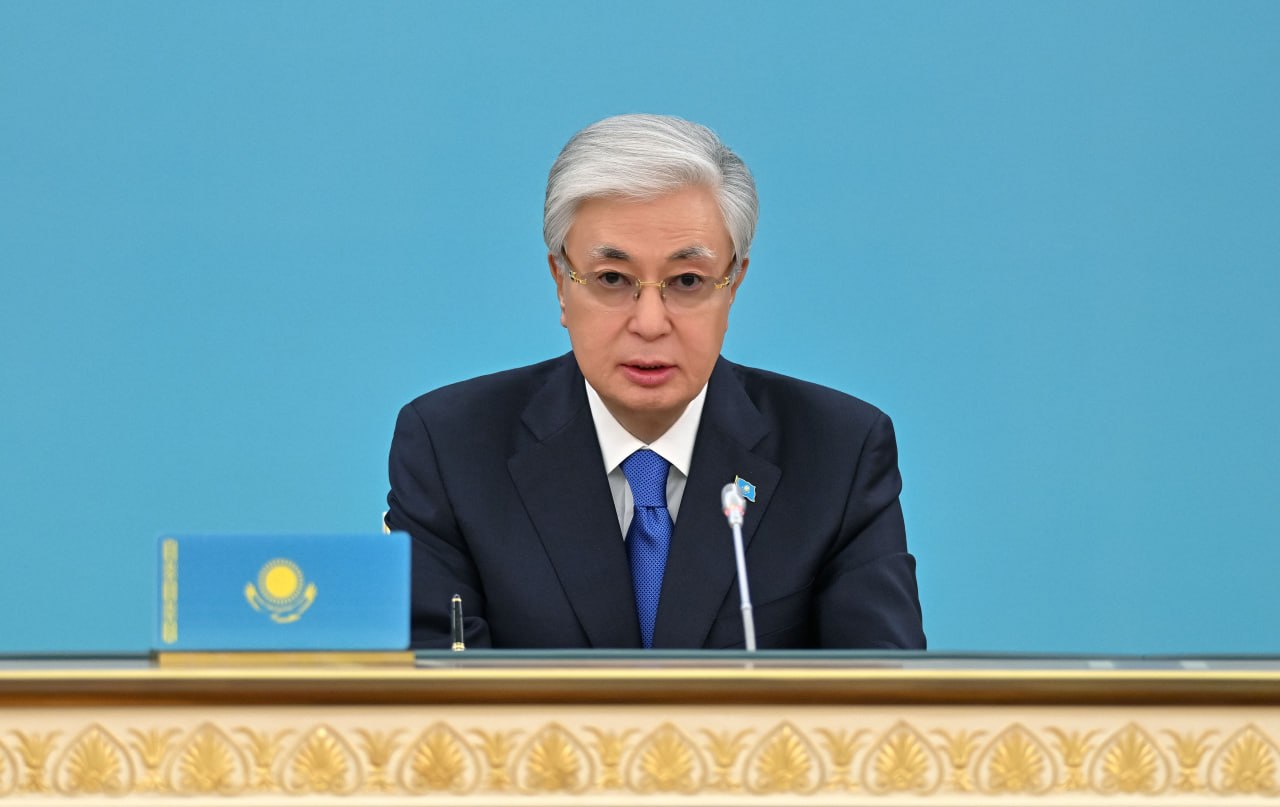

ASTANA, Kazakhstan, May 12. The President of Kazakhstan Kassym-Jomart Tokayev has signed a decree “On Measures for the Implementation of Artificial Intelligence in the Secondary Education System of the Republic of Kazakhstan”, Trend reports via the press service of the Kazakh president.
The main objective of the decree is to ensure the country’s sustainable development amid the rapid advancement of artificial intelligence, as well as to create conditions for building a modern, innovative education system as a key component of human capital.
Under the decree, the Government will approve by July 1, 2026, a Comprehensive Action Plan for the large-scale introduction of artificial intelligence into secondary education for 2026–2029. The plan includes the development of personalized learning mechanisms, digital infrastructure, teacher training programs, and measures to protect students’ personal data.
The decree also provides for the practical use of recommendations by Kai-Fu Lee , a member of the Council for Artificial Intelligence Development. The Government is instructed to submit specific proposals by June 1, 2026, for a pilot project in secondary education, with subsequent nationwide scaling. The initiative aims to reduce disparities in education quality between urban and rural schools.
By August 1, 2026, within the framework of the pilot project, schools are to be equipped with the necessary technical infrastructure, including stable high-speed internet access.
By September 1, 2026, standards for the use of artificial intelligence in the secondary education system will be approved.
Also, by September 1, 2026, an action plan will be adopted to ensure continuous professional development for teachers and to regulate the use of artificial intelligence in education as a supplementary tool, without replacing or undermining the professional role of educators.



