


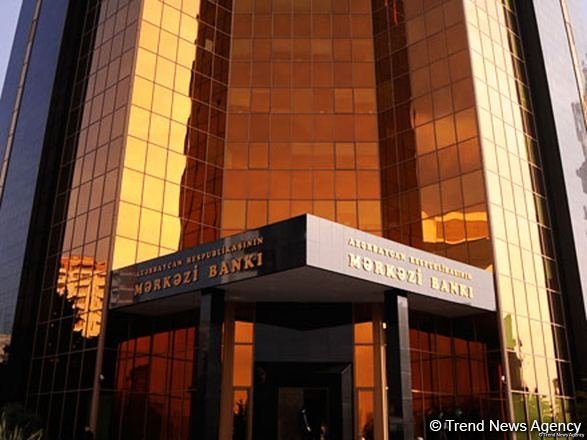

BAKU, Azerbaijan, May 8. BAKU, Azerbaijan, May 8. The Management Board of the Central Bank of Azerbaijan (CBA) has approved the "Regulation on Stress Testing in Banks," Trend reports.
The relevant decision was signed by CBA Chairman Taleh Kazimov.
The regulation establishes the framework for risk assessment in banks, the organization of stress tests, the development of models, and the evaluation of results.
Under the new guidelines, banks are required to conduct stress tests to identify and assess events that may adversely affect their risk profile and to develop corresponding action plans. Stress tests are to be prepared by the units responsible for risk management in coordination with other relevant departments and must be approved by the Supervisory Board and the Risk Management Committee following agreement with the Management Board.
The frequency of stress tests will be determined based on the bank’s operational characteristics, risk exposure, and changes in market and macroeconomic conditions. The results will inform strategic planning, risk appetite, internal policies, and risk limits.
The regulation also specifies requirements for the design of stress-test models. Models must be grounded in economic, financial, and statistical theory, reflecting the size, activities, and risk profile of the bank. They are required to be statistically and economically robust and to logically incorporate the interrelationships among economic indicators.
In addition, econometric models should be used when preparing stress tests, and the models should be tested across different economic periods and scenarios. The impact of macroeconomic indicators on the bank's risk profile should also be predicted.
According to the regulations, banks should conduct sensitivity and scenario analyses at the portfolio or bank-wide level. Sensitivity analyses aim to measure the impact of risk factors on the bank. In this context, changes in interest rates, a decrease in the value of liquid assets, the bankruptcy of large counterparties, and other shocks can be assessed.
Scenario analyses will be conducted under "very unfavorable", "unfavorable", and "likely" scenarios. The analyses will take into account both historical data and hypothetical events.
According to the document, banks must conduct stress tests on liquidity, credit, market, and operational risks at a minimum. The liquidity risk tests will take into account the market situation, credit, and other risks.
Credit risk analyses will also assess the characteristics of the loan portfolio and events that could affect the value of the securities acting as collateral.
Operational risk stress tests should also consider risks such as increased intra-bank fraud during economic crises. Market risk analyses will assess the impact on the bank of changes in interest rates, exchange rates, and prices of securities and commodities.
The regulations also include requirements for "bottom-up" stress tests. Thus, the CBA will submit macroeconomic forecasts to banks for annual stress tests by December 30 and semi-annual stress tests by June 30 of each year.
Systemically important banks must conduct "bottom-up" stress tests on a semi-annual and annual basis, and other banks on an annual basis. The results of annual stress tests and the action plan must be submitted to the CBA within 45 calendar days after the submission of macroeconomic forecasts.
According to the regulations, during the "bottom-up" stress tests, cases such as purposeful reduction of the loan portfolio, improvement of the risk group of assets, or artificial increase of income in unfavorable scenarios aren't allowed.
The results submitted by the CBA will be evaluated within 30 calendar days, and the results will be taken into account in the risk-based supervision process.
Stay up-to-date with more news on Trend News Agency's WhatsApp channel



