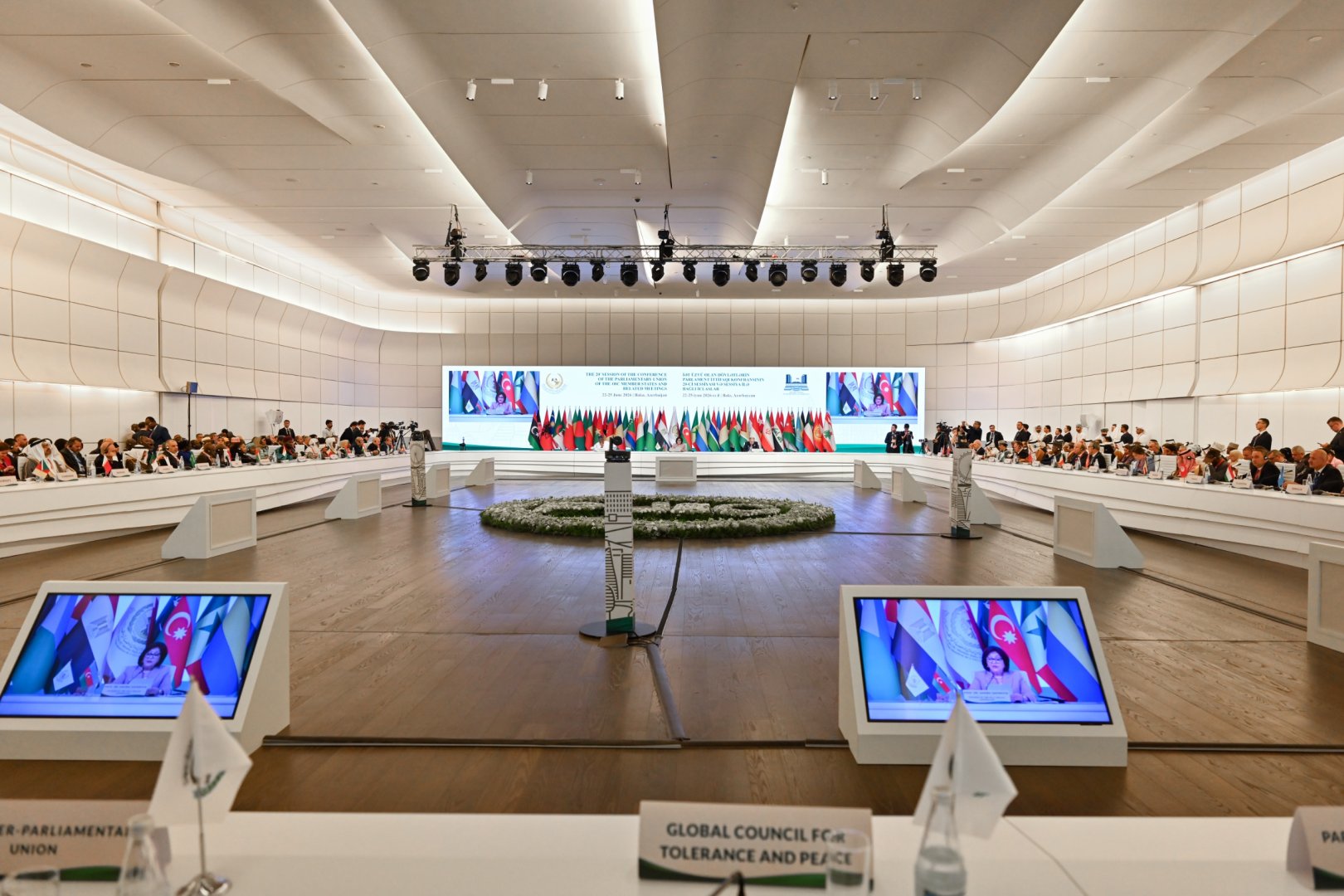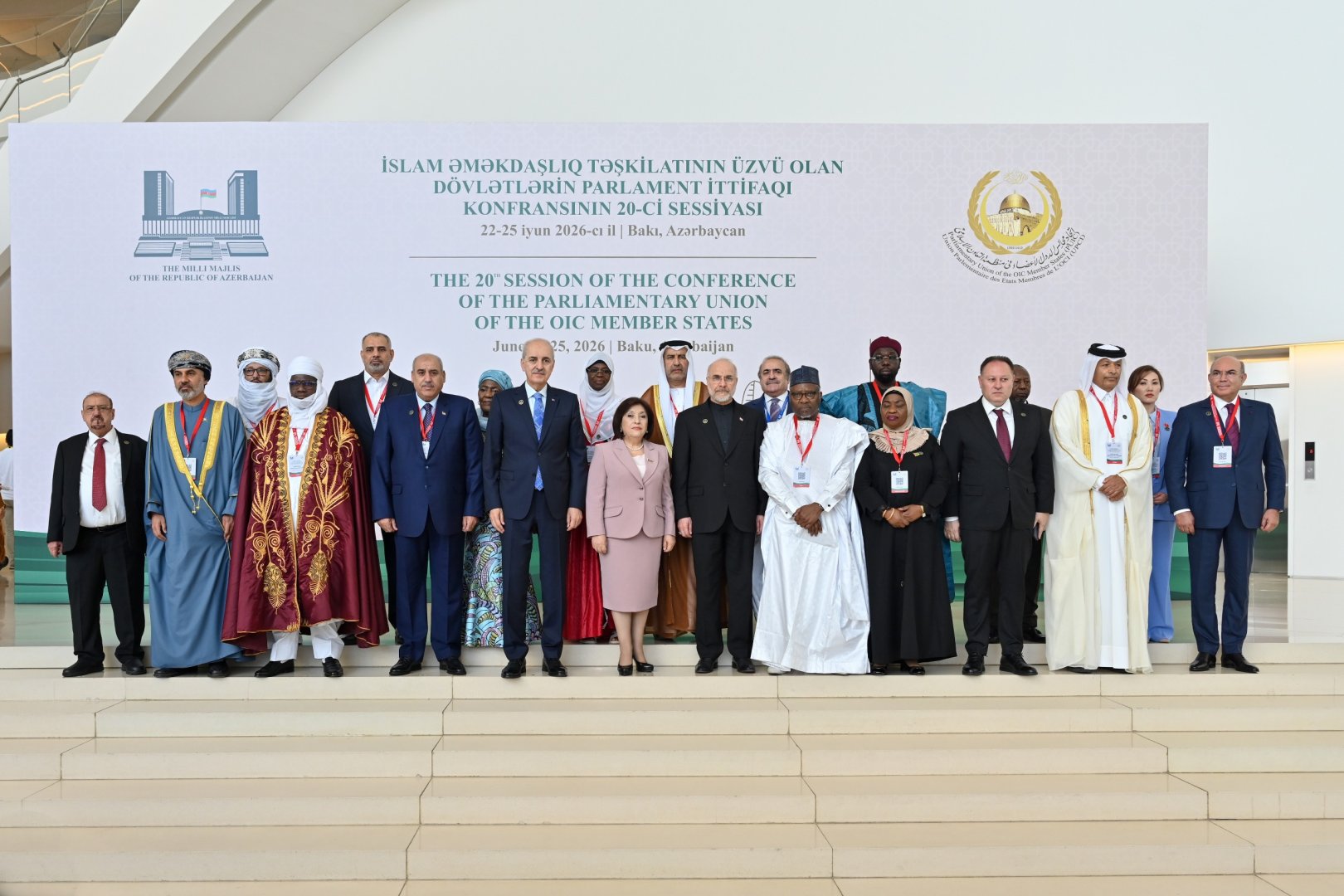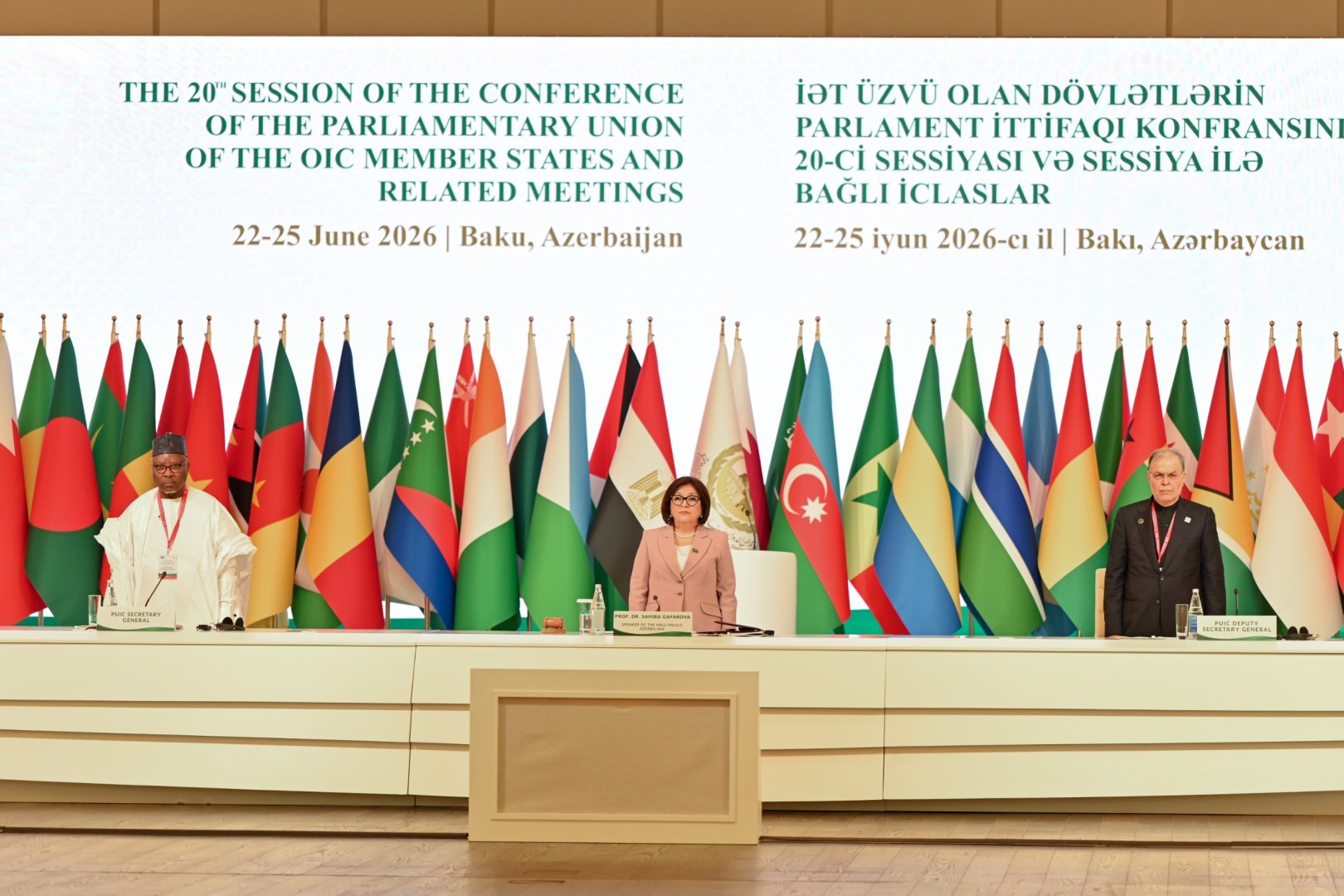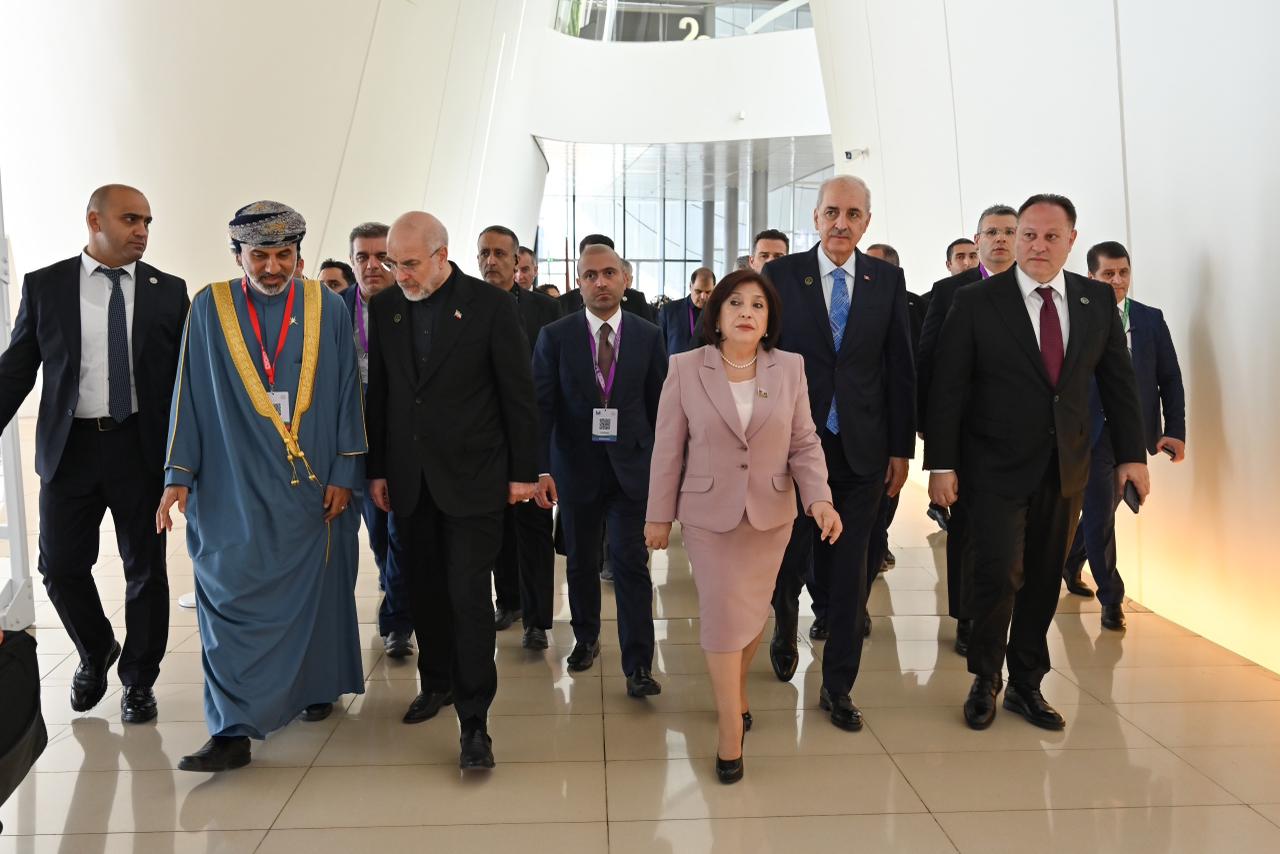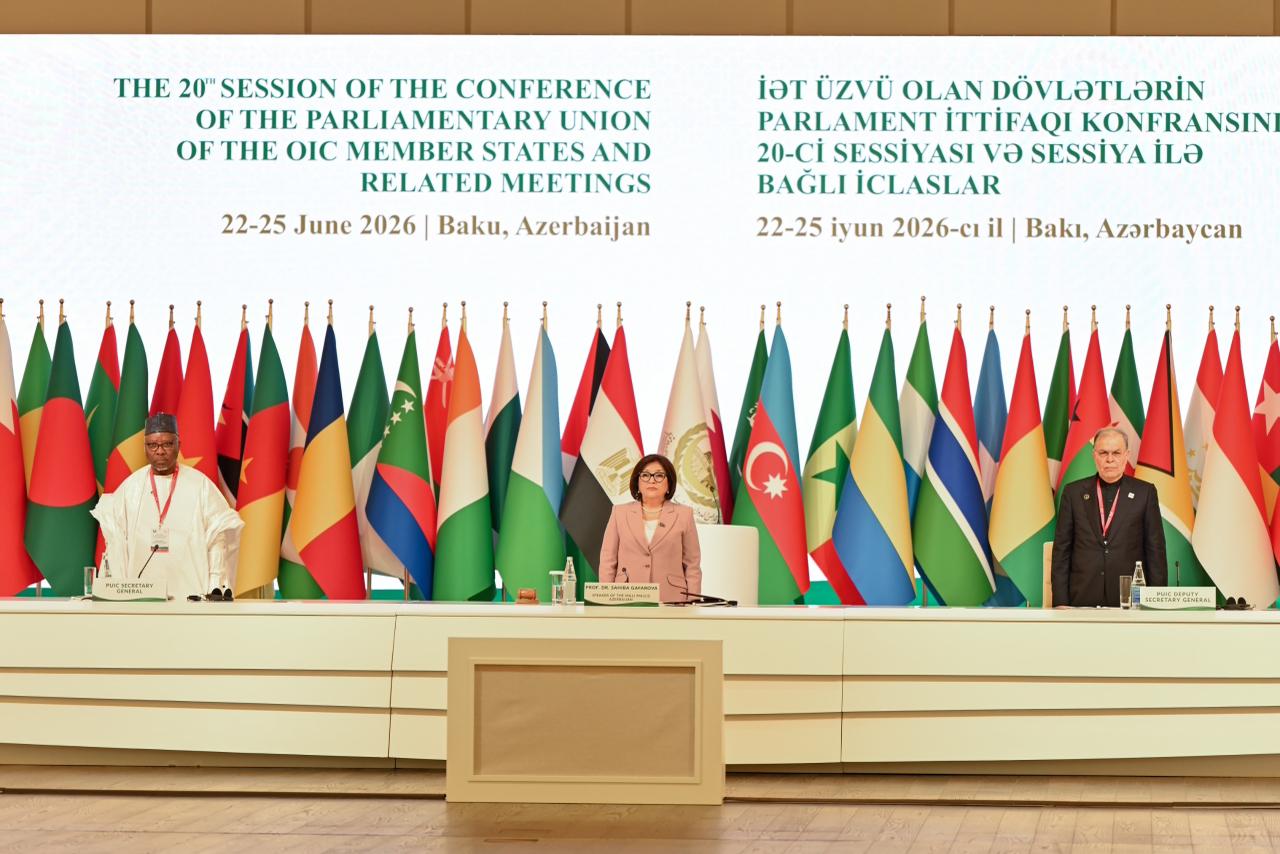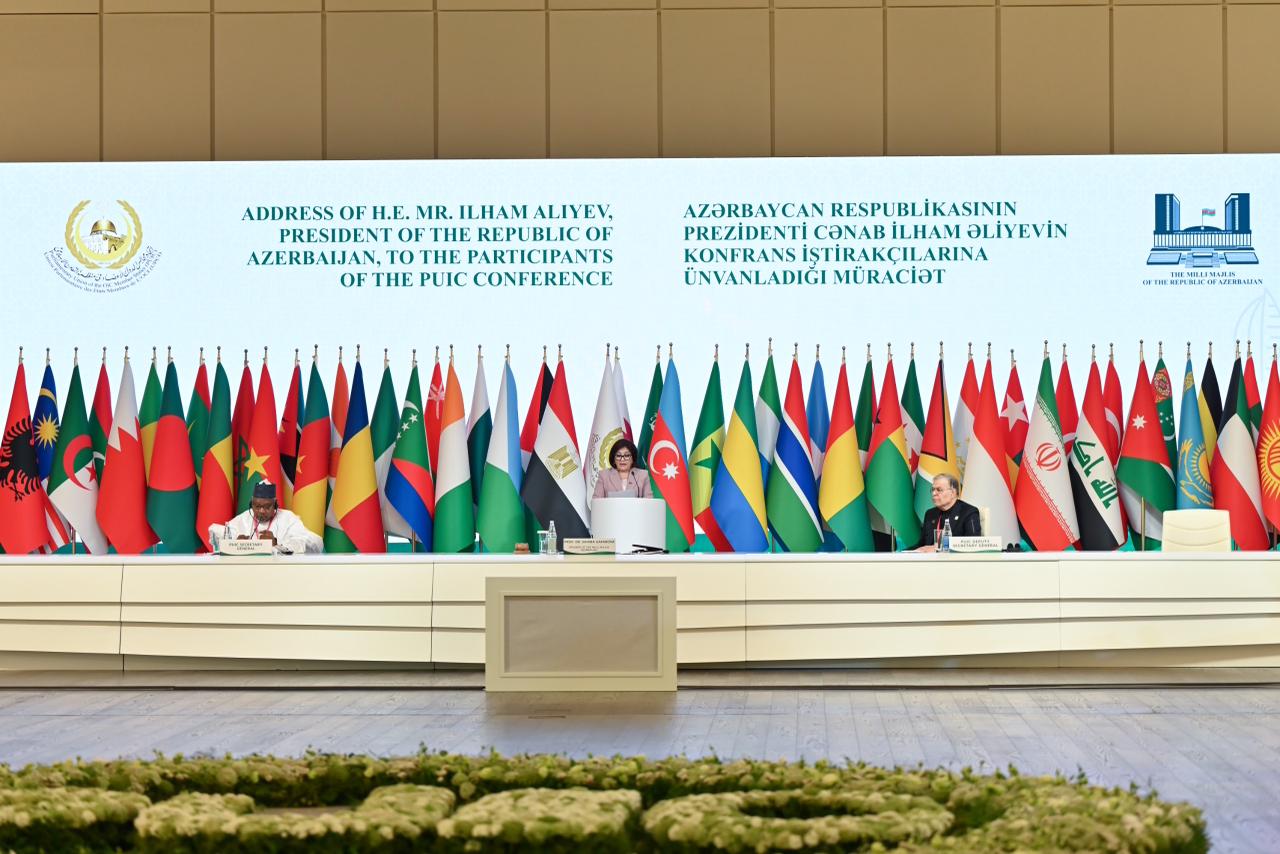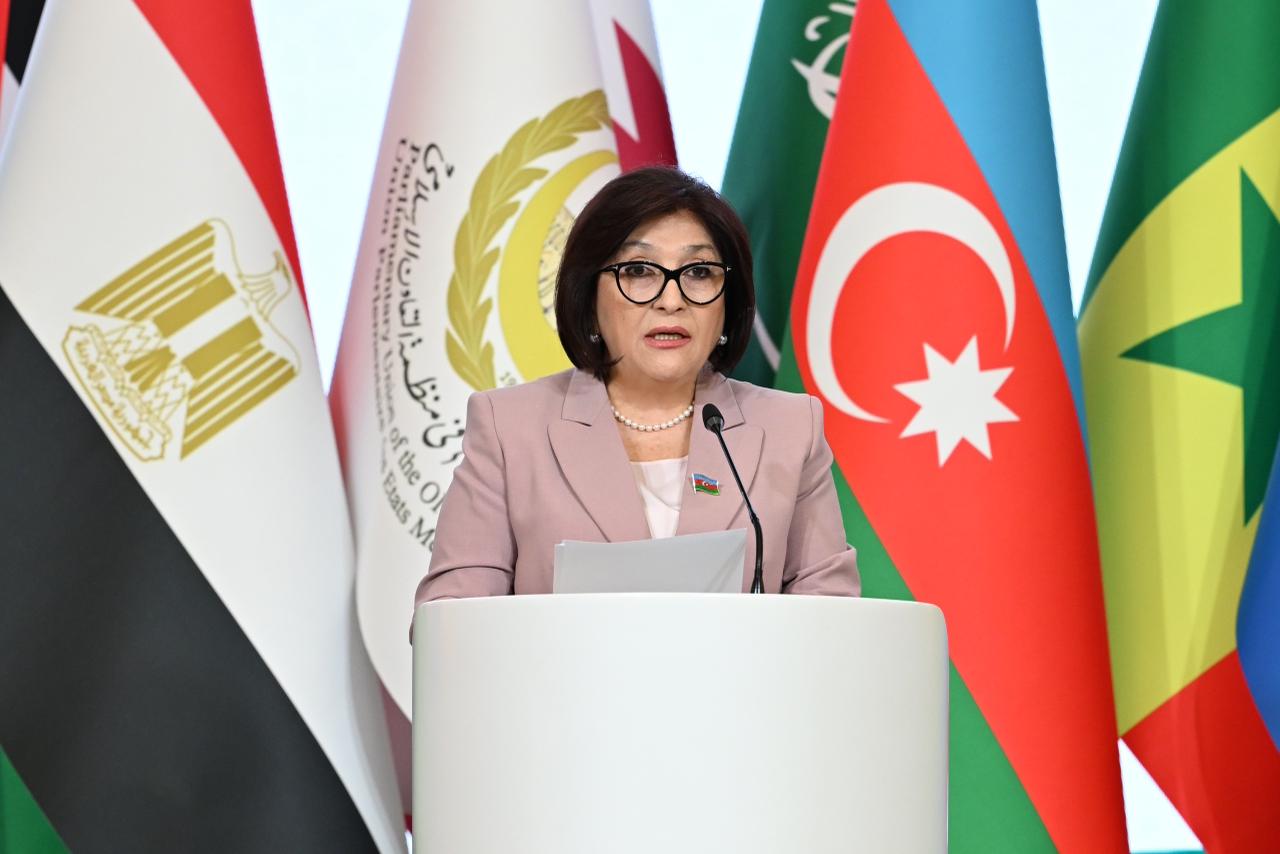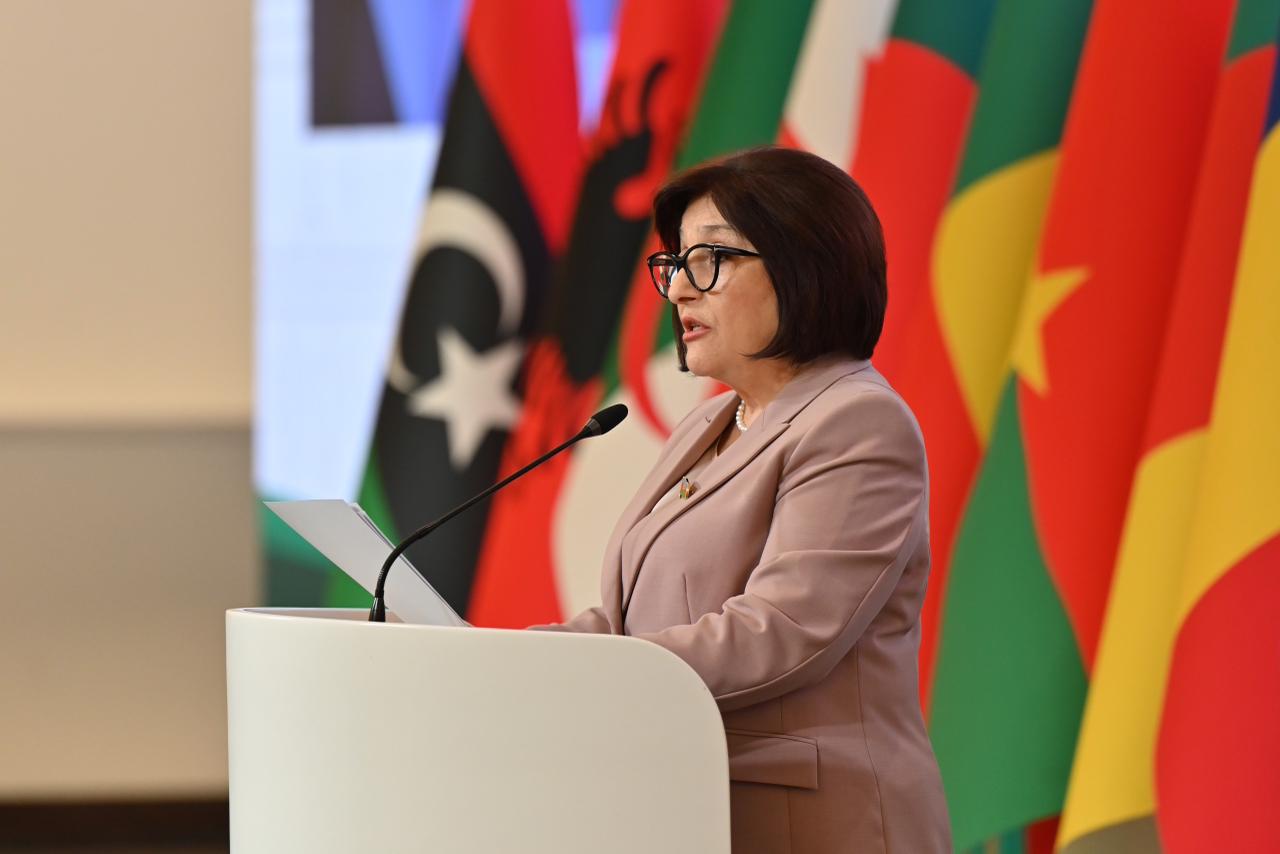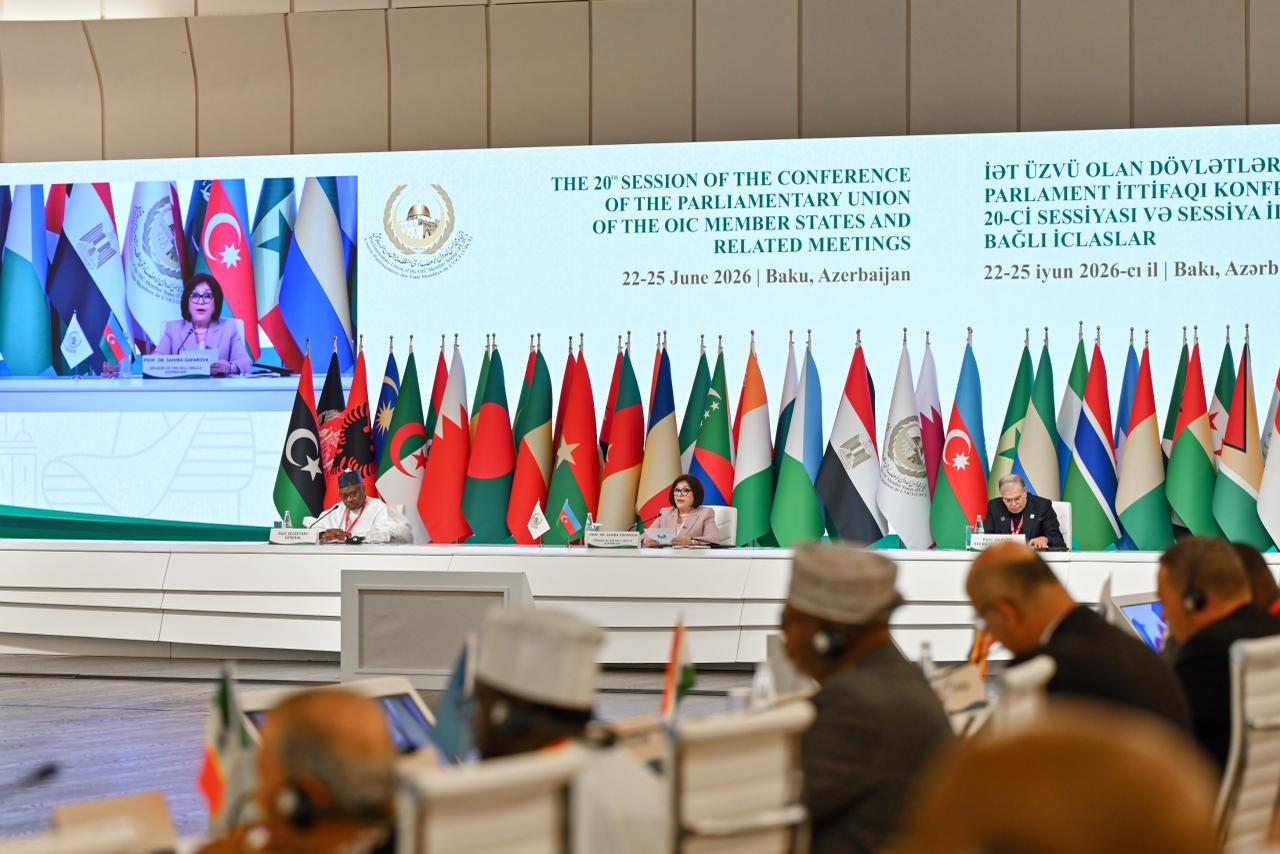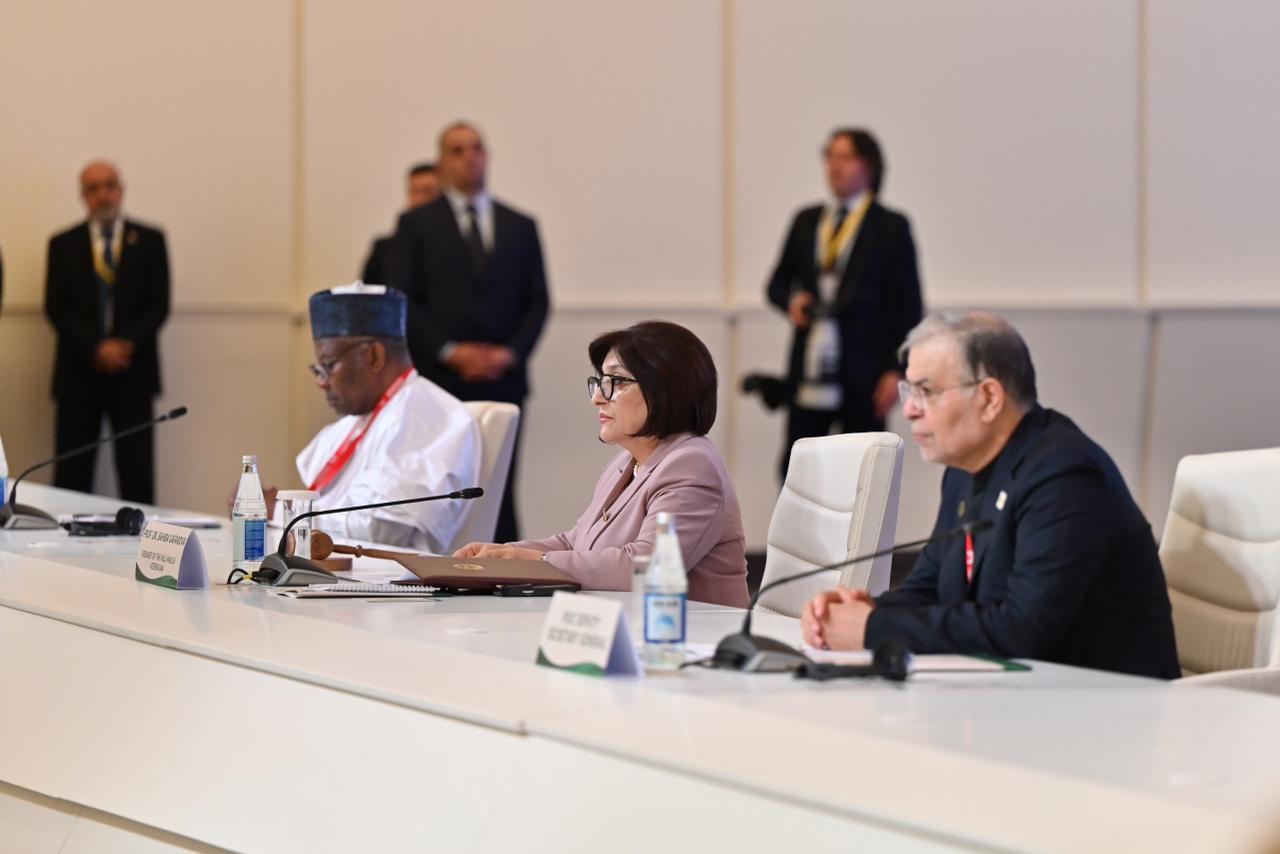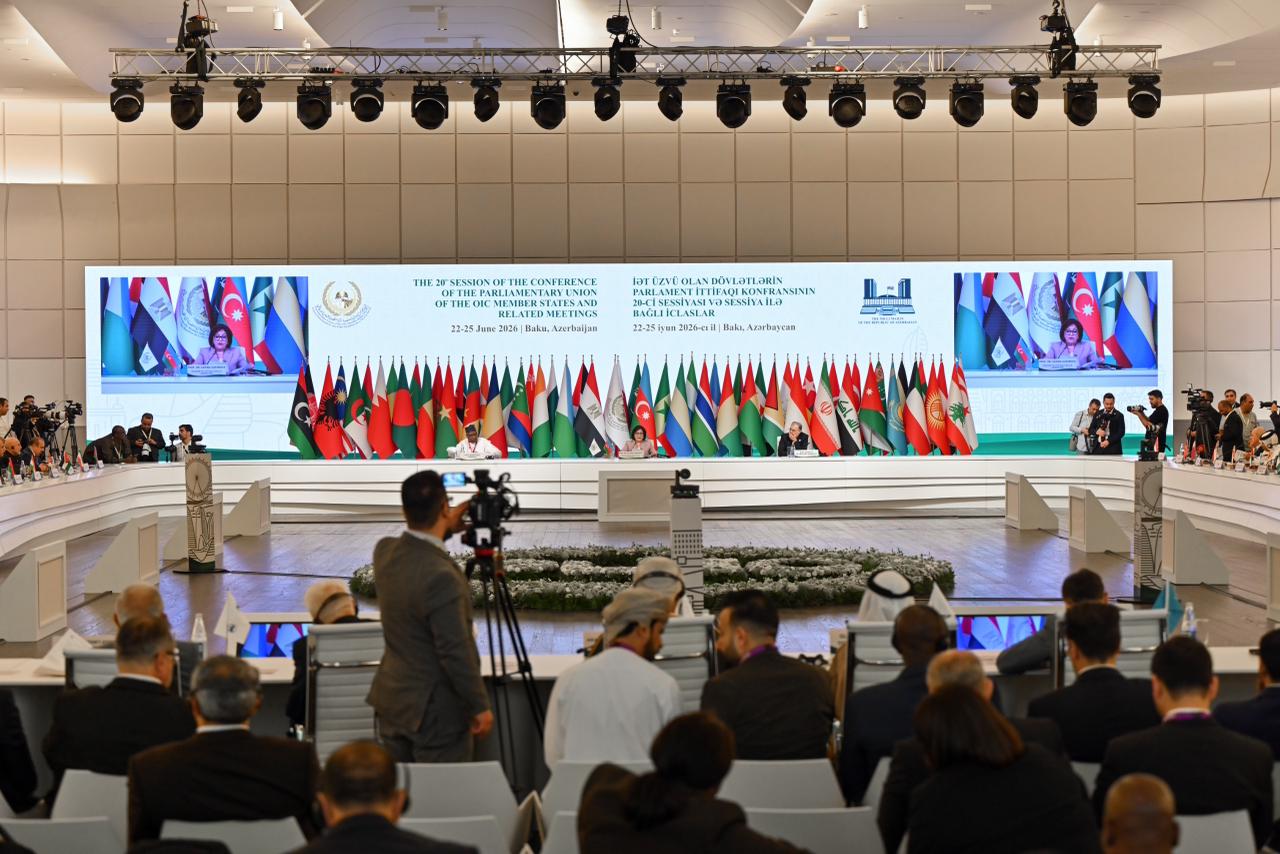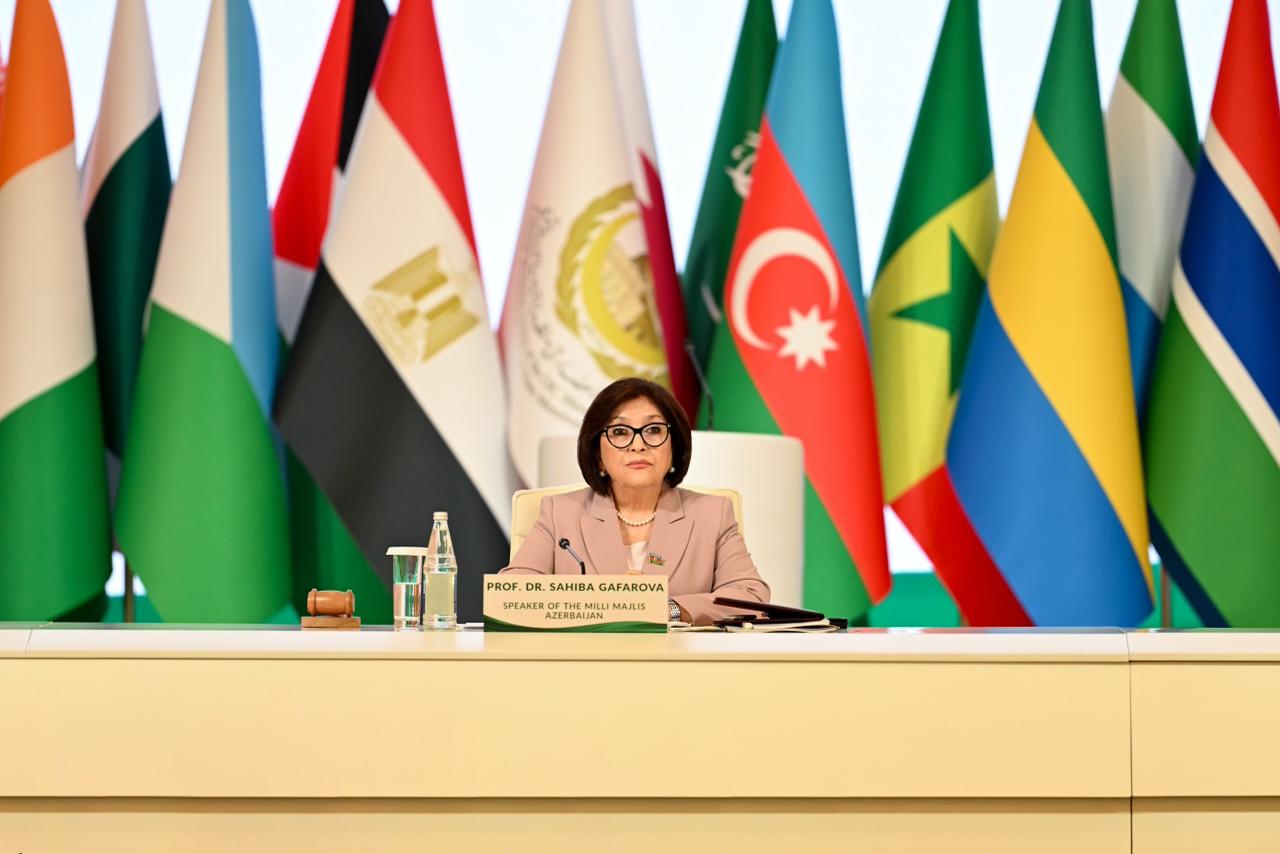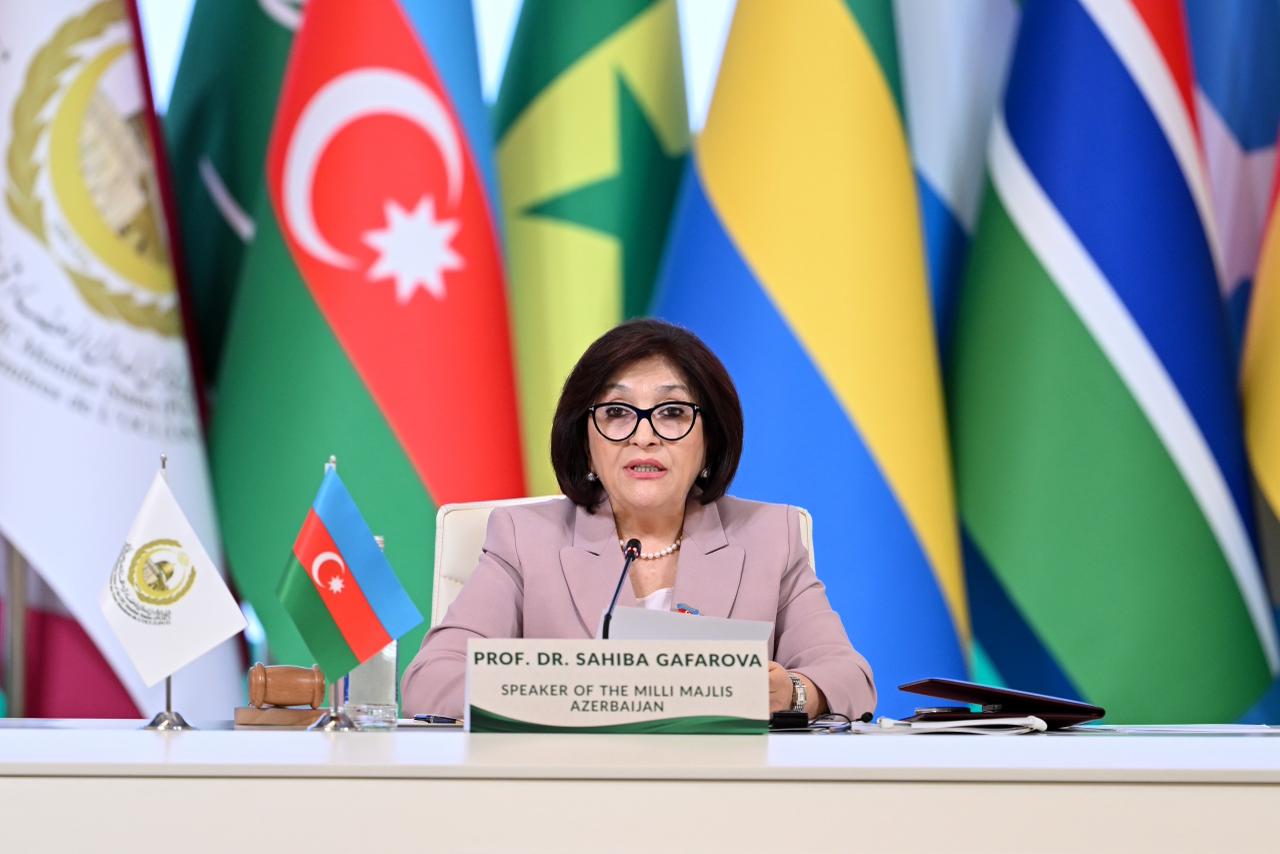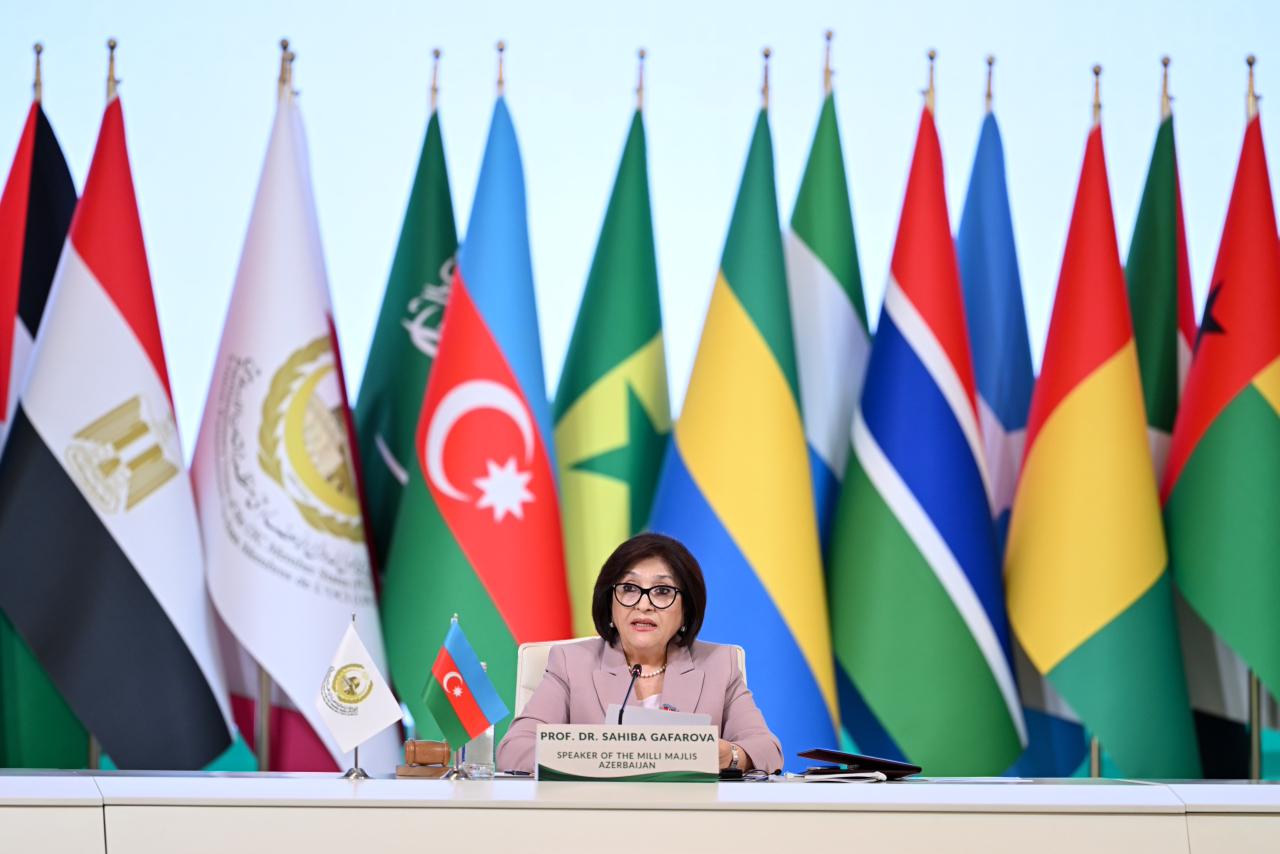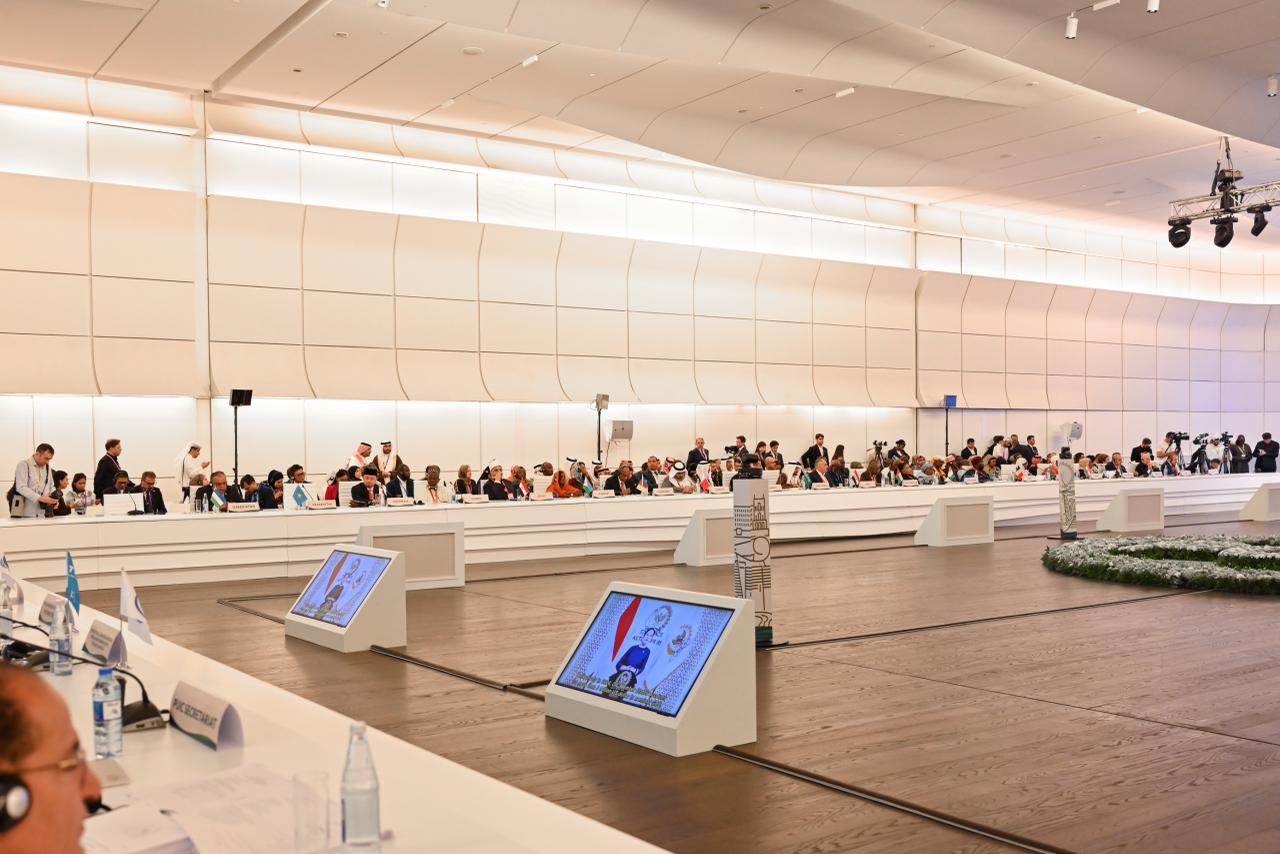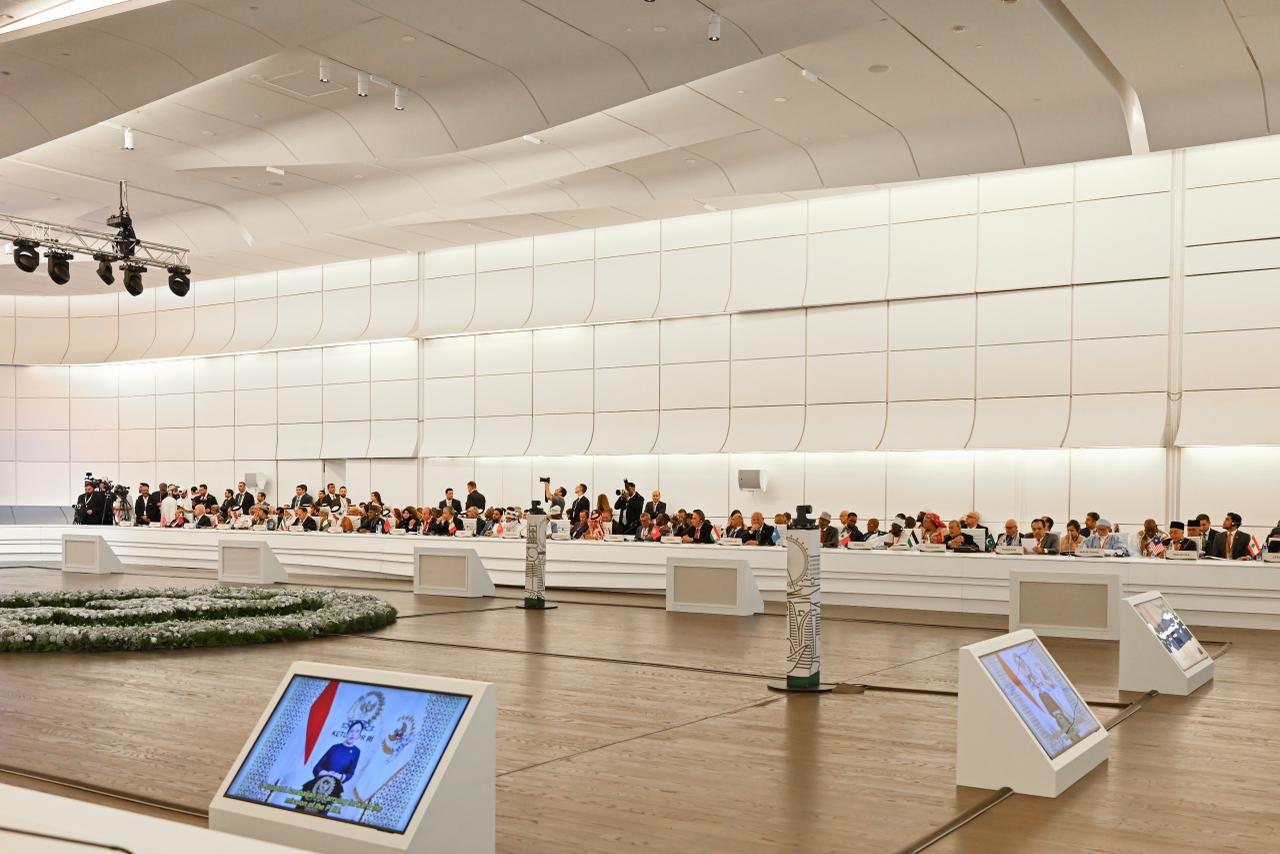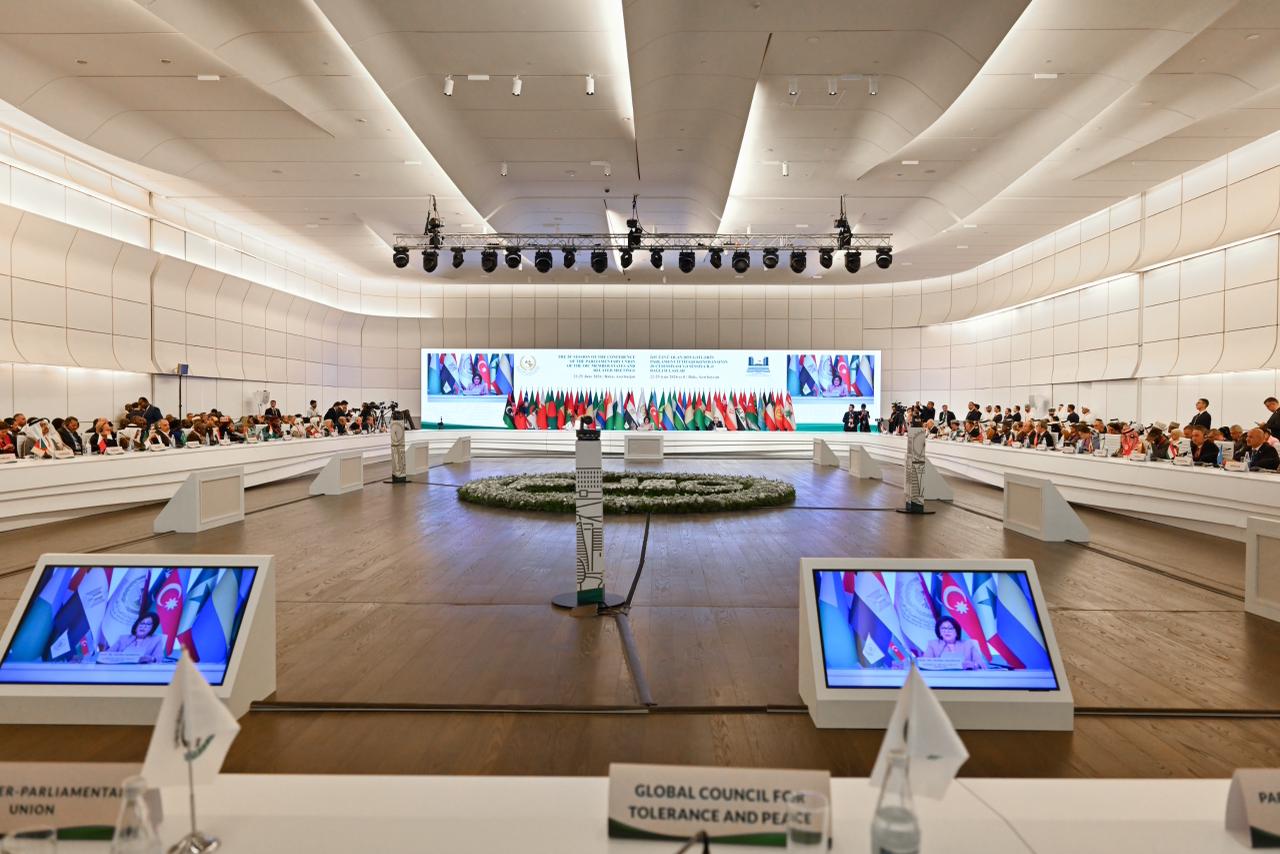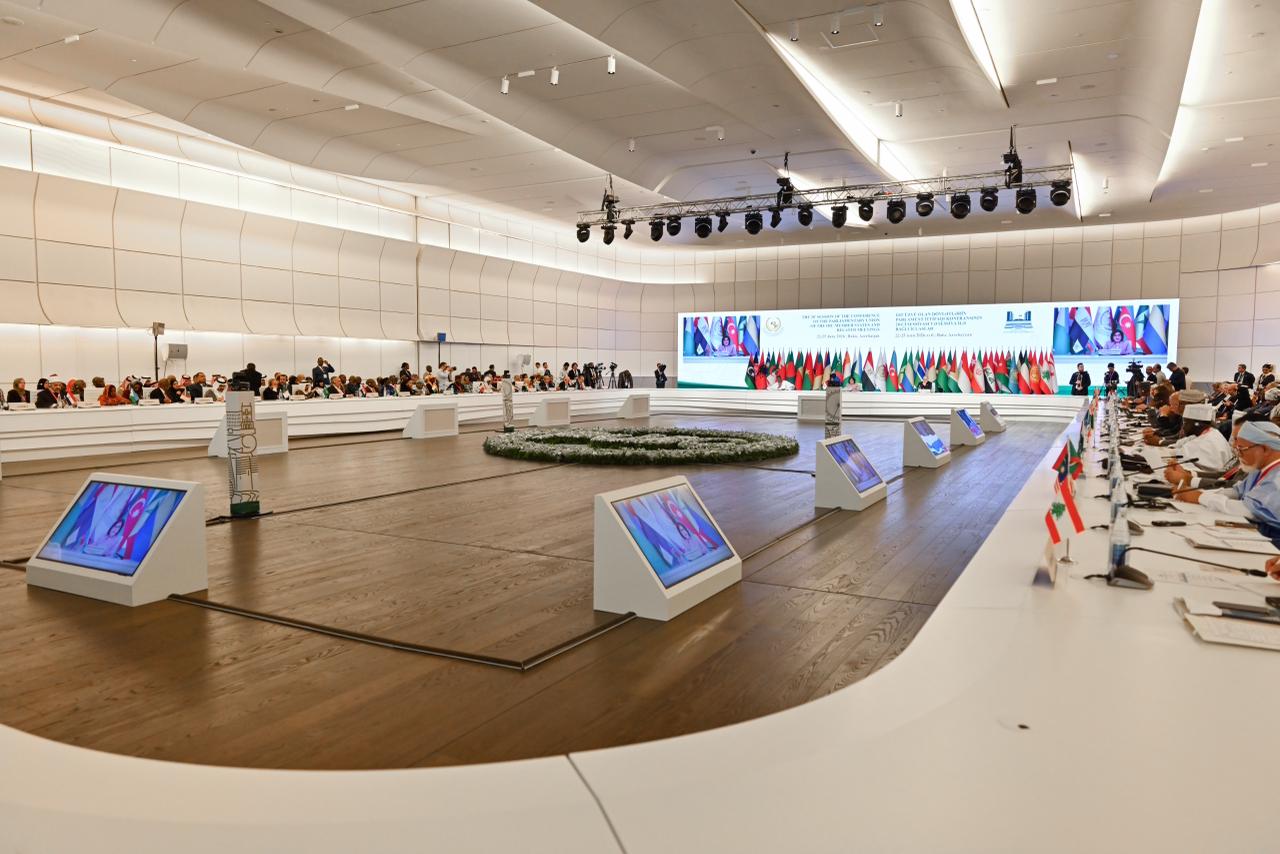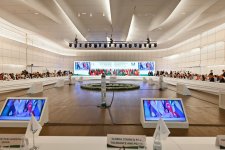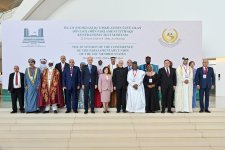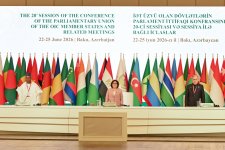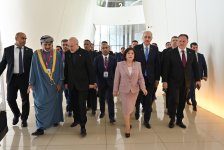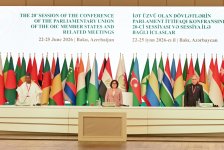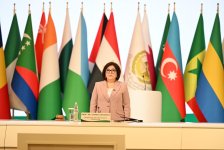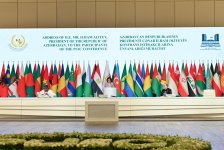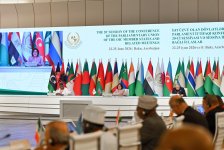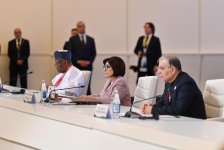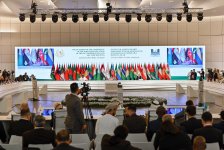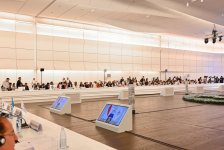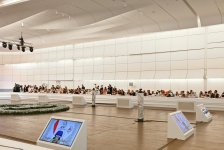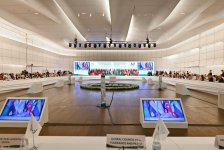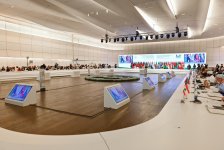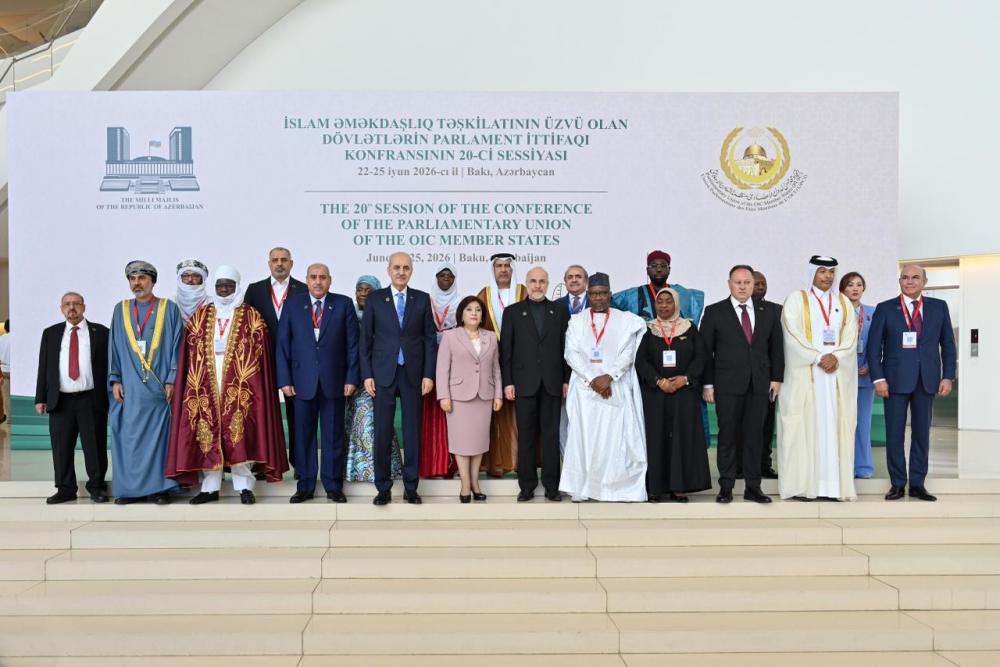
BAKU, Azerbaijan, June 24. The opening ceremony of the 20th Session of the Conference of the Parliamentary Union of the Organization of Islamic Cooperation (PUIC) Member States has been held in Baku, Trend's correspondent reports from the event.
Speeches by speakers and deputies of the parliaments of the member countries of the Organization of Islamic Cooperation (OIC), as well as representatives of international organizations, were delivered at the opening ceremony of the event.
The session included an exchange of views on the organization's main challenges ahead.
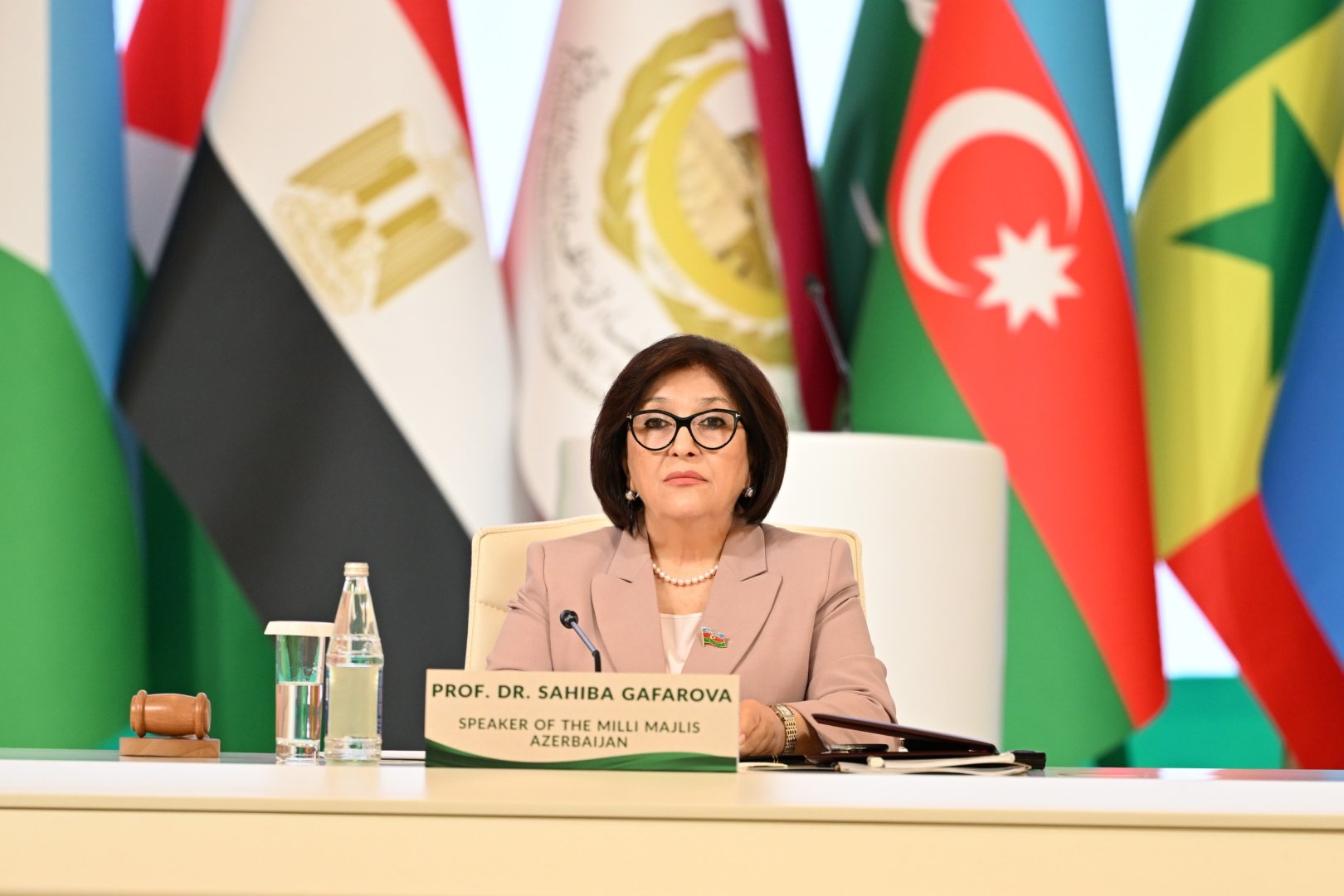
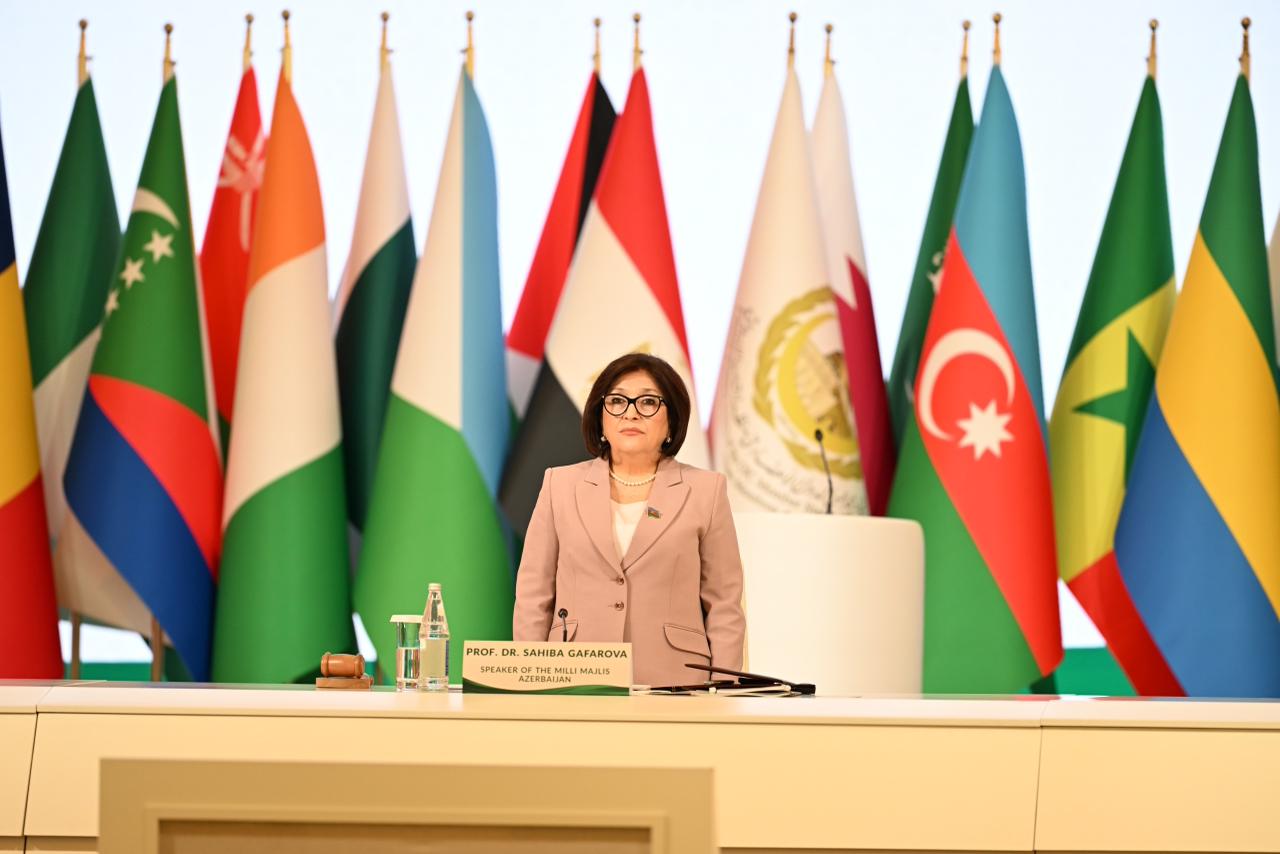
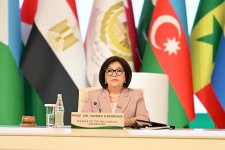
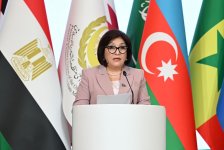
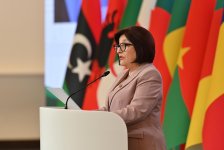
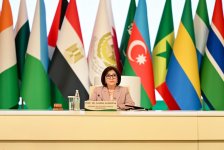
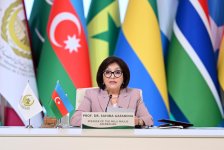
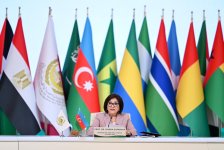
Speaking at the event, Speaker of the Azerbaijani Parliament Sahiba Gafarova said that Chairmanship of the Parliamentary Union of the Organization of Islamic Cooperation (PUIC) showcases Azerbaijan's commitment to strengthening solidarity and close ties in the Islamic world.
The speaker noted that the development of relations with Muslim countries, both bilaterally and within the framework of joint organizations, is one of the priorities of Azerbaijan's foreign policy.
"OIC and its member states have always demonstrated solidarity with Azerbaijan during the occupation of our territories, as well as in the post-conflict period. Over the past 30 years, more than 100 decisions and resolutions have been adopted within the framework of the OIC and the OIC condemning Armenia's aggression and supporting the sovereignty and territorial integrity of Azerbaijan," she explained.
Gafarova emphasized that Azerbaijan, attaching great importance to the principles of Islamic solidarity, is actively participating in promoting and further strengthening this solidarity.
"Azerbaijan has launched various initiatives such as the OIC Youth Forum and the OIC Labor Center. Our country has also organized numerous events and put forward initiatives to promote Islamic culture and demonstrate that Islam is a religion of peace and mercy," she reminded.
According to her, Azerbaijan firmly supports the settlement of the Israeli-Palestinian conflict on the basis of a two-state solution, which envisages the establishment of a Palestinian state with Al-Quds al-Sharif as its capital, in accordance with international law and relevant UN resolutions.
"This position is also reflected in Azerbaijan's activities in international organizations, including the United Nations, OIC, and the Non-Aligned Movement. The same position is being continued during the chairmanship of our parliament in the Asian Parliamentary Assembly in 2024-2026 and the current chairmanship of the Parliamentary Network of the Non-Aligned Movement.
The Palestinian issue has always been on the agenda and has been reflected in final declarations and decisions. In recent years, our country has repeatedly provided humanitarian and financial assistance to meet the humanitarian needs of the Palestinian people and will continue this support in the future," she pointed out.
The speaker added that despite its rich historical and cultural heritage, vast natural and human resources, the Islamic world still faces serious challenges that need to be addressed. Poverty, social and economic inequalities, armed conflicts, humanitarian crises, terrorism, and extremism pose serious obstacles to efforts towards sustainable development.
"To overcome these challenges and fully realize its existing potential, the Islamic world needs unity and solidarity based on the eternal Islamic values of peace, tolerance, harmony, and justice.
In an increasingly complex and interconnected world, it has never been more important for Muslim countries to act together, support each other, and work towards common goals.
Parliaments play a crucial role in addressing all these issues. As representatives of friendly and brotherly peoples sharing the same faith, we must promote solidarity, dialogue, and unity, not contradictions and divisions," she stressed.
According to her, PUIC has become an important and effective platform for strengthening the solidarity, and plays the role of an important framework for the development of the cooperation, joint activities, and decisive steps for common goals.
According to Gafarova, sustainable and inclusive economic development is the common goal of our countries. Achieving this goal requires coordinated efforts and commitment to cooperation at all levels, including through inter-parliamentary cooperation.
"Our parliaments can work together to eliminate barriers to trade and investment, expand customs cooperation, and promote the effective implementation of existing OIC trade and economic integration mechanisms.
At the same time, by supporting the development of safe, sustainable, and interconnected transit and logistics corridors, we can strengthen regional connectivity, facilitate trade, and contribute to sustainable economic integration between OIC member states.
In addition, promoting cooperation in the fields of energy security, renewable energy, and energy efficiency will also help achieve our common goals," she concluded.
Speaker of the Grand National Assembly of Türkiye Numan Kurtulmuş said that important opportunities are opening up for the Islamic world in the context of the formation of a new global order, and Muslim countries can become one of the main power centers of the future world order.
Kurtulmuş noted that the world is currently going through a period of major conflicts, political and economic tensions, as well as unprecedented global upheavals.
"We can easily say that the old world is collapsing and dissolving. What we are experiencing is the birth pangs of a new world. With the end of the bipolar system, and then the unipolar system, the pages of a new era are opening. One of the most important features of this new system will be multipolarity," he pointed out.
The speaker emphasized that the Islamic world, with its more than 2 billion population, 57 member states, rich natural resources, economic potential, and young population, has the opportunity to become one of the main power centers of the new world system.
According to him, for this, first of all, Muslim countries should realize their potential and strength and prepare for the future with confidence.
Kurtulmuş also noted that one of the biggest problems of the Islamic world is fragmentation, division, and weakness of the common will.
"We are forced to take steps to strengthen our unity, integrity, brotherhood, and Islamic unity. Otherwise, different regions of the Islamic world will continue to face serious threats. We should not accept sectarian, ethnic, political, and ideological differences as a cause for conflict, but as the wealth of the ummah," he stressed.
According to the speaker, Muslim countries in the new era should develop common strategies and act together.
"Today, it's impossible for any country to succeed alone. We must develop common and long-term strategies on how to develop and how to successfully exit this complex process, and implement joint projects within the framework of these strategies," he explained.
Kurtulmuş pointed out that the material resources, energy resources, human capital, scientific potential, and strategic geographical opportunities possessed by the Islamic world should be used for common goals.
"These resources should be managed with common sense and serve the welfare of the entire Islamic world," he added.
He also emphasized that the new global conditions cannot be managed with old approaches and that the Islamic world needs large-scale reforms.
Kurtulmuş emphasized that political, institutional, and intellectual reforms are one of the main priorities for Muslim countries, and noted that these processes should be based on four main principles.
"Cooperation based on the principles of justice, competence, consultation, and accountability will enable the development of Islamic countries in the future and the formation of a new model that will serve as an example for the world," he noted.
The speaker also touched on the international relations system in his speech, stating that the current global governance model is experiencing a serious crisis.
"Today, the international system, along with its institutions, rules, and mechanisms, is in a state of collapse. Instead, a new global system that is more just, humane, and fair should be established. The fate of the world should not depend on the will of a few states," Kurtulmuş underscored.
He added that Islamic countries should play a more active role in the formation of this new international system.
Speaker of Iranian Parliament, Mohammad Bagher Ghalibaf, emphasized that Iran supports all initiatives aimed at forming economic, commercial, financial, scientific, and collective security mechanisms.
According to him, the energy resources, transit opportunities, scientific and human potential of the Islamic world should be used for the welfare of Muslim peoples.
"We see the future of the region not in confrontation, but in cooperation. We see it not in isolation, but in coexistence. We see it not in security and destruction, but in common security," the speaker emphasized.
Ghalibaf expressed his country's readiness to expand cooperation with all Muslim countries on the basis of the principles of mutual respect, non-interference in internal affairs, good neighborliness, and common interests.
"As a result of the U.S. and Israeli attacks on Iran, high-ranking military and political officials, as well as more than 3,000 Iranian citizens, most of whom were women and children, were killed. More than 30,000 people were injured. Iran's industrial, healthcare, educational, energy, and transport infrastructure, thousands of residential and service facilities were targeted," he noted.
Ghalibaf also said that despite the difficulties it faces, Iran doesn't accept the policy of surrender and chooses the path of resistance. Iran believes that lasting peace is possible only when it is based on the rights of peoples, mutual respect, balanced obligations, and legitimate interests," he stressed.
The speaker noted that defense capability, national unity, and diplomacy are the main pillars of security and stability.
"Strong defense, national unity, and diplomacy are complementary factors, and their proper coordination is a guarantee of security and stability," he pointed out.
Ghalibaf underscored the importance of determining the future of the region by the countries of the region.
"No great power should decide on the future of our region based on its own interests. The fate of the region should be determined by its peoples and states. Regional security must be ensured by the countries of the region themselves. No state can build its security at the expense of the security of another state," he said.
"Experience has shown that foreign military bases located in West Asia have not created stability, but rather have become a source of instability. "For this reason, we consider the withdrawal of foreign military forces from the region a strategic goal," he stressed.
At the end of his speech, Ghalibaf emphasized that Iran extends a hand of brotherhood and cooperation to all Islamic countries and noted the importance of strengthening solidarity among Muslim states.
The event, which will continue until June 25, is expected to bring together parliamentary delegations from more than 40 countries, speakers of parliament from over 10 nations, and representatives of 10 international organizations.
As part of the event, discussions on the theme “Promoting Sustainable and Inclusive Economic Development in OIC Member States through Parliamentary Cooperation” will be held.
In total, more than 400 delegates are anticipated to attend the event.