


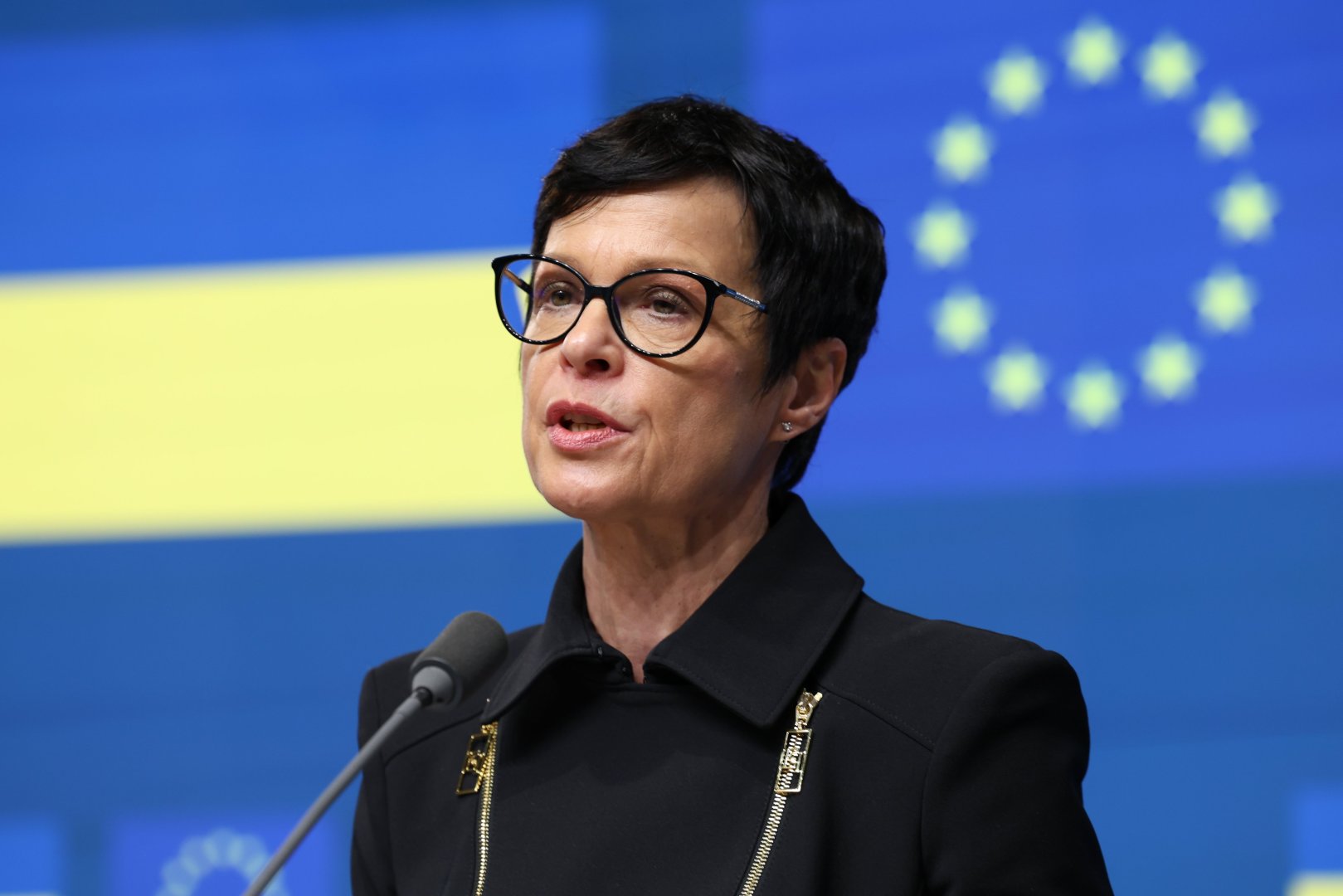

BAKU, Azerbaijan, June 23. European Commissioner for Enlargement Marta Kos has highlighted the strategic importance of the Middle Corridor, particularly its route through the South Caucasus, as a vital alternative for Europe’s trade, energy, and digital connectivity in an increasingly unstable world.
In a video statement shared on her X account, Kos emphasized that geography and reliable infrastructure are now central to European economic security.
“We can make Europe’s trade routes and energy links more secure in a world which is anything but. For a long time, we relied on two routes to link Europe with Asia: the northern route through Russia and the southern route through the Red Sea and the Suez Canal. But conflicts are making these routes unreliable," she said.
Kos pointed out that traditional northern routes through Russia and southern routes via the Red Sea and Suez Canal have become precarious. Many ships are now forced to take the lengthy detour around the Cape of Good Hope.
She drew particular attention to the growing significance of the Caucasus region: “Take a look at the plane map, and after the start of the recent war in Iran, almost all planes started passing through the Caucasus. It’s through here, the Middle Corridor, that we can secure our trade, energy and digital links. It connects Europe and Asia through Türkiye and the South Caucasus.”
Kos noted that trade along the Middle Corridor has already quadrupled since 2022, demonstrating its rising potential. However, current shipping times can reach up to 45 days. The EU’s goal is to reduce this to just 15 days by modernizing roads, railways, ports, and streamlining border procedures.
“This will help lower costs for our businesses and make goods cheaper for people in the EU. It will help us grow our economy. It will also support the improving relations between countries in the region after decades of conflict, while also strengthening the economies of our neighbors to the east,” she said.
Kos compared the initiative’s potential impact to the role of coal and steel integration in post-World War II Europe, describing the Middle Corridor as a priority for the European Commission.
“Securing our trade, energy and digital links via routes we can trust” remains a key objective, she concluded.



