


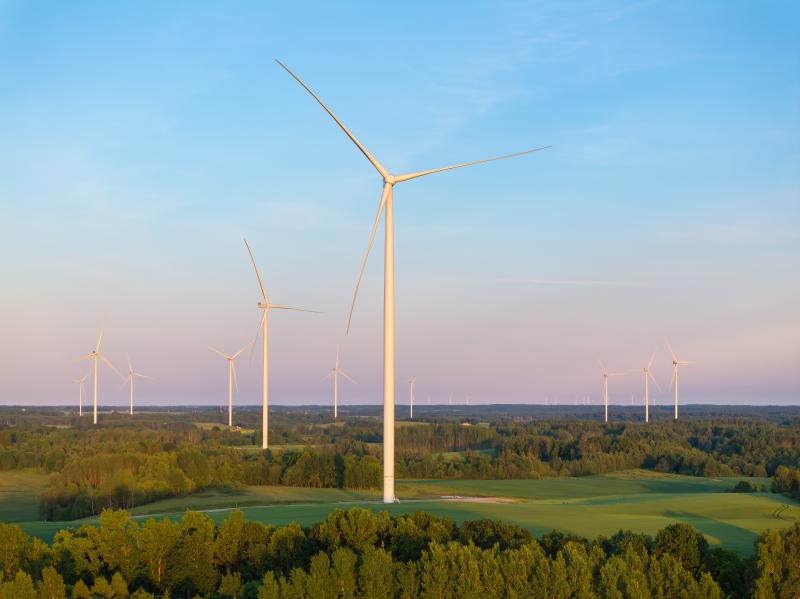
BAKU, Azerbaijan, April 28. On the windswept plains along the Caspian coast, towering turbines are beginning to reshape a landscape long defined by oil rigs and pipelines. For decades, Azerbaijan’s identity as an energy exporter has been tied to hydrocarbons. Now, the country is attempting something more ambitious: to transform itself into a regional hub for green power at the crossroads of Europe and Asia.
The shift is not about abandoning oil and gas, far from it. Instead, Azerbaijan is pursuing a dual strategy, using revenues from fossil fuels to finance a gradual expansion into renewable energy. The goal is as much economic as it is geopolitical: to secure a place in the emerging architecture of transcontinental energy flows.
Under a series of agreements with international partners, Azerbaijan aims to install up to 6 gigawatts (GW) of renewable energy capacity by 2030, with longer-term ambitions reaching around 8 GW. While these figures remain targets rather than binding commitments, they signal the scale of the country’s intent. Crucially, a significant share of this future capacity is expected to be geared toward export.
That export vision is where geography comes into play. Positioned between Europe, Central Asia and the Middle East, Azerbaijan has long served as a transit corridor for oil and gas. Now, authorities are looking to replicate that role in electricity, particularly green electricity.
Plans under discussion include expanded transmission links via Türkiye and deeper grid integration across the South Caucasus, potentially laying the groundwork for new energy corridors toward Europe. These ideas intersect with broader European efforts to diversify energy supplies and reduce dependence on traditional sources, giving Azerbaijan’s ambitions added strategic weight.
On the ground, the transformation is already visible. Projects such as the Khizi–Absheron wind farm and the Garadagh solar plant, developed with the involvement of companies like Masdar and TotalEnergies, mark the first wave of large-scale renewable deployment. Together with a broader pipeline of solar and wind projects, they form part of an investment push that could bring in around $2 billion in foreign funding over the coming years.
Another focal point is the Karabakh economic zone, where renewable energy is being positioned at the heart of reconstruction efforts. With infrastructure largely rebuilt from scratch, the region offers a rare opportunity to design a modern, low-carbon energy system from the ground up, a concept has framed as a “green zone.”
International institutions, including the World Bank, have also stepped in, supporting both infrastructure development and policy planning. Their involvement underscores the extent to which Azerbaijan’s energy transition is becoming embedded in wider regional and global initiatives.
Yet challenges remain. Building renewable capacity at scale will require not only sustained investment, but also significant upgrades to grid infrastructure and regulatory frameworks. Export ambitions, meanwhile, depend on complex cross-border coordination and long-term demand from external markets.
For now, hydrocarbons continue to anchor the economy, and will likely do so for years to come. But as global energy dynamics shift, and as Europe accelerates its own transition, Azerbaijan appears increasingly determined to adapt.
If successful, the country’s next chapter as an energy exporter may be defined not just by pipelines, but by power lines, carrying electricity generated from the same winds that sweep across the Caspian shores.



