


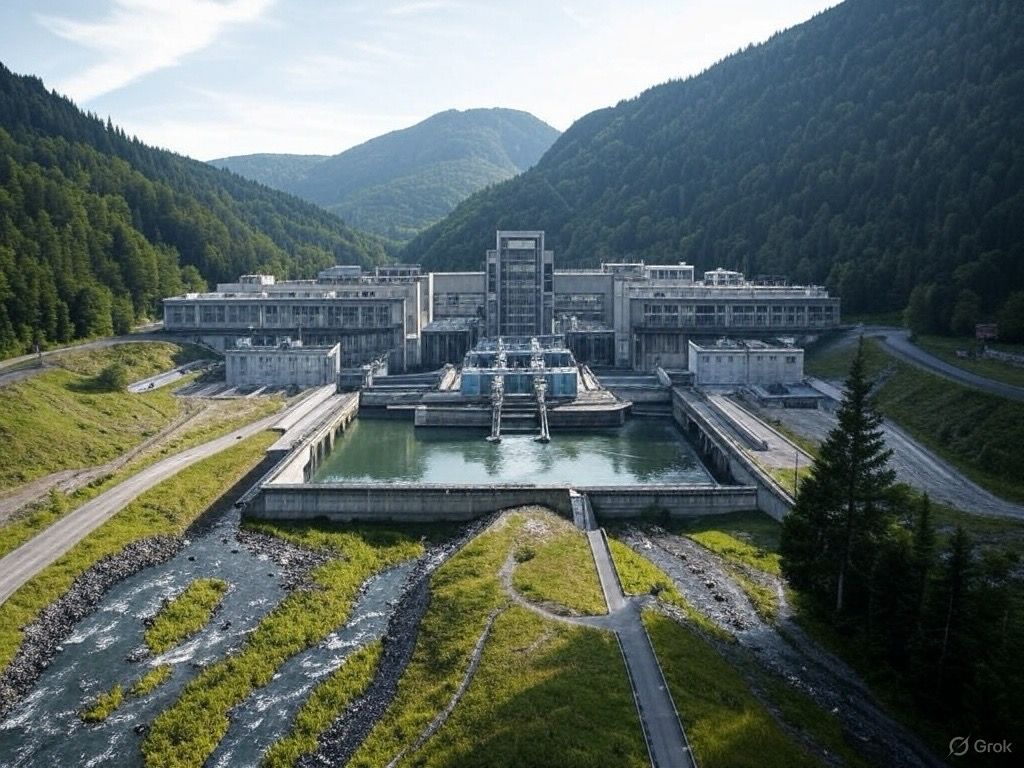

BAKU, Azerbaijan, March 20. Kyrgyzstan is implementing a range of projects to modernize hydropower plants and expand its energy infrastructure, including the upgrade of existing hydropower facilities and the construction of new generation assets through 2026-2029.
The modernization of hydropower infrastructure and the implementation of large-scale projects in the hydropower sector form the basis for a long-term increase in electricity generation and for strengthening the role of renewable energy sources in the country’s energy mix.
In a broader context, the current projects are part of a long-term transformation of Kyrgyzstan’s energy system, which is primarily based on hydropower. The sector remains the key source of electricity generation but is also characterized by high sensitivity to seasonal water fluctuations and limitations in transmission capacity.
Against this backdrop, the modernization of existing facilities and the expansion of generation capacity are viewed as interconnected processes aimed at improving the reliability of power supply and adapting to growing domestic demand.
Within the framework of ongoing projects, hydropower units at existing plants are being modernized, including upgrades at the Uch-Kurgan HPP. These works are aimed at improving generation efficiency, reducing equipment wear, and extending the operational lifespan of existing capacities.
At the same time, the reconstruction of grid infrastructure is being carried out. In particular, at the Kurpsai HPP, there are plans to replace 63 MVA autotransformers with higher-capacity 125 MVA units at the 220/110 kV substation. This is expected to increase the reliability of electricity transmission and enhance the stability of the energy system during peak loads.
The next group of projects is related to the expansion of installed capacity. A key focus is the Kambarata-1 HPP, with a projected capacity of around 1,860 MW, which is considered a long-term strategic infrastructure project. At the current stage, preparatory works are underway, including the construction of roads, transmission lines, and a bridge across the Naryn River, which will provide access to the construction site and serve as a key logistical component of the future project.
In parallel, development continues at Kambarata-2 HPP, where preparations are underway for the commissioning of the second hydropower unit. After its launch, the installed capacity of the plant is expected to increase from 120 MW to 240 MW. The project includes the construction of infrastructure for personnel, production, and auxiliary facilities, as well as the preparation of design documentation for key technological components.
Despite the scale of the announced projects, their implementation remains linked to several structural factors. These include the high capital intensity of hydropower projects, long construction timelines, dependence on contractors and equipment supplies, as well as the need to synchronize generation development with the expansion of grid infrastructure.
Of particular importance is the phased nature of implementation, where capacity additions and infrastructure development proceed in parallel but on different time horizons.
If current projects are implemented consistently, a gradual increase in the share of hydropower in the country’s energy mix may be achieved. This could reduce dependence on seasonal supply shortages and expand system balancing capabilities.
At the same time, the development of new capacity and the modernization of existing plants create conditions for a structural shift in generation, although the overall impact will depend on the pace of project implementation and the state of grid infrastructure.
In the medium- and long-term perspective, several development scenarios can be identified. Under an accelerated implementation scenario with stable investment support, a faster expansion of generating capacity could reduce the risk of electricity shortages during peak periods and expand export potential.
The baseline scenario assumes a gradual commissioning of projects within the planned timelines, with improvements in system stability occurring incrementally without abrupt structural changes.
In the event of slower construction progress or financing constraints, delays in capacity commissioning are possible, which would maintain the existing dependence on seasonal variations in generation.
There is also a scenario of shifting priorities, where emphasis may move toward the modernization of existing plants rather than the construction of large new facilities, allowing efficiency improvements without significant capacity expansion.
Thus, the current configuration of hydropower projects in Kyrgyzstan reflects a combination of modernization and expansion approaches, the outcomes of which will be determined by a combination of technical, financial, and institutional factors.



