


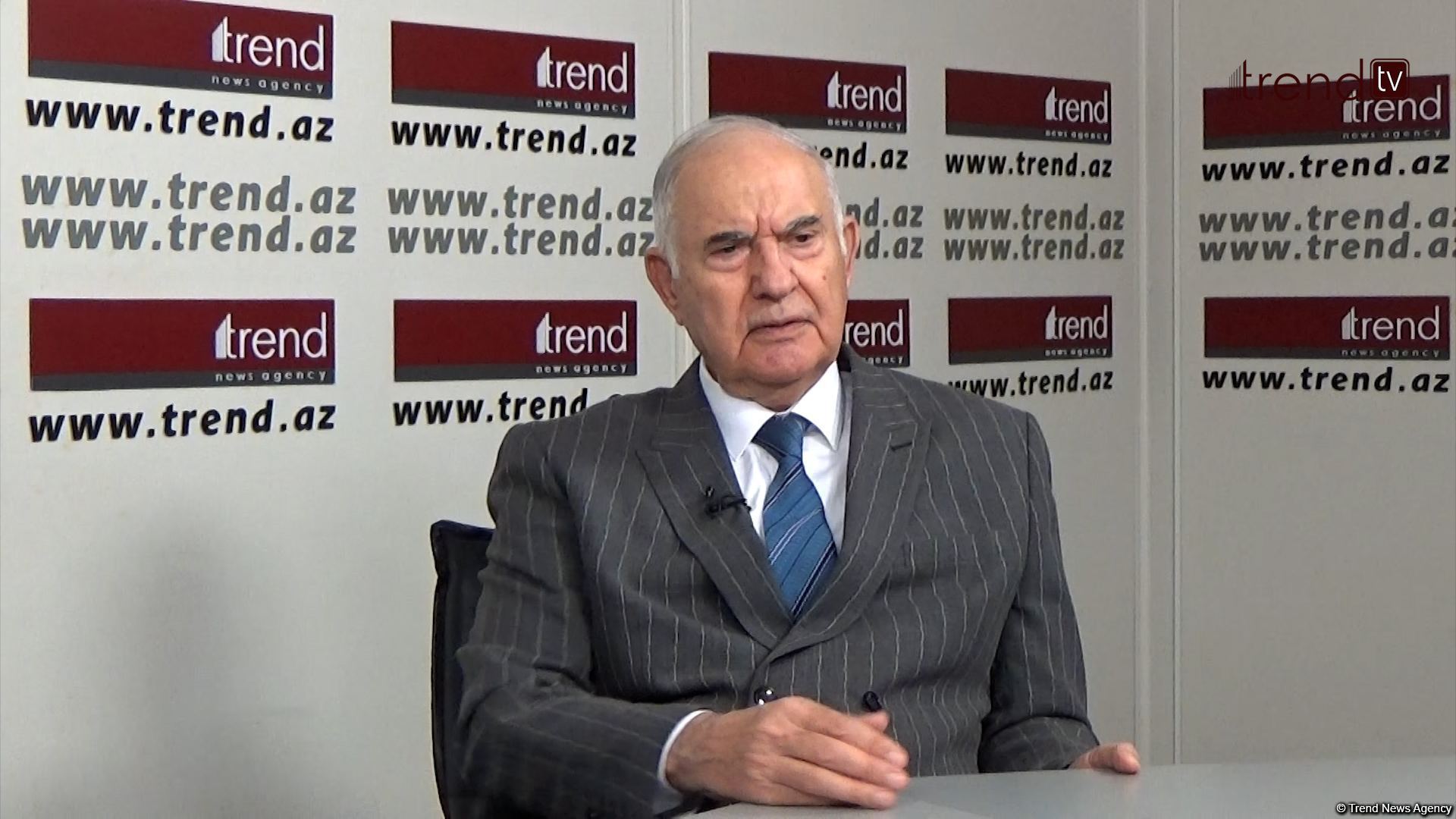
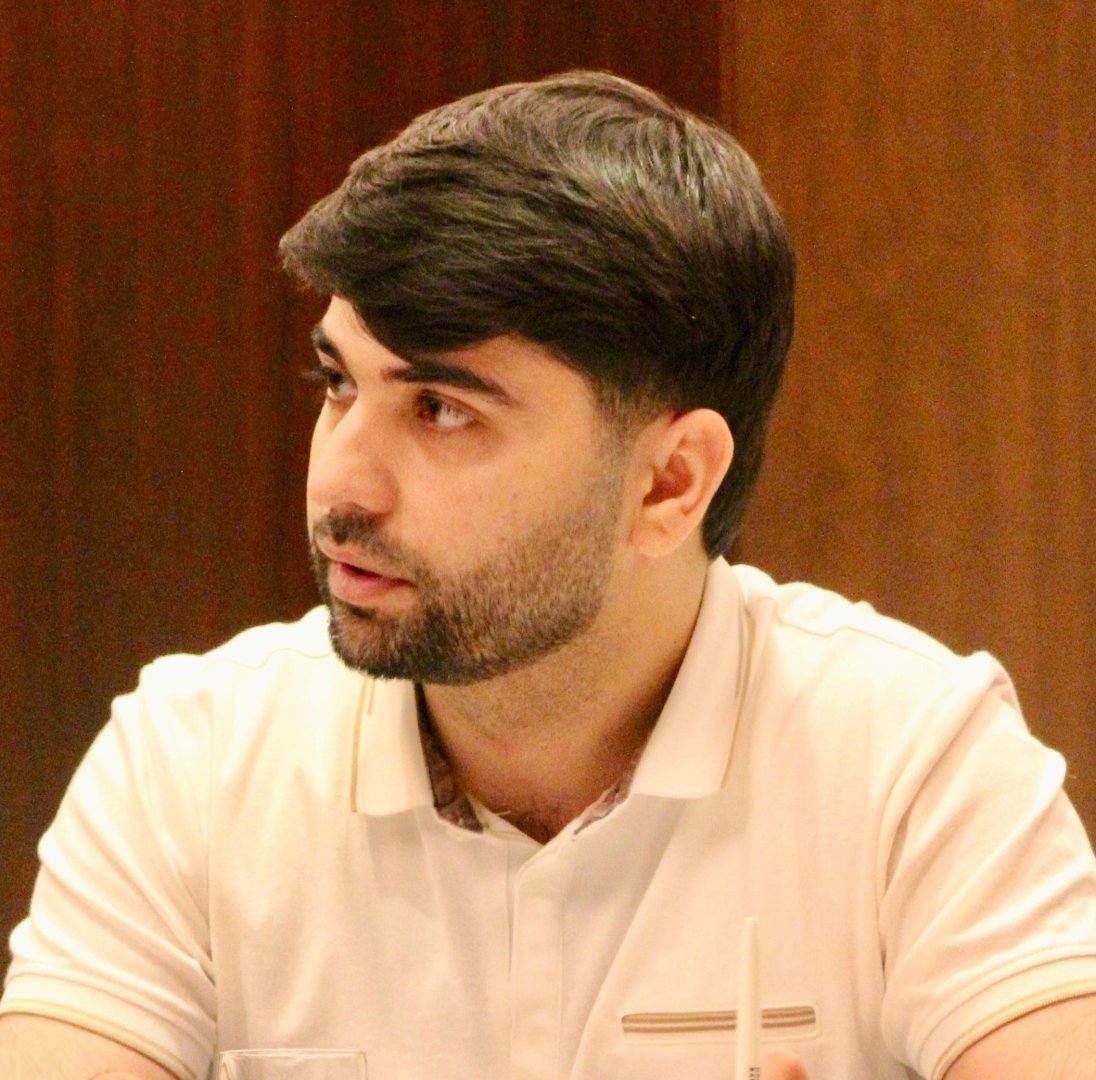
BAKU, Azerbaijan, March 27. Azerbaijan's special service agencies have become a professional and powerful organization responding to the most complex challenges of the modern world today, political analyst Azer Garayev told Trend.
"Every year on March 28, employees of the security and intelligence agencies of Azerbaijan celebrate their professional holiday with great pride. This date is not only the day of the establishment of an institution, but also a symbol of the formation of one of the crucial pillars of Azerbaijani statehood. The main mission of these institutions is to ensure state security, protect national interests, ensure internal stability, and combat external threats.
The history of Azerbaijan's security agencies dates back to March 28, 1919. At that time, the Azerbaijan Democratic Republic understood the crucial importance of ensuring national security. In an environment with many internal and external threats, the establishment of intelligence and counterintelligence services was a strategic necessity.
The establishment of this institution demonstrated how farsighted the policies of Azerbaijan’s statehood were, because for an independent state, a strong security system is just as important as the military and diplomacy. The security structures established during that period formed the foundation of the country’s defense and security system in subsequent stages," he noted.
According to the analyst, after Azerbaijan lost its independence in 1920, the activity of security agencies changed.
"The structure was incorporated into the USSR system, and its main task became the protection of the Soviet regime. This period was a difficult and complex stage for the Azerbaijani people. The protection of national interests was not a priority; rather, ideological control and actions in line with the Soviet system were prioritized. Nevertheless, Azerbaijani personnel working in the security system during this period made significant contributions to the formation of a professional school. This experience later played a key role in the creation of the modern national security system in the independence period.
One of the most important stages in the history of Azerbaijan’s security agencies is related to National Leader Heydar Aliyev. During his time working in the security system, he formed a new approach based on national interests. Appointed to lead the security agencies in 1967, Heydar Aliyev began radical reforms in this field. His main goal was the nationalization of the security system and the promotion of local personnel. At that time, the fact that Azerbaijanis were a minority in high positions was a serious issue. Under the leadership of Heydar Aliyev, this stereotype was changed, and there was a significant increase in the number of national personnel. This policy was not limited to personnel changes. He also organized more professional and systematic activities of the security agencies. Personnel training, strengthening discipline, improving operational activities, and the protection of national interests became key aspects of his policy," he noted.
Garayev pointed out that after Azerbaijan regained its independence in 1991, one of the country’s most important tasks was the reconstruction of the national security system.
"The state was newly established, conflicts continued in the region, and internal political stability was not fully ensured. In such conditions, the creation of a strong security system was of vital importance. After the return of Heydar Aliyev to power, systematic reforms began in the security sector. The state security structures were formed in line with modern-day requirements. During this period, the main priorities of the security system were the protection of state independence, the provision of internal stability, and the prevention of external threats," he noted.
According to him, precisely due to the initiative of Heydar Aliyev, in 1998, the State Security Academy was established to ensure the training of professional personnel for security agencies.
"The establishment of the academy was an important step in further strengthening the national security system and training local, professional personnel. This educational institution prepares officers with modern knowledge and high-level training, who then serve in responsible positions to protect state security. Today, graduates of the academy work in various structures of the State Security Service, making significant contributions to strengthening the country's security. This is one of the real results of the farsighted policy of Heydar Aliyev in the field of security," he said.
The analyst emphasized that a new phase in the development of Azerbaijan’s security agencies began during President Ilham Aliyev’s period. During this time, the security system was completely restructured to meet modern requirements.
"The reforms implemented in 2015 were a turning point in the security sector. As a result of these reforms, the State Security Service and the Foreign Intelligence Service were established. This step made the security system more flexible and effective in its operations. The new institutions were equipped with modern technologies, personnel training was strengthened, and international cooperation was expanded. Today, Azerbaijan's security system is considered one of the strongest and most professional structures in the region," he noted.
According to him, the Second Karabakh War in 2020 once again demonstrated the strength and professionalism of Azerbaijan’s security agencies. The war was won not only through military force but also through intelligence and information superiority.
"Security agencies played a crucial role in identifying enemy plans in advance, gathering operational information, and transmitting it to the military leadership. The application of modern technologies, the protection of information security, and the fight against disinformation became key aspects of the activities of these agencies. As a result of this activity, the Azerbaijani army carried out more effective and precise operations during the war. The correct and timely presentation of intelligence information had a direct impact on the outcome of the war," the analyst noted.
Garayev highlighted that after the Second Karabakh War, the activities of security agencies were further strengthened.
"Ensuring security in the liberated territories, neutralizing illegal armed groups, and restoring state control became one of the main tasks of these agencies. Security agencies played a key role in preventing separatist activities, eliminating terrorist threats, and ensuring stability in the region. After the full restoration of Azerbaijan’s sovereignty, new and more responsible tasks emerged for the security system," Garayev noted.
The analyst underscored that in today’s world, the concept of security carries a broader meaning than in previous years.
"Threats are no longer limited to the military domain. Information warfare, cybersecurity, transnational crime, terrorism, and other risks pose new challenges for states. Azerbaijan’s security agencies are adapting their activities to these challenges. Measures taken in the field of cybersecurity, expanding international cooperation, and operations conducted in the fight against terrorism prove that these agencies are meeting modern demands. Azerbaijan’s geopolitical position and strategic importance also enhance the role of the country’s security system. Today, Azerbaijan’s intelligence agencies cooperate closely with security organizations from many countries. This cooperation contributes to maintaining regional stability and resolving global security issues," he said.
According to him, international forums, conferences, and joint operations demonstrate that Azerbaijan’s security system has gained worldwide recognition. This proves the strengthening of both the country’s political influence and its security system.
"The activities of security agencies are usually not in the public eye. Much of their work is of a secret nature. However, it is through these activities that stability is maintained in the country, state security is ensured, and the security of the people is defended. The personnel of these agencies sometimes risk their lives to protect the state’s interests. Their work is one of the main pillars of the state’s strength. Azerbaijan’s security system has become a strong, modern, and professional structure today," the analyst said.
Garayev noted that March 28 is not just a professional holiday, but also an important page in Azerbaijan’s statehood history.
"The 107-year path has shown that security agencies are one of the main pillars of the country’s independence and stability. The solid foundation laid by Heydar Aliyev, the modernization policies implemented by President Ilham Aliyev, and the historic victory in the Second Karabakh War further prove the power and importance of these agencies. Today, personnel of Azerbaijan’s special service agencies celebrate their professional holiday with pride. They continue to serve with success in protecting the state’s security and ensuring the welfare and stability of the people, adapting their activities to modern challenges. Azerbaijan’s security system will continue to play a key role in the country’s strengthening and the protection of national interests," the analyst added.



