


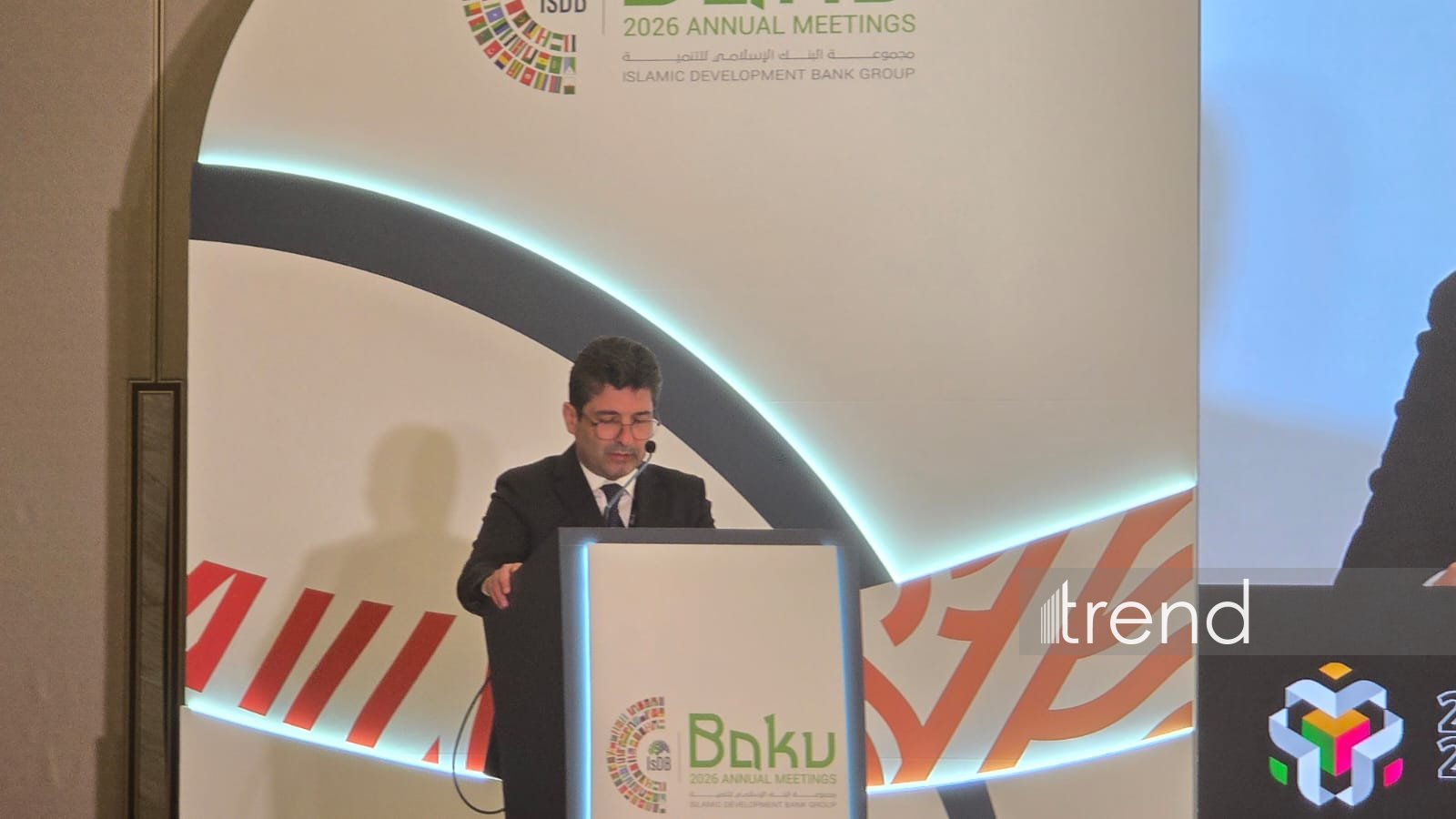

BAKU, Azerbaijan, June 18. Azerbaijan’s industrial zones provide a favorable environment for the development of export-oriented manufacturing, Deputy Economy Minister Anar Akhundov said during a panel discussion held as part of the 51st Annual Meeting of the Islamic Development Bank (IsDB) Group, Trend's correspondent reports from the event.
Speaking at the session titled "From more foreign direct investment to better quality foreign direct investment: Promoting investment for sustainable development", Akhundov highlighted the country’s efforts to attract investment and boost economic diversification.
According to the deputy minister, Azerbaijan has established a network of industrial zones equipped with modern infrastructure and competitive advantages, including in the country’s liberated territories.
“Favorable conditions have been created in Azerbaijan’s industrial zones for export-oriented production. These platforms enable investors to enter the market more quickly and operate more efficiently,” he said.
Akhundov noted that significant economic opportunities are emerging in the liberated territories, where extensive state-funded reconstruction and infrastructure projects are underway in the Karabakh and East Zangezur economic regions.
“Modern infrastructure, reliable connectivity, and investment incentives are creating new opportunities for private sector participation,” he stated.
The deputy minister also pointed to the development potential of the Nakhchivan Autonomous Republic, noting that 10-year tax incentives will come into effect there from January 1, 2026.
“Nakhchivan’s location at the crossroads of Turkey, Iran, and Armenia further enhances its strategic importance,” Akhundov said.
He emphasized that Azerbaijan continues to strengthen its investment climate through tax and customs incentives, public-private partnership mechanisms, export promotion measures, preferential financing programs, and targeted support for entrepreneurship.
“The latest decree signed by President Ilham Aliyev further reinforces these efforts,” he added.
Akhundov stressed that measures aimed at supporting non-oil exports and reducing transport costs will help exporters access new markets and improve the competitiveness of Azerbaijani products. Enhanced credit guarantee and interest subsidy mechanisms will also expand businesses’ access to financing, particularly in the regions.
“These initiatives contribute to business growth, export expansion, increased investment, innovation, and deeper integration into global value chains,” he said.
The deputy minister also underscored the importance of international cooperation, noting that national support mechanisms are most effective when combined with international expertise, financial instruments, and institutional partnerships.
In this regard, he highlighted Azerbaijan’s long-standing cooperation with the Islamic Development Bank Group.
“Azerbaijan has been a member of the Islamic Development Bank since 1992, and during this period the country has received more than $1 billion in financing,” Akhundov noted.
He expressed confidence that the discussions held during the panel would contribute to improving investment quality, advancing sustainable development, and supporting economic diversification in Azerbaijan and other partner countries.



