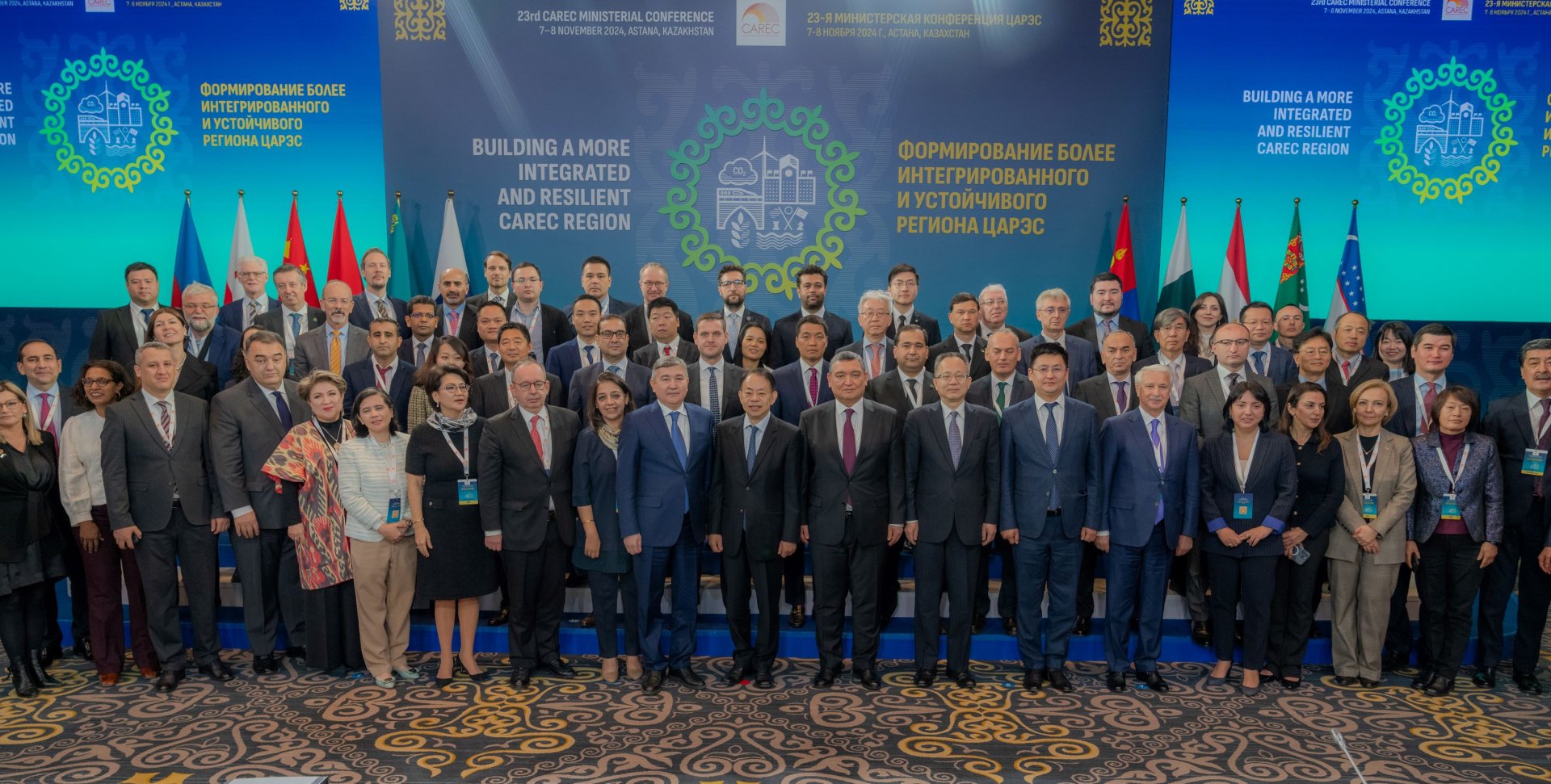
The Central Asian countries also endorsed a new Climate Change
Action Plan (CCAP).
The CAREC CCAP, set for implementation from 2025 through 2027,
outlines strategic initiatives aligned with the CAREC Climate
Change Vision. These initiatives aim to bolster the region's
capacity to respond to climate risks, strengthen the
water-energy-food nexus, reduce carbon emissions through low-carbon
growth strategies, and expand renewable energy usage. The plan also
envisions establishing a dedicated CAREC climate platform to
facilitate ongoing regional climate coordination.
The newly established CSPPF will help member countries develop
viable regional climate projects in line with the Paris Agreement.
During the conference, the Asian Development Bank (ADB) signed
contribution agreements with China’s Ministry of Finance and South
Korea’s Ministry of Economy and Finance, securing an initial $5
million for the fund. This funding will be used to prepare bankable
projects that address climate challenges across CAREC member
nations.
“By working together, we can build resilient infrastructure,
develop early warning systems, and create a greener future powered
by renewable energy,” ADB President Masatsugu Asakawa noted,
underscoring the CAREC Program’s role in promoting sustainable
development.
Ministers at the conference also reviewed and approved the
Midterm Review of the CAREC 2030 Strategy, which recommends a
renewed focus on climate-smart development and regional public
goods, reflecting the region's growing commitment to sustainable
economic progress.
The representative of Tajikistan, Assistant to the President on
Economic Affairs and CAREC National Focal Point Nematullo
Khikmatullozoda, along with Minister of Energy and Water Resources
Daler Juma and Deputy Minister of Economic Development and Trade
Farhod Vosidiyon, also took part in the event, signaling
Tajikistan’s active role in shaping CAREC’s climate agenda.
The ADB is committed to achieving a prosperous, inclusive,
resilient, and sustainable Asia and the Pacific while sustaining
its efforts to eradicate extreme poverty. Established in 1966, it
is owned by 68 members—49 from the region.