


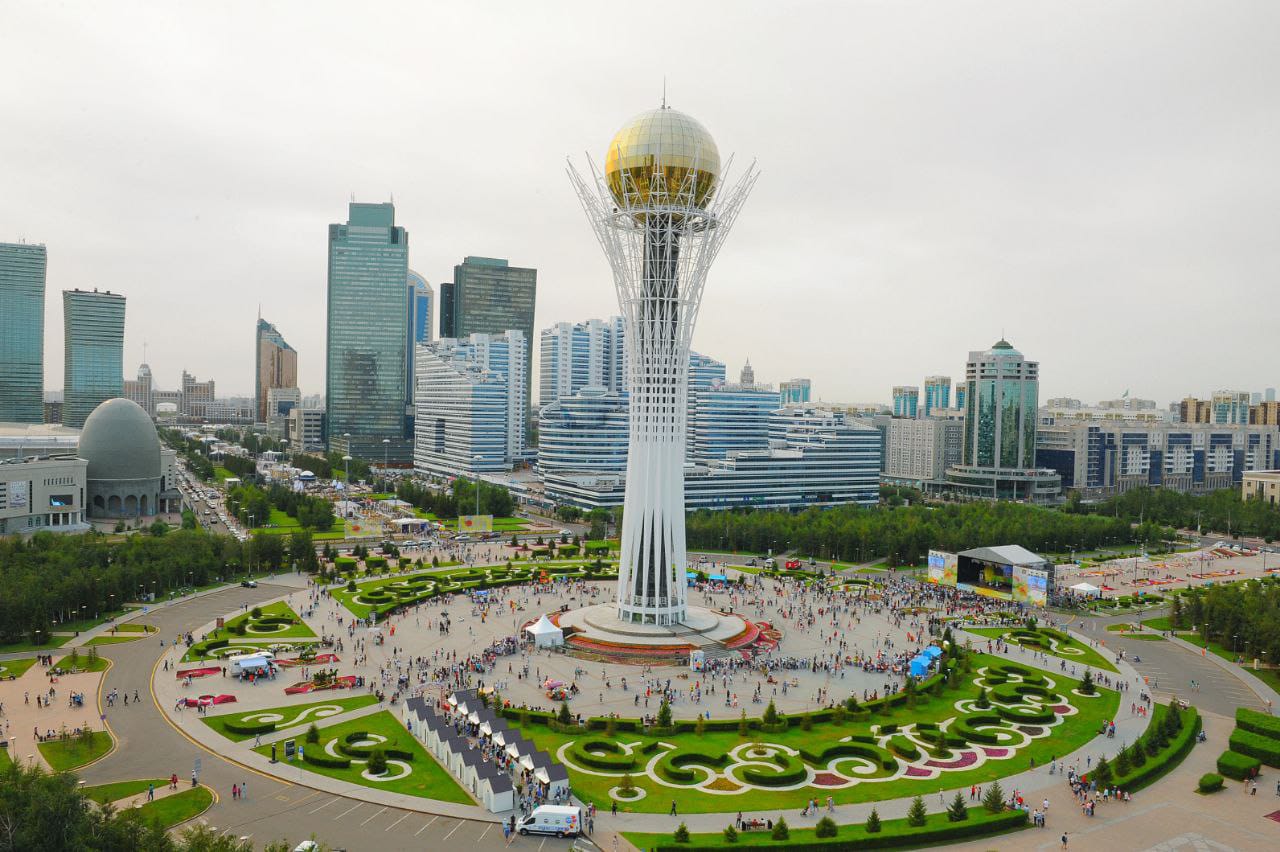

BAKU, Azerbaijan, April 7. Alim Bayel, Kazakhstan’s Ambassador to Azerbaijan, announced that the country’s delegation will participate at a high level in the 13th session of the World Urban Forum (WUF13), scheduled to be held in Baku from May 17 to 22, 2026. The forum will focus on the theme "Housing the World: Safe and Resilient Cities and Communities," addressing key issues related to housing accessibility and infrastructure development.
This agenda is particularly pertinent for Astana, given the ongoing domestic reforms in the construction sector and the rapid urban population growth.
According to data from the Bureau of National Statistics, as of March 1, 2026, Kazakhstan’s total population stood at 20.532 million, with 13.120 million residing in urban areas. This results in an urbanization rate of over 63%, which has significantly increased the pressure on housing, transportation, and utility infrastructure.
The growth in construction activity reflects the scale of these urbanization challenges. In the first two months of 2026, the volume of construction work surged by 14.5%, reaching 495.6 billion tenge (approximately $1.048 billion). The largest contributions came from the construction and repair of facilities (up 63.4%) and residential buildings (up 30.2%).
By market structure, private companies accounted for 82% of the total construction work, foreign organizations contributed 17%, and state entities represented only 1%. The largest share of construction activity was attributed to infrastructure projects, including roads, railways, and metros, which constituted 30.5% of the total volume. Non-residential buildings followed with 17.8%, while residential buildings made up 11.1%.
Simultaneously, the volume of commissioned housing saw an increase. In the period from January through February 2026, 2.1 million square meters of housing were put into operation, reflecting a 9.1% year-on-year growth. Of this, 1.3 million square meters were apartment buildings, and 738 thousand square meters were individual houses. The vast majority (98.8%) of the housing was delivered by private developers.
In response to these developments, Kazakhstan is undertaking comprehensive regulatory reforms in the construction sector. The new Construction Code, signed into law by President Kassym-Jomart Tokayev on January 9, 2026, and set to take effect on July 1, 2026, introduces several key measures. These include the mandatory examination of urban development projects, restrictions on modifications to detailed planning documents (limited to no more than once every two years), and enhanced construction oversight.
Furthermore, an automated urban development cadastre system is being implemented, alongside an electronic registry for licensees and new seismic safety regulations. The establishment of a National Institute of Technical Standardization is also planned, alongside strengthened supervision by the State Architectural and Construction Control authority throughout all phases of project implementation.
Particular importance is given to the development of new urban centers. Kazakhstan is establishing the legal framework for the Alatau City project, which will be designated a “territory of accelerated development.” The project is located along the Almaty-Konaev highway, connecting the Western Europe–Western China transport corridor, and covers an area of approximately 88,000 hectares. The plan envisions the creation of an international hub with a distinct legal, tax, and investment regime.
Alatau City will implement a special management model, financial autonomy, tax incentives, and long-term planning, including a 30-year development concept. Until 2050, funds cannot be withdrawn from the city budget, ensuring sustainable infrastructure financing.
In this context, Kazakhstan’s participation in WUF13 underscores the need to integrate national reforms into the global urbanization agenda. Infrastructure financing, investment attraction, and enhanced urban planning efficiency are key priorities for the country amid growing urban populations and an expanding construction sector.
The WUF13 offers Kazakhstan an opportunity to compare ongoing projects with international practices and assess the sustainability of its urban development model in the context of long-term urban growth.



