


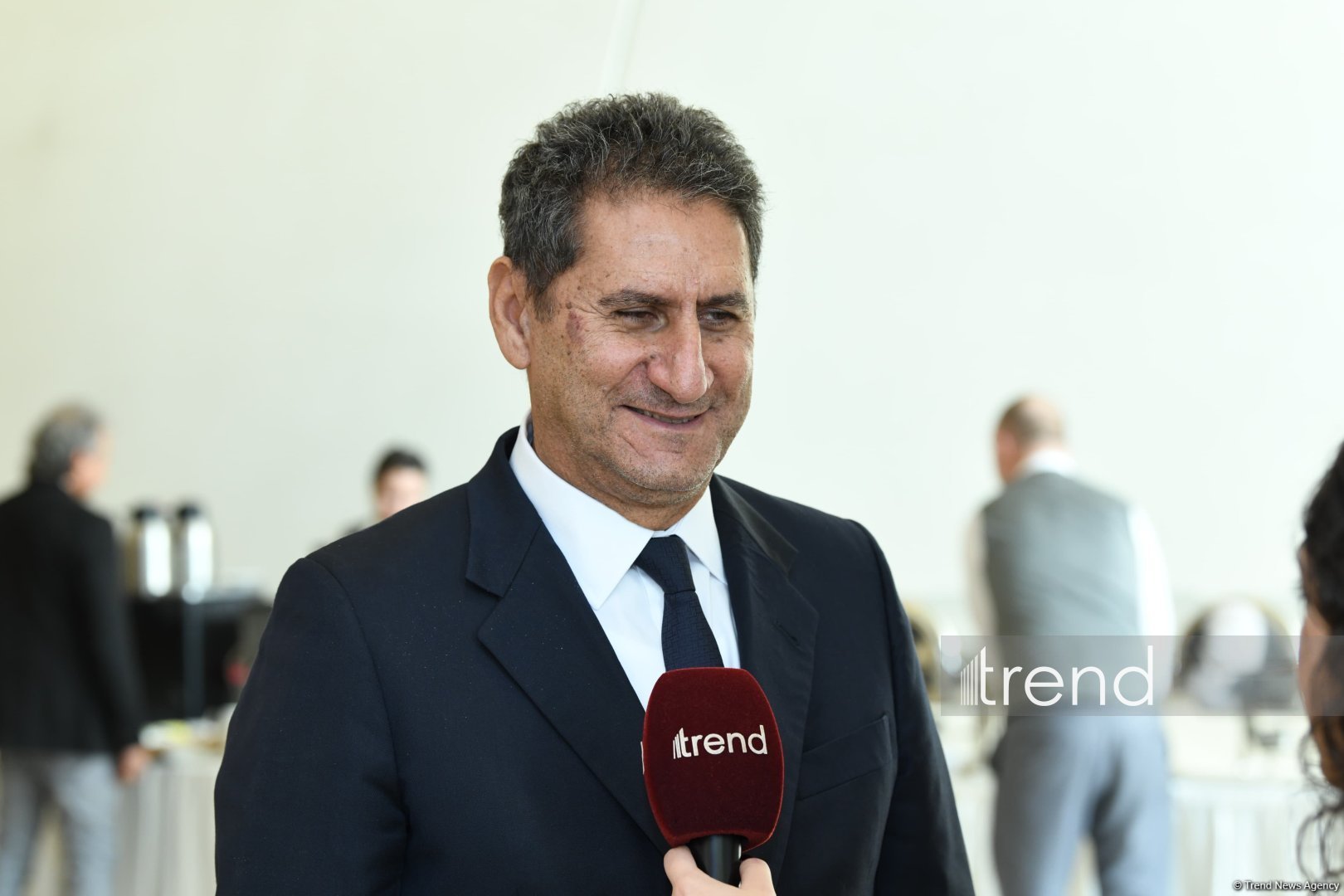

BAKU, Azerbaijan, June 1. The new energy system is increasingly dominated by renewables, hydrogen and biomass, Director-General of the International Renewable Energy Agency (IRENA) Francesco La Camera said in an exclusive interview with Trend on the sidelines of the Baku Energy Week.
He pointed out that the energy transition is absolutely in place and is accelerating.
“The ongoing energy crisis will push forward the acceleration process. Every year renewables are breaking new records in terms of yearly installed capacity. In the last years, around 90% of the new installed capacity were renewables. We are inevitably moving to a new energy system that will be largely dominated by renewables, complemented by sustainable use of biomass and hydrogen, mainly green hydrogen.
The question is if this is happening in a speed that is consistent with the achievement of the Paris Agreement goals. It's fast, but we need a further acceleration. The main barriers that we see are the infrastructure. We need to have grids that are interconnected, flexible, and balanced. We need a legal environment that is more favorable to renewables. We need also to enhance the capacity, which means reskilling the workers coming from the old system of the new one. These are the three main barriers that we see,” said the IRENA director general.
La Camera highlighted the need to rethink the way international cooperation is structured.
“In particular, support from multilateral financial institutions should prioritize the development of the infrastructure required for the new energy system,” he said.
IRENA’s director general noted that there is a need for grids that are interconnected, flexible, and resilient, and naturally storage is part of this.
“We also need tools such as digitalization, as well as artificial intelligence, which can support the functioning of a regulated system in a balanced and flexible way. All these elements may contribute to overcoming the first challenge we see in accelerating the transition through this infrastructure. At the same time, it is essential to strengthen public-private partnerships and implement policies that help reduce investment risks. From our perspective, these are the key priorities for accelerating the energy transition,” he said.
La Camera believes that today, energy security can be achieved through renewables.
“It was an established view that fossil fuels were the main way to ensure energy security. However, I think the latest crisis has shown that, in essence, a fossil fuel-based system is not the best way to ensure energy security. We have seen the disruptions. It is better to move towards a decentralized energy system with many actors on the ground, and this means shifting towards renewables. Today, energy security can be achieved through renewables. This is why countries and the private sector have invested heavily in renewables in recent years, and continue to do so, as they are a key instrument for ensuring energy security and greater domestic independence. And when we talk about costs, renewables have proven to be the cheapest way to produce electricity today. All these factors together suggest, in my view, that the energy transition will continue to accelerate,” he noted.
He underlined IRENA's comprehensive support for countries' renewable energy transition, covering both strategic planning and the deployment of renewable projects.
“The best approach is to bring the country together and support it in long-term planning. We have been assisting countries in preparing and presenting their national contributions within the UNFCCC process. From the planning stage, we then work to facilitate project implementation and financing. Our financial platform is also designed for this purpose. This is how we aim to achieve maximum impact—by supporting countries from the planning phase through to the deployment of renewables on the ground,” La Camera said.



