


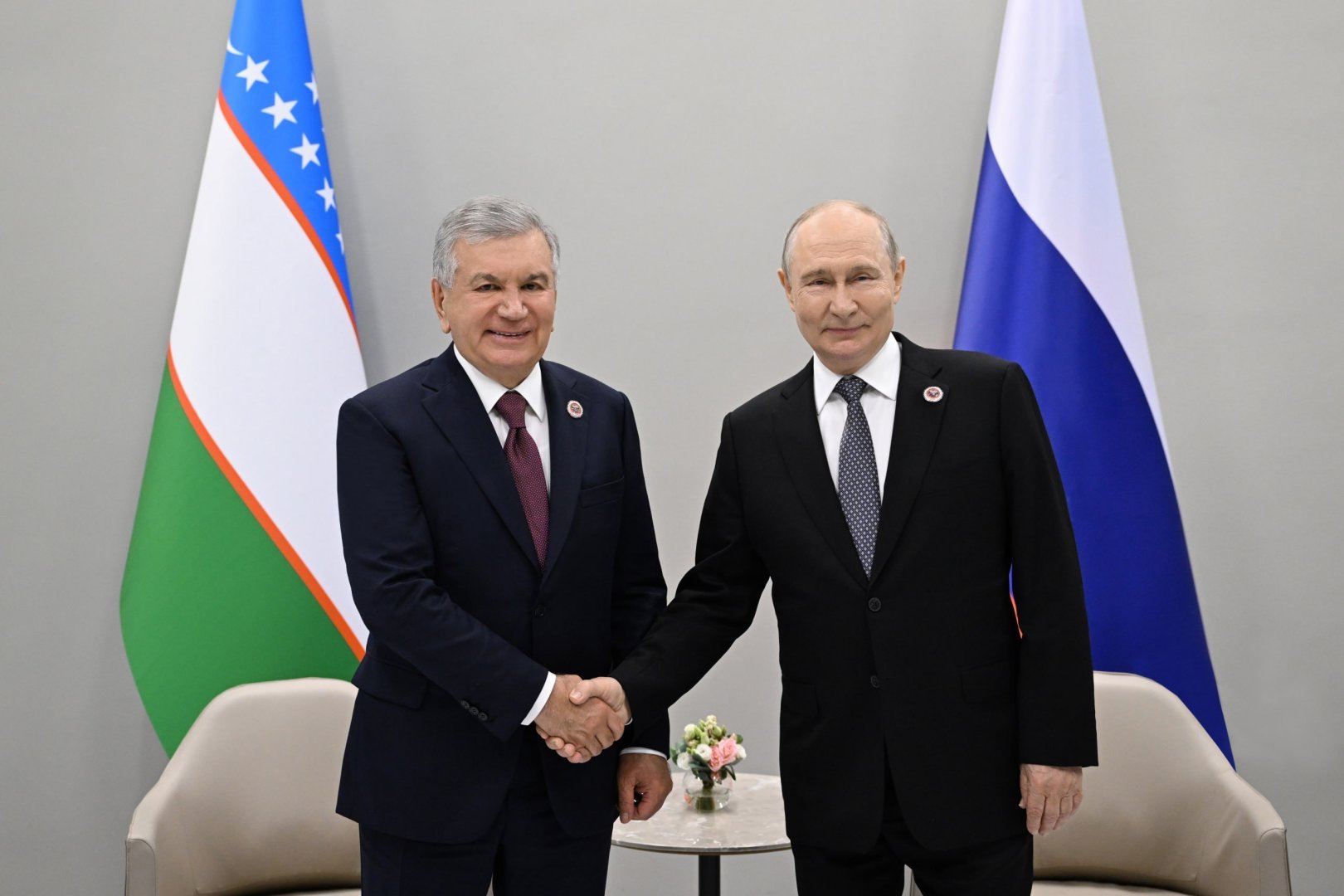

BAKU, Azerbaijan, September 1. Uzbekistan and Russia are strengthening economic cooperation as bilateral trade turnover increased by 12% since the beginning of 2026.
This was reflected in the statement by the press service of the Uzbek president, following a meeting between President Shavkat Mirziyoyev and Russian President Vladimir Putin said during talks in Bishkek.
The meeting focused on further expanding Uzbekistan-Russia relations within the framework of their comprehensive strategic partnership and alliance, according to Uzbekistan’s presidential administration.
The leaders highlighted the positive momentum in trade and economic cooperation, noting that growing trade volumes remain one of the key drivers of bilateral relations.
“Since the beginning of this year, bilateral trade turnover has increased by 12 percent,” the Uzbek presidential administration said.
The sides emphasized the importance of maintaining this positive trend, increasing mutual trade and accelerating the implementation of joint industrial projects.
Current cooperation includes major projects in industry, energy, metallurgy, transport and other priority sectors. The leaders stressed the need to further expand industrial cooperation and strengthen direct ties between regions of the two countries.
Interregional cooperation was identified as an important area for continued growth, with both sides highlighting the role of regional partnerships in supporting business ties and investment initiatives.
The talks also covered cultural and humanitarian cooperation, with the leaders noting the importance of maintaining active exchanges between the peoples of Uzbekistan and Russia.
Mirziyoyev and Putin additionally reviewed the schedule of upcoming bilateral and multilateral meetings.
The latest trade growth figures underline the continued importance of Russia as one of Uzbekistan’s key economic partners, while ongoing industrial projects indicate a shift toward deeper cooperation beyond traditional trade relations. The focus on expanding production, transport and energy links suggests that both countries are seeking to build a more integrated economic partnership.



