


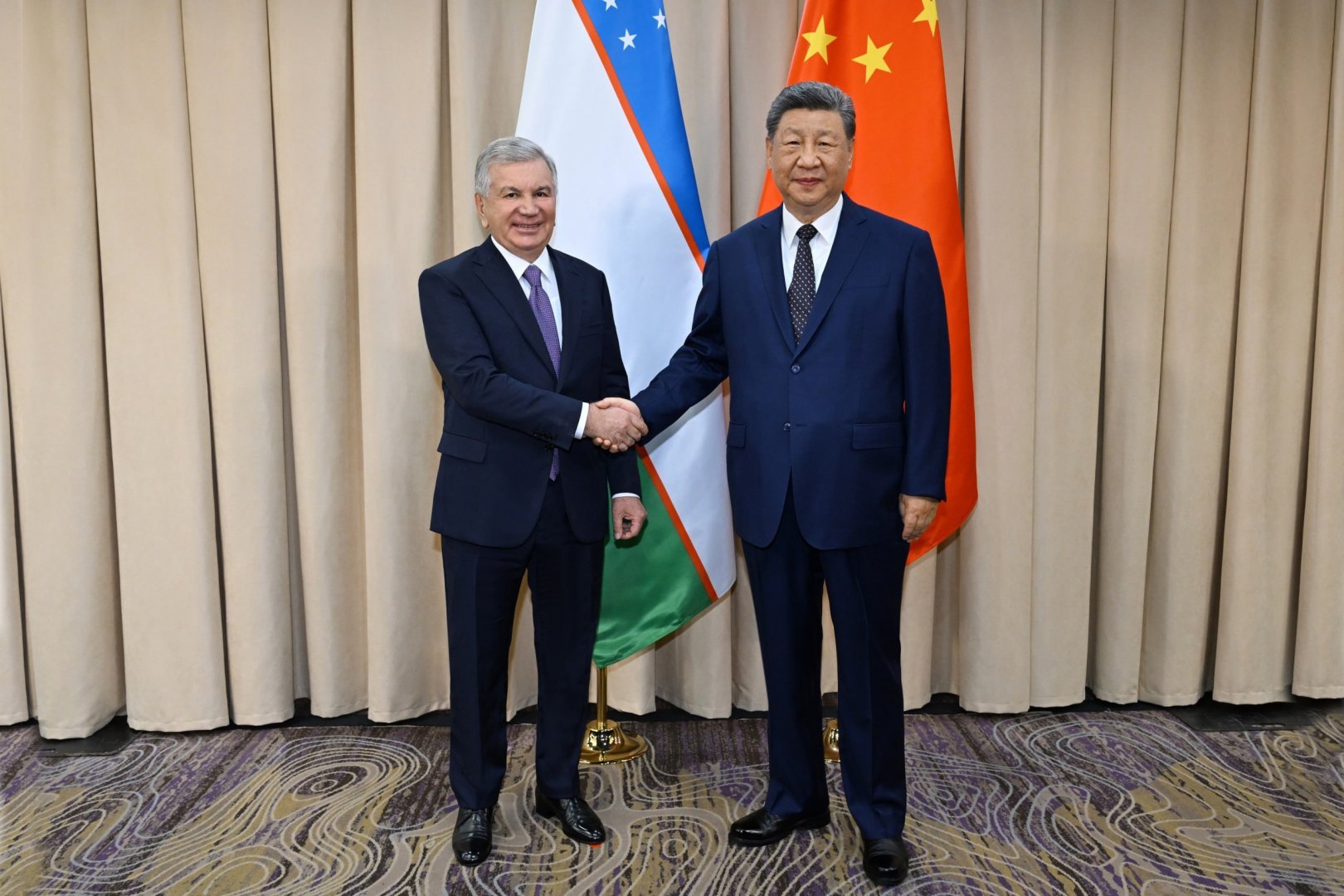

BAKU, Azerbaijan, August 31. Uzbekistan and China are targeting $30 billion in bilateral trade in the coming years as President Shavkat Mirziyoyev and Chinese President Xi Jinping agreed to deepen economic, investment, infrastructure and technology cooperation.
This was reflected in the statement by the press service of the Uzbek president, following the talks on the sidelines of the Shanghai Cooperation Organization summit in Bishkek.
The leaders noted that bilateral relations have reached a new level in recent years, with political dialogue expanding alongside trade, investment, technology and cultural cooperation. The two sides also agreed to continue strategic dialogue between their foreign ministries and strengthen interparliamentary ties.
Trade and investment were central to the talks. Bilateral trade approached $18 billion last year, and the leaders expressed confidence in further growth. Uzbekistan proposed setting a new target of $30 billion in bilateral trade in the coming years, with efforts focused on increasing mutual supplies of industrial and agricultural products and expanding the participation of Uzbek companies in Chinese trade exhibitions.
The scale of investment cooperation is also significant. The portfolio of ongoing joint investment projects is estimated at about $60 billion, while more than 6,000 joint ventures involving Chinese and Uzbek partners operate in Uzbekistan.
The two countries identified energy, chemicals, metallurgy, construction materials, food production, transport, infrastructure, agriculture and high technologies as priority areas for industrial cooperation. They also plan to expand cooperation in digital technologies, mining and the extraction and processing of mineral resources.
The leaders highlighted cooperation with Chinese automaker BYD as a successful example of technology partnership. They supported plans to expand production capacity and increase localization of electric vehicle manufacturing in Uzbekistan, while encouraging Chinese companies to establish additional production facilities in joint industrial zones across the country.
Energy cooperation was another major priority. Uzbekistan expressed interest in expanding partnerships in both conventional and renewable energy and attracting Chinese companies to peaceful nuclear energy projects.
Transport connectivity also featured prominently in the talks. The leaders highlighted the ongoing construction of the China-Kyrgyzstan-Uzbekistan railway, expressing confidence that the route will become an important component of Eurasian transport infrastructure and strengthen connectivity under the Belt and Road Initiative.
The two sides also agreed to expand tourism, air connectivity and humanitarian exchanges. Uzbekistan and China maintain a visa-free regime, while plans are being considered to expand flight routes and increase flight frequencies. Cultural cooperation will also be strengthened through cultural centers and planned Uzbek Culture Days in China.
Cooperation in science and education will continue through Lu Ban Workshops, Confucius Institutes and joint university programs. Uzbekistan also expressed interest in expanding Chinese-language education and increasing opportunities for Uzbek students to study in China.
The leaders further emphasized cooperation under the China-Central Asia framework and preparations for the third summit of the format, scheduled to be held in China next year. Mirziyoyev invited Xi to visit Uzbekistan.
"The President of Uzbekistan invited the Chinese president to pay a visit to our country. The meeting was held in a traditionally trusting, open and friendly atmosphere," the press service said.
The breadth of the agreements points to an increasingly multidimensional economic relationship, with the proposed $30 billion trade target reflecting Uzbekistan’s ambition to move beyond its current trade volumes. The growing investment portfolio, electric vehicle production, major transport projects and cooperation in energy and technology suggest that China is becoming an increasingly important partner in Uzbekistan’s industrial and infrastructure development.



