


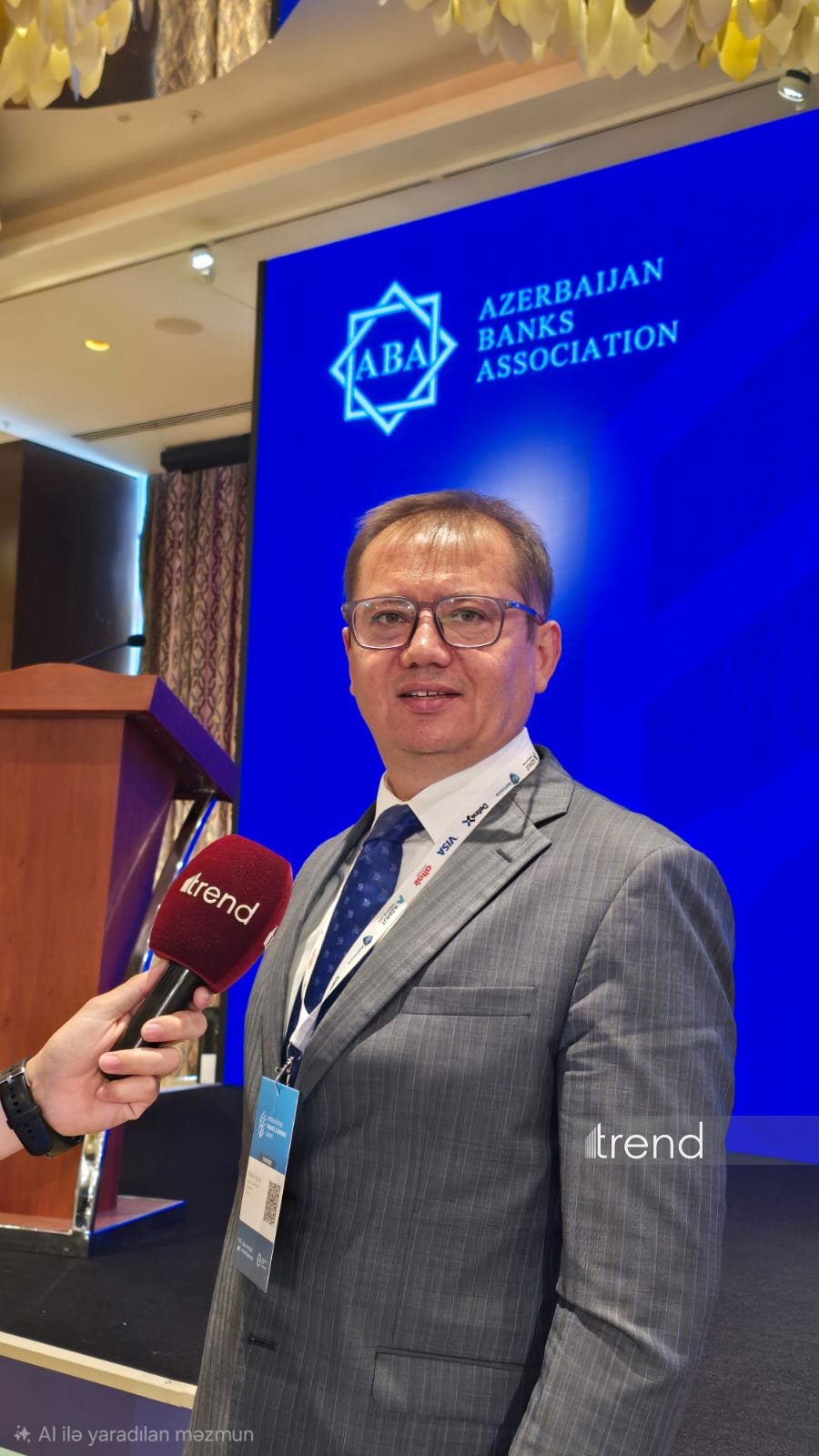

BAKU, Azerbaijan, June 9. There is a huge potential for mutual fintech investments between Central Asia and the Caucasus, and this potential hasn't yet been fully untapped, Chairman of the Central Asia Fintech Association, Otabek Nasirov, said in an interview with Trend.
Fintech bridge between Central Asia and Caucasus
He noted that today's signing of the Memorandum of Cooperation between the Central Asia Fintech Association (CAFA) and the Azerbaijan Fintech Association (AzFina) is another important step towards strengthening ties between the Central Asian and Caucasus regions in the field of financial technologies.
"There are many common priorities that unite our regions. This includes the development of digital payments, fintech innovations, artificial intelligence, cybersecurity, digital identity, financial inclusion, and cross-border digital trade. We believe that the close cooperation established between the sectoral associations will accelerate the exchange of knowledge and experience, promote the implementation of best practices and digital solutions, as well as open up new opportunities for business entities operating in both markets," he explained.
The chairman emphasized that this memorandum creates a solid legal basis for conducting joint research, organizing professional events, establishing expert dialogue, implementing educational programs, as well as exchanging experience in the field of regulatory and technological innovations.
"We also see great potential in areas such as the development of the fintech ecosystem, support for startups, digital financial infrastructure, integration of artificial intelligence into financial services, and mutual integration (interoperability) of regional systems," he explained.
Nasirov noted that for CAFA, Azerbaijan is one of the most important innovation and financial centers in the wider region.
"We highly appreciate the constructive partnership we have established with AzFina and look forward to projects that will contribute to the formation of a more integrated, innovative, and competitive digital economy in Central Asia and the Caucasus.
I would like to take this opportunity to express my deep gratitude to the management and team of AzFina, as well as the Azerbaijan Banks Association, for their commitment to regional cooperation and for creating platforms that bring together regulatory bodies, financial institutions, fintech companies, and technology leaders. We are confident that this partnership will support the sustainable growth of the fintech industry in both regions and create real value for our members," he said.
Mutual investment opportunities and strategic partnerships
Nasirov expressed an opinion that there is a huge potential for mutual fintech investments between Central Asia and the Caucasus, which hasn't yet been fully exploited.
"In the past few years, both regions have seen strong growth in digital payments, e-commerce, digital banking, embedded finance, and fintech infrastructure. Countries such as Azerbaijan, Uzbekistan, Kazakhstan, and Georgia are actively investing in digital transformation, creating an increasingly favorable environment for innovation and technology businesses.
What makes our regions particularly attractive is that they have similar market dynamics, regulatory challenges, and customer needs. This creates unique opportunities not only for direct capital investment, but also for strategic partnerships, technology transfer, joint ventures, and market expansion.
We are already witnessing growing interest from fintech companies, venture capitalists, banks, and technology providers looking to expand beyond their local markets. Azerbaijani fintech companies can find attractive growth opportunities in Central Asia, while Central Asian fintechs can benefit from Azerbaijan’s strategic geographical location as a gateway between Central Asia, the Caucasus, Türkiye, and European markets.
From CAFA’s perspective, the most promising areas for future investments include digital payments, AI-based financial services, cybersecurity, RegTech (regulatory technologies), digital identity solutions, open banking infrastructure, as well as technologies supporting cross-border trade and financial connectivity.”
He stressed that the Memorandum of Cooperation between CAFA and AzFina will serve as an important platform for facilitating business relations, identifying investment opportunities, supporting the entry of fintech companies into new markets, and strengthening the dialogue between investors, innovators, and regulatory agenciesş
"As a result, strengthening investment cooperation between Central Asia and the Caucasus will serve not only the growth of the fintech sector, but also the deepening of regional economic integration, and the increase of our competitiveness in the global digital economy," he said.
Influence of external factors and regional challenges
The chairman pointed out that external factors are playing an increasingly important role in shaping the future of fintech in both Central Asia and the Caucasus.
"On the positive side, the growth of international trade, increasing digital connectivity, and expanding cross-border economic corridors are creating a strong demand for modern payment solutions, digital financial services, and more efficient financial infrastructure. As our economies become more interconnected, the fintech sector has the opportunity to play a role as a bridge that facilitates trade, investment, and financial inclusion.
At the same time, global technological developments - particularly in artificial intelligence, cloud computing, digital identity, and cybersecurity - are accelerating innovation in the financial sector. Financial institutions in our region are increasingly adopting international best practices and technologies to stay ahead of global competition and meet changing customer expectations.
However, external challenges and risks also exist. Geopolitical uncertainties, fragmentation of regulatory frameworks, cybersecurity threats, and differences in digital standards can slow the pace of innovation and increase operational challenges for fintech companies seeking to expand in multiple markets," he also said.
Nasirov underscored that this is why regional cooperation is more important than ever.
"Expanding dialogue between regulators, industry associations, financial institutions, and technology providers can help harmonize approaches, reduce barriers, and create a more predictable environment for innovation and investment.
I believe that Central Asia and the Caucasus are well-positioned to benefit from global digital transformation trends. The key issue is not whether innovation will come to our region, but how effectively we can work together to transform these opportunities into sustainable economic growth and stronger financial ecosystems," he clarified.
Synergy of Islamic finance and fintech
According to Nasirov, the rapid growth of Islamic finance and the development of fintech are no longer separate areas, but increasingly complementary trends.
"Islamic finance is based on the principles of transparency, ethical investment, risk sharing, and financial inclusion. Interestingly, many fintech solutions naturally support these goals by making financial services more accessible, efficient, and customer-oriented.
Today, we see fintech actively supporting the growth of Islamic banking, Takaful (Islamic insurance), digital payments, crowdfunding, digital onboarding, and Sharia-compliant investment platforms. Technologies such as artificial intelligence, digital identity, blockchain, and smart contracts help Islamic financial institutions increase operational efficiency, strengthen compliance processes, and provide a better customer experience.
One particularly promising area is the digitalization of Islamic financial products. Fintech allows financial institutions to reach out to underserved populations, reduce transaction costs, and provide Sharia-compliant financial services through fully digital channels. This is especially important for regions with young and digitally active populations, including Central Asia, the Caucasus, and many parts of the Islamic world as a whole.
We are also seeing growing interest in the application of artificial intelligence in Islamic financial institutions for customer service, risk management, fraud prevention, and compliance monitoring. At the same time, blockchain and tokenization technologies are opening up new opportunities for greater transparency in asset-backed financing and financial transactions," the chairman said.
He pointed out that the future belongs to institutions that successfully combine the values and principles of Islamic finance with the innovation and scalability capabilities of fintech.
"Together, they have the potential to expand financial inclusion, increase efficiency, and create a more accessible and sustainable financial ecosystem for millions of people.
Events like the next Islamic Finance Forum to be held in Baku are a perfect opportunity to exchange experiences, discuss new trends, and strengthen cooperation between Islamic financial institutions, fintech companies, regulators, and technology providers in our regions," he concluded.



