


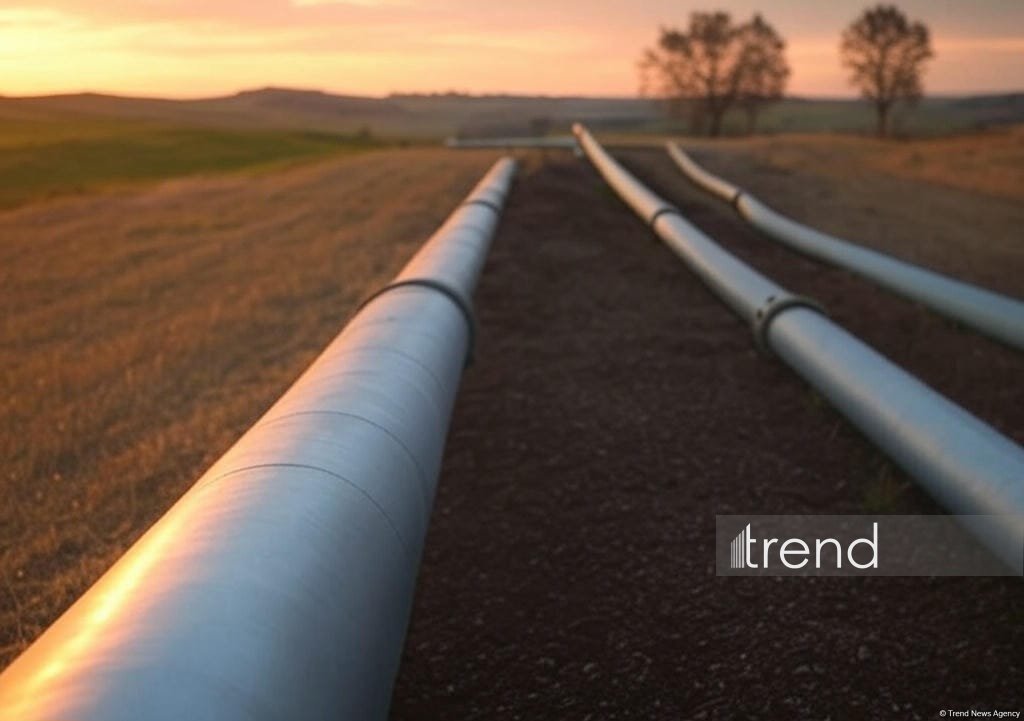

BAKU, Azerbaijan, July 13. A total of about 559 million metric tons of Azerbaijani oil and condensate have been exported through the Baku-Tbilisi-Ceyhan (BTC) oil pipeline over the past 20 years.
According to Azerbaijan's Ministry of Energy, approximately 559 million metric tons of Azerbaijani-origin crude oil and condensate have been exported since the Heydar Aliyev Baku-Tbilisi-Ceyhan main export pipeline was commissioned.
The ministry said the pipeline primarily transports crude oil from the Azeri-Chirag-Gunashli (ACG) field and condensate from the Shah Deniz field.
Earlier, bp announced that, effective July 1, 2026, operational responsibility for the BTC export pipeline was transferred from BP Exploration (Caspian Sea) Limited to SOCAR Midstream Operations (SMO), a subsidiary of SOCAR.
The transfer covers all three sections of the BTC pipeline in Azerbaijan, Georgia and Türkiye. According to bp, SMO has also assumed responsibility for managing all BTC-related activities, as well as operator duties for the joint operations previously performed by bp for the BTC and South Caucasus Pipeline (SCP) systems.
The BTC pipeline stretches 1,768 kilometers and is designed to safely transport crude oil from the Caspian region to the Mediterranean coast.
The project has strengthened economic and political ties among Azerbaijan, Georgia, Türkiye and Western countries while generating significant transit revenues for the countries along the route.
Since the project was launched, thousands of social initiatives have been implemented in more than 550 communities, benefiting over 750,000 people along the pipeline corridor.
The BTC pipeline has a capacity of 1 million barrels of oil per day. It uses 46-inch, 42-inch and 34-inch diameter pipes and includes eight pumping stations and 98 block valve stations. Along its route, the pipeline crosses several mountain ranges, more than 3,000 roads, railways and communication lines, and over 1,500 water bodies, including the Ceyhan River, which is up to 500 meters wide.
Construction of the BTC pipeline, regarded as one of the largest and most complex engineering projects of its time, lasted four years—from project approval in July 2002 to completion in May 2006. At peak construction, about 22,000 people worked on the project, around 80% of whom were local employees.
The first shipment of oil was loaded onto the tanker British Hawthorn at the Ceyhan Terminal on June 4, 2006.
Today, the BTC pipeline transports crude oil from the Azeri-Chirag-Gunashli field, condensate from Shah Deniz, as well as oil and condensate from other Caspian producers, including supplies from Kazakhstan, Turkmenistan, and additional volumes produced by SOCAR.



