


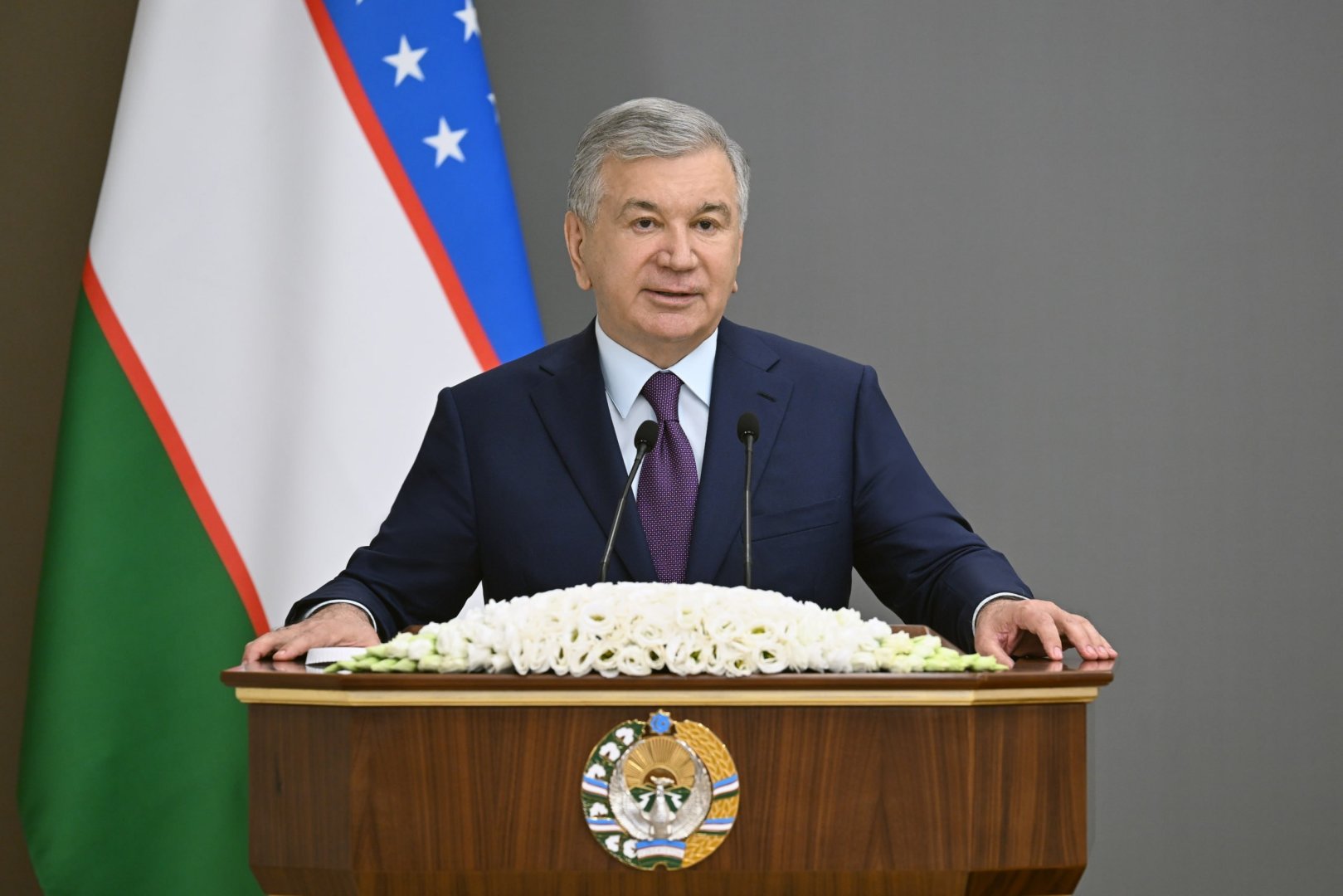

BAKU, Azerbaijan, July 13. Uzbekistan's President Shavkat Mirziyoyev has outlined a sweeping modernization strategy for the country's ferrous metallurgy sector, calling for greater use of artificial intelligence, expanded domestic raw material production, and lower reliance on imports to support the country's long-term economic growth.
This was reflected in the statement by the press service of the Uzbek president.
Speaking at a meeting held at the Uzbekistan Metallurgical Plant in Bekabad, Mirziyoyev said the steel industry will play a key role in achieving the government's goal of increasing gross domestic product to $240 billion by 2030, which requires annual economic growth of 8–9 percent.
"The development of the metallurgical industry must be based on a sustainable raw material base, competitive products, and the introduction of modern technologies," Mirziyoyev said.
The president said the sector remains constrained by import dependence, high production costs and energy consumption, as well as slow progress in digitalization and artificial intelligence adoption. He noted that these challenges have become more significant amid global supply chain disruptions and logistics uncertainties.
According to the press service, Uzbekistan's demand for sheet steel, long steel products, pipes, and metal structures has tripled over the past decade to 5.5 million metric tons. Demand is expected to exceed 8 million tons annually by 2030, driven by large industrial, infrastructure, and housing projects.
Mirziyoyev announced a series of measures to strengthen the industry's domestic resource base. Uzbekistan has 1.5 billion tons of iron ore reserves, and agreements have been reached with Chinese partners to produce 650,000 tons of iron ore concentrate annually from the Surun-Ota deposit. The government also plans to accelerate development of the Tebinbulak iron ore project and finalize an agreement to import 700,000 tons of iron ore per year from Tajikistan's metallurgical sector.
To improve transparency in the scrap metal market, all transactions involving ferrous scrap will be tracked in real time through a new electronic platform, E-Lom, scheduled to launch on Aug. 1. A dedicated government project office will oversee pricing, competition, and regulatory enforcement.
"All processes related to the circulation of ferrous metals will be monitored in real time through an electronic platform," it was said during the meeting.
The government will also establish a specialized company with $200 million in funding to centrally import raw materials for approximately 150 small and medium-sized private metallurgical enterprises, with imported materials to be sold exclusively through the commodity exchange.
Mirziyoyev placed particular emphasis on expanding value-added production. It was said that the newly commissioned casting and rolling complex in Bekabad will create opportunities to manufacture $1.5 billion worth of products for the automotive, machinery, agricultural equipment, household appliance, and construction materials industries.
The president instructed officials to prepare projects for the production of seamless pipes, cold-rolled steel, precision metal processing, and 3D printing technologies.
A 90-hectare Uzbekistan Eco-Industrial Technology Park will also be established at the Bekabad plant, featuring a ferrous metallurgy research and development center and an internationally accredited certification laboratory.
Artificial intelligence will be central to the industry's modernization strategy. The government plans to introduce a digital transformation program designed to increase equipment efficiency by 20 percent, reduce production costs by 10 percent, cut energy consumption by 15 percent, and lower maintenance costs and production downtime by 20 percent.
"It is necessary to make a technological breakthrough in the industry by expanding the raw material base, reducing import dependence, widely introducing digital technologies and artificial intelligence, developing new products, and strengthening cooperation with the private sector," Mirziyoyev said.
The Center for Economic Research and Reforms has been designated as the sector's analytical hub and will coordinate research with leading mining companies, universities, and scientific institutions. Beginning with the next academic year, the Uzbekistan Metallurgical Plant will also establish a dedicated ferrous metallurgy department and introduce a dual education program to train future specialists.



