



BAKU, Azerbaijan, December 1. For most of the twentieth century, global finance revolved around a dual core — London and New York. Those cities offered not just liquidity and infrastructure, but something deeper: a shared belief in the rule of law, property rights, and the neutrality of financial intermediation. Around them, a constellation of “secondary” hubs—Geneva, Luxembourg, Singapore, later Hong Kong—served as satellites of this Western financial universalism.
But the 21st century has rewritten the rules.
Brexit, aggressive regulatory oversight in the U.S. and EU, the politicization of investment flows through ESG mandates and sanctions — all have turned once-neutral markets into instruments of ideological control. Financial institutions that once optimized for efficiency now serve as tools of foreign policy.
The result has been a paradox: the overregulation meant to protect stability has itself become destabilizing, driving capital to seek refuge elsewhere.
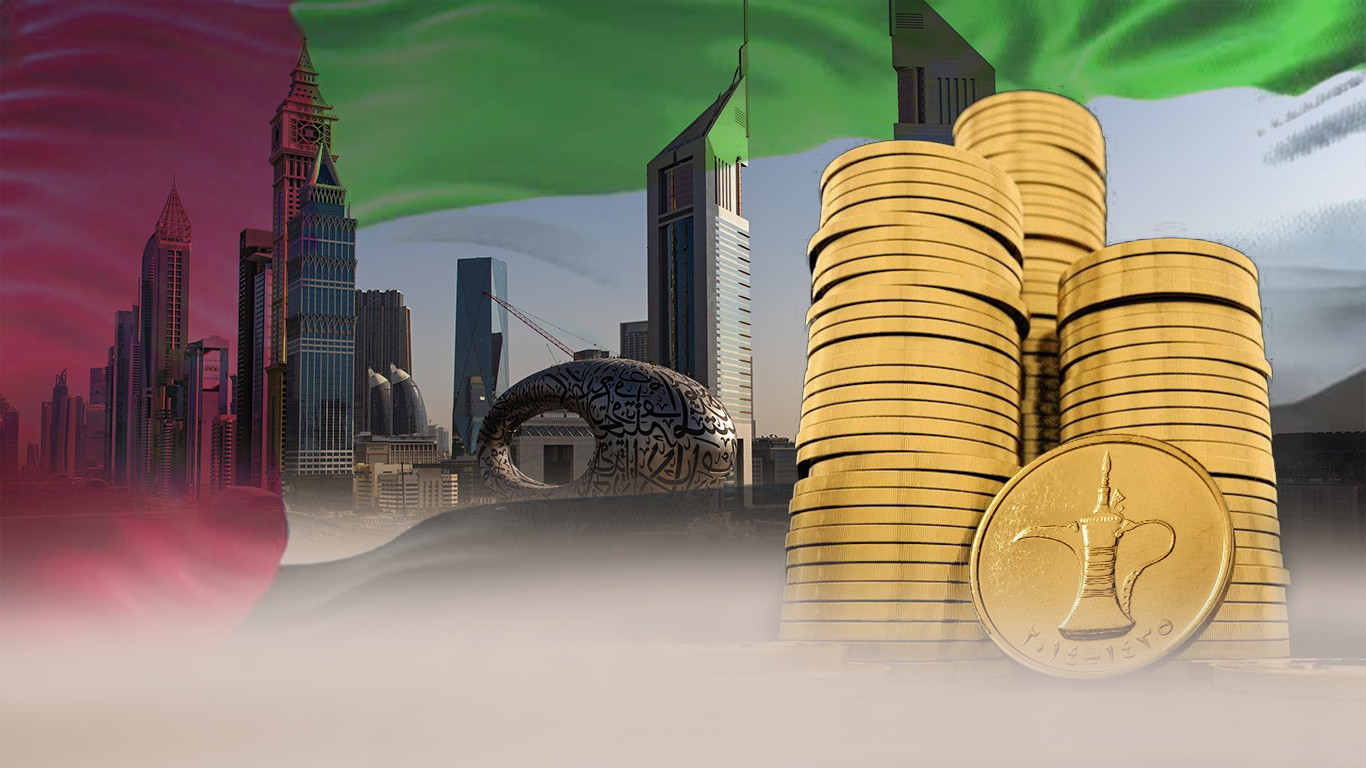
And that “elsewhere” increasingly means the United Arab Emirates — especially Dubai and Abu Dhabi. Their ascent isn’t just a regional success story; it’s a structural response to the West’s self-inflicted crisis of financial governance.
According to Henley & Partners, roughly 9,800 millionaires are expected to relocate to the UAE in 2025 — the largest net inflow of wealthy residents in the world. Assets under management in the Dubai International Financial Centre (DIFC) surged from $444 billion to $700 billion in the first half of 2024, while the combined private wealth of UAE residents now stands at about $700 billion.
For contrast: over the same period, London lost more than $1 trillion in assets as financial firms shifted operations to Paris, Frankfurt, and Dublin.
The message is clear: capital flows to where rules remain neutral and the environment predictable. The UAE has become a laboratory of financial pragmatism — a system where the law functions as a service, not a weapon.
Institutional reinvention: how the Emirates engineered a capital hub
The UAE’s success was no accident. It rests on a long-term national strategy built around the concept of a post-oil economy.
Since the early 2000s, the Emirati leadership — recognizing the finite nature of its resource model — has been constructing the architecture of global capital: not only physical and technological, but legal and institutional as well.
The creation of two autonomous jurisdictions — DIFC in Dubai and ADGM in Abu Dhabi — marked a turning point. Both operate under English common law, with independent regulators (DFSA and FSRA) and function almost as “embedded financial states” within the federation. Their legal codes, arbitration systems, and compliance standards align with international norms yet remain far more flexible than those of London or New York, increasingly constrained by political and bureaucratic inertia.
This design has allowed the Emirates to offer what the West no longer can: compliance with comfort, transparency with speed.
Obtaining a financial license in DIFC typically takes a few weeks; in Europe, the same process can drag on for months. Streamlined “single-window” systems and fully digitized procedures have turned the Emirati financial zones into models of efficiency, particularly attractive for fintech, Islamic finance, and venture capital.
By 2024, DIFC hosted over 6,100 registered firms (up 24 percent year-over-year), while ADGM surpassed 11,000. This isn’t statistical noise — it’s the anatomy of a new trend: capital now seeks jurisdictions where institutions serve, rather than supervise for the sake of supervision.
Tax sovereignty and the trust dividend
The second pillar of the Emirati model is its deliberately crafted “tax vacuum” — a fiscal ecosystem where the state’s interests align with the investor’s.
No personal income tax. No capital gains or dividend tax. And in the financial free zones, a zero percent corporate rate. These aren’t perks; they’re philosophy. The UAE doesn’t profit from redistribution — it profits from attraction.
Even the introduction of a 9 percent corporate tax in 2023 didn’t break the logic. It applies only to businesses operating outside the special zones. The result is a two-tiered system: an “outer” tax framework to meet international obligations, and an “inner” regime designed to capture global capital. That balance lets the Emirates avoid being branded a rogue offshore haven while preserving their competitive edge.
Equally vital is stability. In Western economies, fiscal rules have become political footballs — think of France’s “tax the rich” debates or Britain’s abolition of the non-dom regime. In the UAE, by contrast, an unspoken social contract prevails: the government guarantees predictability as the foundation of trust.
That predictability has become its own kind of currency. Investors plan not just for years, but for decades.
Together, these policies have produced what might be called “the sovereign trust dividend” — a model where the state generates revenue not by taxing wealth, but by concentrating it.
Geopolitical Neutrality and the Diplomacy of Capital
What sets the United Arab Emirates apart from every other aspiring financial hub isn’t just tax policy or infrastructure — it’s diplomacy.
At a time when global finance increasingly mirrors geopolitics, the UAE has deliberately built a model of nonaligned capitalism. Since 2022, as Western capitals launched an unprecedented wave of sanctions, Dubai has emerged as one of the few places where American, Chinese, Indian, and Russian money coexist — often in the same room. That’s not an accident. It’s the result of a deliberate policy: the UAE doesn’t join sanctions coalitions, export ideology, or demand political loyalty from investors.
Neutrality, for the Emirates, isn’t a posture — it’s survival strategy.
The comparison to Cold War–era Switzerland only goes so far. Geneva’s neutrality was a matter of status; Dubai’s is a matter of calculation. This is pragmatic neutrality, embedded in national security. Emirati officials understand that in a world where sanctions and ideology have become weapons of economic coercion, the role of a trusted intermediary is a source of power.
That’s why the UAE has positioned itself as a diplomatic broker across the Middle East, hosting global summits and expanding what could be called the “diplomacy of capital” — building platforms of trust where traditional diplomacy has failed.
Technological Sovereignty: The New Foundation of Financial Power
The global economy is shifting from traditional capital to digital capital, where money, data, and computing power are increasingly intertwined. The UAE grasped this early: to remain a financial center, it must control its own technological backbone. Hence the third pillar of its strategy — technological sovereignty.
Since 2018, the Emirati government has woven digital technology into both its financial and administrative ecosystems. Initiatives like Smart Dubai and the UAE Digital Government go far beyond e-services; they represent a transformation of the state into a data-driven corporate actor. The goal is to build an ecosystem where financial flows, legal processes, and digital infrastructure exist on a single, integrated platform.
The most striking example of this ambition is Stargate UAE, a high-performance artificial intelligence and computing hub being built in Abu Dhabi with the participation of G42, OpenAI, Oracle, and NVIDIA. With a projected energy capacity of one gigawatt — on par with the largest data centers in the U.S. and China — the project serves dual purposes: securing national data, cybersecurity, and fintech operations while offering a global AI cluster open to partners from Asia, Europe, and Africa.
In effect, the UAE is building a technological infrastructure that functions like energy security — only for data.
At the same time, the country is betting heavily on human capital. The establishment of the Mohamed bin Zayed University of Artificial Intelligence (MBZUAI) symbolizes a new philosophy: educating not just specialists, but architects of the digital age. A nationwide program now requires all public-school students — roughly 400,000 a year — to study AI fundamentals. The aim is generational: to produce, within two decades, a domestic cadre of technologists capable of running next-generation financial and digital systems.
Integration of technology into finance extends well beyond education. In 2022, Dubai launched the Virtual Assets Regulatory Authority (VARA) — the world’s first dedicated crypto regulator. That move turned the city into a safe harbor for crypto exchanges, fintech firms, and digital investment platforms fleeing regulatory uncertainty in the U.S. and Europe. It was both an economic and political statement: the UAE has declared itself a laboratory of the new financial era, where capital, technology, and the state interact experimentally — but under control.
Reshaping the Global Financial Order: Toward a Multipolar Capital System
The rise of the Emirates as a global financial hub is quietly transforming the architecture of international finance — institutionally, regulatorily, and strategically.
1. Institutional: From hierarchy to network. The 20th-century financial map was a vertical structure anchored by two poles — New York and London. The 21st is a horizontal web of interconnected hubs. Alongside Singapore, Hong Kong, and Shanghai, Dubai and Abu Dhabi now bridge the financial arteries of Asia, Africa, and Europe. This marks the dawn of a post-Western globalization, where the centers of value creation and regulation no longer coincide with political power. In that sense, the UAE isn’t just a mediator — it’s becoming one of the architects of a new financial geography.
2. Regulatory: Rethinking the balance between control and trust. Since the 2008 crisis, Western finance has drifted into hypercompliance — an avalanche of regulation, KYC/AML procedures, and politicized ESG mandates that made legality more expensive than efficiency. The Emirates offer an alternative: “sufficient transparency,” where oversight exists but doesn’t strangle business. The UAE’s removal from the FATF “grey list” in 2024, after significant supervisory reforms, proved that it’s possible to be part of the global rulebook without surrendering sovereignty or agility.
3. Strategic: The diplomacy of capital as soft power. Financial might has become a tool of foreign policy. The UAE’s sovereign wealth funds — Abu Dhabi Investment Authority (ADIA), Mubadala, and the Investment Corporation of Dubai (ICD) — are not just investors but instruments of diplomacy. In 2024, ADIA managed over $993 billion, ranking as the world’s third-largest sovereign fund. These assets underpin economic alliances: equity stakes in African energy projects, infrastructure investments across Europe, joint funds with China and India. It’s a new paradigm of influence — funds instead of bases, partnerships instead of pressure.
As a result, the Emirates are evolving into a global “trust hub” — a bridge between regions divided by ideology and conflict. Their neutrality and financial openness are ensuring that, even amid geopolitical fragmentation, the machinery of the global economy keeps running.
The Limits of the Model: Can the Emirates Stay Stable Without Stagnating?
For all its success, the Emirati financial experiment carries its own contradictions.
1. Reputation and risk. By welcoming capital from all corners, the UAE walks a tightrope between openness and over-tolerance. Global watchdogs have raised concerns that Emirati structures may at times facilitate funds seeking to skirt sanctions or tax regimes. The UAE’s removal from the FATF “grey list” eased immediate pressure but didn’t erase the underlying vulnerability. Over the long run, the Emirates will need to strengthen oversight without morphing into a clone of Western bureaucracies — a delicate balance between scrutiny and the trust-based model that fuels their appeal.
2. Social and economic strain. The influx of wealth — and wealthy migrants — has inflated real-estate prices, widened inequality, and deepened cultural divides. With Emirati citizens making up less than 20 percent of the population, the presence of so much foreign money demands careful management of social cohesion and national identity. The government has launched “Emiratization” programs in the private sector and poured resources into education and cultural initiatives aimed at building a shared civic space. Yet the long-term stability of this model depends on maintaining equilibrium between cosmopolitan dynamism and national consolidation.
3. Geopolitical constraints. Neutrality works only until great-power politics intrudes. The UAE’s deepening tech partnerships with Chinese firms have already drawn scrutiny from Washington. In 2025, the U.S. even weighed restricting advanced microchip exports to the Emirates over fears of re-exports to China, backing off only after quiet diplomacy. The message was clear: as the UAE’s influence grows, so will the pressure from rival blocs.
Looking Ahead: Scenarios Through 2035
Based on current trends, three broad trajectories define the UAE’s possible role in global finance over the next decade.
1. The Sustainable Leadership Scenario. The Emirates entrench their position as a global financial node, expanding their share of cross-border settlements and investment flows. By 2030, DIFC and ADGM manage over $1 trillion in assets, and Dubai ranks among the world’s top ten financial centers. The UAE integrates into the international regulatory architecture, becoming the Gulf’s equivalent of Singapore. Regional stability holds, and global fragmentation only amplifies Dubai’s function as the “neutral server” of the world economy.
2. The Competitive Rebalancing Scenario. Western centers adapt. London regains some of its luster, while Saudi Arabia accelerates its push to build a rival financial cluster in Riyadh. Capital disperses more evenly across markets, yet the UAE remains dominant in key niches: fintech, Islamic finance, and crypto-economy. In this landscape, Dubai and Abu Dhabi evolve into nodes within a multi-hub network, each specializing in specific sectors rather than competing across the board.
3. The External Shock Scenario. A major geopolitical crisis or regional instability undermines investor confidence. Some capital retreats to traditional jurisdictions, and the UAE’s momentum slows. Even then, its hard-won infrastructure — technological, legal, and human — retains strategic value, enabling a faster post-crisis recovery than most rivals.
Conclusions: Lessons from a Desert Financial Powerhouse
The rise of the United Arab Emirates is not a regional anomaly but evidence of a structural realignment in global finance. The Emirates have capitalized on capital’s fatigue with ideology, bureaucracy, and tax volatility — and built their success on three core principles: neutrality, flexibility, and technological sophistication.
For the global system, this marks a shift toward financial multipolarity, where no single jurisdiction commands a monopoly on trust.
For Western financial centers, the message is blunt: it’s time to rethink regulatory philosophy — to compete not through ideology but through institutional quality and predictability.
For emerging economies, the lesson is equally clear: legitimacy today is earned not in imperial capitals, but in trust hubs — places where money feels safe, rules stay stable, and politics keeps a respectful distance.
And for the Emirates themselves, the imperative is vigilance — to remain open without becoming exposed, to refine institutions without losing agility, and to preserve autonomy in a world where neutrality is both their greatest asset and their hardest act to maintain.
Stay up-to-date with more news on Trend News Agency's WhatsApp channel



