


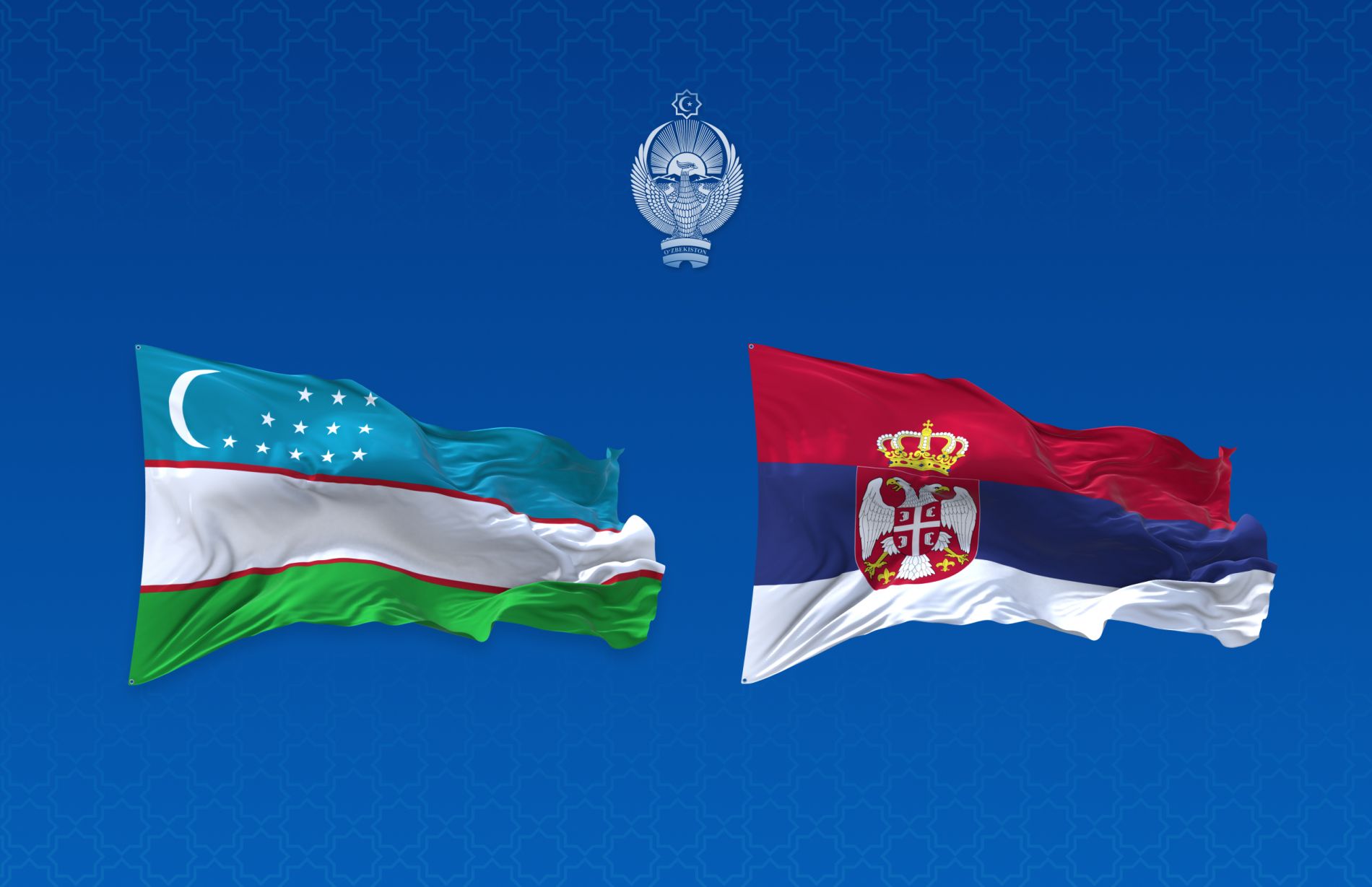

BAKU, Azerbaijan, January 20. As Central Asia’s role in global politics continues to grow, Uzbekistan is actively expanding cooperation with European countries, placing a strong emphasis on practical engagement and the launch of joint economic projects. In this context, dialogue with Serbia is gaining increasing importance, as bilateral relations have intensified markedly in recent years.
A key milestone in the development of bilateral ties was the official visit of Serbian President Aleksandar Vučić to Uzbekistan, which took place on October 28-31, 2025. This was the first visit by a Serbian head of state to the country and demonstrated the parties’ readiness to move from political dialogue toward closer economic cooperation.
During the visit, in the presence of the leaders of both countries, agreements were signed on the promotion and protection of investments, the development of economic cooperation, as well as collaboration in engineering, advanced technologies, and artificial intelligence. In addition, a cooperation program between the foreign ministries for 2026–2027 was agreed upon, and partnership relations were established between Tashkent and Belgrade. These arrangements created clear and stable conditions for business and laid the groundwork for the implementation of joint projects.
The agreements reached will be followed by the Uzbekistan–Serbia Business Forum, scheduled to take place on January 23 in Tashkent. The forum is expected to deliver tangible outcomes, primarily by establishing direct contacts between companies from both countries and discussing potential joint projects. The event is viewed as a practical platform where businesses can directly address cooperation conditions and investment opportunities.
It is expected that the forum will focus on sectors such as mechanical engineering, agriculture and agri-processing, pharmaceuticals, the chemical industry, construction materials production, textiles and light industry, as well as information technology. The Uzbek side plans to present opportunities to Serbian businesses in production localization, the creation of joint ventures, and participation in industrial and infrastructure projects.
Particular interest is attached to the use of Uzbekistan as a production and logistics base for Serbian companies seeking access to Central Asian markets. In turn, the Serbian side views Uzbekistan as a promising market with growing domestic demand and a favorable investment climate. The forum is expected to help identify priority sectors where cooperation can be launched in the near term.
Economic cooperation between the two countries remains limited in volume but shows positive dynamics. Over recent years, bilateral trade turnover has demonstrated steady growth: it increased by 134% in 2022 and rose by 63% in 2024 compared to the previous year. From January through September 2025, bilateral trade expanded by a further 2.5%.
Currently, 9 enterprises with Serbian capital are registered in Uzbekistan, including 4 joint ventures and 5 companies with 100% foreign ownership. These firms mainly operate in construction materials, trade, services, and mechanical engineering, as well as furniture and household goods production.
Serbia exports construction and finishing materials, furniture, chemical products, marble, and agricultural goods to Uzbekistan. Uzbekistan supplies Serbia with cotton yarn, textiles, and leguminous crops. Despite relatively modest trade volumes so far, both sides note significant untapped potential.
“We see great opportunities for expanding partnership in the economic sphere and are ready to give it a practical character,” said Uzbekistan’s Foreign Minister Bakhtiyor Saidov during a phone conversation with Serbia’s First Deputy Prime Minister and Minister of Foreign Affairs.
Going forward, the parties plan to strengthen the institutional framework of cooperation, including the establishment of an intergovernmental commission on economic cooperation. This format would allow for systematic project support, investment protection, and the reduction of administrative barriers. The development of transport routes along the “Central Asia–Balkans” axis is also under discussion, which could further support trade and investment.
Uzbek–Serbian relations are moving to a practical level. The signed agreements have created a clear legal framework for business, while the business forum in Tashkent is expected to facilitate the transition to the implementation of concrete projects.
For Uzbekistan, this means attracting investment, technologies, and expertise from Serbian companies, as well as expanding cooperation with Europe. For Serbia, Uzbekistan is becoming a promising market and a gateway to the countries of Central Asia.



