


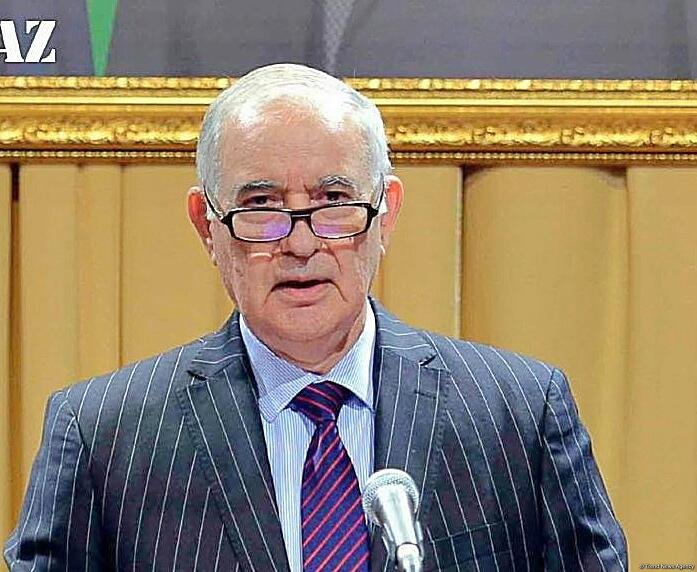

BAKU, Azerbaijan, February 17. Baku-Belgrade cooperation is shaping not only the future of the two countries but also the broader region, political analyst Azer Garayev told Trend.
"The official visit of President Ilham Aliyev to Serbia on February 15, 2026, marked the beginning of a qualitatively new stage in Azerbaijan–Serbia relations. High-level meetings in Belgrade with Serbian President Aleksandar Vučić, the first session of the Strategic Partnership Council, and the signing of numerous intergovernmental documents demonstrated that Baku and Belgrade have moved beyond traditional diplomatic cooperation toward a long-term strategic partnership," he said.
According to Garayev, the visit is significant not only in terms of intensifying bilateral relations but also against the backdrop of Europe’s evolving energy, security, and economic architecture. Following the Russia-Ukraine war, Europe’s energy security concept has undergone fundamental changes, turning reliable energy exporters such as Azerbaijan and key transit and consumer countries in the Balkans, such as Serbia, into strategic partners.
Garayev emphasized that personal relations between President Ilham Aliyev and President Aleksandar Vučić have played a decisive role in elevating bilateral ties to their current level. Vučić stated, 'I would like to express my great respect to the people of Azerbaijan and to you personally, dear Mr. President. I would also like to say to the people of Serbia and, of course, to the people of Azerbaijan that every time I talk to you, I learn a lot, I manage to observe many things from the different perspective of an experienced statesman and a true leader. Therefore, I would like to thank you very much for always sharing your knowledge with me and for establishing such relations with us, from which my country, the country I lead, has a lot to learn,' which, according to the analyst, shows that their relationship goes beyond protocol.
He noted that President Ilham Aliyev’s high assessment of Vučić’s activities also demonstrates deep political respect between the two leaders. This trust enables the swift adoption of strategic decisions and ensures their implementation through practical mechanisms.
"The first session of the Strategic Partnership Council in Belgrade showed that Azerbaijan-Serbia relations have taken on a systematic rather than episodic character. This format is applied by Azerbaijan only with selected countries, and Serbia’s inclusion highlights the special importance attached to the Balkan region.
The Council’s agenda covered energy, industry, investment, transport, agriculture, culture, sports, media, and healthcare, reflecting the multifaceted nature of cooperation. This model goes beyond the traditional “energy contract” format and signals a transition toward real economic integration," he added.
Garayev stressed that energy is the main driving force of Azerbaijan-Serbia relations.
“Azerbaijan already exports gas to Serbia, significantly strengthening Baku’s position in the Balkan energy balance. However, the new agreements reached in Belgrade elevate this cooperation to a qualitatively deeper level. The joint construction of a 500-megawatt gas-fired power plant in Serbia represents not merely an energy facility but a project of regional energy security importance. The plant will reduce Serbia’s reliance on imports while enabling Azerbaijan to move further up the European energy value chain, transitioning from a raw material supplier to a producer of finished energy products. As President Ilham Aliyev noted, Azerbaijan’s current export potential stands at 2 gigawatts, with an additional 8 gigawatts of capacity planned by 2032. This trajectory underscores Azerbaijan’s emergence as one of the key actors in Europe’s green and secure energy landscape,” the analyst said.
The analyst emphasized that Serbia’s geographical position makes it an ideal energy transit hub in the Balkans. Azerbaijani gas, and in the future, Azerbaijani-generated electricity, can access Central and Southern European markets via Serbia, giving Baku’s role in European energy security a more structured and long-term dimension.
“For Serbia, this partnership represents energy sovereignty. By expanding its domestic electricity generation capacity, Belgrade will be able to reliably meet the growing demands of its industry, as well as future data centers and the digital economy. The signed economic agreements demonstrate that Azerbaijan now views Serbia not only as a political partner but also as a strategic investment platform. Planned initiatives in gas turbine power generation, energy, agriculture, and industry are expected to stimulate reciprocal capital flows. In turn, Serbia can serve as Azerbaijan’s economic gateway to the European Union market, opening new export and production opportunities, particularly for the non-oil sector.
The launch of direct Baku-Belgrade flights will provide strong momentum to humanitarian and cultural ties alongside economic cooperation. Tourism, student exchanges, business forums, and exhibitions will further deepen bilateral engagement. These connections will increase direct interaction between the Azerbaijani and Serbian peoples, reinforcing the social foundations of their political partnership. Azerbaijan and Serbia consistently support each other’s territorial integrity and sovereignty on international platforms, an important political assurance for the two countries facing complex security challenges in their respective regions. This mutual support, combined with expanding energy and economic cooperation, creates a genuine strategic alliance,” he said.



