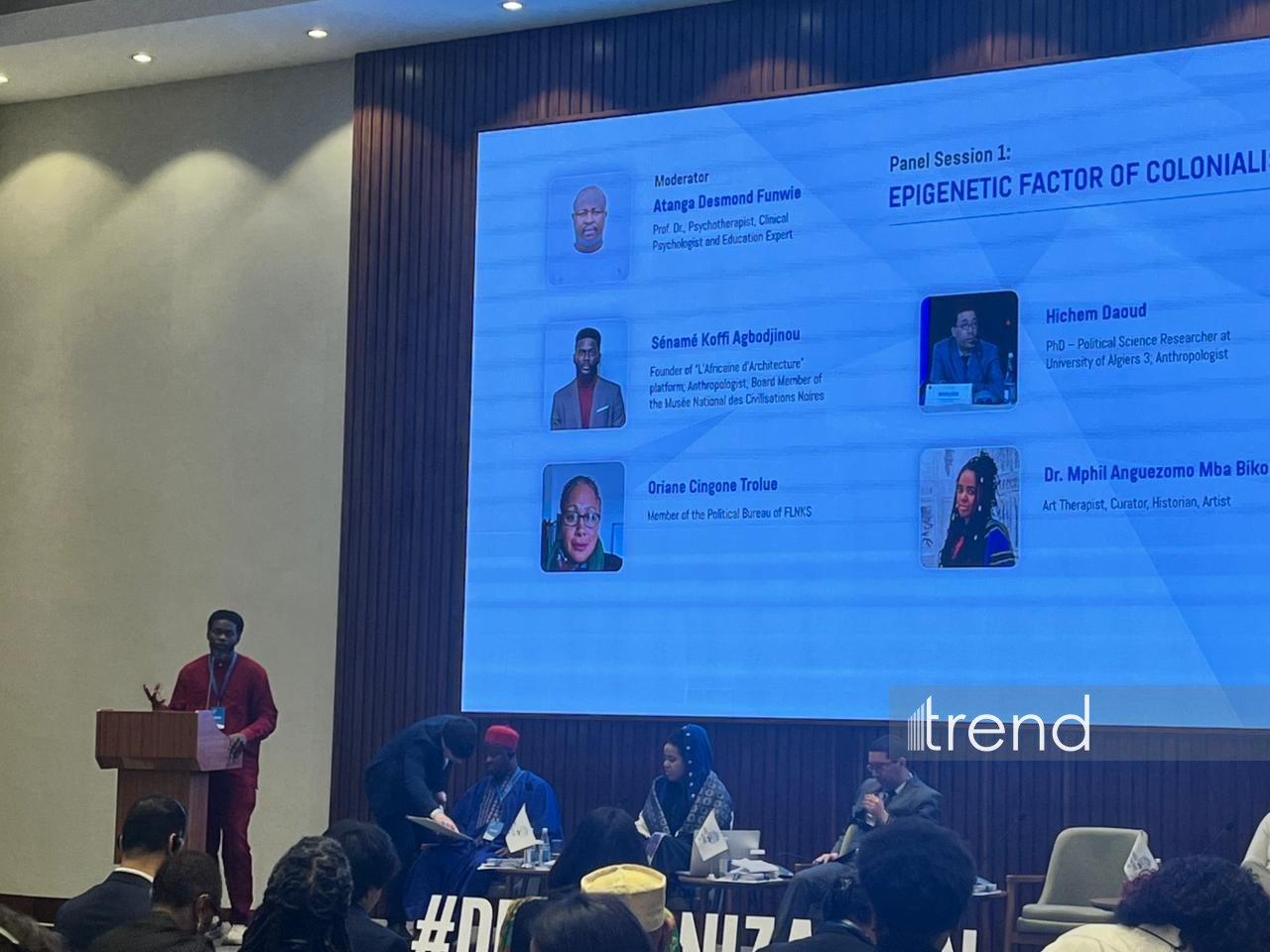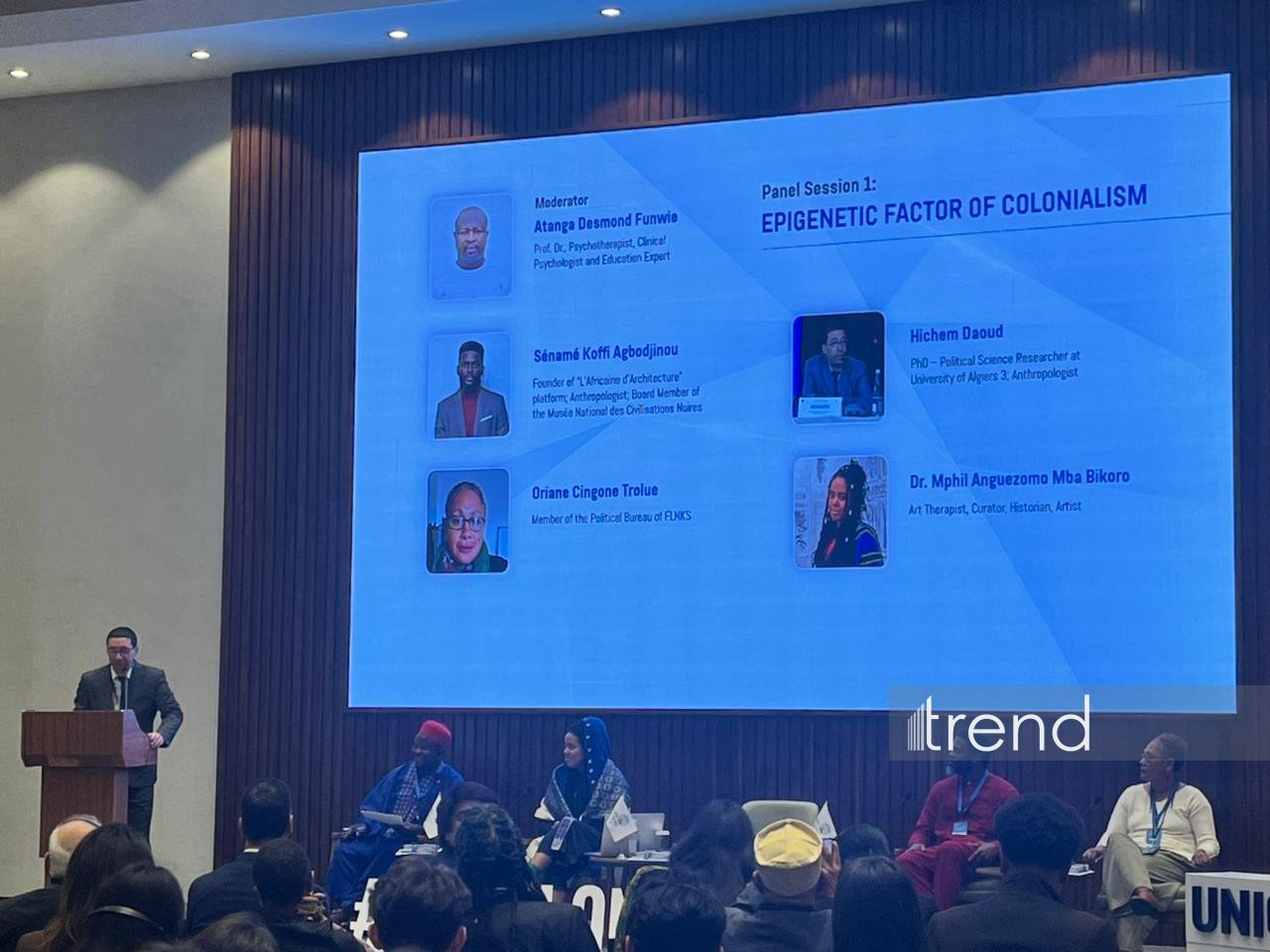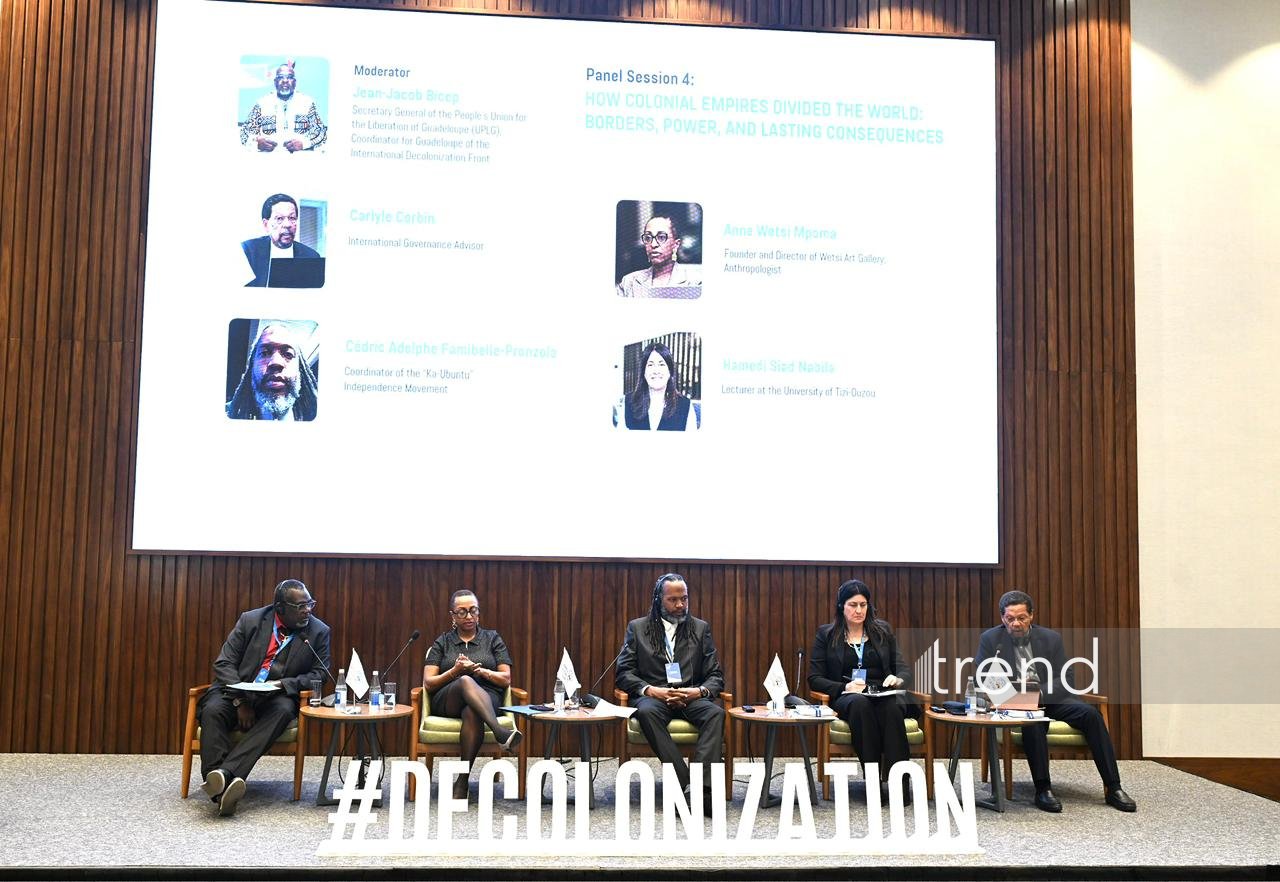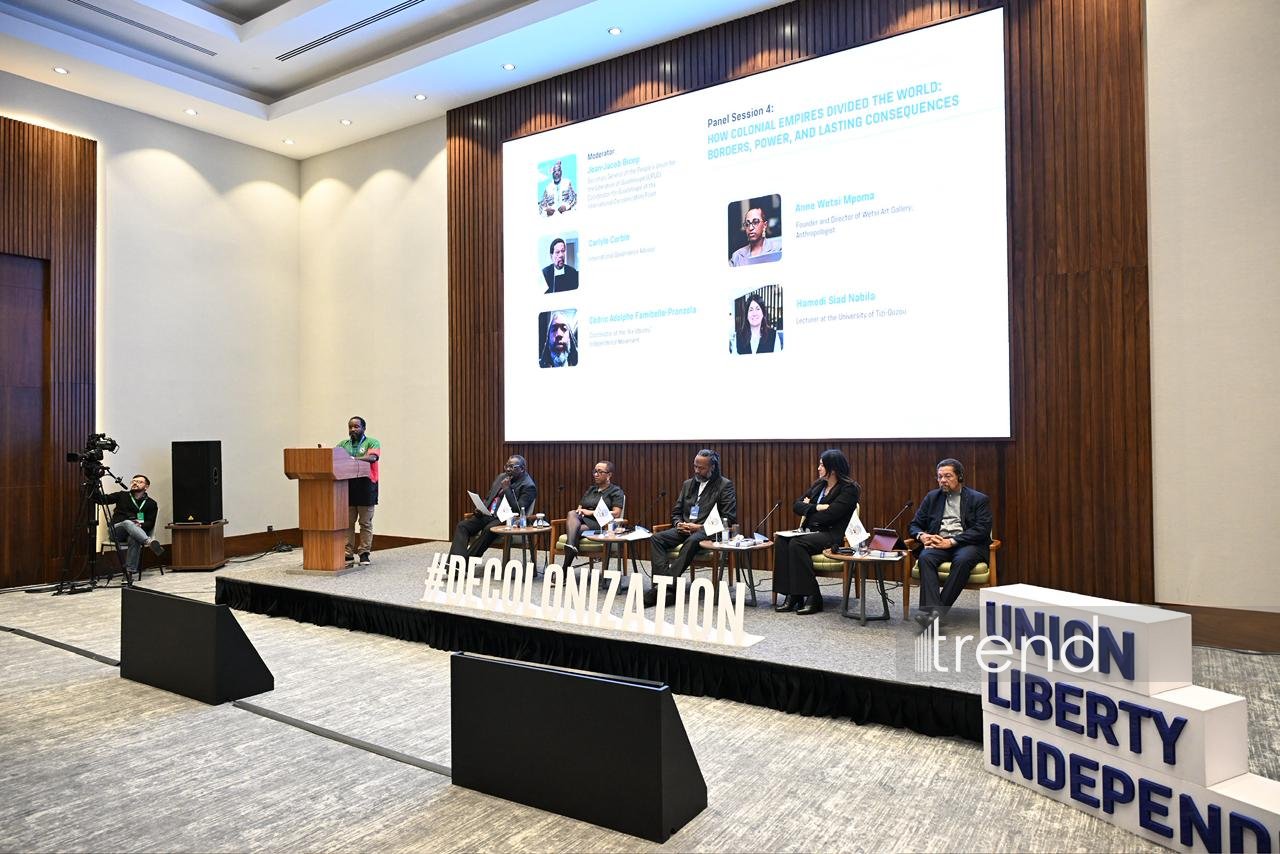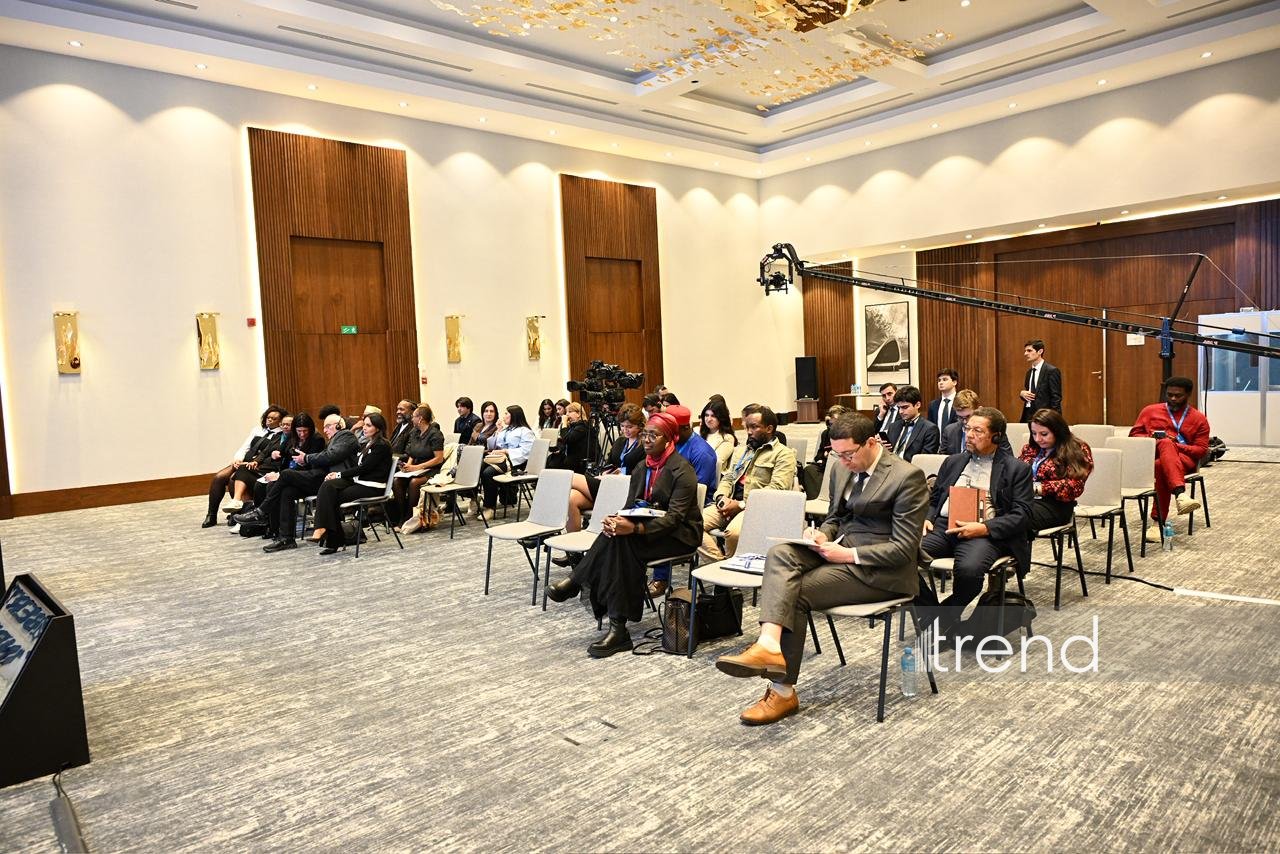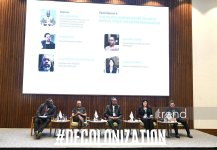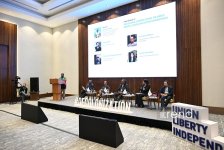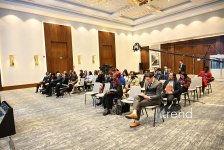

BAKU, Azerbaijan, February 19. Azerbaijan's Baku hosted an international conference titled “Neocolonialism and Global Inequality,” bringing together scholars, practitioners, and activists to examine the lasting impact of colonial systems and emerging forms of dependency, Trend reports.
The event was organized by the Baku Initiative Group (BIG).
For the first time, the conference convened anthropologists and psychotherapists working directly on the ground with indigenous populations in former colonial territories, experts involved in the creation of a Virtual Museum dedicated to colonialism, leaders of independence movements operating in those territories, as well as researchers specializing in neocolonialism.
Discussions within the framework of the event focused on the traumatic and social experiences of people affected by colonial rule across different social and cultural contexts. Participants are examining structural problems stemming from the unlawful actions of colonial powers, ongoing patterns of inequality, and ways to ensure access to data for documenting, analyzing, and elevating these issues to the international level.
Speaking at the event, Abbas Abbasov, Executive Director of the Baku Initiative Group (BIG) said that strategic measures such as diplomacy, protests, and international advocacy have been employed in this struggle against colonial powers.
The official also highlighted BIG’s activities over the past two years.
"We have focused on the role of non-governmental organizations in the fight against colonialism. During this period, we organized more than 35 international conferences, conducted nearly 150 resource studies, and published over 40 reports," he said.
He added that a report presented at a forum for people of African descent in April 2025 was recognized as a significant achievement, having been included in the program of the United Nations (UN) Secretary-General.
Sénamé Koffi Abgodjinou, anthropologist and board member of the Black Civilization Museum highlighted that colonialism is, in many ways, one of the most complex and pressing issues of the present era.
“We are the first human generation confronted simultaneously with three existential threats. In other words, the ability of our species to sustain itself is under threat on three levels or in three dimensions.
The first level is political. It is linked to the return of wars, many of which are colonial wars or preventive wars. There is also a technological threat. Today, all the processes generated by digital technologies could potentially bring an end to the dominance or even the continuity of our species. On the other hand, there is an ecologically well-documented scientific threat. This danger stems from the depletion of the planet’s resources and pushing it into such a crisis that it can no longer regenerate itself,” he said.
The anthropologist noted that humanity’s capacity to restore the planet to a sustainable level is increasingly limited.
“Such periods are favorable for the emergence of ‘monsters.’ It seems that we are indeed in a phase where many ‘monsters’ are appearing. I believe they all share the colonial question. Whether it is the ecological threat, the danger linked to digital technologies, or the political threat emerging against the backdrop of the plundering of international law, all of these are, in a certain sense, colonial threats. In this regard, colonialism remains one of the central and most difficult issues of our time,” he added.
Anthropologist Hichem Daoud, in turn, stated that Algeria in the north experienced one of the harshest assaults of colonialism, described as France’s “dual-system” colonial approach.
According to Daoud, Algerians endured intergenerational trauma under colonial rule.
“First and foremost, there was torture and moral persecution. Torture causes physical wounds, while moral persecution leaves psychological scars. French colonial ideology promoted the idea of a ‘superior race,’ which was reinforced over time. France paid particular attention to archaeology to allegedly prove genetic superiority. French archaeologist Stéphane Zelle, in 1911, wrote about Algeria’s archaeological traces and focused his research on monuments in Algeria. His studies aimed to justify the so-called ‘historical right’ of French colonial rule,” Daoud said.
He also emphasized that France applied local laws to exclude Algerians from citizenship rights, placing them at a lower status compared to French settlers.
“French authorities claimed, using various pseudo-scientific theories, that the brain structure of colonized Algerians was inferior to that of the French. Some French doctors even linked notions of ‘backwardness’ and ‘savagery’ among the colonized population to genetics, presenting France’s mission as an effort to supposedly improve this ‘inferiority,’” Daoud added.
The anthropologist noted that the best path to liberation is to overcome fear, act collectively, preserve the historical heritage of colonized peoples, study collective memory to restore authentic identity, strengthen communication tools, and create an environment for the free circulation of independent voices.
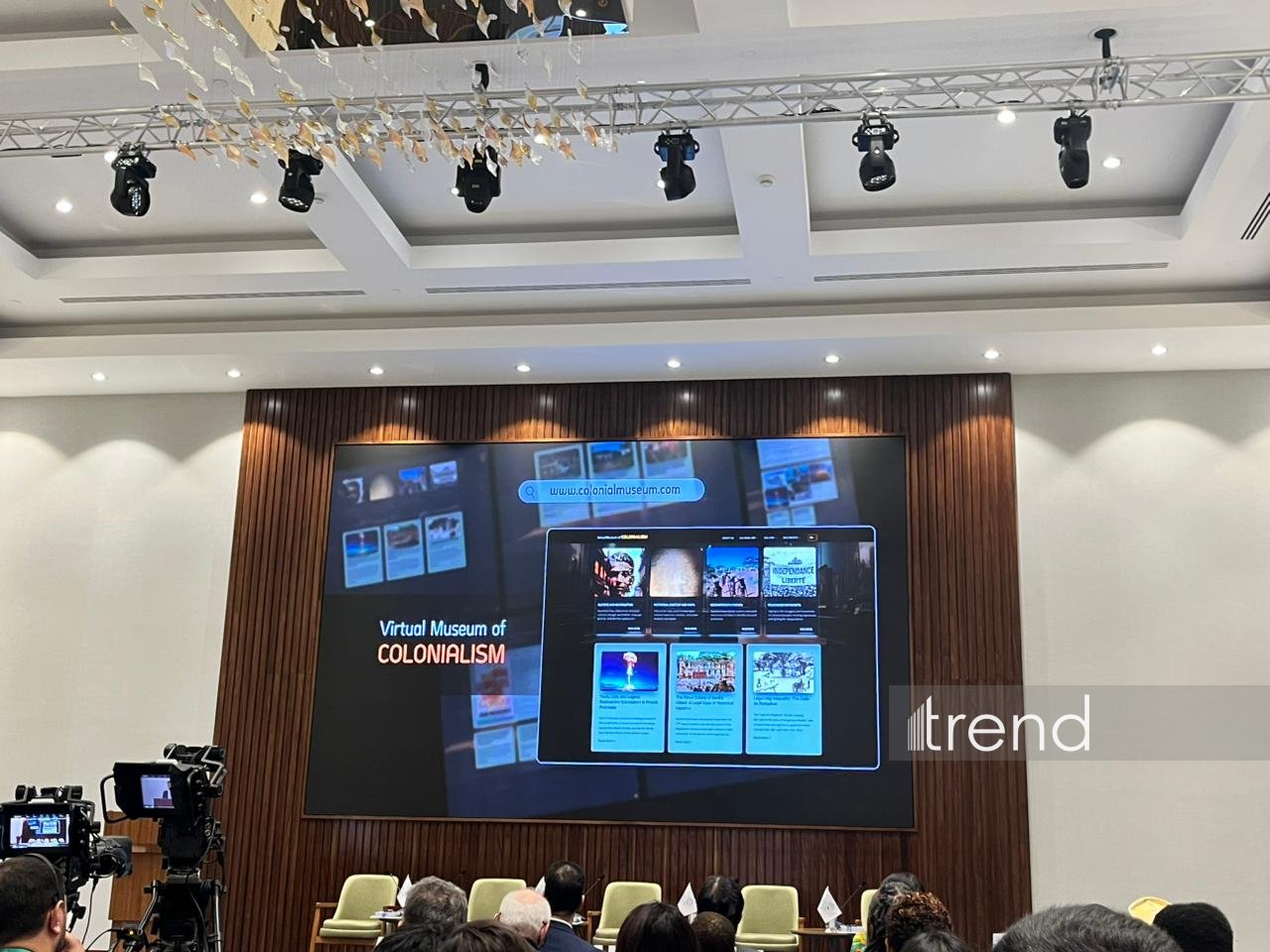
The conference follows the presentation held the previous day of the world’s first Virtual Museum reflecting colonialism on a global scale. Created by BIG, the Virtual Museum is designed as the first digital platform dedicated to colonialism and its modern manifestations worldwide.
Stay up-to-date with more news on Trend News Agency's WhatsApp channel