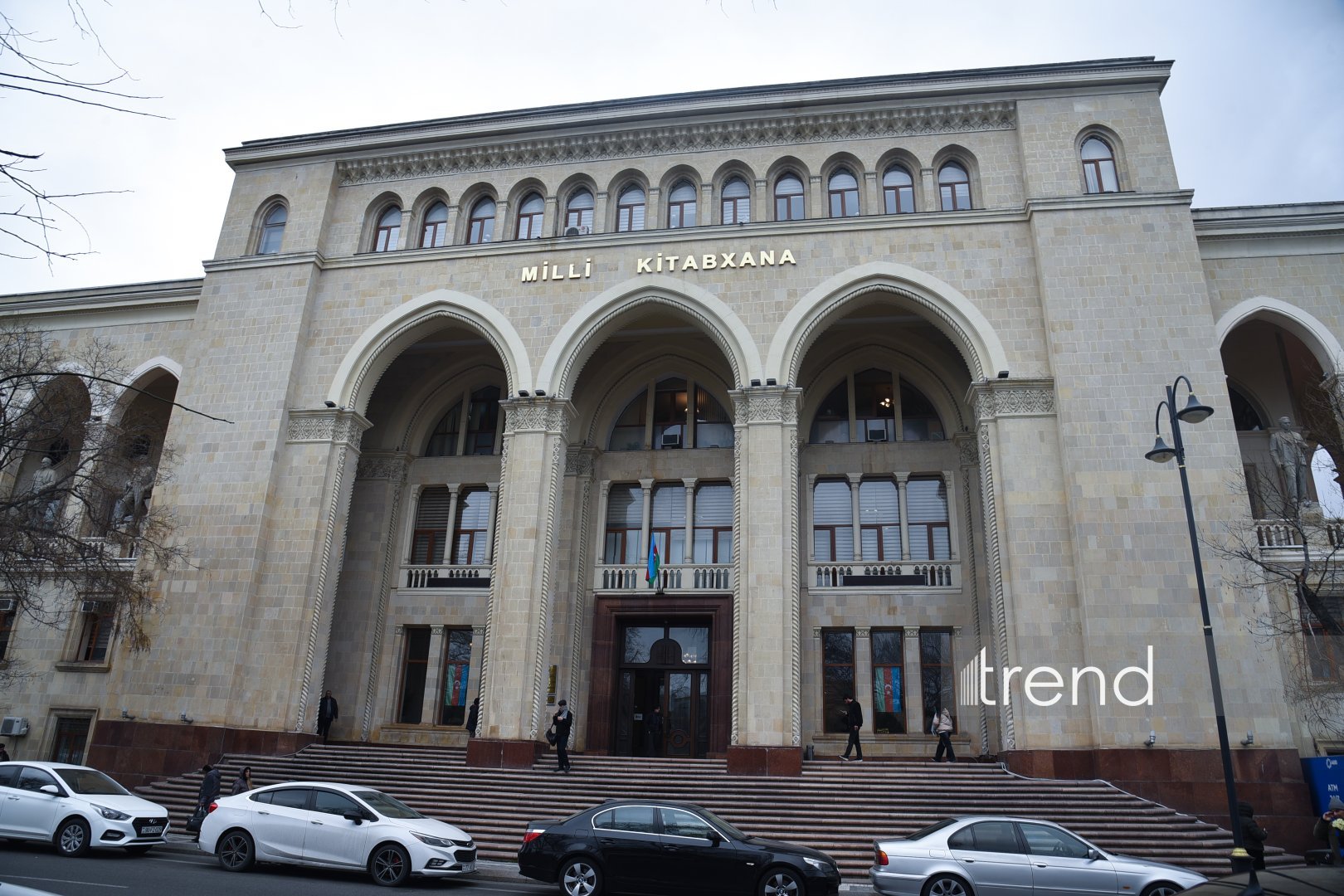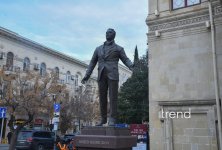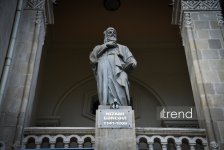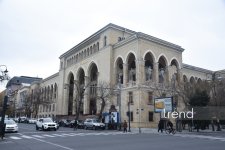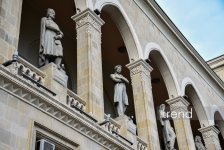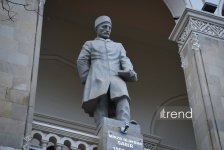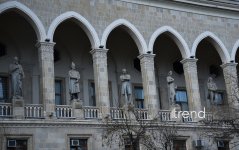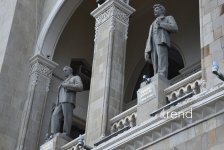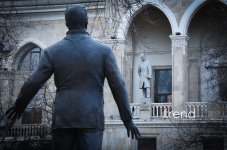
BAKU, Azerbaijan, January 29. Many of us have passed by the Mirza Fatali Akhundzade National Library dozens of times, the country's main book depository, located in the very center of Baku. We hurried about our business, made appointments at the Sahil Garden, and admired the austere architecture of the library building.… And almost always our gaze glided higher - along the majestic facade, where stone figures of prominent figures of world and Azerbaijani culture were frozen in the loggias, like timekeepers. But have we ever wondered whose statues are installed there and who are their authors? Trend presents interesting articles for readers, illustrated with photographs by Arif Guluzade.
The history of the National Library dates back to May 23, 1923. In the first years of its existence, it was housed in just a few rooms of the building of the Azerbaijan Academy of Sciences, which naturally limited its development.
In 1939, the library was named after the outstanding Azerbaijani thinker, playwright, and publisher Mirza Fatali Akhundzade. Over time, the library’s collection grew rapidly, the number of readers increased, and the need for a new, spacious building became obvious.
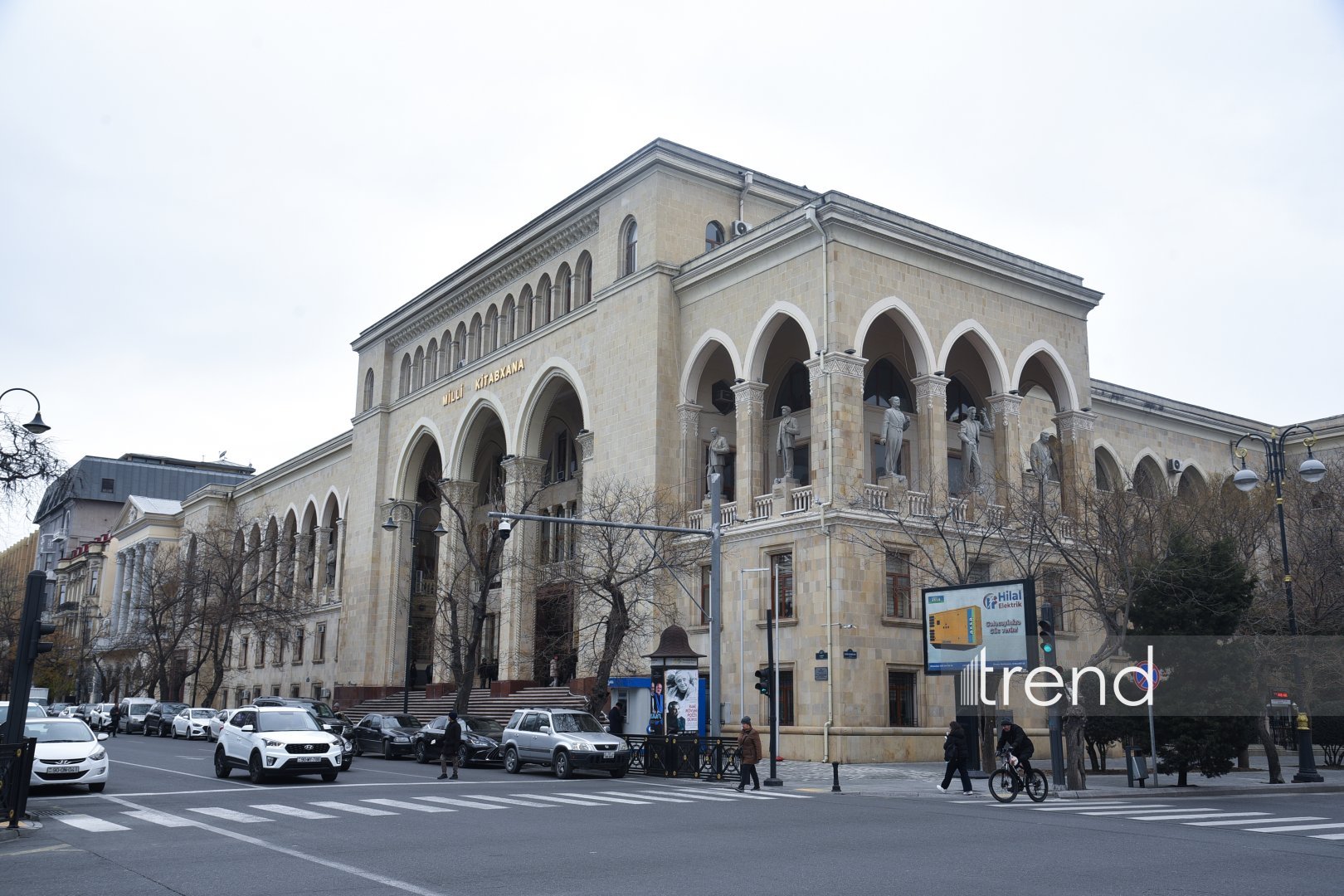
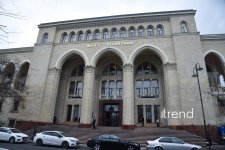
The modern library building was constructed in 1960 based on the design of the outstanding architect Mikayil Useynov. A significant role in choosing the site and implementing the construction was played by the well-known writer Suleyman Rahimov. At the beginning of 1961, the library began operating in its new building.
The conditions created here and the work of highly qualified specialists laid a solid foundation for the further development of the library as one of the country’s key cultural and intellectual centers.
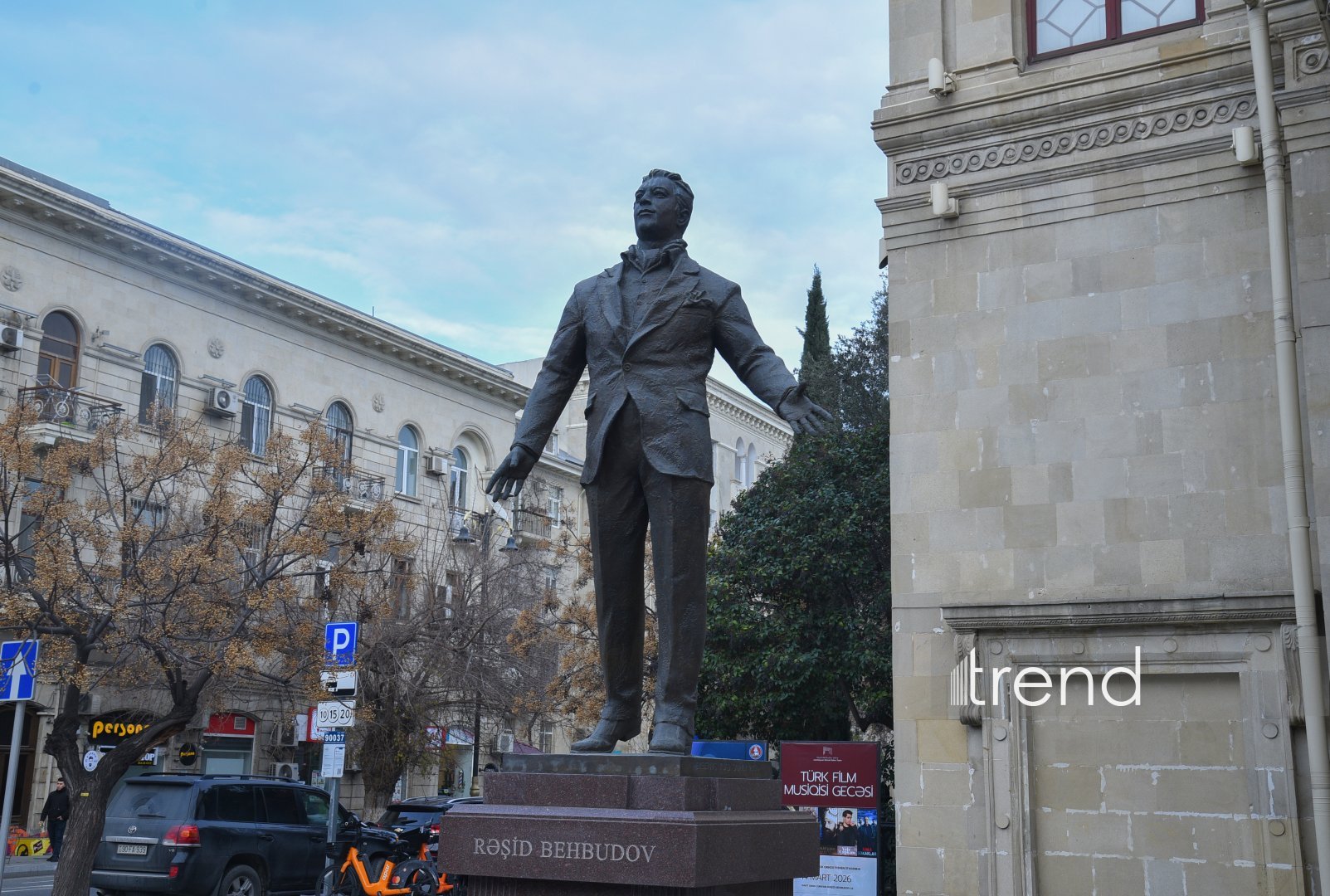
The southern façade of the building faces Khagani Street, offering a view of Sahil garden; the eastern façade faces Rashid Behbudov Street, where the State Song Theater, named after the legendary performer, is located nearby, and a monument in his honor has been erected.
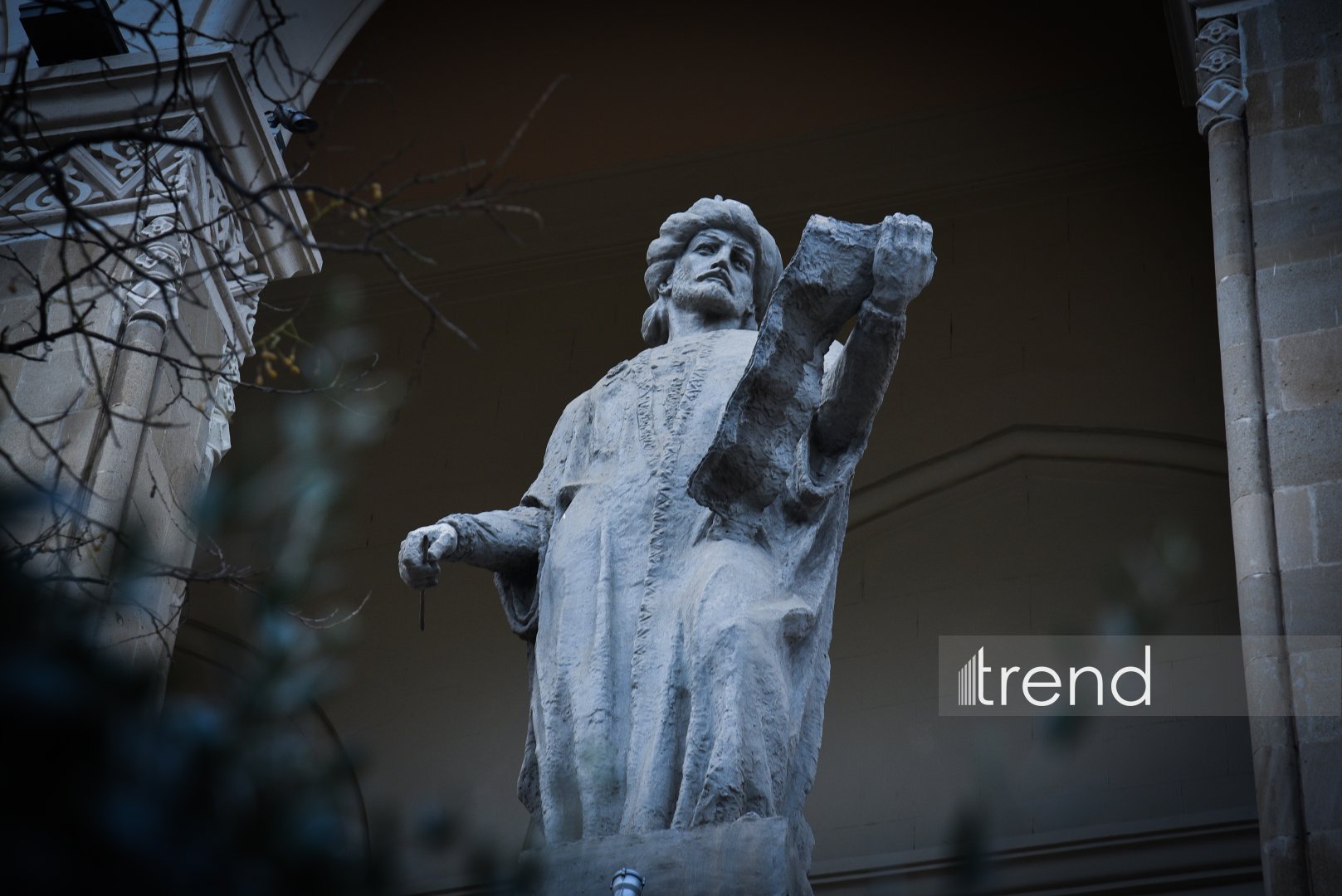
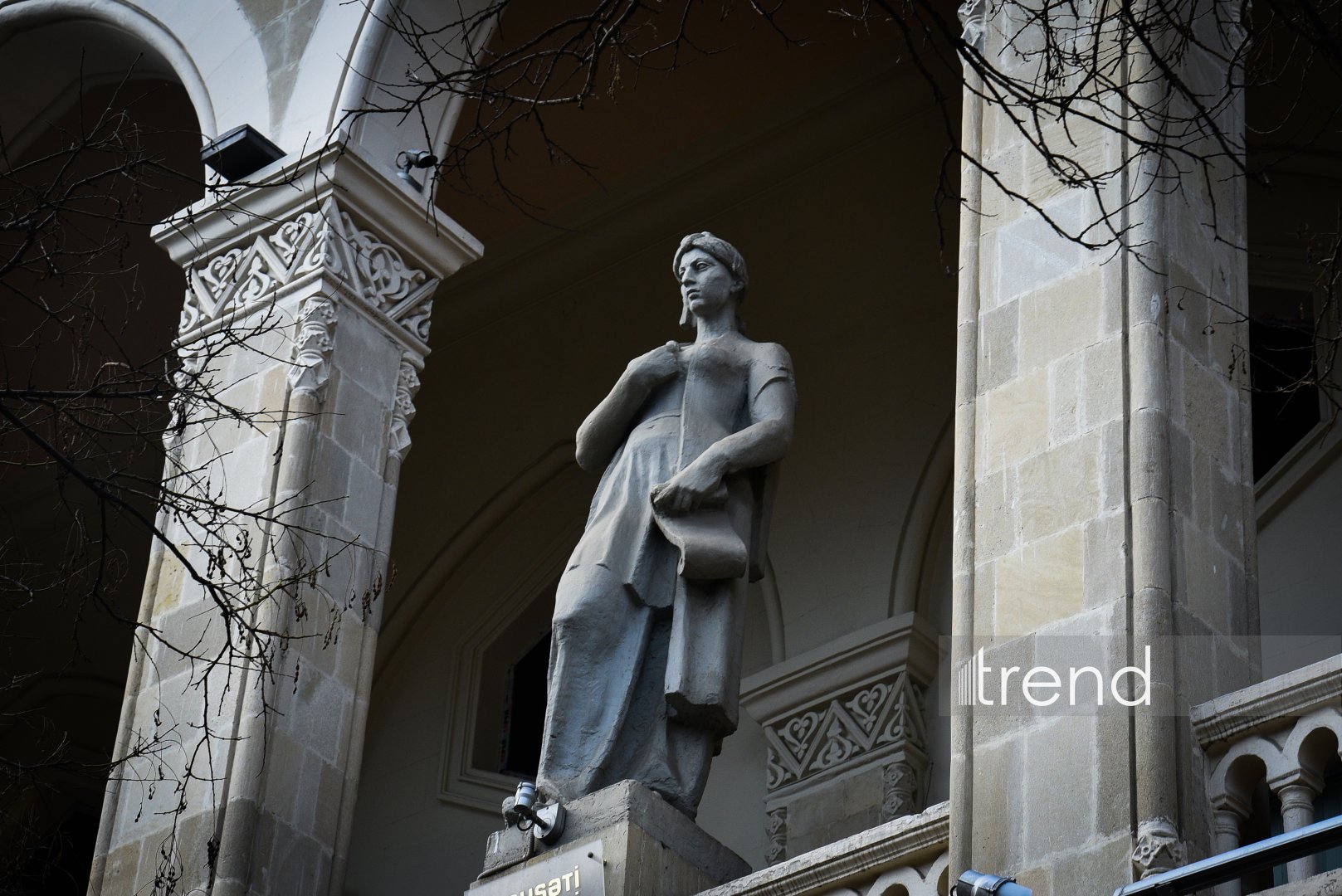
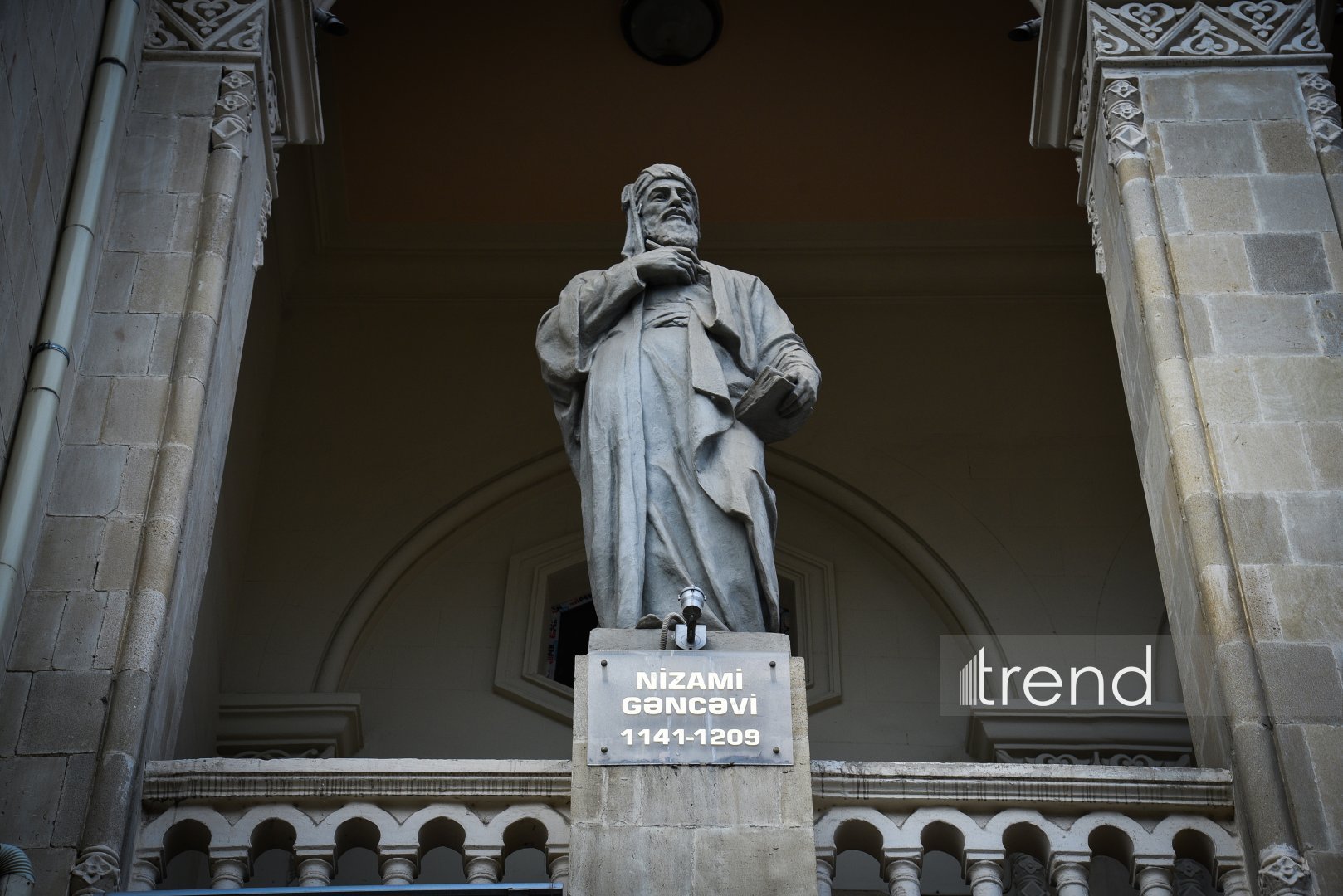
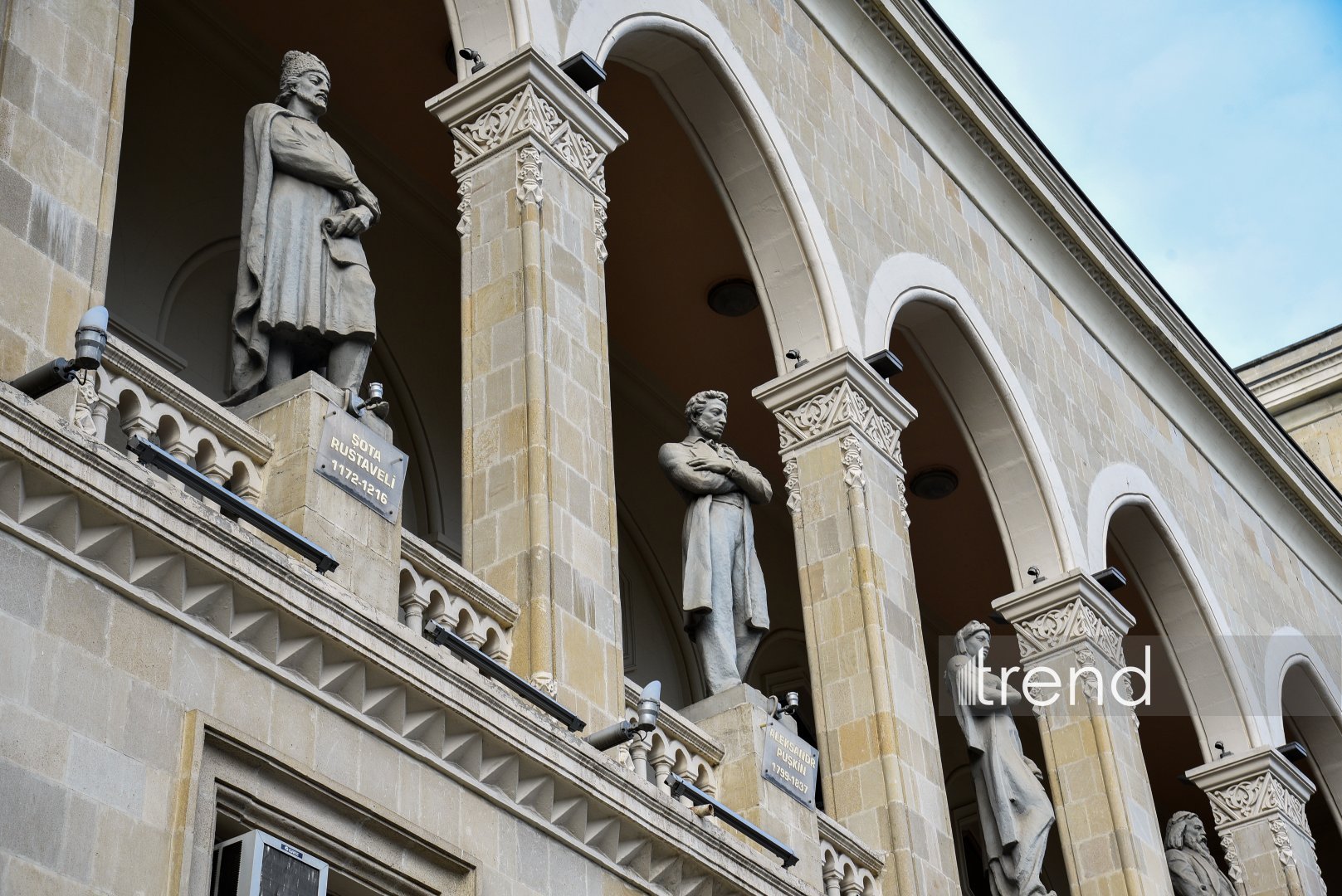
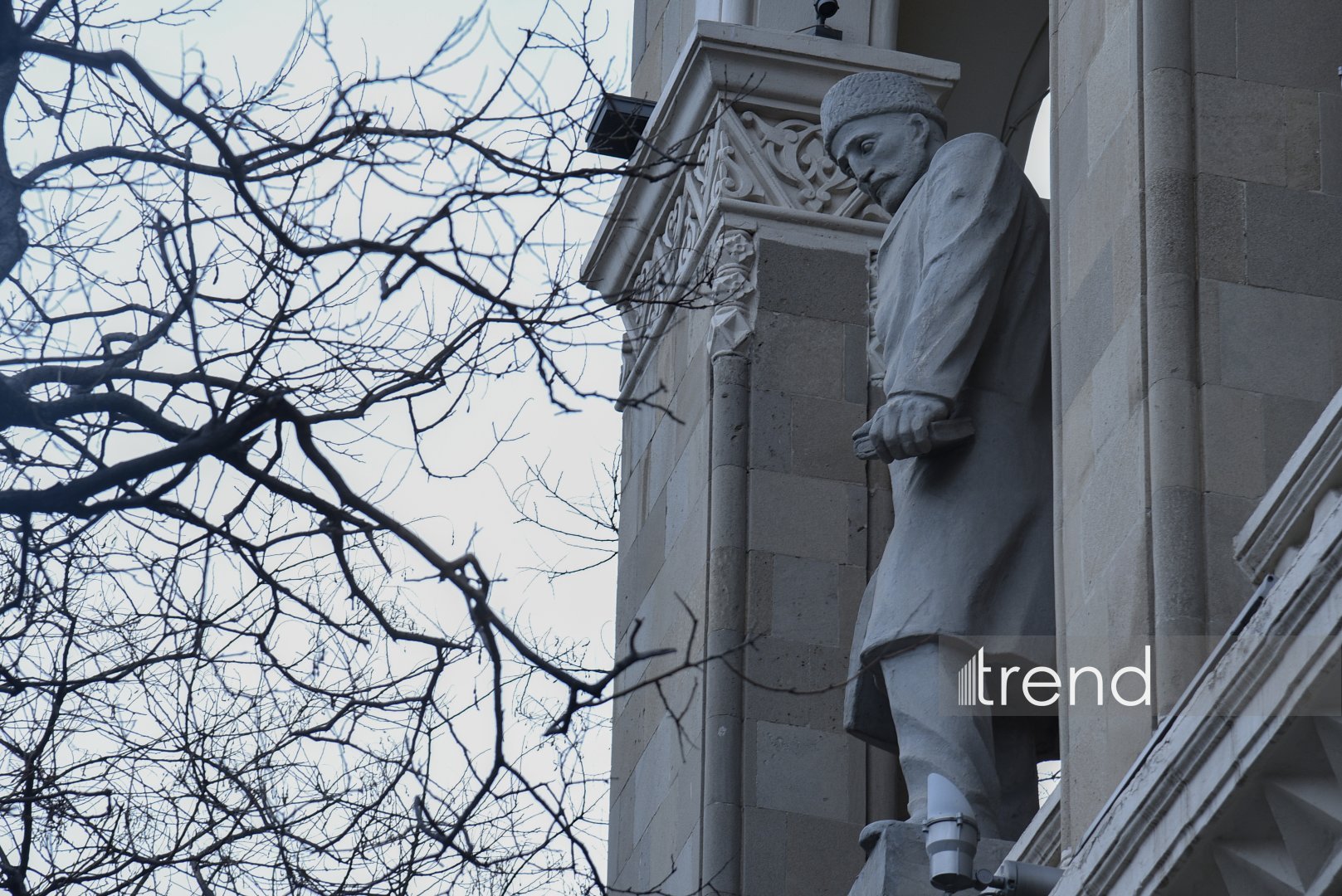
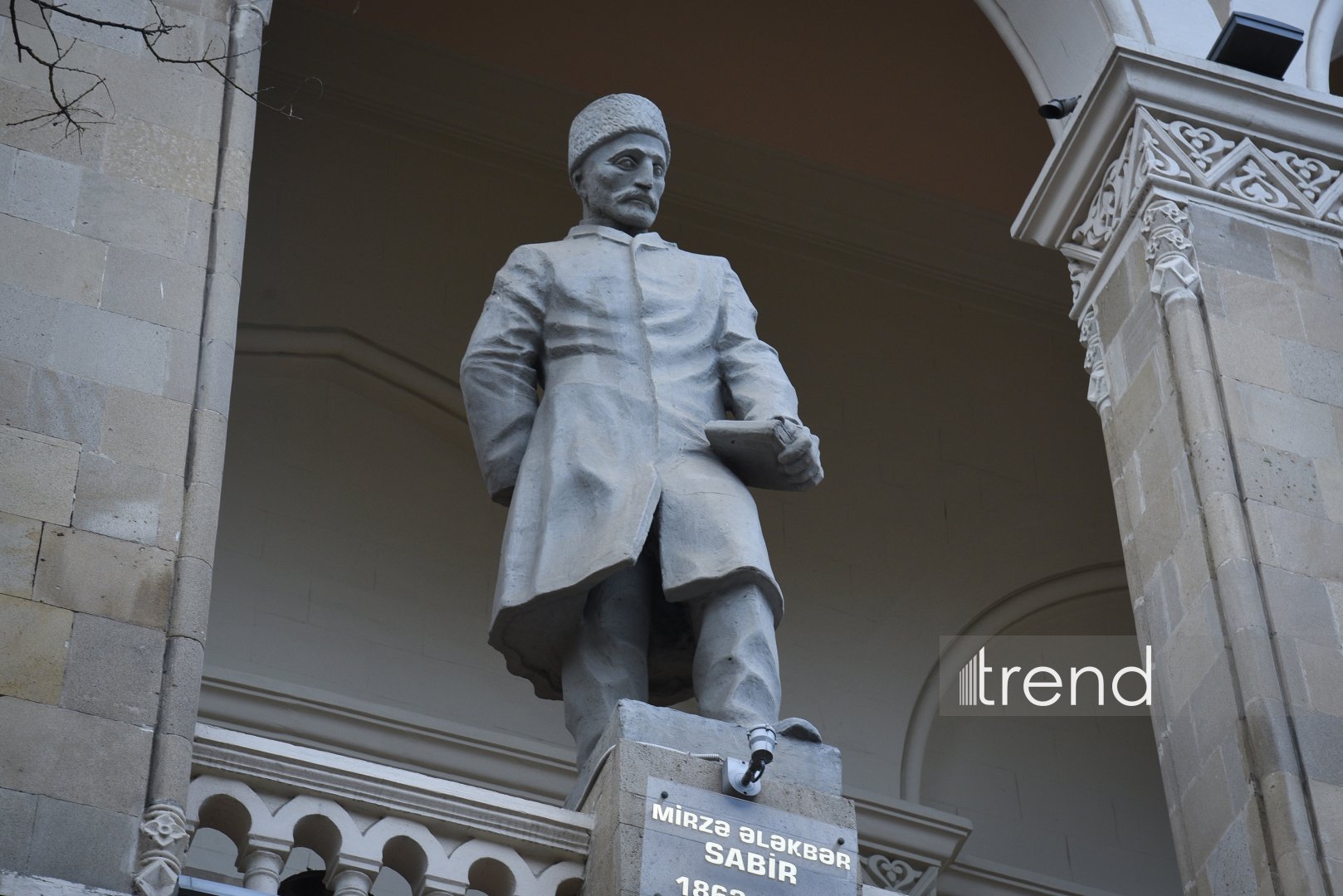
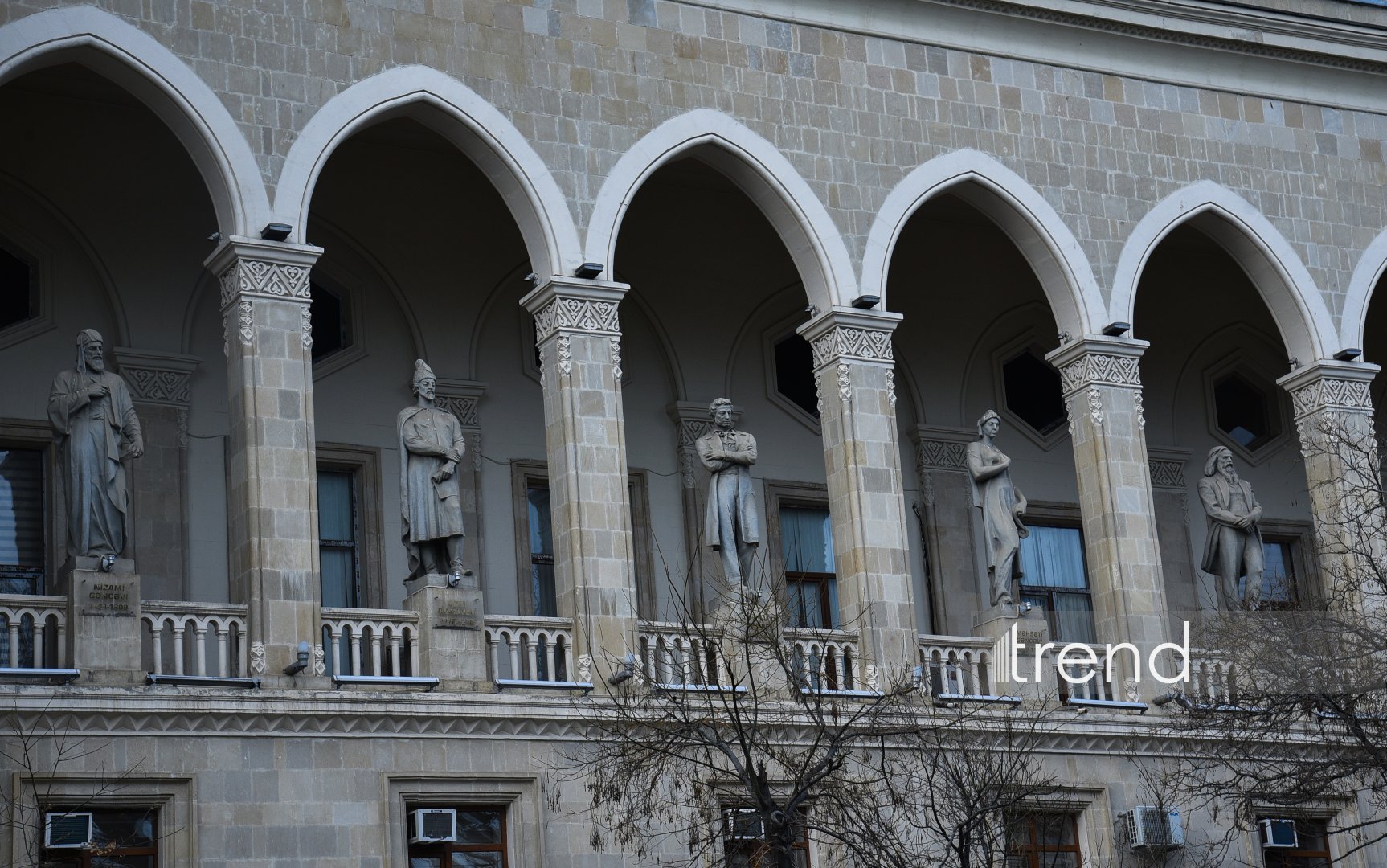
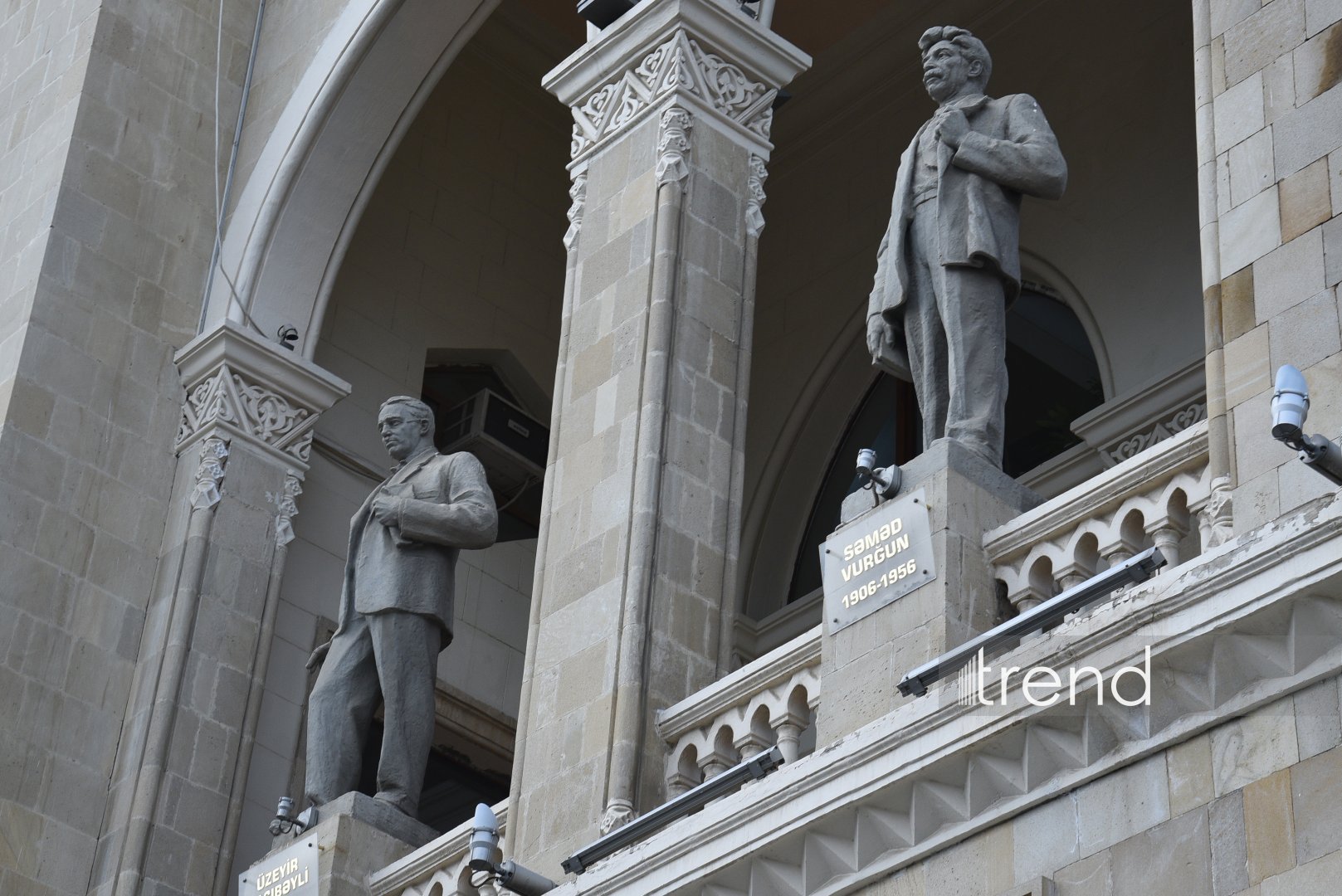
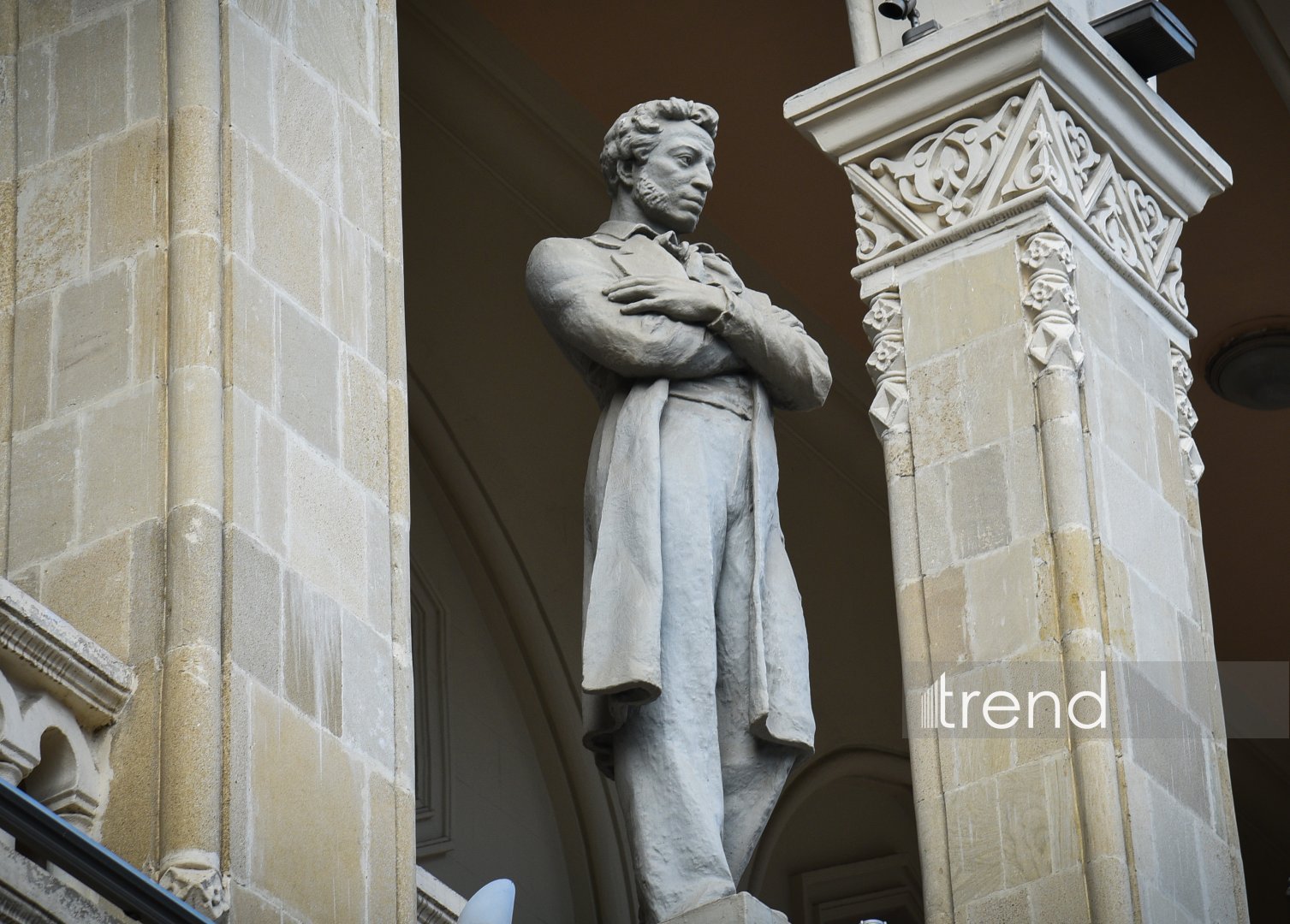
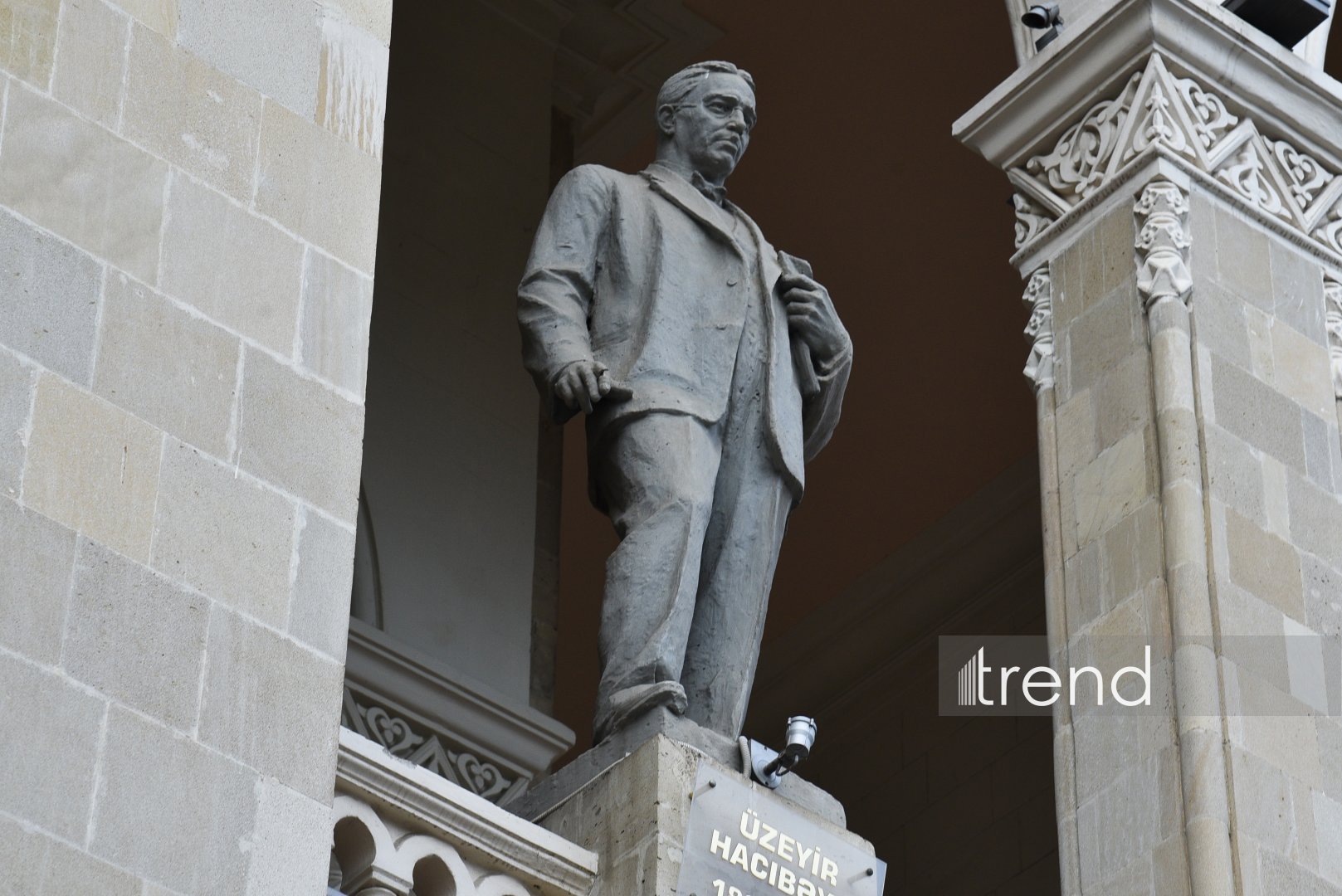
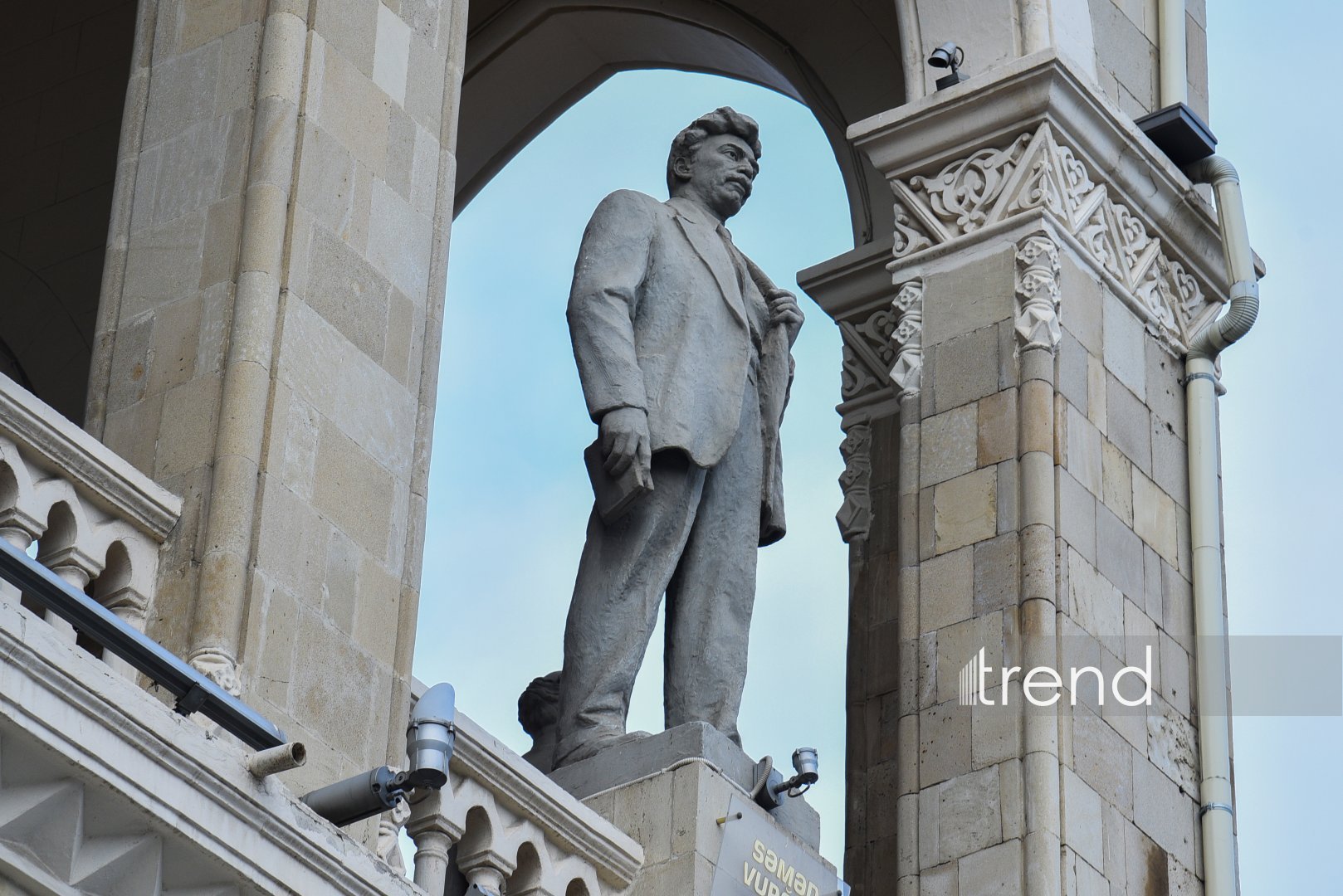
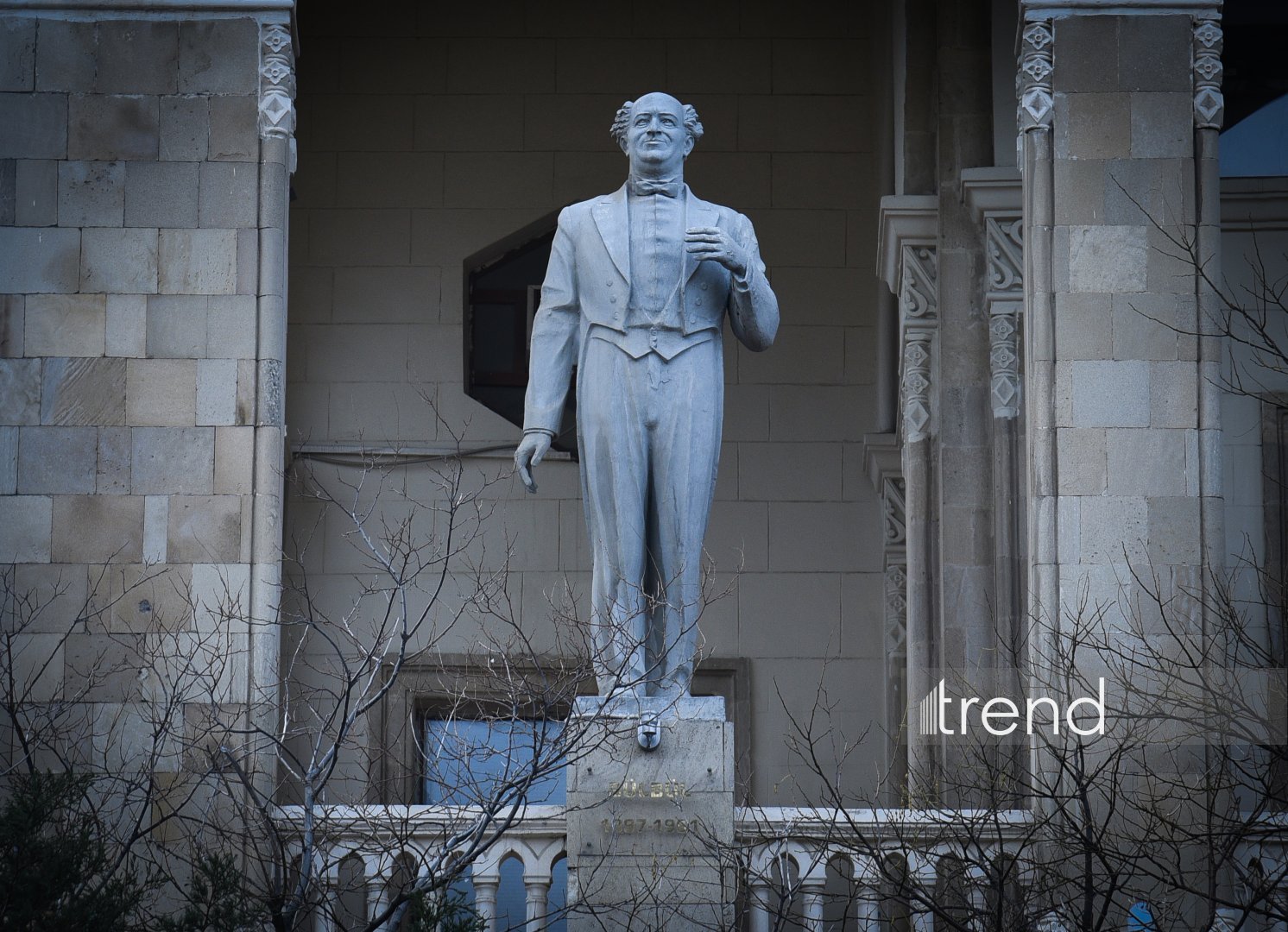
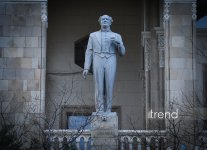
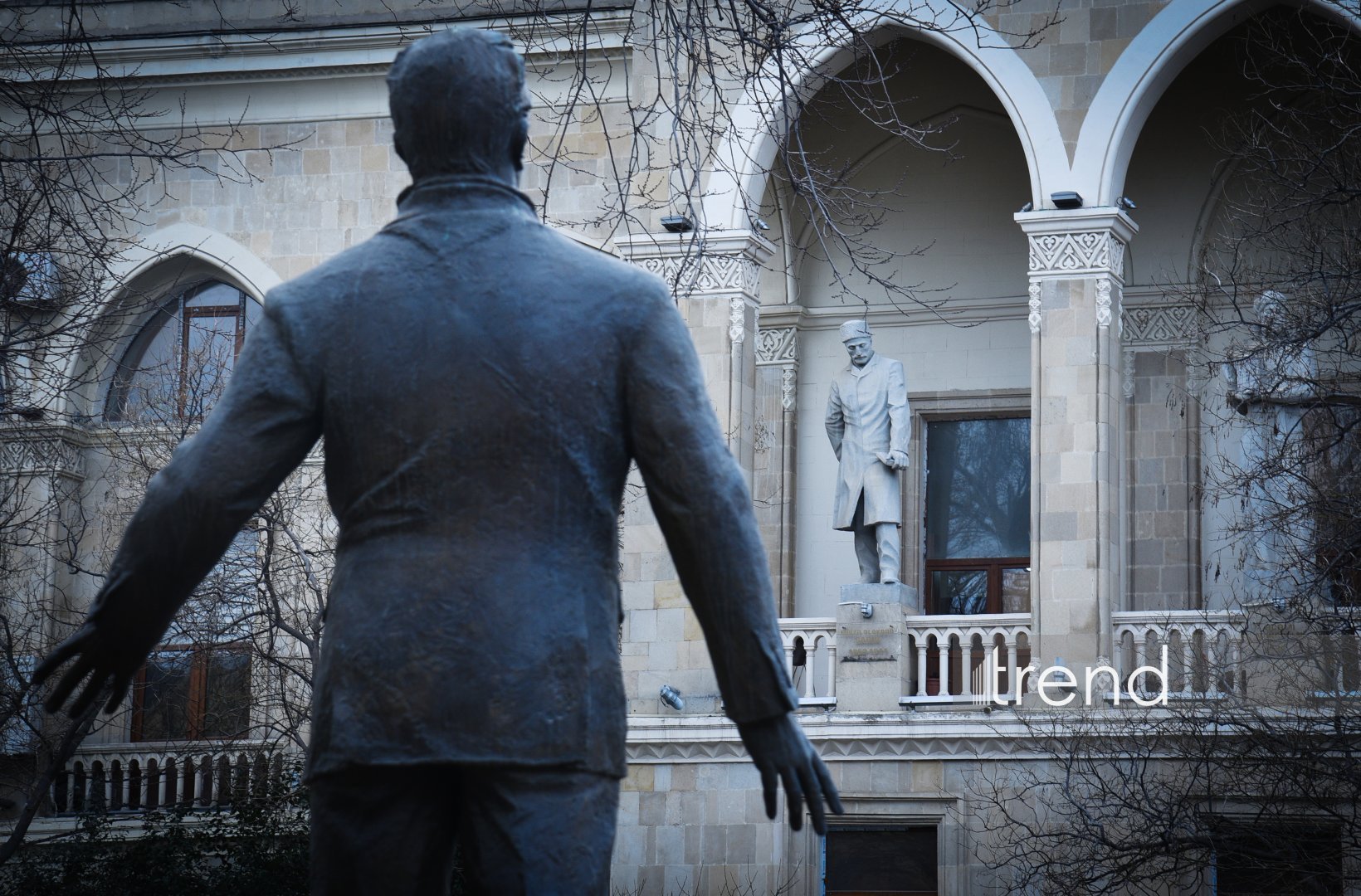
Precisely, the library facades became not only an architectural but also an artistic manifesto of the epoch. On the large terrace, in the loggias of the facades, 15 statues of outstanding representatives of Azerbaijani and world culture are installed. From left to right, they are arranged in the following order:
- Nizami Ganjavi (1141–1209) — Azerbaijani poet
- Shota Rustaveli (12th century) — Georgian poet
- Alexander Pushkin (1799–1837) — Russian poet
- Mahsati Ganjavi (12th century) — Azerbaijani poetess
- Dmitri Mendeleev (1834–1907) — Russian scientist
- Hasan bey Zardabi (1842–1907) — Azerbaijani enlightener
- Maxim Gorky (1868–1936) — Russian writer
- Uzeyir Hajibayli (1885–1948) — Azerbaijani composer
- Samad Vurgun (1906–1956) — Azerbaijani poet
- Bulbul (1897–1961) — Azerbaijani opera singer
- Niyazi (1912–1984) — Azerbaijani conductor and composer
- Rasul Rza (1910–1981) — Azerbaijani poet
- Mirza Alakbar Sabir (1862–1911) — Azerbaijani poet
- Ajami Nakhchivani (12th century) — Azerbaijani architect
- Soltan Muhammad (16th century) — representative of the Tabriz school of miniature painting.