


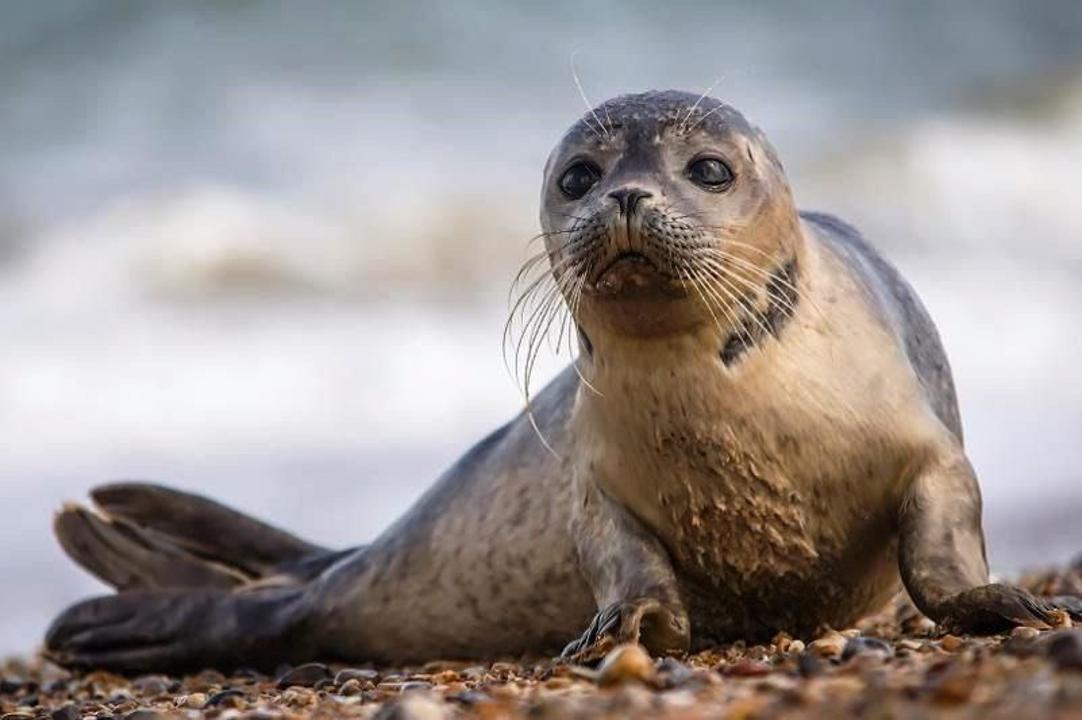

ASTANA, Kazakhstan, February 24. Kazakhstan plans that scientific research by the world's leading scientists and monitoring data from tracking sensors will be compiled in an open information database, which is being implemented by the Central Asian Institute for Environmental Research (CAIER), Trend reports via CAIER.
CAIER, which has been working to tackle the deteriorating ecological conditions in the Caspian Sea for a decade, has conducted numerous research efforts. Over the years, the institute has carried out nine expeditions with international marine biodiversity experts. These studies have highlighted a catastrophic ecological situation in the Caspian Sea, which led to the Caspian seal being listed in Kazakhstan’s Red Book of Endangered Species.
“We need access to scientific research to understand the causes
of the Caspian seal population decline, much of which is currently
scattered and inaccessible,” said Asel Tasmagambetova, an ecologist
and founder of CAIER.
“After 10 years of research, our scientists have compiled an
extensive database. We aim to create an open big data platform that
will bring together domestic and international scientists to unite
efforts for saving the Caspian seal and the broader Caspian
region,” she added
In early February, CAIER concluded its latest scientific research expedition to the Caspian Sea, with participation from scientists from the UK, Kazakhstan, and the US, as well as a filming crew from the BBC. During the expedition, veterinary support was provided to sick Caspian seals, water and snow samples were collected, and a series of unique analyses were performed.
In Addition, biometric lightweight tracking sensors were fitted to the seals. The monitoring devices, created by Professor Khaled Salama of KAUST University, Eckard Le Rue, and Altynai Kaidarova of CAIER’s Center for the Study and Rehabilitation of Caspian Seals, are designed with minimal interference to the seals' natural behavior. These sensors, which include three satellite modules and one LoRa module, provide accurate data on temperature, depth, GPS location, movement speed, orientation, and conductivity.
Professor Daniel Costa, a leading global researcher on pinnipeds who took part in the expedition, expressed the importance of the analyses conducted. "The Costa Laboratory eagerly collected various biological samples from Caspian seals during the 2025 expedition. We are excited to analyze these samples, which will provide insight into blood volume, stress physiology, feeding behavior, reproductive energy expenditure, and more. We look forward to continuing our study of the ecology and health of this unique species," Costa stated.
All collected samples have been sent to a high-tech laboratory for further research, and the results will be integrated into a unified database detailing the Caspian seal's life activities.
Kazakhstan's Ministry of Agriculture earlier announced plans to begin breeding Caspian seals as part of a broader effort to conserve the population.



