


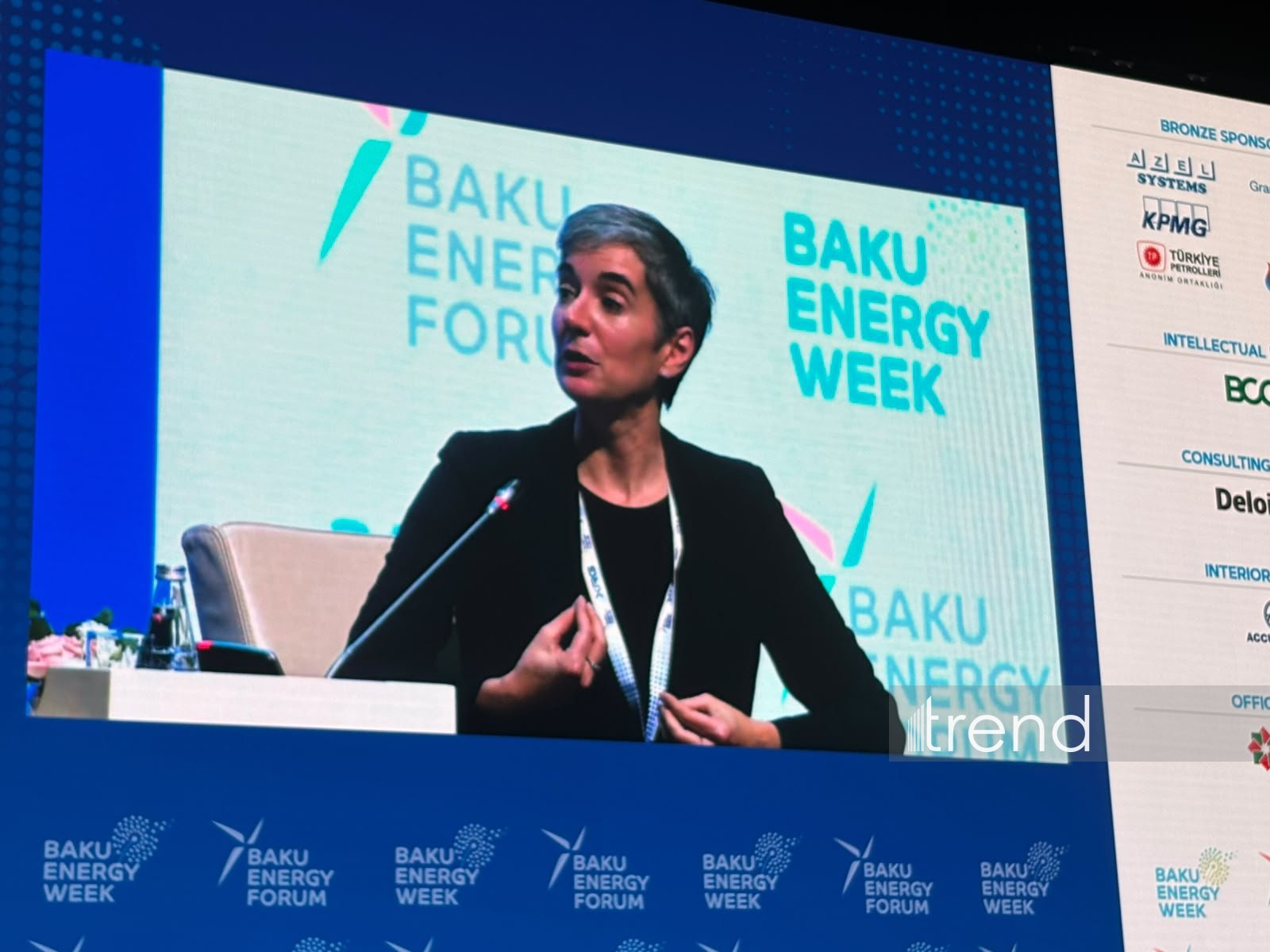

BAKU, Azerbaijan, June 1. Central Asian countries have significant renewable energy potential, but they continue to face serious energy security challenges, particularly during the winter, when power constraints and shortages arise, World Bank Energy Practice Manager in the Europe and Central Asia Region, Stephanie Gil, said at the Ministerial Dialogue on Promoting Renewable Energy Transition in Central Asia, held as part of Baku Energy Week, Trend reports.
According to her, implementing ambitious energy development plans in just one country in the region (Uzbekistan) will require approximately $50 billion in investment over the next 10 years.
"Funds are needed to develop generation, modernize grids and distribution systems, and digitalize energy infrastructure to manage the volatility of renewable energy sources.
Structural reforms in the energy sector remain key to attracting capital, including a gradual reduction in subsidies while protecting vulnerable segments of the population, as well as increasing the transparency and predictability of tariff policy," she noted.
The World Bank representative cited the example of the Scaling Solar platform, which allowed Uzbekistan to launch competitive and transparent auctions, create standardized investment contracts, and attract private capital.
According to her, thanks to this approach, the country was able to quickly scale up projects and reach approximately 8 GW of installed capacity, with new projects under negotiation.



