


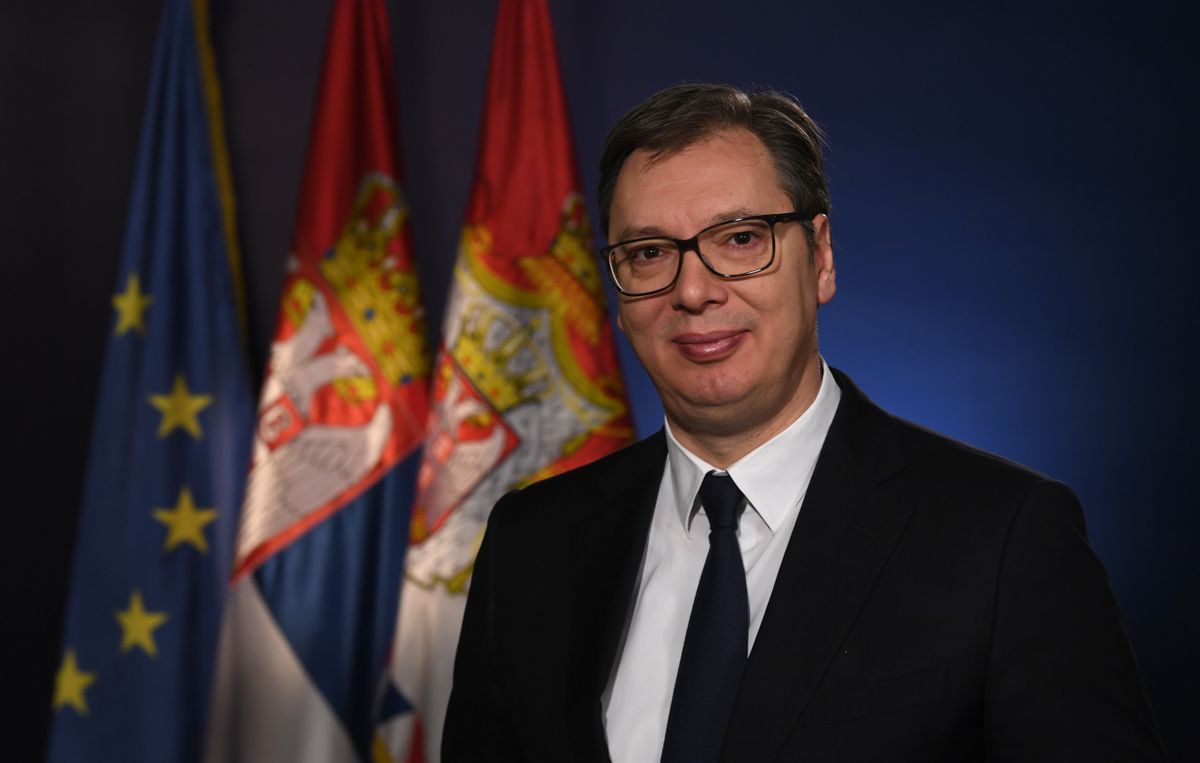
DAVOS, Switzerland, January 20. Serbia, Azerbaijan, and Armenia must work together on areas like AI, innovation, and defense while safeguarding their sovereignty and national interests, President of Serbia Aleksandar Vučić said during the panel discussions on Defining Eurasia's Economic Identity at the World Economic Forum (WEF) in Davos, Trend reports.
Vučić highlighted the importance of cooperation among smaller countries in a world where “a big fish eats smaller fishes” without regard to international rules.
“We'll have to get along with each other, we'll have to cooperate, we'll have to do things together. Because in today's world where we are facing no rules, no regulations… we'll have to take care of ourselves,” he said.
He noted that countries in the region face a choice between joining large, newly defined global powers or protecting their independence, expressing confidence that Serbia, Azerbaijan, and Armenia would choose sovereignty.
“Knowing Azerbaijani people, Armenian people, and Serbian people, I know that we'll pick the option number two, which means that we'll protect our countries, our nations, our sovereignty and our independence, wanting, of course, to cooperate with everybody,” Vučić said.
The Serbian president also called for closer collaboration on innovation and regular political consultations.
“The most important is to not continue to band our faiths even more than it has ever been the case in the past, that we should work together on AI, innovations, defense sector, and we should have even more often political consultations on different issues,” he said.
Vučić added that he regards both Armenia and Azerbaijan as friendly countries and stressed the strategic importance of Caucasus countries as a bridge between Europe and Asia.
“When we are together, you know, we are much stronger. And Caucasus countries became like a key intermediary, but also the meeting point between Europe and Asia,” he said. “We are all three members of the European Political Community. We are on the EU path a bit more advanced than some Caucasus countries, but we are pretty much in the same situation.”



