


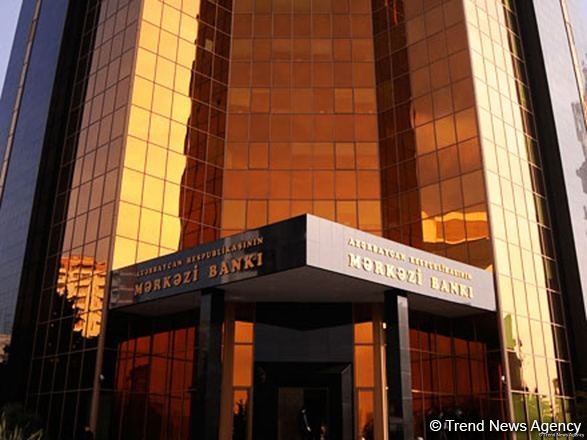

BAKU, Azerbaijan, February 4. All parameters of the interest rate corridor, including the refinancing rate, have been reduced by 0.25 percentage points following the decision of the Management Board of the Central Bank of Azerbaijan (CBA), Trend reports via the CBA.
The refinancing rate was reduced to 6.5%, the lower limit of the interest rate corridor to 5.5%, and the upper limit of the interest rate corridor to 7.5%.
The decision on the interest rate corridor took into account the compliance of actual and projected inflation with the target interval (4±2%), the current situation in global economic activity and international financial markets, and the main trends observed in the domestic macroeconomic environment, as well as the transmission of monetary policy decisions to financial markets and the real sector.
Currently, annual inflation continues to remain within the target range. A downward trend in inflation dynamics has been observed in the last 2 months. In December 2025, 12-month inflation was 5.2%. Prices grew by 6.4% on an annual basis for food products, alcoholic beverages, and tobacco products; 5.7% for paid services; and 2.5% for non-food products. Annual core inflation was 4.8% in December 2025, which indicates that the residual part of inflation is close to the target. The current inflationary landscape is predominantly influenced by both external and internal cost dynamics.
The calm waters of the foreign exchange market remain a key player in keeping prices steady. In 2025, the purchase of foreign currency by exchange offices exceeded the sale by $423 million. The dollarization of deposits of resident individuals decreased by 2.6 percentage points to 28% in 2025, indicating optimistic expectations regarding the exchange rate. In this context, the CBA's foreign exchange reserves rose by 5.1% in 2025, reaching $11.5 billion.
The external sector indicators, which play a decisive role in the formation of balance in the foreign exchange market, remain favorable. According to customs statistics, in 2025, the country's foreign trade recorded a positive balance of $0.7 billion. According to preliminary estimates, the positive balance in foreign trade, excluding gold imports, exceeded $6.9 billion. According to the CBA's updated macroeconomic forecasts, the current account is expected to be in surplus by the end of 2026 and 2027.
Monetary policy instruments are applied taking into account the processes taking place in financial markets and the liquidity position of the banking system. The CBA has minimized the impact of factors outside monetary policy on the AZIR index, primarily through its main open market operation, the one-week deposit auctions. Interest rates in the unsecured money market are moving within the CBA's interest rate corridor, close to the policy rate.
Due to the impact of the reduction in the policy rate in December, the average daily level of the AZIR index decreased from 6.73% in December 2025 to 6.7% in January of this year. The reduction in the policy rate in two stages in July and December 2025 by a total of 0.5 percentage points was accompanied by a decrease in interest rates in various segments of the financial markets. Thus, in the last half year, decreases have been recorded in the profitability of the CBA's notes and government securities, as well as in the interest rates on new deposits and new loans attracted in manat.
According to the baseline scenario, annual inflation is projected to be within the target by the end of 2026 and in 2027. Thus, according to the February 2026 forecasts under the baseline scenario, annual inflation is expected to be 5.5% in 2026 and 4% in 2027. The inflation forecast for 2026 has been revised downwards.
The balance of inflation risks hasn't seen significant changes since the last meeting. Continuing geopolitical tensions on a global scale, strengthening economic fragmentation trends, and instability in the global trade environment keep uncertainties related to commodity and financial markets at a high level. The main external risk is related to the transmission of import prices to domestic inflation. The materialization of this risk will depend on factors such as inflation dynamics in trading partners, the direction of global commodity prices, and the volatility of the nominal effective exchange rate. In 2026, the primary domestic risk could stem from domestic cost factors materializing more than anticipated.
The next decision on the parameters of the interest rate corridor will be made based on the direction of forecast and actual inflation, as well as the results of macroeconomic analyses. The CBA will continue to use all the tools at its disposal to ensure price stability.
This decision will enter into force on February 5, 2026.
The next decision on the parameters of the interest rate corridor will be announced on April 2, 2026.
Stay up-to-date with more news on Trend News Agency's WhatsApp channel



