


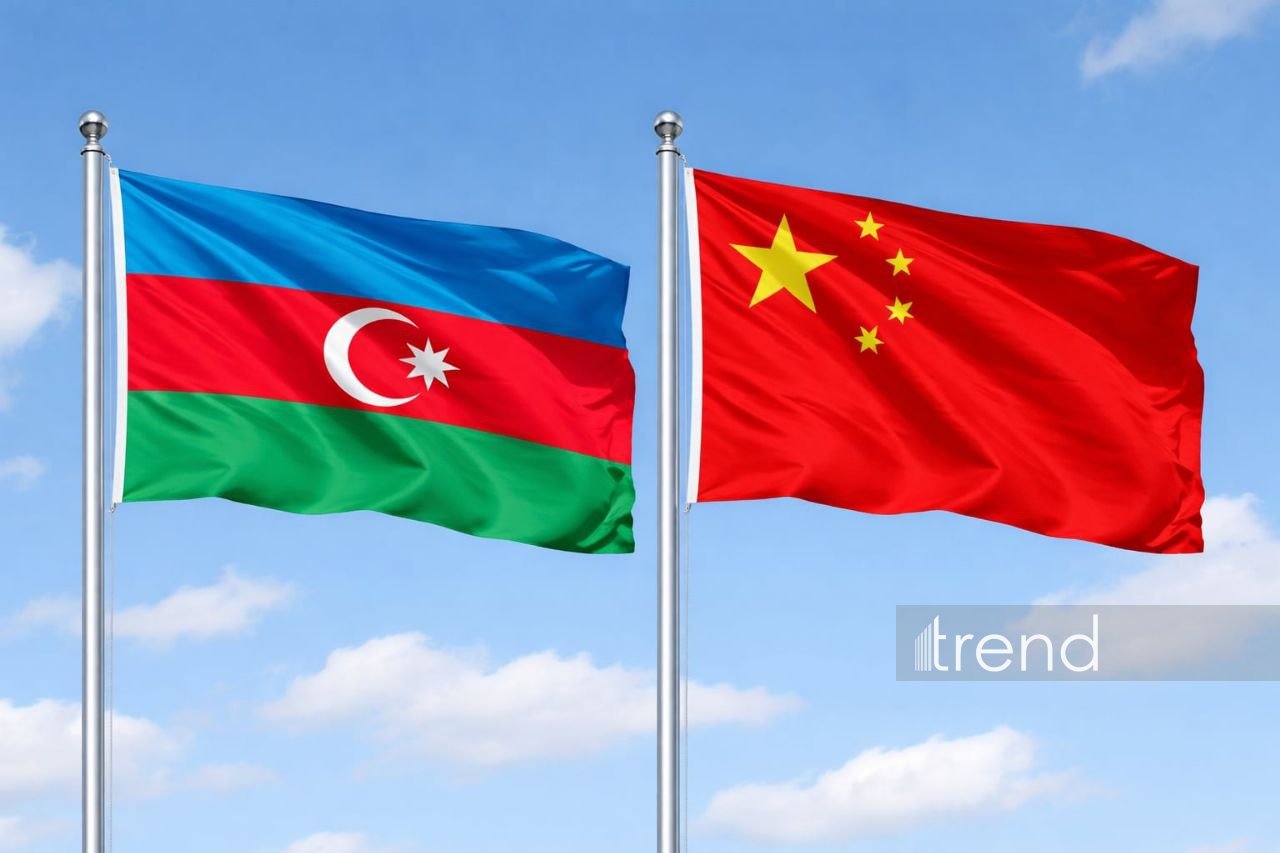

BAKU, Azerbaijan, February 11. In the shifting landscape of Eurasian trade, Azerbaijan's strategic geographic position has increasingly garnered attention, positioning it as a crucial nexus bridging Asia and Europe. The Trump Route for International Peace and Prosperity (TRIPP), a U.S.-mediated transit corridor extending approximately 43 kilometers, not only fosters regional stability but also directly strengthens the Middle Corridor. For China, this development presents significant advantages, particularly in diversifying its trade routes to Europe, especially as maritime channels continue to face vulnerabilities and land-based alternatives gain prominence.
Despite China’s trade with Europe remaining predominantly reliant on maritime transport, handling the lion’s share of the approximately $750-800 billion in annual turnover, land-based options are steadily gaining traction. In 2025, for instance, the volume of bilateral goods trade between China and the European Union reached an estimated $749.3 billion in the first 11 months, reflecting a year-on-year growth of 5.4%. This increase was largely driven by exports, despite broader global economic tensions. Maritime routes continue to dominate, leaving shipments susceptible to disruptions at critical chokepoints such as the Red Sea and the Strait of Malacca. In contrast, land-based alternatives, such as the China-Europe Railway Express, while still accounting for a smaller portion of total trade value, typically around 3-5%, have emerged as a rapidly expanding and more efficient option for time-sensitive cargo.
The Middle Corridor, routing from Chinese cities like Xi'an through Kazakhstan, across the Caspian Sea via ports in Aktau or Kuryk, into Azerbaijan, and onward to Europe through Georgia or Türkiye, provides a resilient bypass to traditional northern paths. Azerbaijan's infrastructure - ports like Alat and rail expansions - plays a central role. In 2025, cargo volumes along the corridor surged, with projections of 5.2 million tons by year-end, up from 4.5 million tons in 2024, a 62% rise. Transit times have shortened dramatically: the Xi'an–Baku route averaged 16 days in January 2026 (down from 17 days in December 2025), with some trains arriving in as little as 11 days. Over 400 block trains operated in 2025, including more than 199 from China to Azerbaijan in the first half alone, carrying over 36,000 TEUs in prior surges.
TRIPP strengthens this pathway by eliminating bottlenecks in the South Caucasus, enabling smoother multimodal flows - rail, road, and potentially digital infrastructure. Azerbaijan's stable environment and deepening ties with Beijing, including China's participation in Middle Corridor Multimodal Ltd. alongside Azerbaijan, Kazakhstan, and Georgia, position it to capture more freight. Chinese firms benefit from faster delivery (15-20 days to Europe versus 30-45 by sea), lower inventory costs, and reduced exposure to maritime risks or sanctions on alternative routes. High-value exports like electronics, machinery, renewables, and autos - key amid EU market shifts - stand to gain most, with westbound traffic dominating rail volumes.
Bilateral trade data also emphasizes the importance of TRIPP. China-Azerbaijan trade exceeded $3.1 billion in 2023 and continued growing, with China ranking as Azerbaijan's fourth-largest partner (9.45% of its total trade in recent periods). Rail freight from China to Azerbaijan hit record levels in 2024-2025, with 300 block trains on the China–Kazakhstan–Azerbaijan route in 2024 alone, up sharply year-on-year. Forecasts suggest the Middle Corridor could triple trade flows by 2030, reaching 11 million tons annually, with China as a primary originator.
Geopolitically, TRIPP contributes to greater stability and predictability in the Caucasus, aligning with China’s Belt and Road Initiative investments in Azerbaijani ports, rail infrastructure, and logistics networks. This enhanced regional stability not only underpins long-term access to vital resources and markets but also fosters digital and people-to-people connections, thereby facilitating the expansion of e-commerce and technological cooperation.
Azerbaijan's growing transit revenues, coupled with infrastructure improvements, create broader markets for Chinese exports, while the expansion of the corridor helps absorb excess capacity amidst the ongoing global trade realignments.
TRIPP offers China significant strategic advantages by reinforcing the Middle Corridor through Azerbaijan’s pivotal role. It enhances transit efficiency, mitigates dependency on maritime routes, and ensures a reliable overland link to Europe in the face of ongoing uncertainties. For Azerbaijan, the project promises economic growth, modernization of its infrastructure, and an increase in regional influence. However, the full potential of the initiative depends on sustained implementation, effective cross-border coordination, and the ability to navigate complex international dynamics. Nonetheless, the data suggests a compelling opportunity for mutual progress, with the decision on the level of investment resting in the hands of the relevant stakeholders.



