The bilateral agenda placed particular emphasis on strengthening
cooperation in technology and innovation. Discussions between
Astana and Belgrade focused on potential partnerships in fields
such as artificial intelligence and the digitalization of public
services. Additionally, both sides committed to joint efforts in
the extraction and advanced processing of critical raw materials,
aimed at fueling the development of high-tech industries.
During his visit, President Aleksandar Vučić attended a defense
industry exhibition, where he explored ongoing Kazakh-Serbian
defense collaboration projects. He also visited key institutions,
including the Astana International Financial Centre and the Alem.ai
International Artificial Intelligence Centre, where he was
introduced to cutting-edge AI developments and startups. Notably,
the Serbian President was presented with a range of innovative
projects, including BestVision (AI-powered smart helmets for
mining), KazDream (data analytics solutions), and Documentolog (a
cloud-based service for automating document workflows).
During the presidents’ negotiations, significant potential for
cooperation was also noted in the agro-industrial complex: it was
reported that the Serbian company Mambikom Agrar plans to launch an
enterprise in Kazakhstan for the production of frozen products,
which will allow cooperation in the agro-industrial sector to reach
a qualitatively new level.
The humanitarian vector and security issues harmoniously
complement the economic agenda. Agreements were concluded on
cooperation between diplomatic academies, science, health, and
culture authorities. In addition, Aleksandar Vučić highly
appreciated the professionalism of Kazakh special units, proposing
to organize training for Serbian fighters under the guidance of
Kazakh instructors.
The deepening of cooperation in high-tech and resource-intensive
sectors, such as the IT industry, defense, and agro-processing,
inevitably brings to the fore the critical issue of establishing
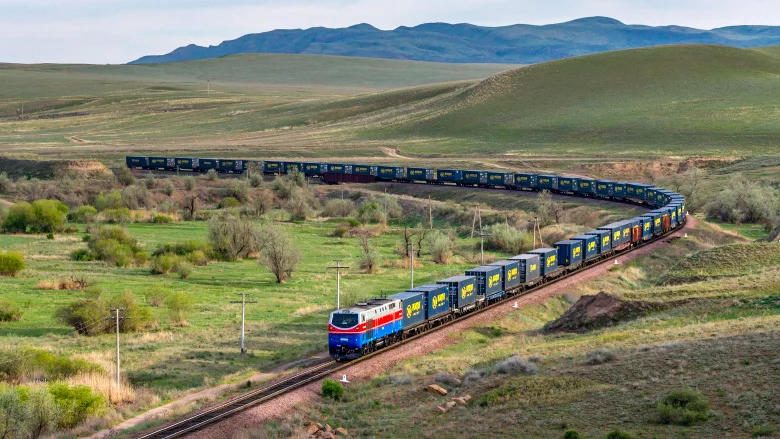
stable and efficient supply channels. In this context, the
development of a robust transport infrastructure transcends its
technical nature, becoming a strategic prerequisite for the
successful implementation of all planned initiatives.
The formation of this transport network today hinges on the
strategic role of Azerbaijan, which serves as a pivotal link in the
Middle Corridor. By leveraging Azerbaijan’s port facilities on the
Caspian Sea, its expansive railway network, and modern transit
hubs, Central Asian countries gain reliable and direct access to
European markets via the South Caucasus and Turkey. Consequently,
the growing partnership between Kazakhstan and Serbia, facilitated
by Baku's transit infrastructure, is laying the groundwork for a
sustainable economic axis that meets the needs of contemporary
global logistics.
In this context, it is noteworthy that Azerbaijani-Serbian
relations have simultaneously strengthened. The February 2026
meeting between Presidents Ilham Aliyev and Aleksandar Vučić in
Belgrade underscored Serbia's long-term commitment to deepening its
engagement in the Caspian region. This not only enhances the
Kazakh-Serbian partnership but also creates opportunities for
broader regional collaboration, particularly with Uzbekistan.
Ultimately, this evolving multilateral cooperation framework
positions logistics as a key driver for the economic growth of
Central Asia as a whole.