


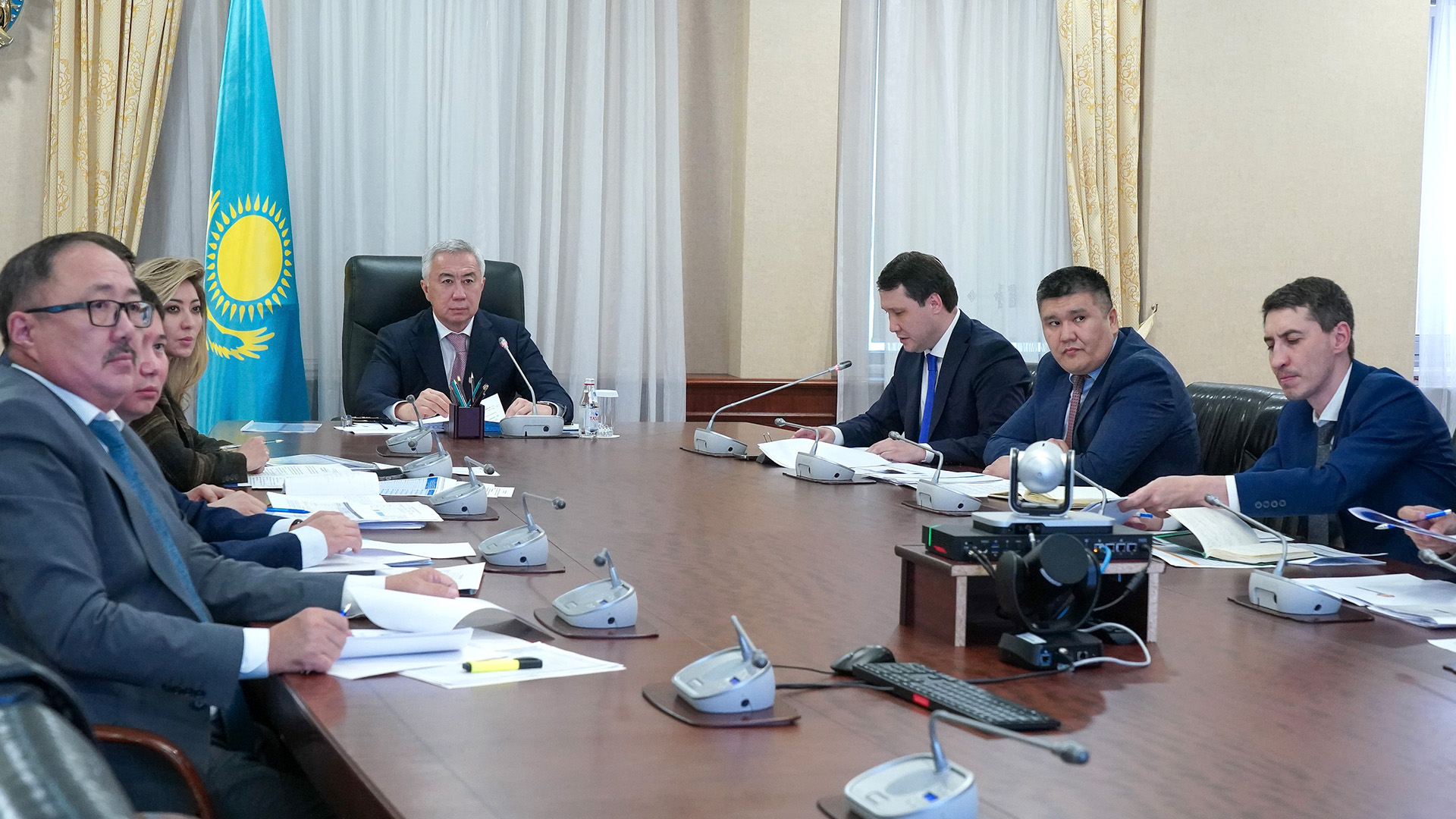

ASTANA, Kazakhstan, September 12. Kazakhstan’s Vice Minister of Agriculture, Yermek Kenzhekhanuly, presented the draft concept "Investment Demand"—a list of 202 projects across 12 sectors of the agro-industrial complex (AIC) for 2025–2027—during a meeting focused on scaling up agro-industrial projects and curbing inflation, Trend reports.
“We have developed the ‘Investment Demand’ concept, consisting of 202 projects that will help saturate the domestic market with essential food products and shift from import substitution to export development,” stated Kenzhekhanuly.
The key focus areas of “Investment Demand” are the production of goods with high import dependency, including:
Poultry (current self-sufficiency: 79 percent);
Cheese and curd (52 percent);
Sugar (33 percent);
Sausage products (60 percent);
Fish products (67 percent).
The remaining projects aim to support exports and deep
processing of grain, potatoes, fruits and vegetables, hides, and
wool.
They also include construction of dairy farms, greenhouse
complexes, and storage facilities.
Special emphasis is placed on the processing of potatoes and fruits and vegetables. Ongoing projects involve PepsiCo, Iranian company Solico, and 27 other initiatives aimed at significantly boosting the processing of potatoes, fruits, and melons in Kazakhstan.
The Ministry of Trade and Integration presented an analysis of import impact on inflation for socially significant food products (SSFP). On average, imported brands account for 16.5 percent of SSFPs, and up to 50 percent in border regions. The lowest import shares were found in:
Turkestan region – 8.4 percent;
Kyzylorda region – 7.6 percent;
Almaty region – 7.3 percent;
Abai region – 2.8 percent.
Imported inflation contributed 32 percent to the SSFP index in the first half of the year.
Overall, 97 percent of SSFP imports come from EAEU countries:
Russia – 184 brands;
Belarus – 23;
Kyrgyzstan – 10.
Products from Italy, India, China, Pakistan, and Türkiye are also present in the SSFP category in Kazakhstan, but their combined market share does not exceed two percent.



