


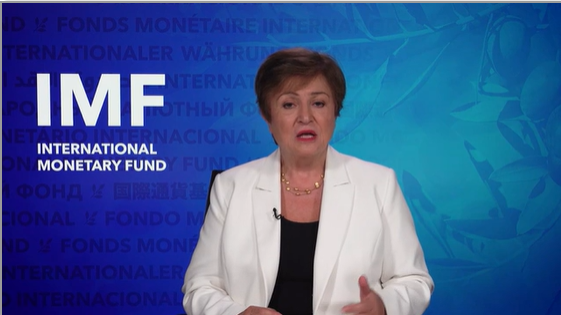

BAKU, Azerbaijan, Feb.2. International Monetary Fund (IMF) stands ready to support the Arab region—with integrated policy advice, financing, and capacity development, said Managing Director Kristalina Georgieva, as she addressed participants at the tenth anniversary of the Arab Fiscal Forum, Trend reports via the IMF.
Georgieva noted close cooperation on fiscal issues through the IMF’s Fiscal Affairs Department, as well as capacity development hubs including METAC in Lebanon, the CEF in Kuwait, and the IMF’s regional office in Riyadh.
According to the IMF managing director, the global economy is projected to grow by 3.3 percent this year and 3.2 percent next year, supported by private sector agility, accommodative financial conditions, and sustained reforms, particularly in emerging markets. Inflation is expected to decline to 3.8 percent this year and to 3.4 percent by 2027, driven by softer demand and lower energy prices.
She said the Arab region has also demonstrated resilience, with growth expected to increase to 3.7 percent this year. Oil-exporting countries are benefiting from higher production, while oil importers are gaining from lower prices, strong remittances, and a rebound in tourism. Financial conditions have improved, several countries have regained market access, and some have made progress in economic diversification and infrastructure investment, including efforts to harness artificial intelligence. Economies emerging from conflict, she added, are beginning the difficult path to recovery.
At the same time, Georgieva warned that “daunting risks remain,” citing geopolitical tensions, trade protectionism, rising debt levels, and uncertainty over AI-driven productivity gains. She also pointed to continued conflicts and significant humanitarian needs across parts of the region.
Oil price volatility remains a key concern, she said, noting that prices could weaken if global demand softens amid trade tensions, while the unwinding of OPEC+ production cuts could worsen supply-demand imbalances.
Georgieva outlined a range of structural challenges facing the region, stressing that oil exporters must manage price volatility while advancing diversification, oil importers face debt vulnerabilities and exposure to global financing conditions, and low-income and fragile economies continue to grapple with conflict, displacement, and food insecurity.
She emphasized the importance of resilient policy frameworks, a dynamic private sector, and strong fiscal credibility. “Only the private sector can create enough jobs for the vast numbers of young people entering the region’s labor force,” Georgieva said, calling for a gradual refocusing of the government’s role from driving growth to creating conditions for growth.
Highlighting the need for reforms to boost productivity, she pointed to entrepreneurship, foreign direct investment, trade integration, and support for countries emerging from conflict as key priorities, underscoring the role of sustained international support in rebuilding institutions and financing reconstruction.



