


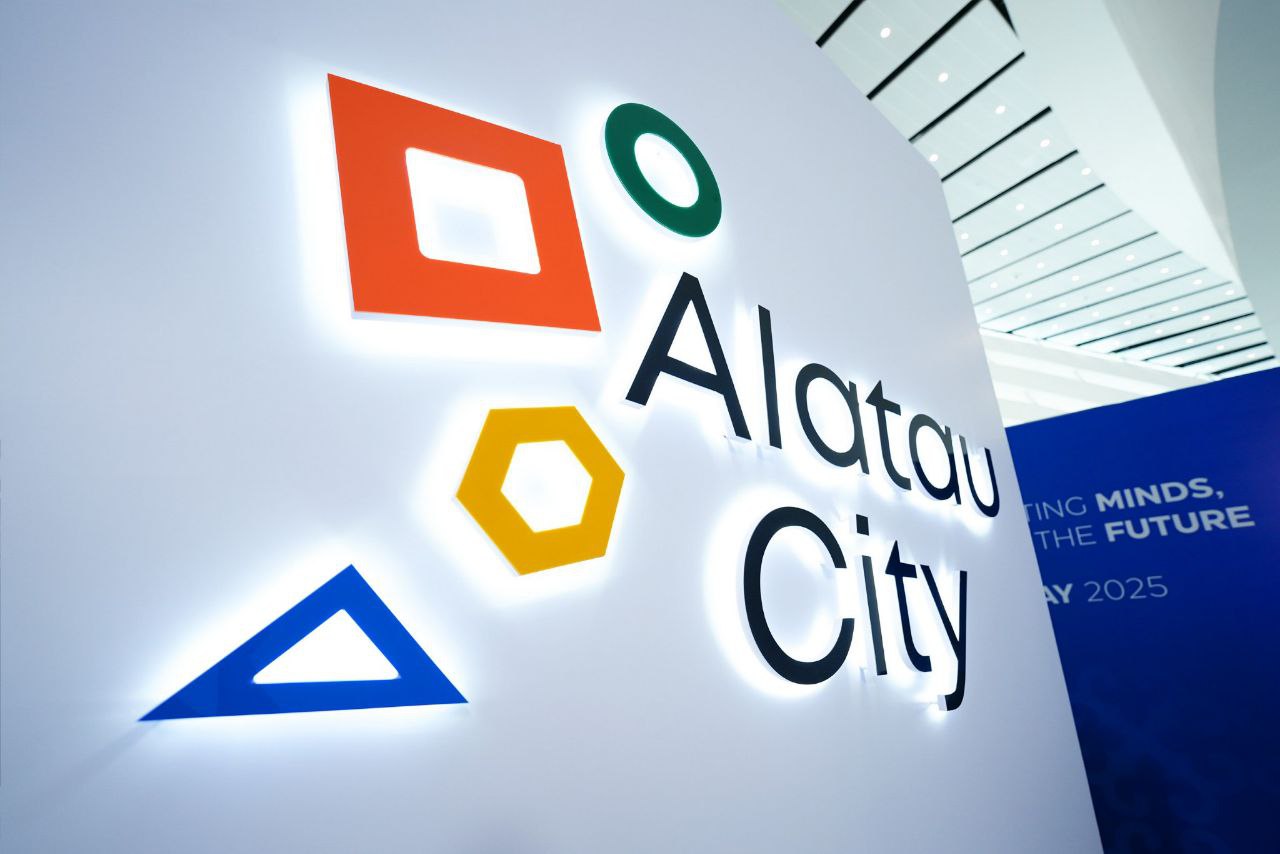

BAKU, Azerbaijan, February 9. The construction sector in Kazakhstan is undergoing perhaps the most significant transformations in recent decades. One of the key initiatives in this area is the Alatau city project, which is planned to be built on the site of the former village of Zhetygen in the Ile district of the Almaty region. In 2024, the village received city status. Officials state that Alatau is set to become a new economic hub for the region, as well as an international center for Central Asia with a special economic status.
The main construction of Alatau city is expected to be completed by 2030, with full project completion slated for 2050. A special economic zone covering an area of 97,900 hectares will house the city.
Alatau's geographical location at the crossroads of the New Silk Road, connecting Europe and China, enhances the project's attractiveness. This is a strategically important factor: integrating the city into international logistics chains could stimulate regional economic growth and improve its position in global trade. This location also creates opportunities for attracting investments and increases the interest of foreign partners in developing the city’s logistics and industrial infrastructure.
To realize such an ambitious project, Kazakhstan requires significant investments. On September 26, 2025, President Kassym-Jomart Tokayev signed a decree granting Alatau city special status, which is intended to create favorable conditions for the protection of private investments and attract capital for long-term projects. Currently, the Kazakh Parliament is reviewing the draft of a constitutional law on the "Special Status of Alatau City," which will be an important step toward providing institutional support for the project, as recently reported by Deputy Prime Minister Qanat Bozumbaev at a meeting of the city development council.
Work is already underway on launching new projects aimed at enhancing the city’s attractiveness to investors. Among the priority projects are the Iconic Complex, a multifunctional complex that will serve as the architectural and business center of the city, and the KAIST Kazakhstan technological university, which will focus on training highly qualified specialists and implementing advanced technologies.
The Government of Kazakhstan has reported that the city’s investment portfolio includes 44 projects totaling around 1.8 trillion tenge (more than 3.6 billion US dollars) in various sectors: industry, logistics, agro-processing, and the creative industry. The implementation of these projects is expected to create more than 30,000 jobs and provide a stable economic environment for the city. Alisher Adykadyrov, the Chief Executive Officer of the Alatau city Authority, noted that key documents are currently being developed, including the conceptual and urban planning documents, as well as the city’s development strategy.
Alongside the implementation of the project, Kazakhstan is updating the regulatory framework of the construction industry. In 2026, the new Construction Code will come into effect, introducing mandatory oversight through a unified information system. The implementation of digital identifiers for objects and the use of BIM (Building Information Modeling) technology, which allows the creation of accurate 3D building models, will reduce the risks of unjustified cost increases and eliminate “gray areas” in the market. These initiatives will create favorable conditions for attracting large investors and increase trust in construction projects.
Overall, Kazakhstan is demonstrating a comprehensive approach to transforming the construction sector and urban infrastructure. However, the success of the Alatau city project largely depends on the quality of institutional support, the volume of investments, and adherence to construction deadlines. Realizing such a large-scale project will require careful planning, adequate financial investment, and strict control over project timelines. For successful implementation of such initiatives, legal transparency and the confidence of foreign partners in the safety of investments are critically important. If these conditions are satisfied, Alatau city could emerge as a model of distinctive urban development in Central Asia.



