


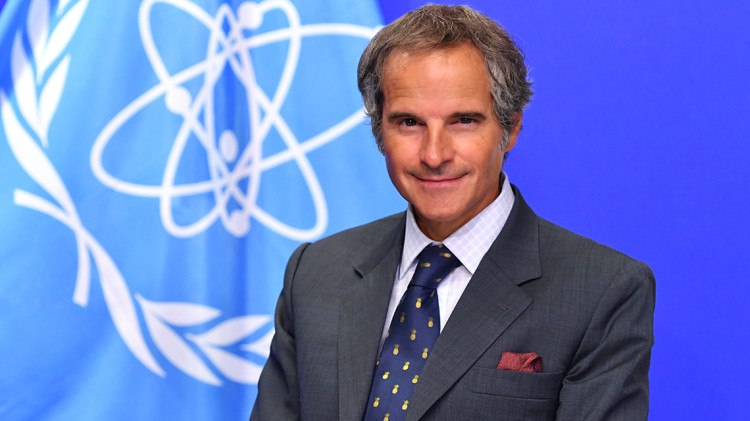

BAKU, Azerbaijan, March 2. The International Atomic Energy Agency (IAEA) is closely monitoring nuclear safety in Iran and the wider Middle East following recent military operations, IAEA Director General Rafael Grossi said in an introductory statement to the Board of Governors, Trend reports.
“The Agency immediately responded, in accordance with our mandate, by focusing on possible radiological emergencies derived from the military operations,” Grossi said.
He confirmed that the IAEA’s Incident and Emergency Centre (IEC) is operational, collecting information and assessing the situation despite communication limitations caused by the conflict.
So far, the IAEA has detected no increase in radiation levels above usual background levels in countries bordering Iran.
"Regarding the status of the nuclear installations in Iran, up to now, we have no indication that any of the nuclear installations, including the Bushehr Nuclear Power Plant, the Tehran Research Reactor, or other nuclear fuel cycle facilities have been damaged or hit," Grossi outlined.
He identified the UAE, Jordan, Syria, Bahrain, Iraq, Kuwait, Oman, Qatar, and Saudi Arabia as nations potentially vulnerable to radiological risks.
He urged all parties to exercise the utmost restraint and referenced previous resolutions from the IAEA General Conference, emphasizing that armed assaults on nuclear facilities should be unequivocally avoided, as they could lead to catastrophic radioactive releases with severe consequences both within the affected state and beyond its borders.
The IAEA Director General underscored the critical importance of resuming diplomatic efforts and negotiations, stressing that such measures are vital to preventing Iran from acquiring nuclear weapons and preserving the integrity of the global non-proliferation framework.
“Diplomacy is hard, but it is never impossible. Nuclear diplomacy is even harder, but it is never impossible,” he said.
Grossi added that the IAEA is ready to provide technical advice and hands-on support to member states in the event of any radiological release.



