


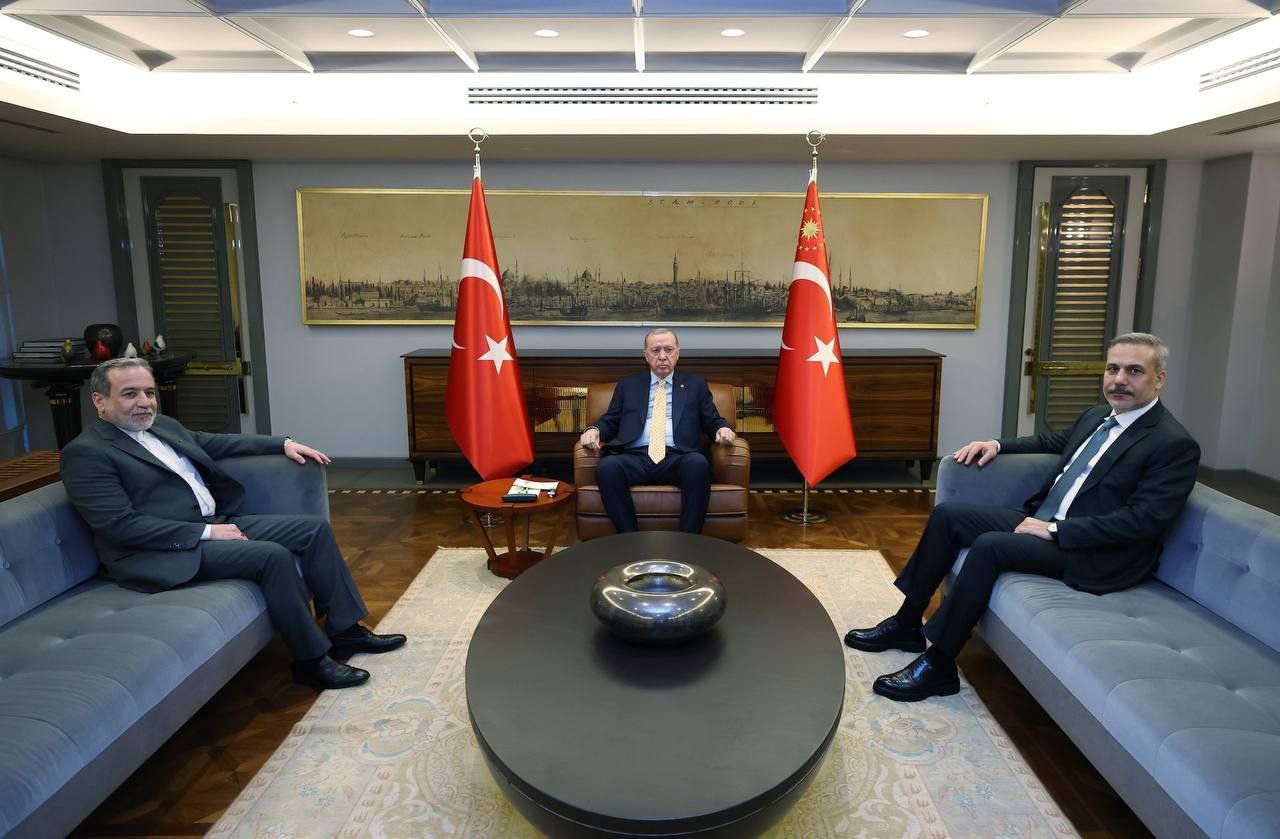

BAKU, Azerbaijan, January 31. The visit of Iranian Foreign Minister Abbas Araghchi to Türkiye on January 30 represents a significant moment in regional diplomacy. During the trip, Araghchi engaged in high-level discussions with Turkish Foreign Minister Hakan Fidan and President Recep Tayyip Erdoğan. Reflecting on the outcomes of the visit, Araghchi described the bilateral relations between Iran and Türkiye, as well as the regional negotiations, as both constructive and beneficial.
The Iranian minister reiterated Iran's firm stance against the pursuit of nuclear weapons, reaffirming the country’s commitment to a fair and rational nuclear agreement that safeguards its legitimate interests. He emphasized that such an agreement should encompass not only a commitment to non-proliferation but also the effective removal of sanctions.
Araghchi further acknowledged Türkiye's longstanding role as a constructive force in promoting peace and stability within the region, highlighting Iran’s deep appreciation for these efforts. He concluded by reiterating Iran's readiness to engage in cooperation with its neighboring countries to preserve regional peace and stability.
Tensions in relations between Iran and the U.S. have reached a peak in recent times. Although the U.S. side has put forward a number of proposals for an agreement with Iran, Tehran considers these proposals unacceptable. In particular, the demand to abandon uranium enrichment in Iran is considered by Iran as a violation of the country's sovereign rights. The U.S., on the other hand, links uranium enrichment with the threat of a potential nuclear weapon.
This disagreement shows that the process is heading in a dangerous direction. The increase in military preparations by both sides has raised the risks of possible escalation in the region. The Gulf countries and other neighbors of Iran have also openly expressed their concern about the escalation of the situation.
It's against this background that several Arab countries and regional actors are making diplomatic initiatives to prevent the escalation of tensions. Türkiye is also starting to take a more active role in the process, establishing contacts with both Tehran and Washington and trying to prevent the deepening of the conflict.
The Iranian side, on the other hand, has stated several times that the discussions held so far with the U.S. aren't realistic and result-oriented, and that it's not interested in negotiations in such a format. Tehran considers it possible and appropriate to hold negotiations that are free from threats and pressure, based on mutual respect, and that can yield concrete results. According to Iran's position, negotiation frameworks without the prospect of an agreement neither promise real development nor contribute to regional stability.
Although there were expectations that tensions would gradually decrease after the U.S. struck three key Iranian nuclear facilities in June last year, the process has developed in the opposite direction. Tehran has not provided the International Atomic Energy Agency (IAEA) with any additional information about those facilities and has criticized the IAEA for its lack of a clear response to the strikes on nuclear facilities, describing it as biased.
Although Iran has repeatedly stated that its nuclear program is for peaceful purposes only, the U.S. and Western countries are not unequivocal about this position. They claim that Iran's nuclear activities could potentially be directed towards military purposes, and highlight the high enrichment of uranium as one of the main indicators of this risk.
Following the nuclear agreement reached in 2015 with the P5+1 countries (the U.S., Russia, China, France, the UK, and Germany), Iran reduced its uranium enrichment level to 3.14%. However, after the U.S. unilaterally withdrew from the accord in 2018, Tehran announced its decision to halt compliance with the deal's stipulations, progressively increasing its uranium enrichment to 60%.
This shift has positioned the nuclear issue as a key risk factor, not only in the context of Iran-U.S. relations but also within the broader regional security framework. As a result, the diplomatic efforts of regional actors, particularly Türkiye, have become even more critical in addressing the growing tensions and mitigating potential risks.



