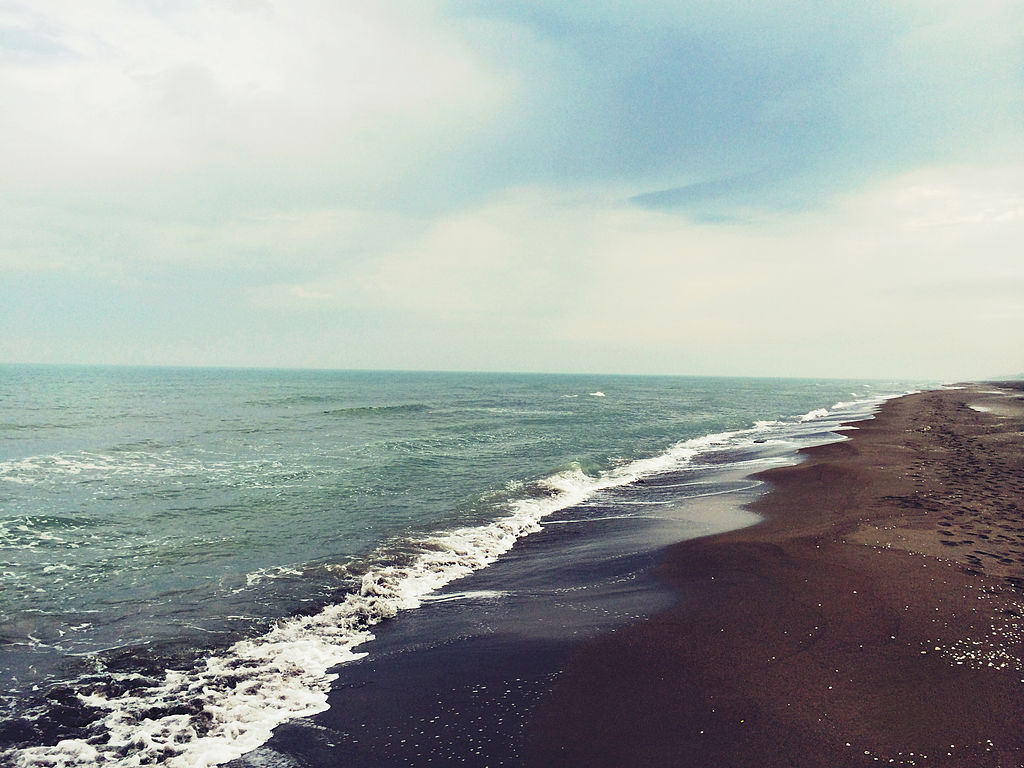
BAKU, Azerbaijan, January 13. One of the issues
discussed at a meeting dedicated to the State Program for the
improvement of water supply, wastewater, and stormwater systems in
Baku and the Absheron Peninsula for 2026–2035, held on January 12,
is related to desalinizing the water of the Caspian Sea and making
it usable.
How and in what sequence will this issue, reflected in the above
program, approved by the decree of the President of the Republic of
Azerbaijan, Ilham Aliyev, be addressed?
The Azerbaijani State Water Resources Agency (ADSEA) said in
response to Trend's inquiry that in line with President Ilham
Aliyev's decree aimed at ensuring the country's water security,
increasing access to drinking water for the population, and
introducing new technologies in this field, work continues on the
"Pilot project for producing drinking water through desalination of
seawater", which is in its first phase.
The agency noted that a contract for the pilot project of
seawater desalination for producing drinking water was signed
between the agency and Saudi Arabia's ACWA Power company on
September 22, 2025, during the First Azerbaijan International
Investment Forum.
"The project will be implemented in Sumgayit city, covering an
area of approximately 30 hectares and a coastal strip. The
desalination plant's daily production capacity will be 300,000
cubic meters, which translates to about 100 million cubic meters of
water annually. This will provide a 20% increase in the current
water demand of the Absheron Peninsula. Saltwater will be purified
and converted into drinking water," the agency explained.
The agency added that from 2026 through 2028, the construction
of a main pipeline from the Sumgayit desalination plant to the
Jeyranbatan reservoir is planned.
Sadig Gurbanov, the chairman of the Azerbaijani Parliament's
Committee on Natural Resources, Energy, and Ecology, told Trend that only 30% of the
country's water resources originate within its borders, while the
remaining 70% is sourced from transboundary rivers, creating a
range of challenges.
"This is because every country needs additional water resources
for development, in line with the requirements of the new era. If
there had been no processes like the construction of the
Takhtakorpu reservoir or the Oghuz-Gabala-Baku water pipeline, Baku
could be facing very serious problems today," he clarified.
The committee chairman also noted that the purification and
desalination of Caspian Sea water will be carried out in
parallel.
"Desalination of seawater is a widely applied practice
worldwide. Technologies have been implemented in Saudi Arabia, the
UAE, Israel, and Italy. The issue raised by President Ilham Aliyev
in the meeting is to prevent Azerbaijan from facing ecological
problems in the future," Gurbanov said.
In turn, Hydrologist Rovshan Abbasov told Trend that desalination of
seawater has been applied for a long time in international
practice. Countries such as the U.S., Kuwait, Qatar, Israel, and
Saudi Arabia rely on desalination of seawater for water supply.
"The Caspian Sea water is three times less salty compared to
other seas. This means that desalinating Caspian water will cost
three times less. Therefore, the desalination of Caspian Sea water
will be more economically efficient," he pointed out.
Abbasov added that approximately 50% of wastewater is discharged
untreated into the Caspian Sea from Baku. To prevent this
pollution, wastewater in Baku should be treated before being
discharged into the Caspian Sea and other lakes in the Absheron
peninsula. Additionally, rainwater will be separated from the
sewage system, which will help reduce the cost of water treatment.
The construction of the plant for desalination of Caspian Sea water
has already started, and it will be located in the Sumgayit
direction," he concluded.