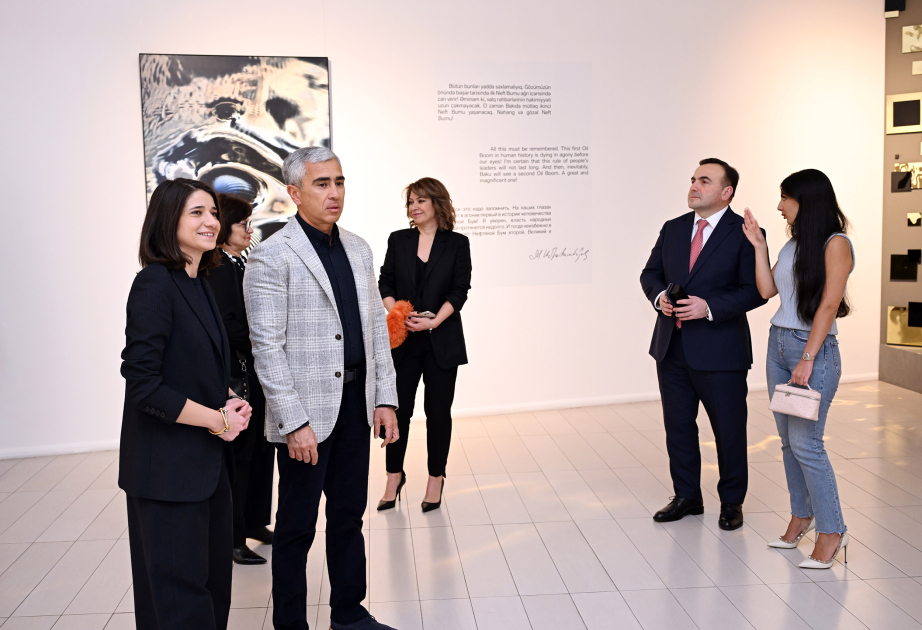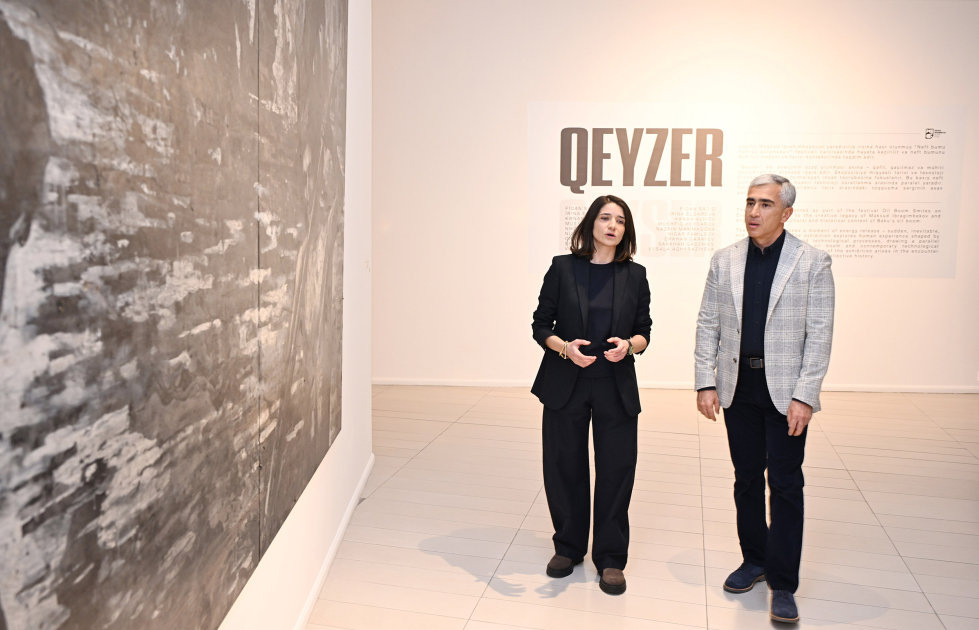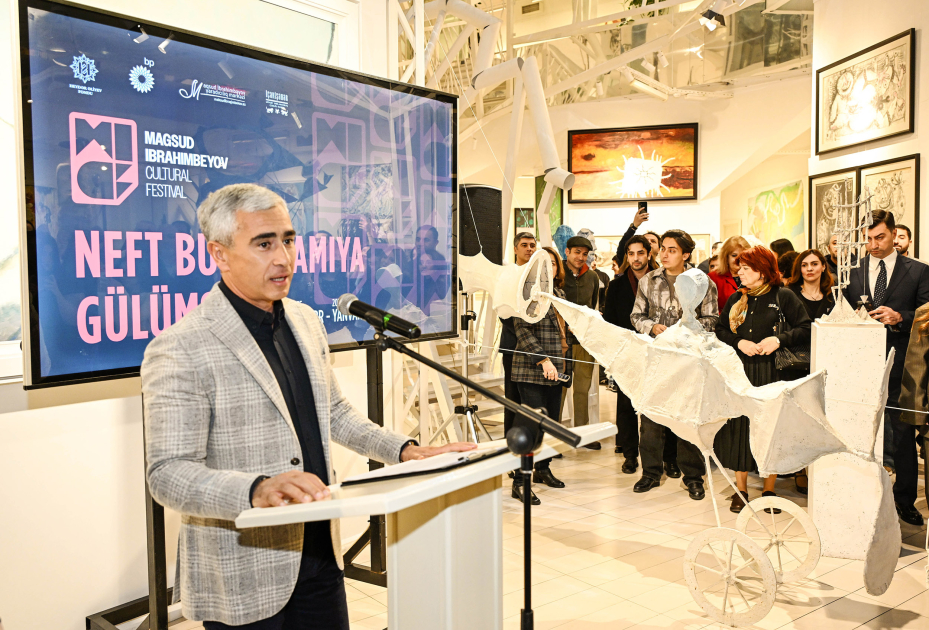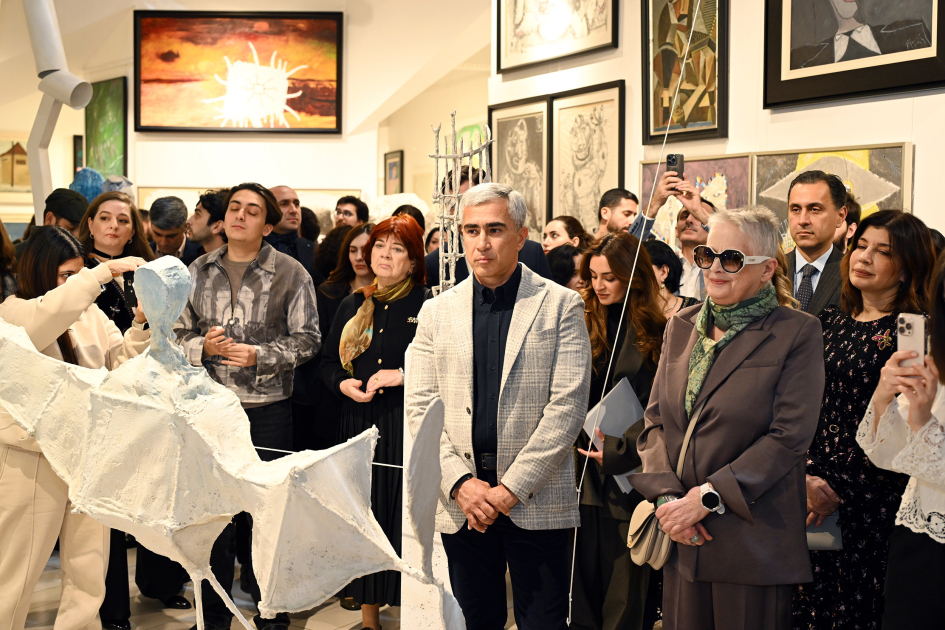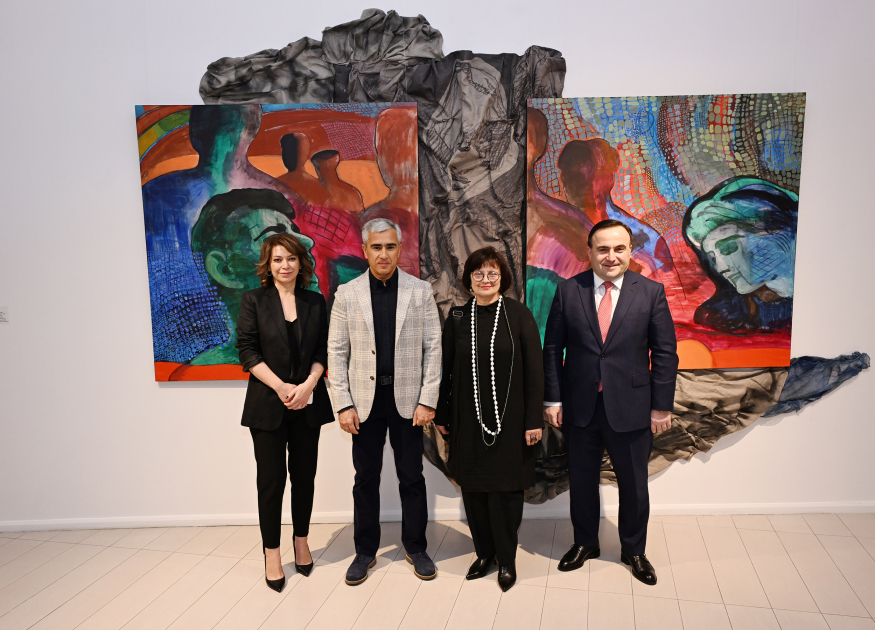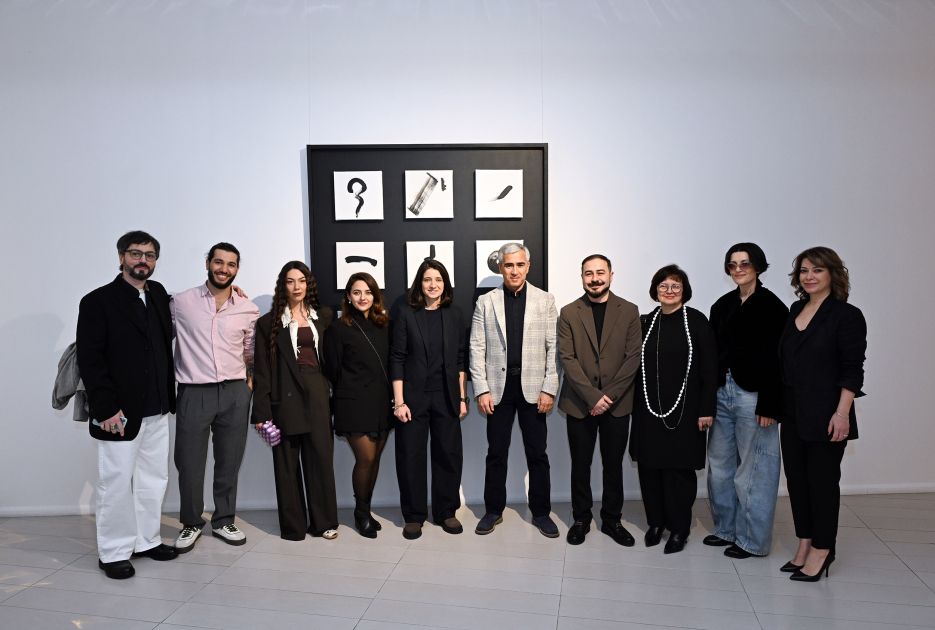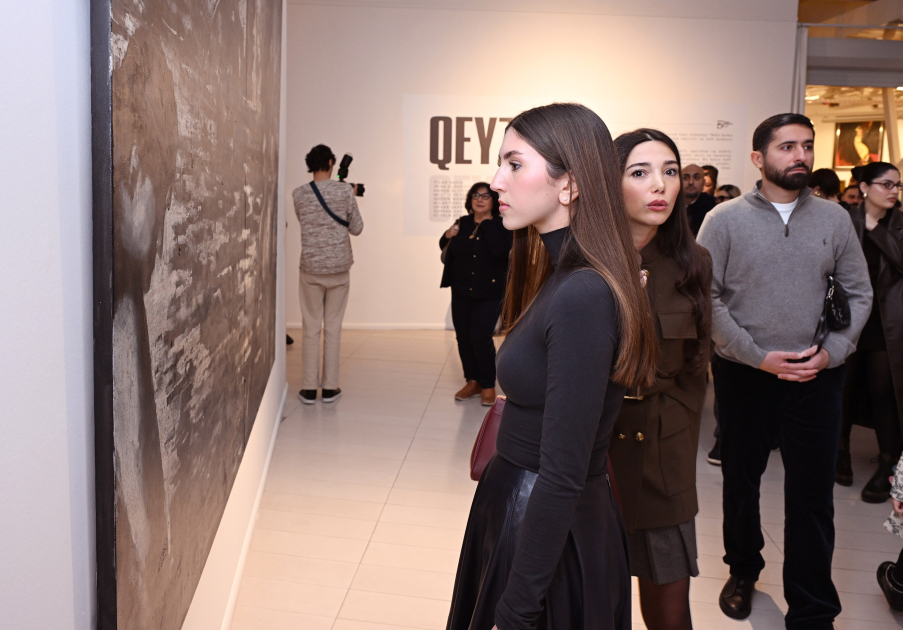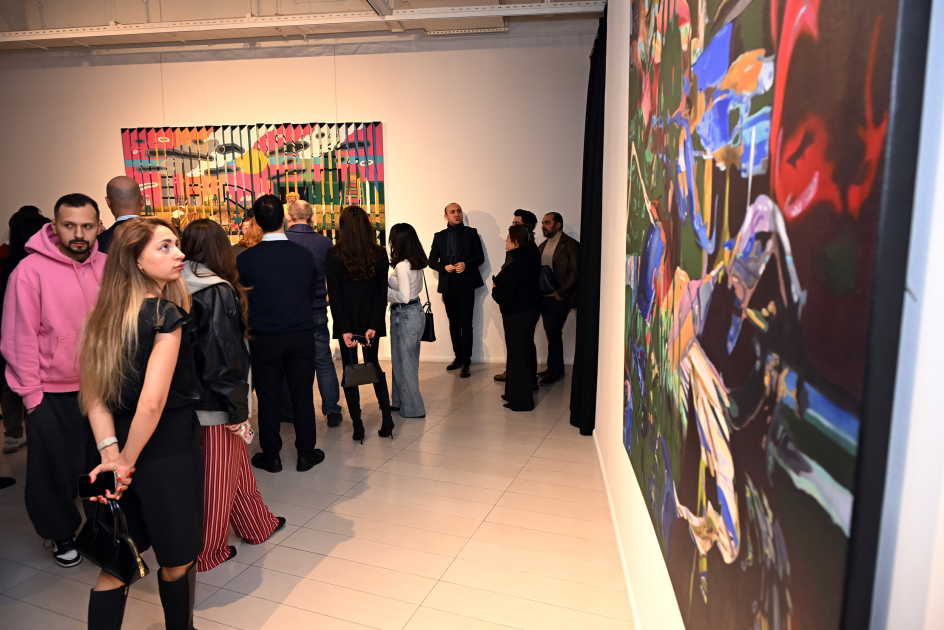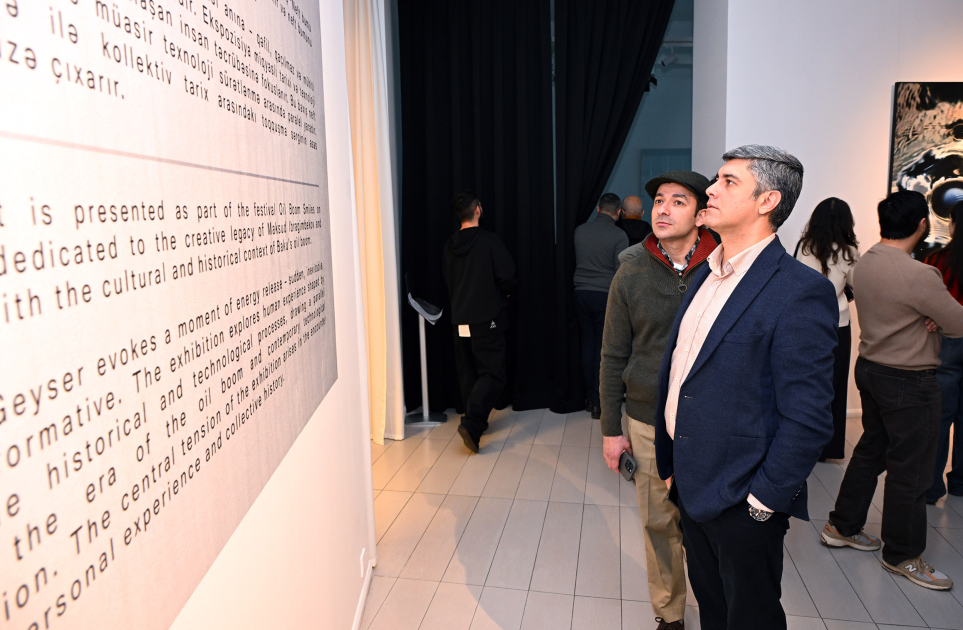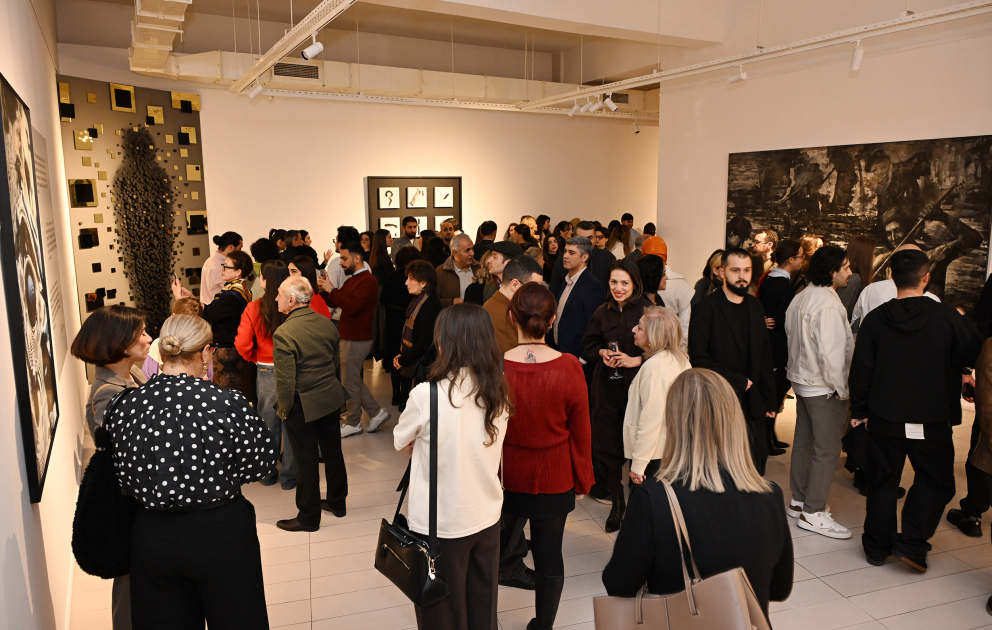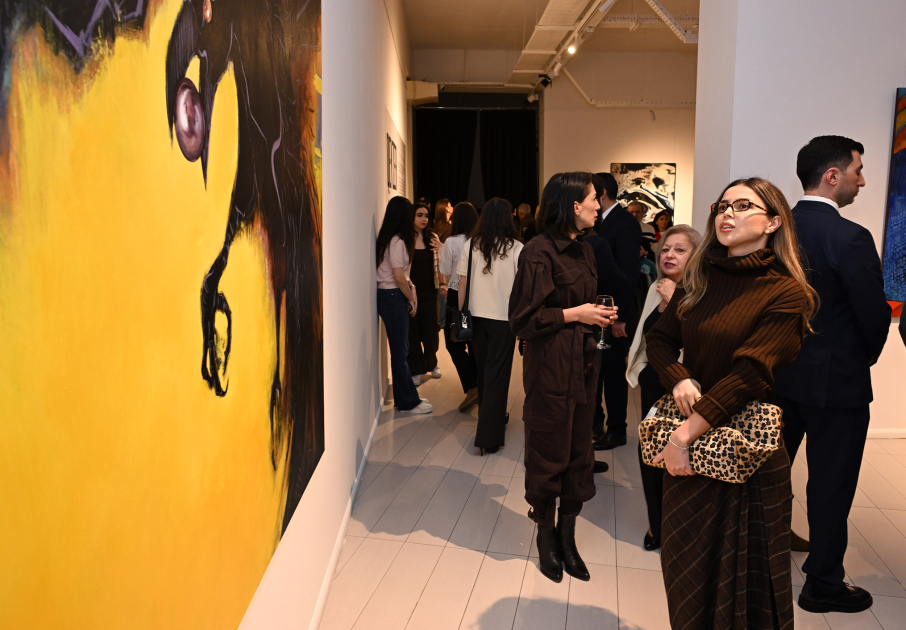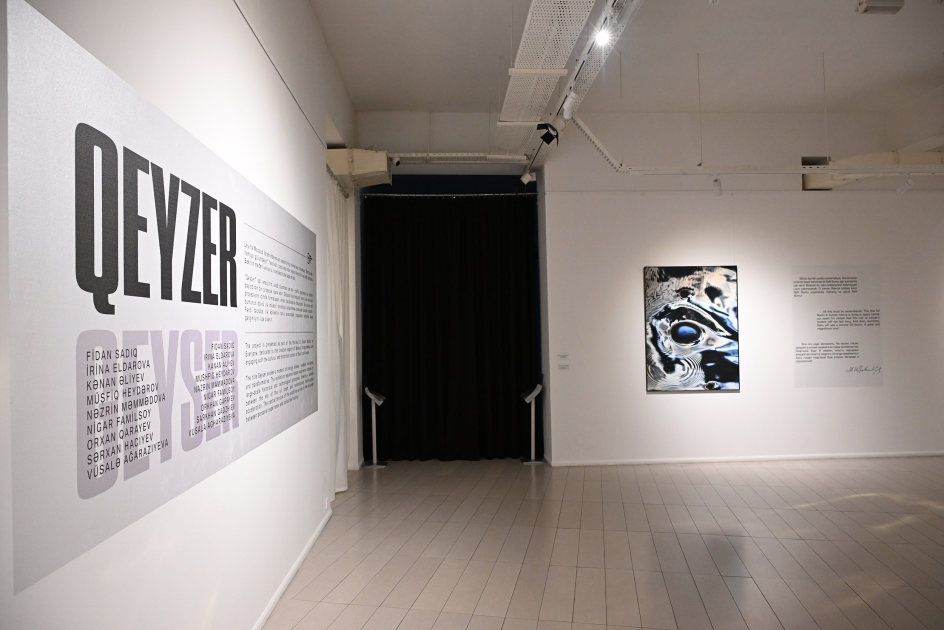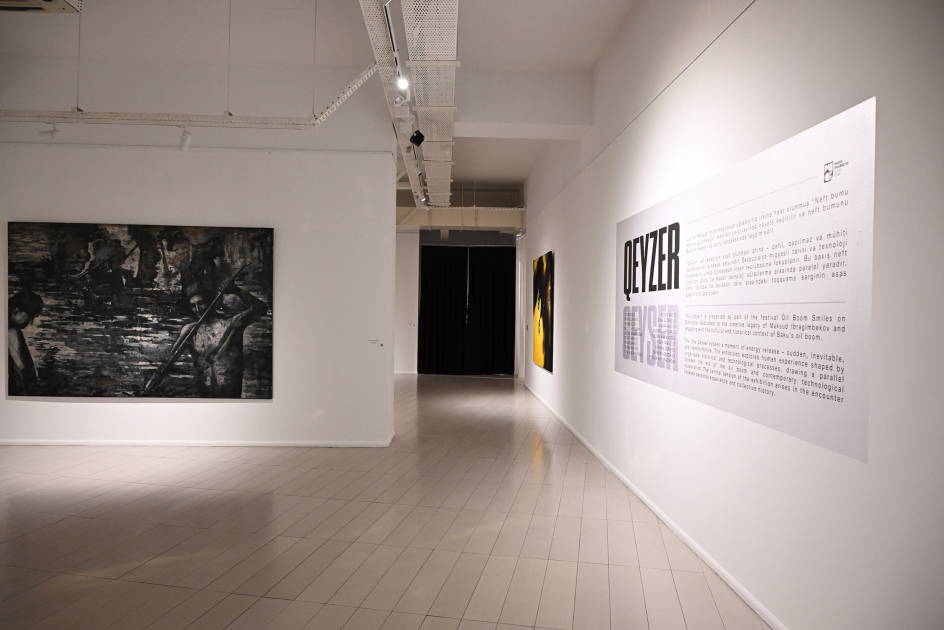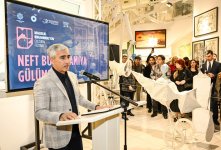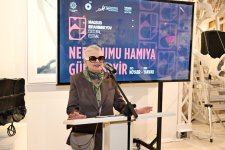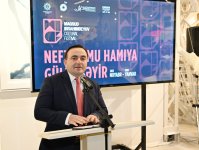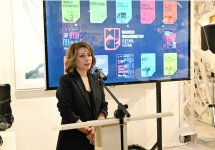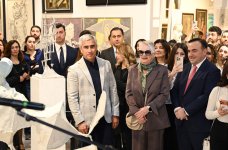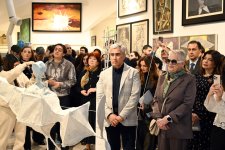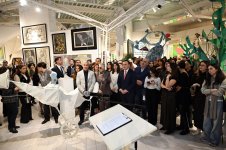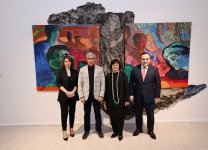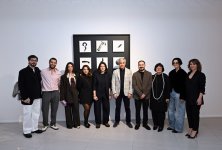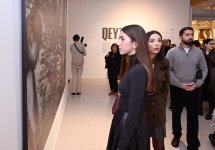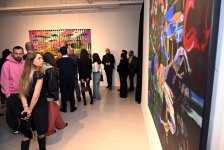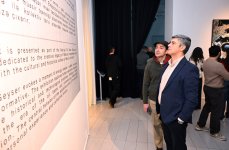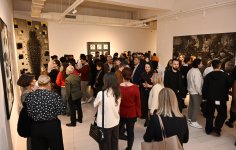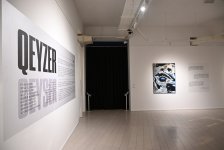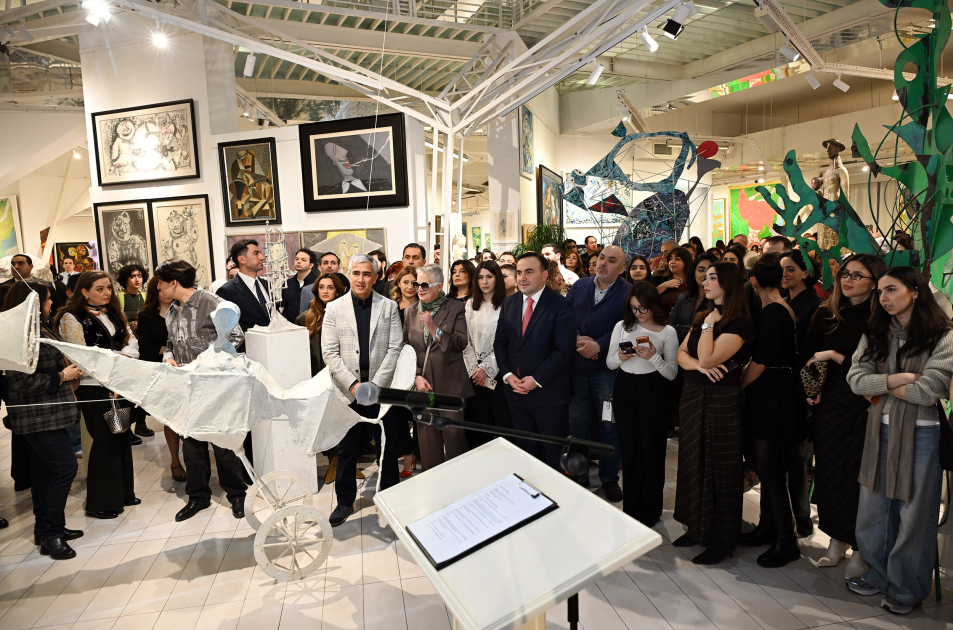

BAKU, Azerbaijan, January 18. The opening ceremony of the contemporary art exhibition titled “Geyzer” was held at the Museum of Modern Art on January 17 as part of the “Oil Boom Smiles at Everyone” festival, Trend reports.
The festival is supported by the Heydar Aliyev Foundation, sponsored by bp, and organized by the Magsud Ibrahimbeyov Creativity Center.
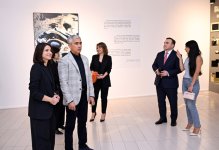
The opening ceremony was attended by Anar Alakbarov, Director of the Heydar Aliyev Center, official guests, and prominent representatives of the arts community.
Running from November 2025 to February 2026, the “Oil Boom Smiles at Everyone” festival is dedicated to the creative legacy of prominent Azerbaijani writer Magsud Ibrahimbeyov. The festival is built around the cultural and historical context of the oil boom era and brings together various art forms. It explores themes of transformation, expectation, and inner tension reflected in the author’s literary works.
The “Geyzer” contemporary art exhibition is one of the flagship projects of the festival. Conceptually referencing the play “Oil Boom Smiles at Everyone,” the exhibition offers an immersive interpretation of the intersection between personal experience and collective history.
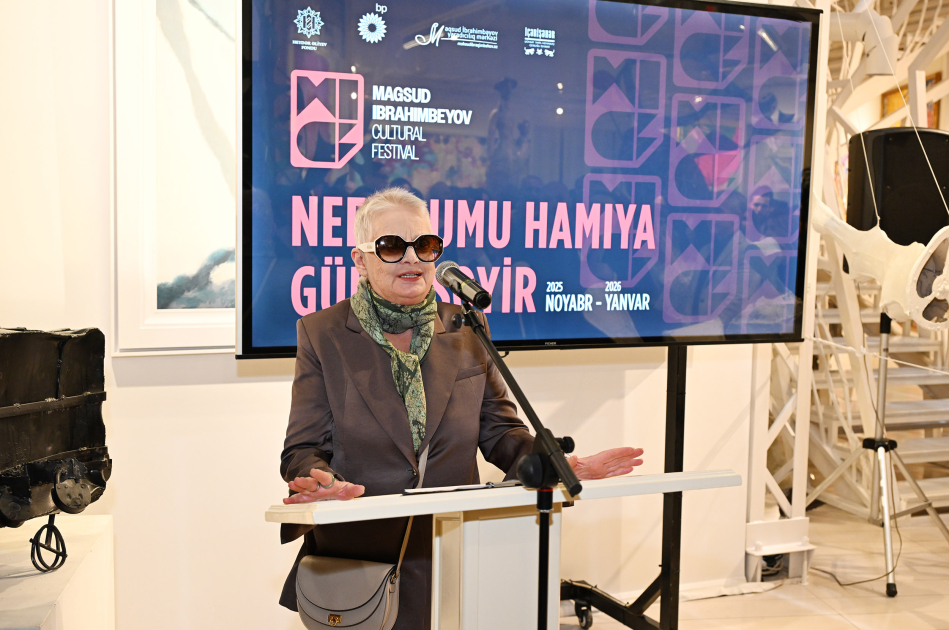
Speaking at the opening, Anna Ibrahimbeyova, Director of the Magsud Ibrahimbeyov Creativity Center, emphasized the special significance of the day for the festival: “Today is truly a magnificent event, as young and talented artists are participating in the festival. What particularly delights me is that many of the participants are not just exhibiting but are deeply reflecting on ideas and turning to Magsud Ibrahimbeyov’s books.”
Anna Ibrahimbeyova noted that the presented works are primarily impressions, personal interpretations, and artistic responses—transforming words and images into the language of visual art.
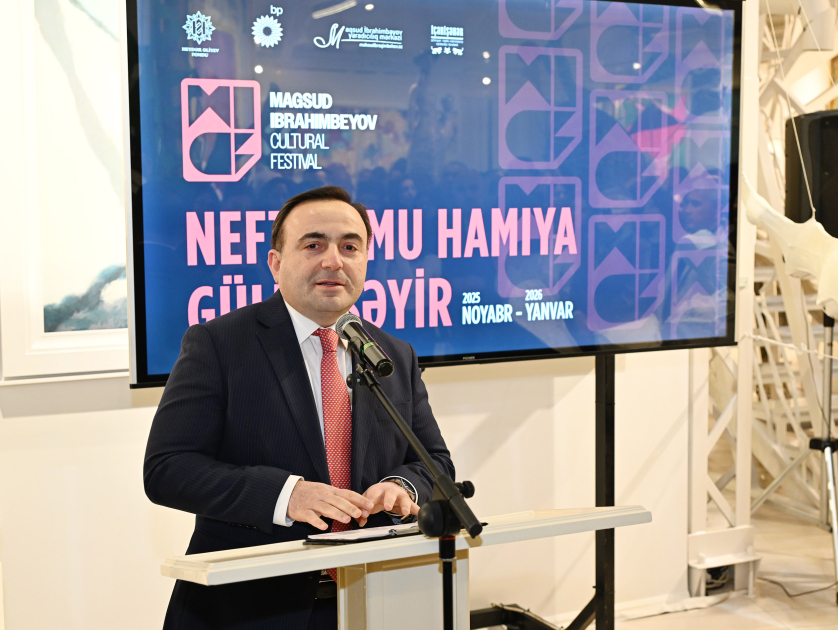
In his speech, Anar Alakbarov, Director of the Heydar Aliyev Center, expressed gratitude to the entire team involved in realizing the event. He highlighted the great importance of the “Oil Boom Smiles at Everyone” festival, which has been ongoing since November 2025: “The events and performances presented within the festival framework carry great significance. I hope this becomes a tradition. Today, I met with the artists. They are presenting one beautiful work after another. I wish each of them success in their future creative endeavors.”
Addressing the event, Bakhtiyar Aslanbayli, bp’s Vice President for the Caspian region, Communications and External Affairs, stated: “Today we are celebrating one of those holidays that have existed until now and will continue in the future — a holiday born at the intersection of art and literature.” On behalf of bp, he expressed pleasure in contributing to the realization of such a wonderful event.
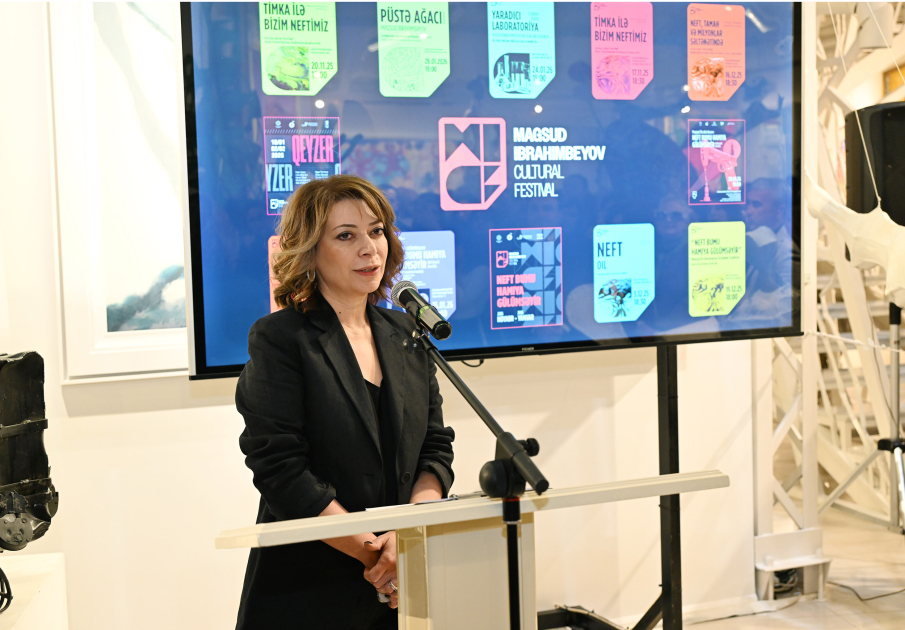
The exhibition curator, Nigar Rzayeva, said in her speech that Magsud Ibrahimbeyov’s work is so vibrant and contemporary that it has become a major source of inspiration for the project and the presented works. She extended her thanks to the entire creative team, as well as to the Heydar Aliyev Foundation, bp company, and the Museum of Modern Art for the support provided.
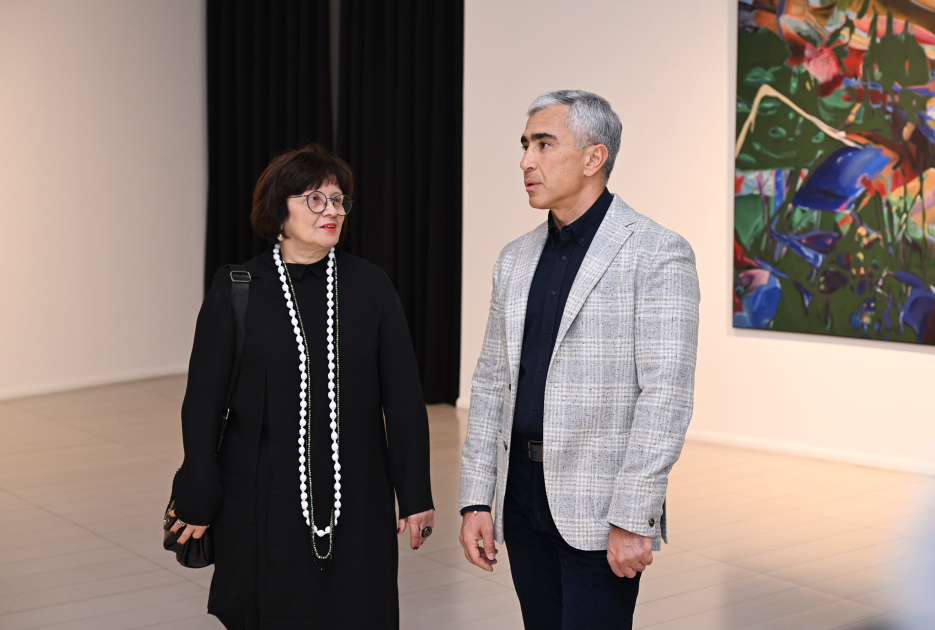
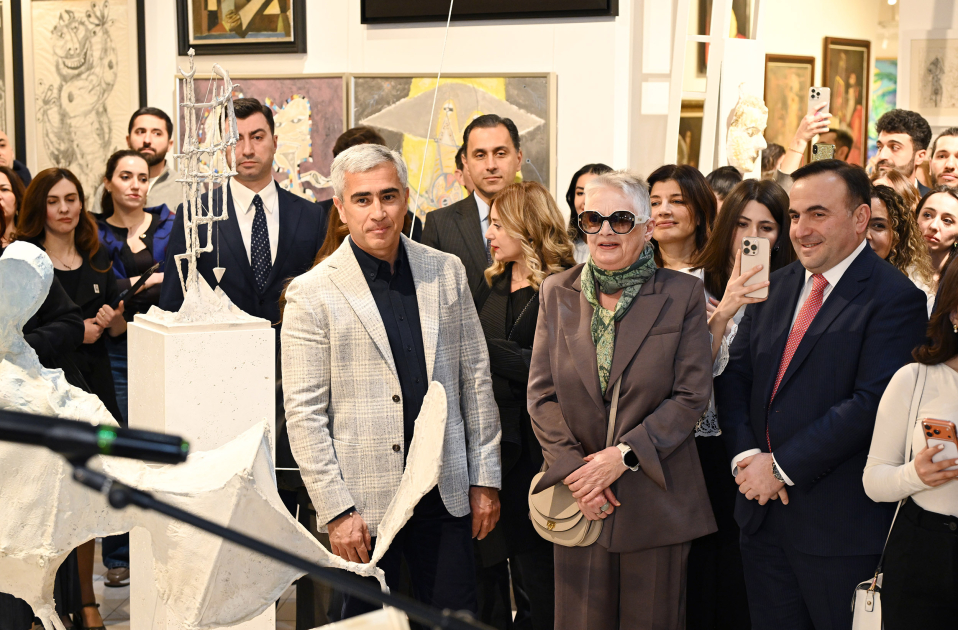
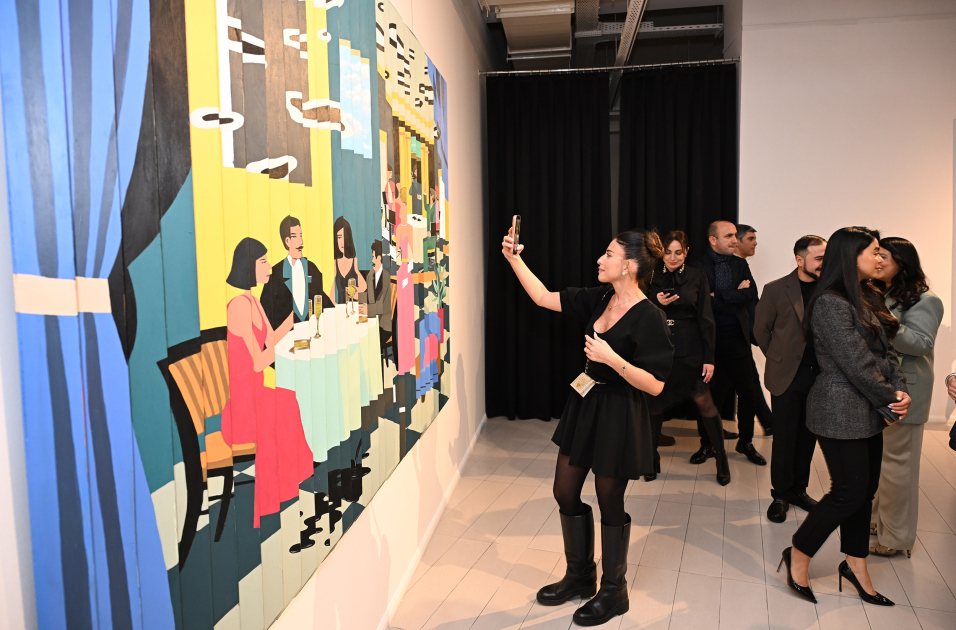
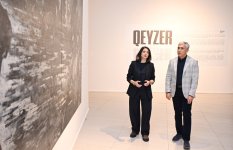
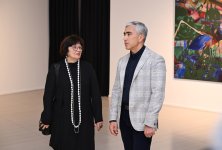
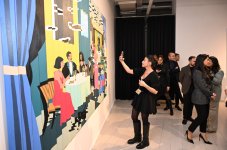
Afterward, the guests toured the exhibition.
In the project, oil emerges as a real force that determines the rhythm of Baku, people’s destinies, and the overall development of the country. It creates the environment in which human relationships have been shaped throughout the nation’s history.
The title “Geyzer” alludes to an oil fountain — the eruption of oil to the surface under pressure — as well as to the principle of a geyser releasing accumulated energy. The same impulse is provided by Magsud Ibrahimbeyov’s play and is developed in the artistic works of the project.
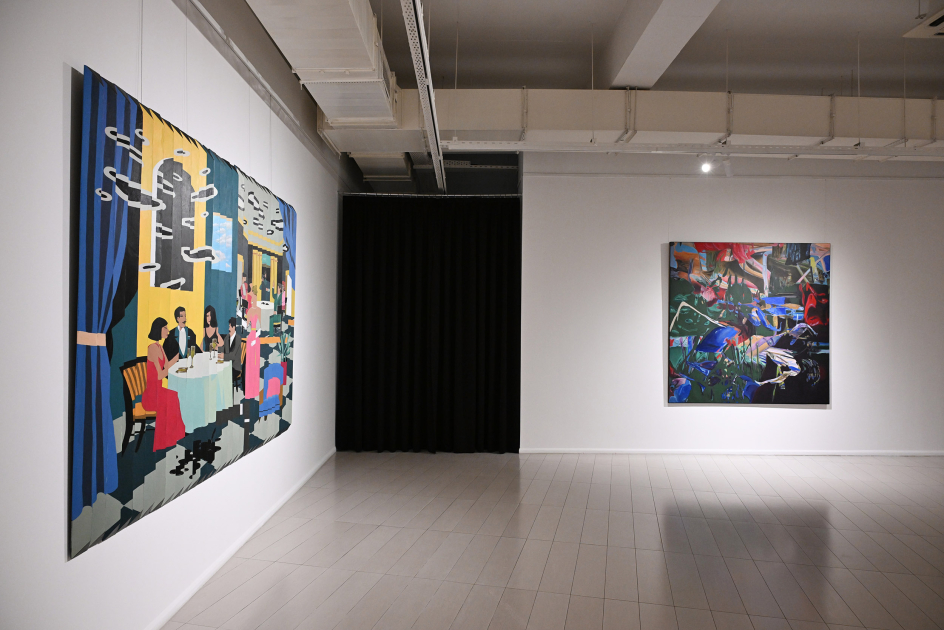
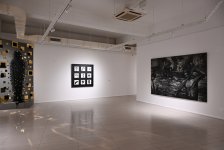
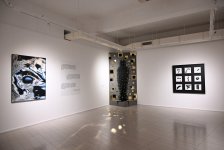
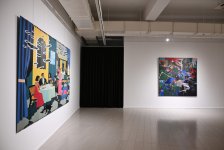
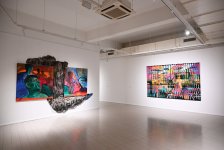
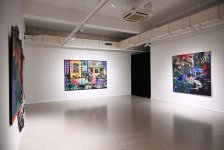
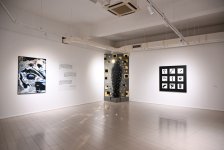
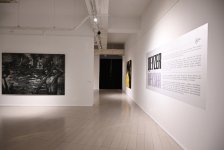
The exhibition features nine artists. The exposition is conditionally divided into two interconnected parts: a conceptual video work based on the reprocessing of archival materials, and works by contemporary artists that form the main artistic space.
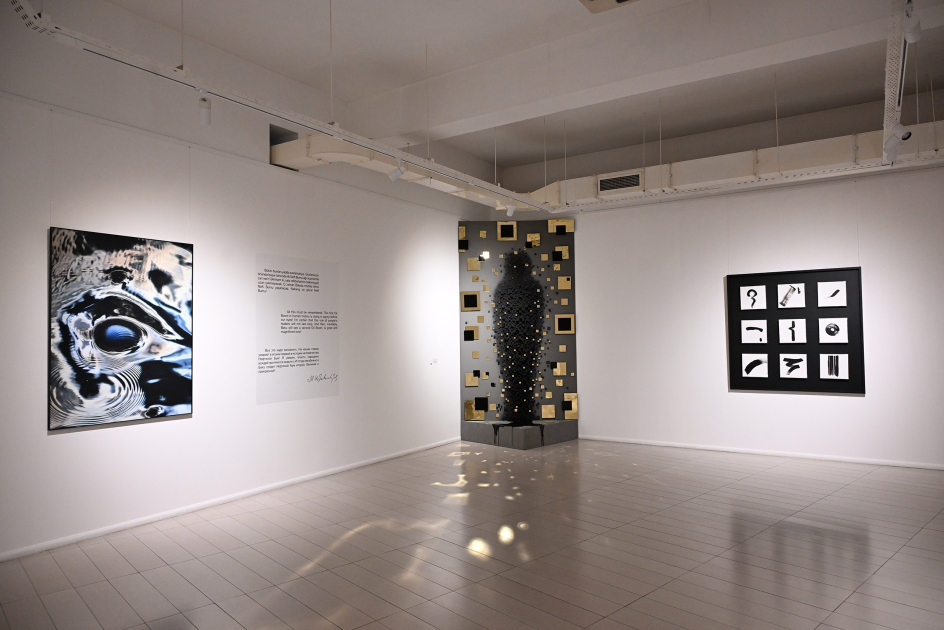
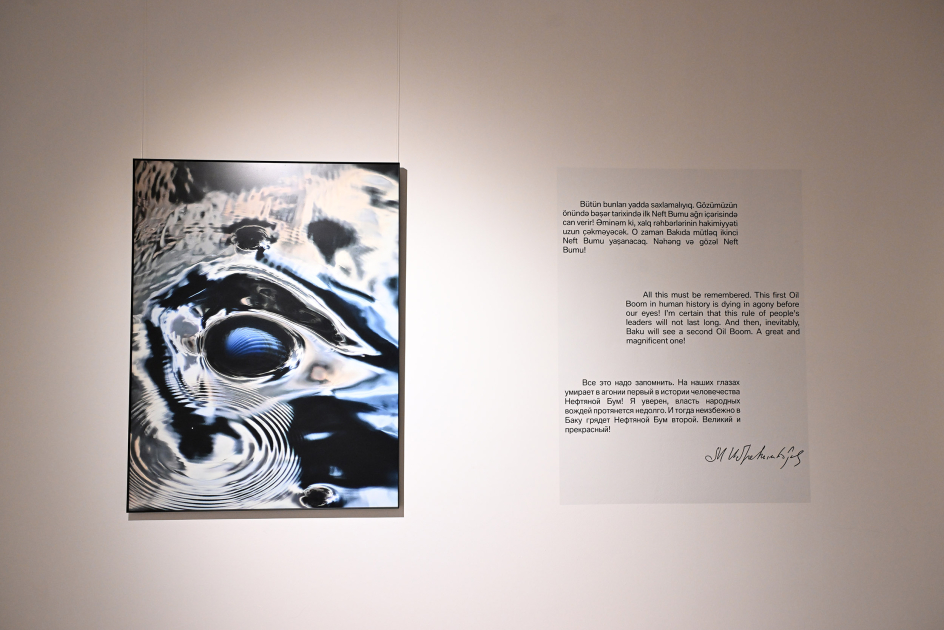
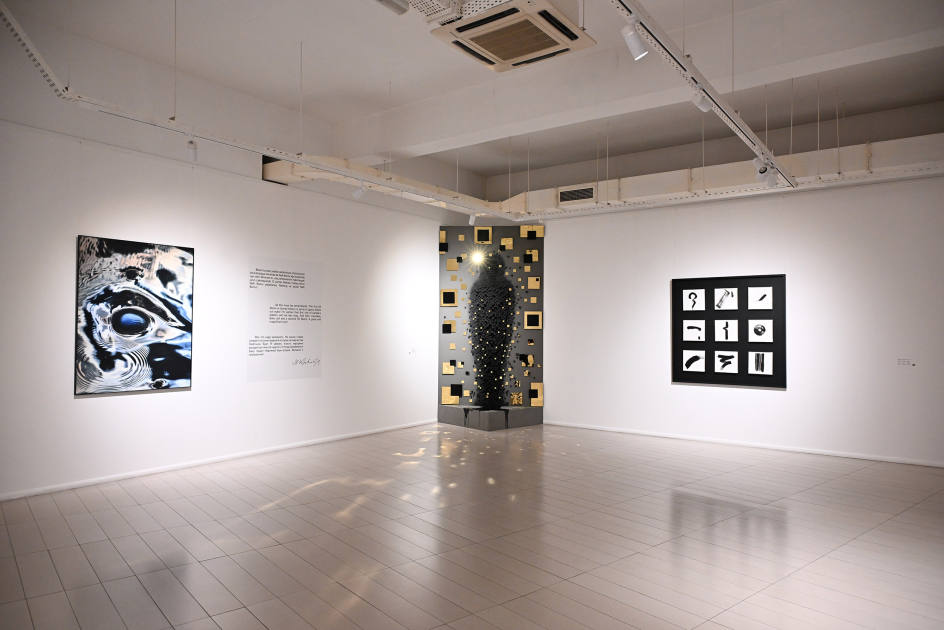
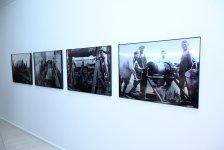
Additionally, the exhibition includes a photographic work by Anna Ibrahimbeyova — the initiator and organizer of the festival, and Magsud Ibrahimbeyov’s wife. This piece is presented outside the main participating lineup.
The participating artists are: Fidan Sadig, Irina Eldarova, Kanan Aliyev, Mushfig Heydarov, Nazrin Mammadova, Nigar Familsoy, Orkhan Garayev, Sarkhan Hajiyev, and Vusale Agharaziyeva.
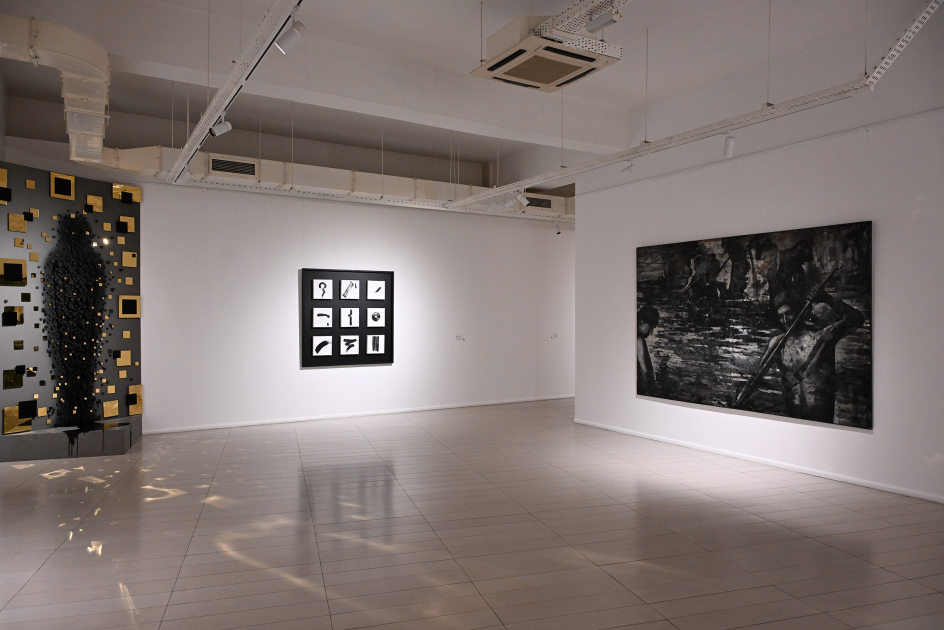
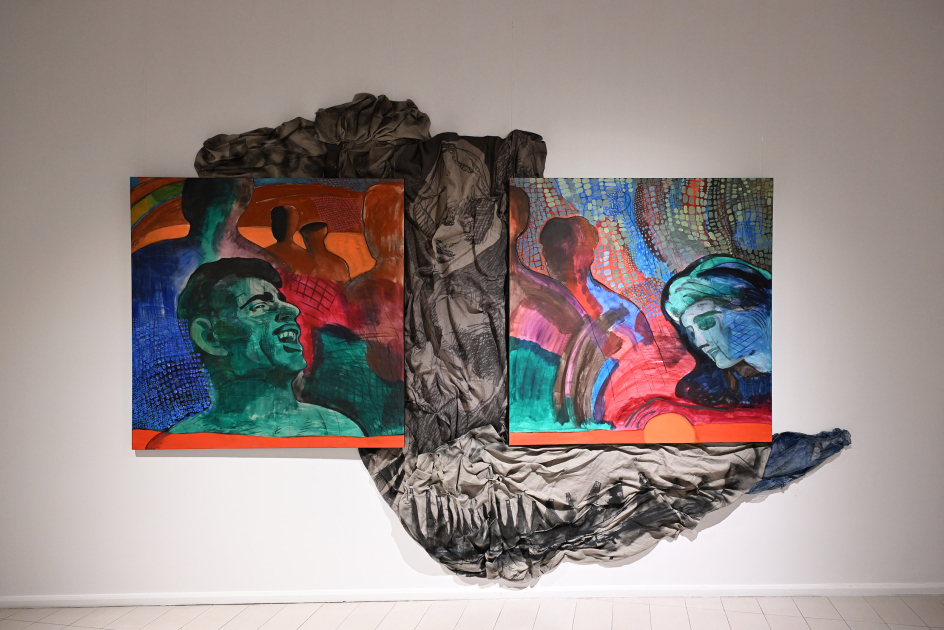
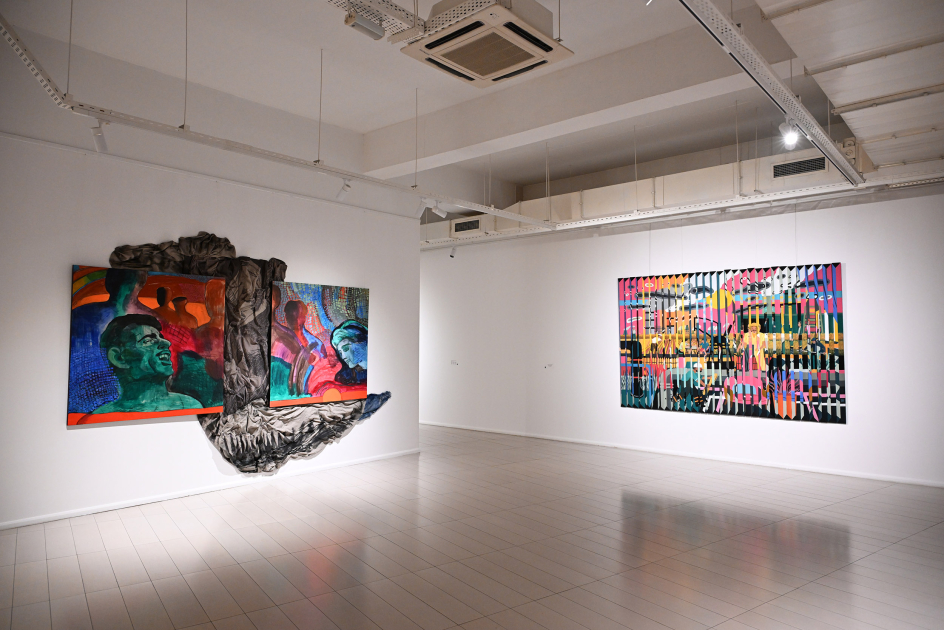
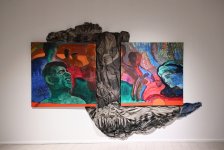
Fidan Sadig’s installation “Nameless” touches on the invisible presence of women during the oil boom period. A faceless female figure becomes an image of lost individuality, with the body serving as a boundary between a woman’s inner state and social pressure. A pattern reflecting fragments of Baku during the oil era replaces the face, fixing the trace of industry and history on the body. The female figure is presented in a state where the individual’s voice is almost unheard.
Irina Eldarova’s work “Drakaris. Fire-Worshippers” addresses solar energy as the primary source of life and a symbol of the Land of Fire. Here, the sense of ephemerality disappears, replaced by a continuous energy impulse. Humanity is presented as a collective image — a titan that has tamed fire and created systems extending from the depths of the earth to the global space for its transmission. The work is constructed as a visual expression of the scale and power of the energy that shapes the modern world.
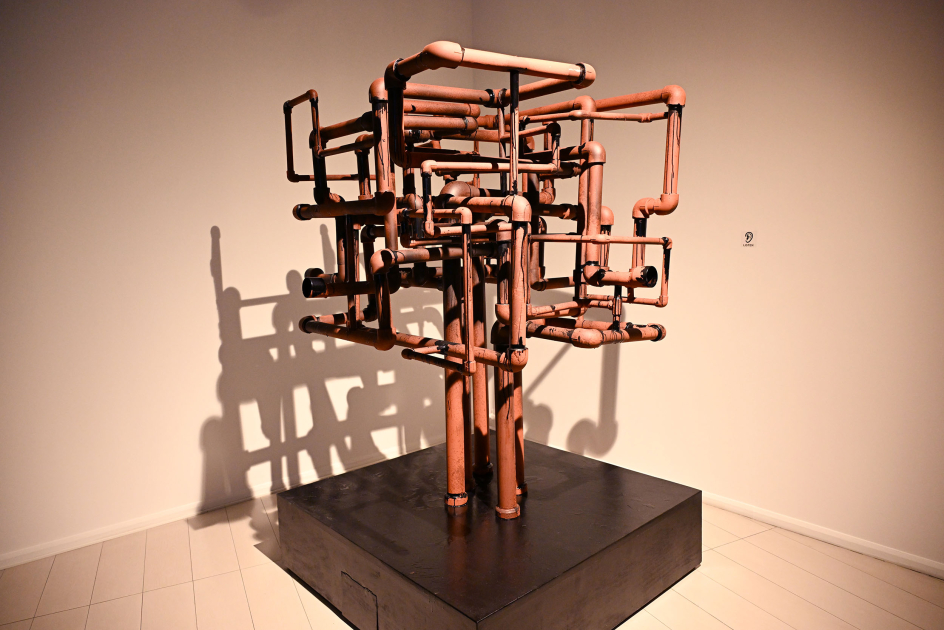
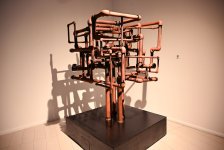
Kanan Aliyev’s sculptural work “Expectation” is built around the sensations of ascent and anticipation. Pipes rise chaotically from the pedestal, forming a closed square that symbolically refers to the conventional unit of oil — the cube. Individual pipes extending outward from this construction transmit sound. As the viewer approaches, they hear an intensifying internal movement, as if something is striving to rise and burst forth. The work references the experience lived in Baku during the oil boom era, when the sound accompanying an oil eruption was perceived as a harbinger of impending change.
This feeling is deeply personal for the artist. In the 1990s, during a period of water shortages in Baku, he experienced firsthand the emotions of expectation, tension, and joy: “I would turn on the tap over and over again and listen. I was waiting for that sound. When the water finally came, I was simply happy.”
Mushfig Heydarov’s conceptual sculpture “Posthuman” presents an image of a human stripped of gender and individual characteristics. The figure’s large scale reinforces its perception as a posthuman entity — an object shaped by the modern era. The artist alludes to the idea that energy, technology, and information are gradually altering the ways humans live and perceive themselves, creating new realities.
In this context, oil plays a foundational role: as the primary energy source underpinning industrial and digital systems. It is precisely this energy that drives transformation processes, resulting in the risk that humanity may progressively lose its bodily and social identity, becoming a universal, depersonalized functional carrier.
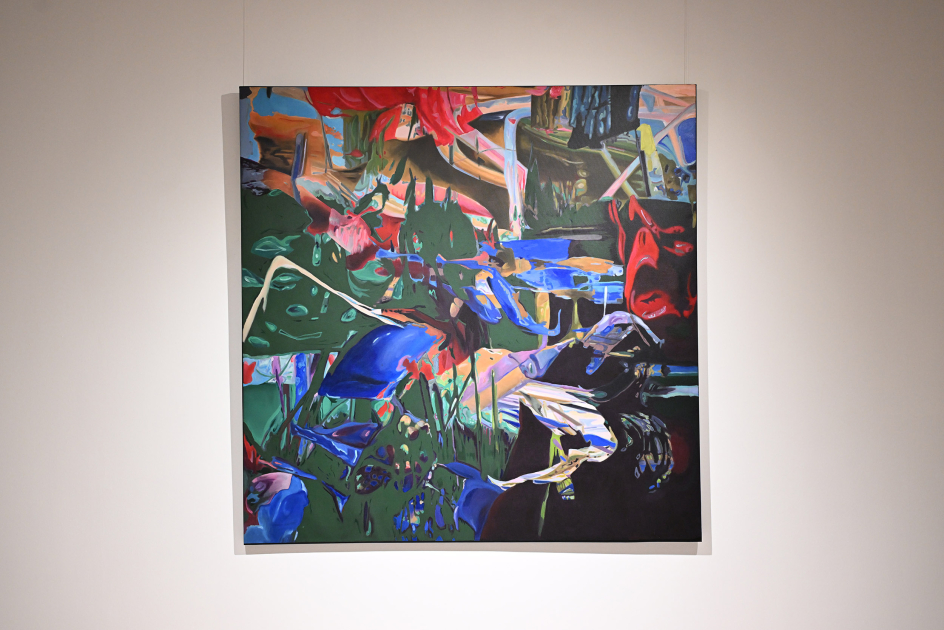
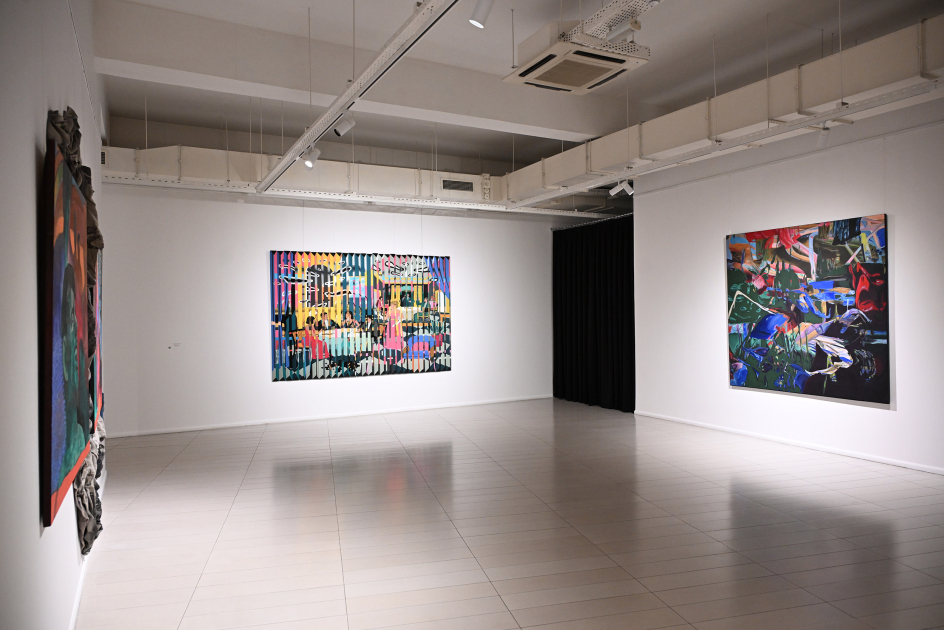
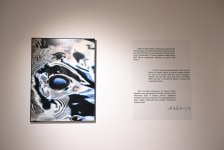
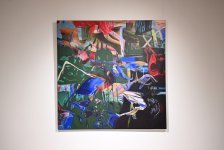
Nazrin Mammadova’s abstract work “Geyzer” captures the moment when hidden energy rises to the surface and begins to alter a person’s inner states. Energy ascending from subterranean layers disrupts familiar lines, creating unstable conditions between disintegration and formation.
The artist is drawn to the tension of the transitional moment: old emotional structures collapse, while new ones have not yet had time to take shape. This process manifests as the sudden release of accumulated energy.
In the structure of the work, associations with the Absheron landscape are perceptible through color, form, and depth.
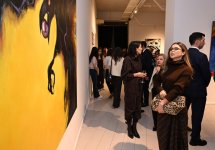
Nigar Familsoy’s painting “Side Effect” centers on the image of a crow — an observer of historical changes and turning points. It emerges within an aggressive yellow field that acts like the blinding light of progress.
The work foregrounds the irreversible nature of the oil and technological boom. The illusion of general prosperity collides with the reality of consequences. In this collision, the crow remains an immobile witness, simultaneously embodying both faces of progress.
Orkhan Garayev’s work “Curtain” analyzes the oil boom as a field of contradictions formed between dazzling development and the invisible reality of everyday labor. The construction, composed of triangular lamellas, creates two visual surfaces; each surface reveals itself only from a specific viewing angle, placing physical toil in direct opposition to outward brilliance.
When viewed head-on, the image disintegrates into an abstract form. This optical “blindness” serves as a metaphor for illusion and fragmented perception. Meaning emerges only in the process of movement: the viewer is compelled to change position in order to grasp the whole. Just as in life, clarity arises from the combination of separate fragments.
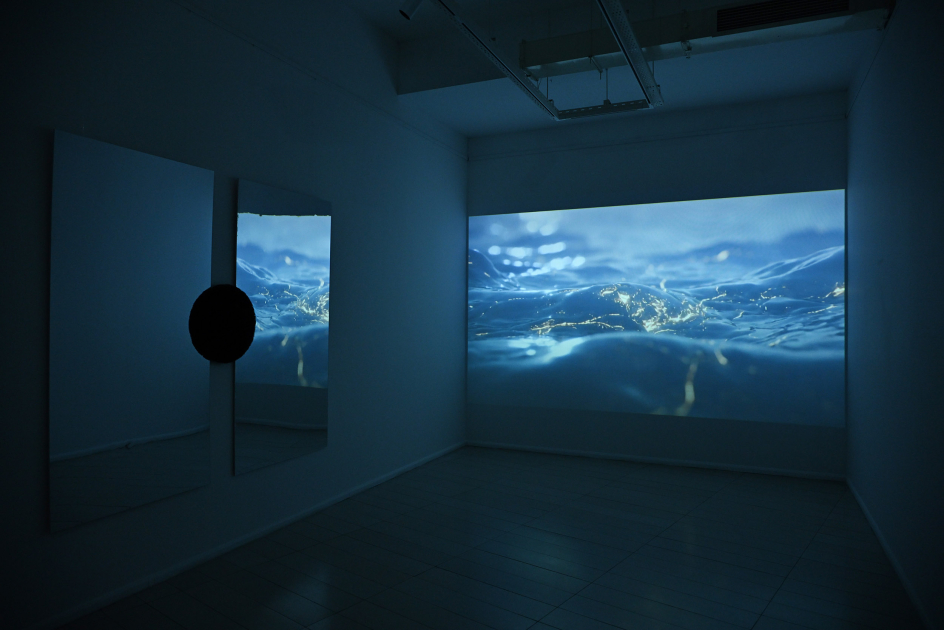
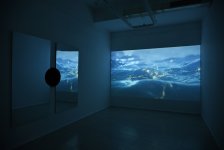
Sarkhan Hajiyev’s work “Interval” is an artistic video fantasy depicting the state between material and digital realities. The shift between realities occurs gradually and almost imperceptibly for a person, with no precise beginning or end point. Against this backdrop, oil appears as primordial matter and the memory of ancient life, from which emerges the image of a butterfly — evoking consciousness and soul.
The imagery of oil and artificial intelligence forms a visual language expressing humanity’s position caught between material memory and digital reality.
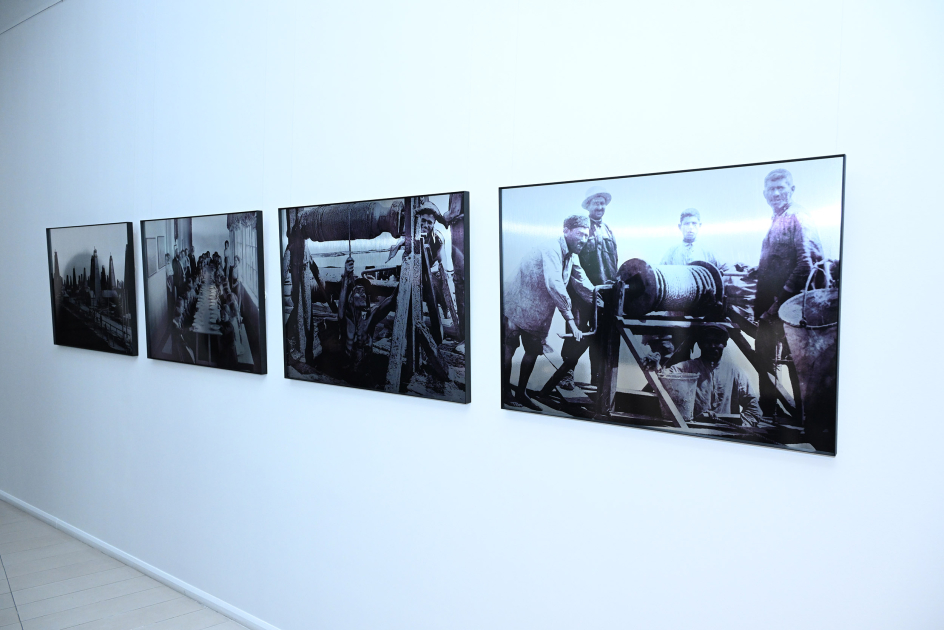
A second video artwork is created based on archival materials from the Azerbaijan State Film Fund, presenting oil as an inseparable part of real life and history.
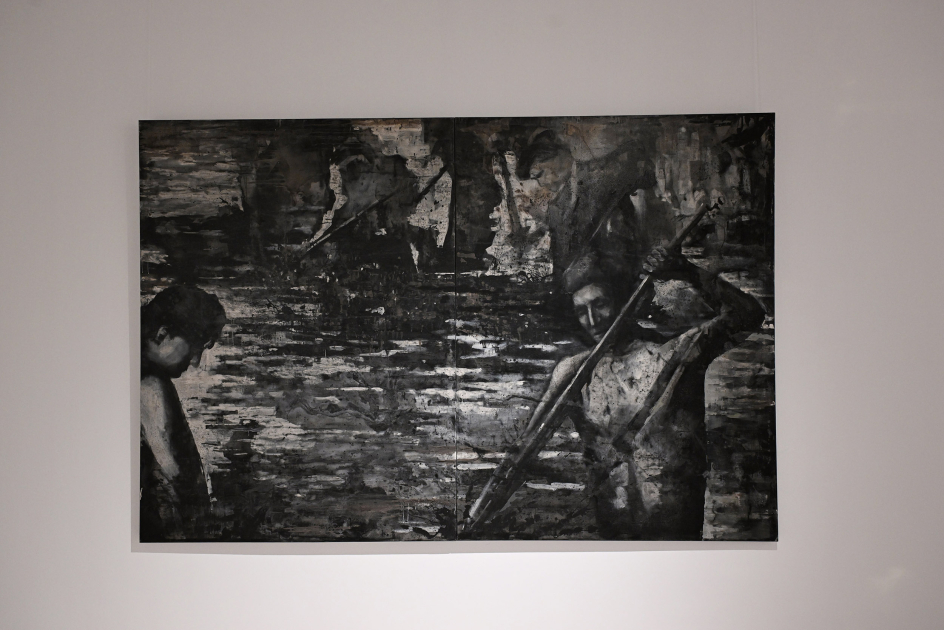
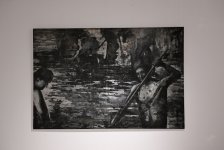
Vusale Agharaziyeva’s work “Field” draws on historical-documentary images from the oil boom era: people standing knee-deep in oil, working in a heavy, sticky environment where the boundary between body and substance dissolves. In the space the artist calls “Field,” human and oil become elements of the same entity. This monumental painting carries no pathos or claim to idealization. The artist focuses on the direct inclusion of the historical process through the acceptance of human physical and bodily experience.
This logic continues in the installation titled “Center”. The circular wooden form alludes to manual labor and the earthen environment in which it takes place. The rotating center generates continuous motion. Resting upon it is a single pair of oil worker’s gloves — a silent witness to human existence, a memory of labor and the toil of many people.
The contemporary art exhibition “Geyzer” will continue until February 2.