


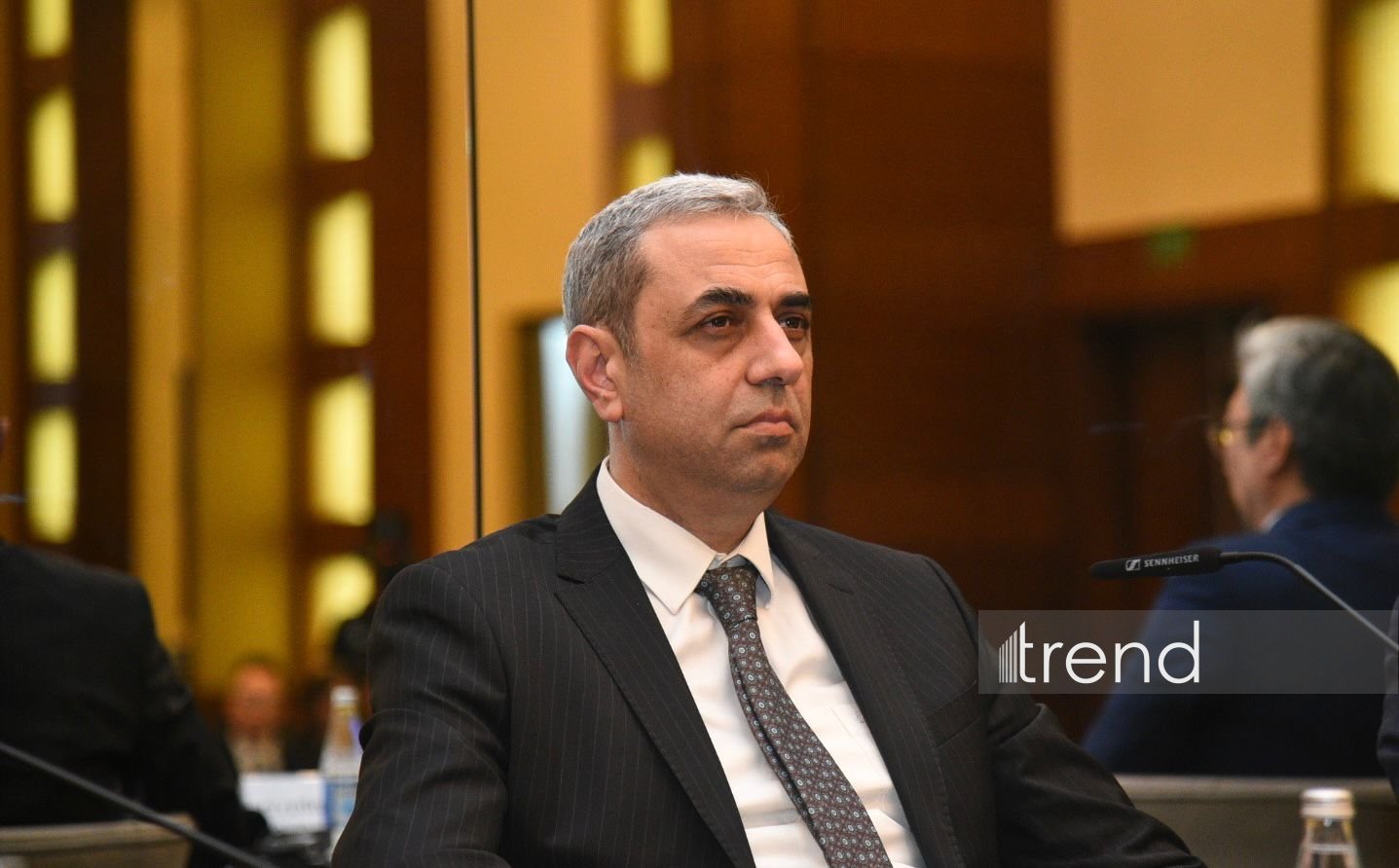

BAKU, Azerbaijan, February 18. A single geopolitical identity has already formed between Azerbaijan and the countries of Central Asia, and this is a natural process, Board Member of the AIR Center, Javid Valiyev said, Trend reports.
He made the remark at an international conference on 'C6: One region, shared future – enhancing strategic dialogue' held today in Baku.
According to him, over the past decades, the processes taking place in the region and in the world have, to a certain extent, made the formation of a common geopolitical identity between Central Asia and Azerbaijan necessary:
“Why has such an identity formed, and what made it necessary? This is due not only to a common Soviet past and similar historical experiences. As I have already noted, the geopolitical events of the last 30 years in the region – in the fields of economy, transport, trade, energy, and security – have made deeper cooperation necessary.”
In the early years after gaining independence, the Central Asian countries, Turkmenistan, Uzbekistan, and Kazakhstan, showed great interest in the energy and transport projects being implemented by Azerbaijan. In 1999, Turkmenistan and Kazakhstan also participated in the Baku–Tbilisi–Ceyhan project agreements in Istanbul. After the launch of the Baku-Tbilisi-Ceyhan oil pipeline in 2006, oil from Turkmenistan and Kazakhstan began flowing through Azerbaijan to global markets," he added.
Valiyev pointed out that the Central Asian countries are landlocked states: "They had to cooperate to access world markets. Azerbaijan had already created the necessary energy and transport infrastructure for such access. World powers interested in the region's energy and transport corridors supported the development of cooperation between these states. The Central Asia-Azerbaijan-Türkiye-Western markets route was supported. This was important for strengthening the sovereignty and independence of the new states, and also because the route was seen as an alternative to the northern and southern directions."



