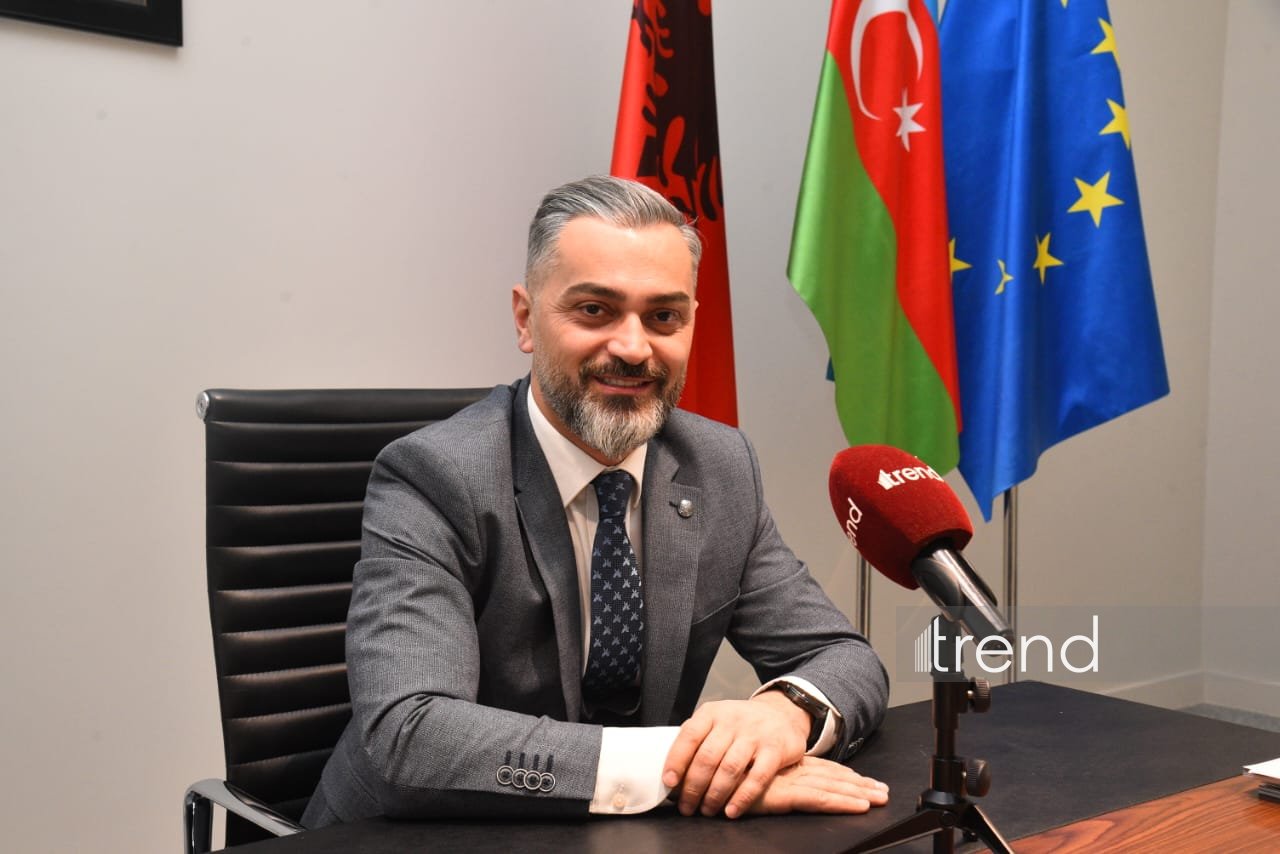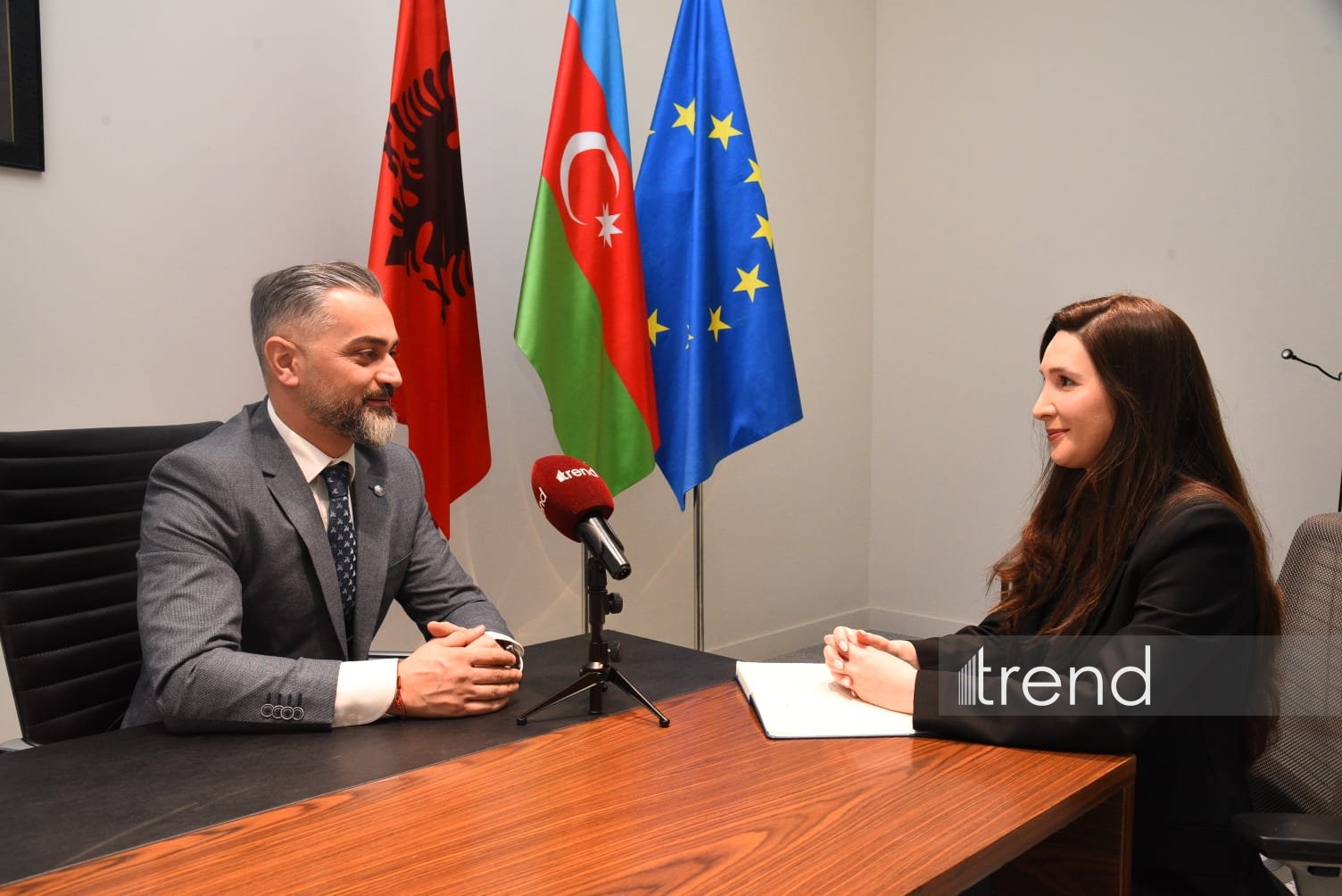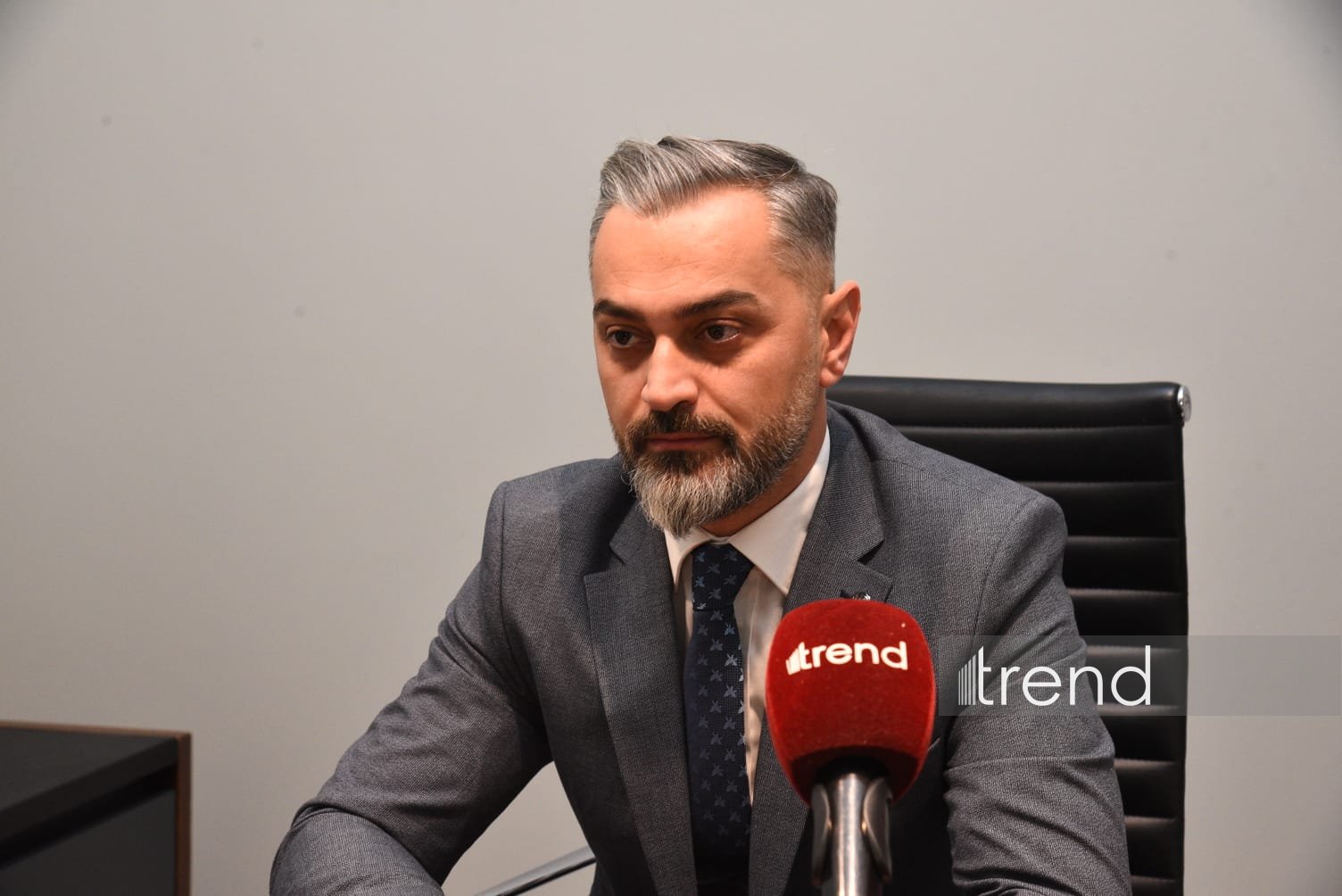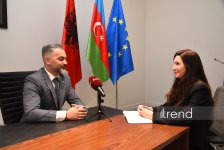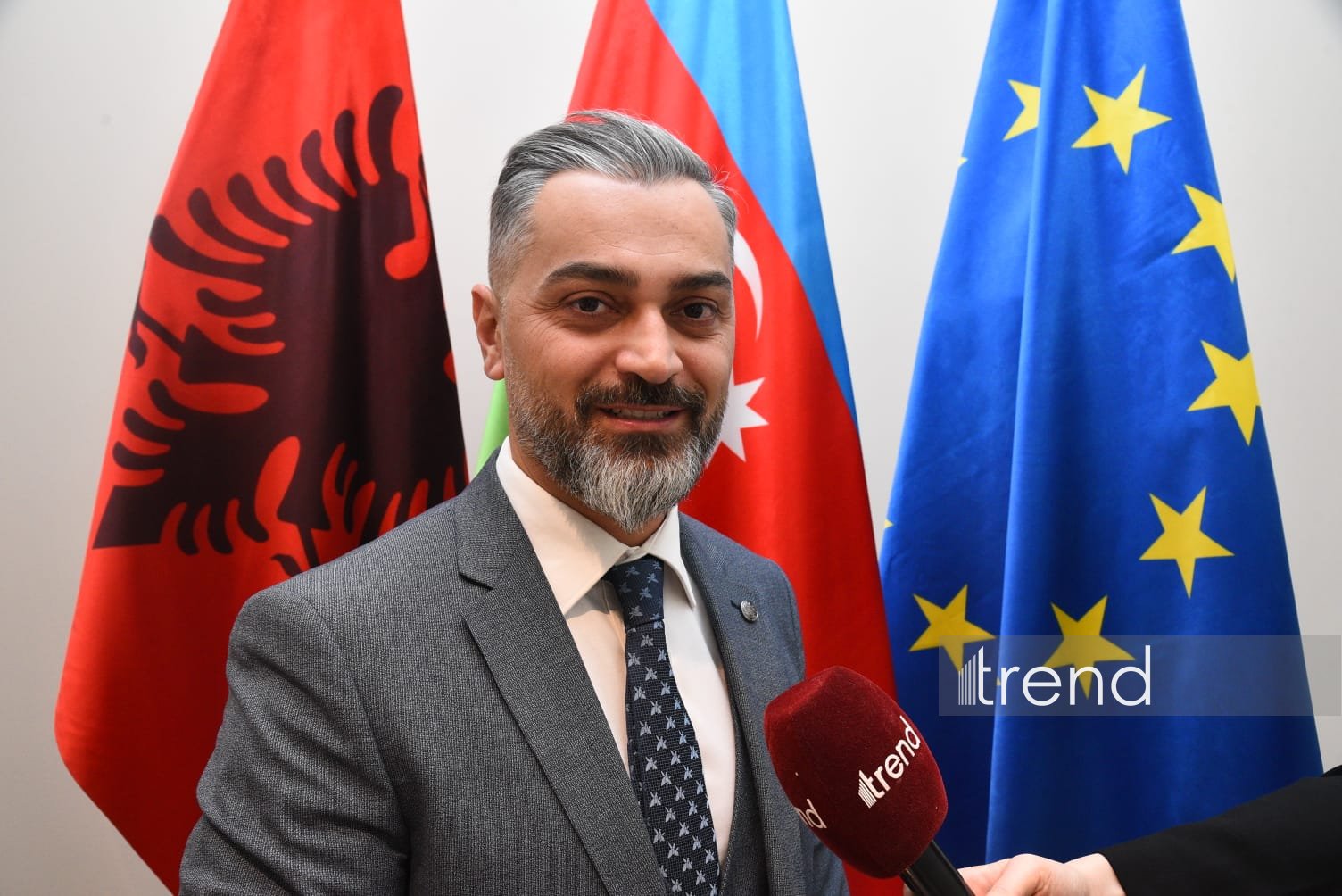

BAKU, Azerbaijan, January 16. The start of gas supplies from Azerbaijan to Albania via the Trans Adriatic Pipeline (TAP) in 2026 is expected to have a positive and strategic impact on Albania’s energy landscape and energy security, Besart Kadia, Ambassador Extraordinary and Plenipotentiary of the Republic of Albania to Azerbaijan, said in an exclusive interview with Trend.
“It will contribute to the diversification of the country’s energy mix, reduce reliance on hydropower, and enhance the stability and resilience of the energy system.This development builds on the growing framework of bilateral cooperation, notably strengthened through the 1st meeting of the Joint Working Group on Economic, Industrial and Technological Cooperation in May 2023. Concrete projects such as the “Nur” gasification project in Korça, presented during the visit of Azerbaijan’s Minister of Energy H.E Parviz Shahbazov in April 2025, demonstrate how this partnership is translating into tangible infrastructure and development benefits.Overall, TAP gas supplies reflect a long-term strategic partnership, reinforcing Albania’s energy security while further positioning Azerbaijan as a key partner in regional energy stability,” he said.
Kadia noted that the initial volume of 0.16 billion cubic meters is considered an important first phase in Albania’s gasification process.
“Albania has a clear interest in increasing these volumes in the future, in line with the development of domestic infrastructure and regional connectivity. Albania values Azerbaijan’s role in projects such as the gasification of Korça, underground gas storage, and cross-border transmission networks, as well as the optimal use of TAP. Both countries also support the Ionian Adriatic Pipeline and EU-backed initiatives to expand the Southern Gas Corridor. In this context, Albania is updating its Gas Master Plan and enhancing transmission capacity, with the appreciated technical support of SOCAR and its affiliates, creating a solid basis for a gradual increase in gas volumes over time,” the ambassador explained.
Expanding SOCAR’s gasification project
Kadia pointed out that the gasification of Korça is regarded as a flagship and pilot project, and there is a strong interest in its gradual extension to other regions of Albania.
“As gas supply through TAP becomes more established and domestic infrastructure continues to develop, Albania envisages the expansion of gas networks to additional cities and economic zones. This process would be pursued in a phased and coordinated manner, in line with the updated Gas Master Plan and in close cooperation with SOCAR and its affiliates, with the shared objective of strengthening energy security and supporting sustainable economic development,” he said.
Prospects for cooperation in green energy
The ambassador went on to add that Albania follows with great interest strategic initiatives that enhance regional connectivity and the diversification of clean energy sources, including the Black Sea Cable project.
“In line with its commitment to green energy and the development of new transmission corridors, Albania is open to exploring forms of participation that are consistent with its national energy strategy and regional priorities. Albania highly values Azerbaijan’s leading role in advancing major energy infrastructure projects and recognizes the importance of Azerbaijani energy—both gas and renewables—for regional energy security, including in the Western Balkans. As Albania continues to update its Gas Master Plan and expand its energy infrastructure, it welcomes Azerbaijani technical expertise and cooperation, as well as EU-supported frameworks, to further integrate into regional and European energy markets and contribute to the transition toward sustainable and secure energy systems,” said Kadia.
He believes that beyond existing flagship projects, Albania and Azerbaijan have ample scope to further strengthen their energy cooperation through a strategic and comprehensive approach.
“Priority areas include the diversification of energy sources, the development of new transmission corridors, renewable energy projects, energy storage, LNG infrastructure, and the exchange of technical expertise and capacity building. At the same time, Albania attaches importance to broadening cooperation beyond the energy sector, notably in transport connectivity, trade and SME partnerships, sustainable agriculture and food security, education, tourism, and cultural exchanges. Enhanced institutional cooperation, business-to-business contacts, and joint forums will further support investment and the implementation of joint initiatives. This holistic approach, encompassing energy, economy, connectivity, innovation, and people-to-people exchanges, will contribute to deepening bilateral relations and delivering sustainable economic and social benefits for both Albania and Azerbaijan,” he said.
Investment opportunities
Kadia pointed out that Albania welcomes Azerbaijani investments across several priority sectors that align with the country’s national development objectives and bilateral cooperation agenda.
“Beyond energy, Albania sees strong potential for investment in transport and logistics, tourism and hospitality, sustainable agriculture and food processing, digital innovation, and infrastructure development. Opportunities also exist in trade and SME partnerships, supported by cooperation between AIDA and AZPROMO and by strengthened links between chambers of commerce. Through a stable investment climate, ongoing legal harmonization, and targeted business forums and B2B initiatives, Albania aims to facilitate Azerbaijani investments that generate mutual economic benefits and contribute to long-term, sustainable growth in both countries,” said the Albanian ambassador.
He highlighted that Albanian companies have expressed interest in contributing to the reconstruction of Azerbaijan’s liberated territories.
“Participation in such projects offers an opportunity to provide expertise, technology, and services in infrastructure, construction, and related sectors. This engagement aligns with the broader framework of bilateral economic cooperation, strengthening trade, investment, and long-term business partnerships, while reflecting Albania’s commitment to supporting initiatives that promote sustainable development and regional prosperity,” said Kadia.
As for other ways of expanding the economic ties, the ambassador noted that Albania welcomes the establishment of joint ventures between Albanian and Azerbaijani companies as a strategic means to strengthen bilateral economic cooperation.
“Such partnerships offer opportunities to combine expertise, technology, and resources, fostering innovation, competitiveness, and the successful implementation of joint projects. Joint ventures hold particular potential in sectors including energy, infrastructure, renewable energy, agriculture, and tourism, while also enhancing trade, investment, and long-term cooperation. They reflect a shared commitment to sustainable development and the deepening of our bilateral relations,” he explained.
Further, speaking about tourism relations, the ambassador said Albania welcomes the prospect of establishing direct flights between Azerbaijan and Albania as a strategic measure to strengthen bilateral relations.
“Enhanced air connectivity, building on the existing visa-free travel agreement, would facilitate business, tourism, and cultural exchanges, as well as closer people-to-people ties.This initiative complements ongoing efforts to enhance trade, investment, and regional connectivity, reflecting the shared commitment of both countries to deepen their economic, cultural, and social partnership,” he said.
Albania’s perspective on Azerbaijan-Armenia peace process
The ambassador noted that Albania welcomes the recent positive developments in the dialogue between Azerbaijan and Armenia and expresses hope that they will lead to a lasting resolution of the conflict.
”We continue to follow the situation and reaffirm our support for the mutual recognition of the sovereignty and territorial integrity of both countries. We stress that constructive dialogue, conducted in full respect of international norms and principles, is essential for achieving enduring peace, reconciliation, and stability in the South Caucasus. Albania commends the commitment of both nations to dialogue over division and welcomes the historic milestone towards peace formalized at the White House under the special leadership of President Trump. We recognize this agreement as a significant step marking the end of decades of conflict and laying the foundation for the full normalization of relations, as well as the strengthening of regional trust, stability, and security,” Kadia said.
Upcoming joint events and visits
The ambassador noted that Albania looks forward to a series of high-level visits and joint events that will further strengthen bilateral cooperation with Azerbaijan.
“The 2nd meeting of the Joint Working Group on Economic, Industrial, and Technological Cooperation is scheduled to take place in Tirana, providing a platform to advance concrete projects and deepen institutional collaboration. President Bajram Begaj will visit Azerbaijan from 13 to 15 March to participate in an event organized by the Nizami Ganjavi International Center, underscoring Albania’s commitment to cultural and intellectual exchange. Additionally, Prime Minister Edi Rama is expected to attend the special meetings of World Leaders on 18 May 2026 at WUF13 in Baku, highlighting Albania’s engagement in regional and global dialogues. Several other visits and joint initiatives are currently in the process of confirmation, reflecting the shared commitment of both countries to expanding cooperation across economic, cultural, and technological fields,” Kadia concluded.