


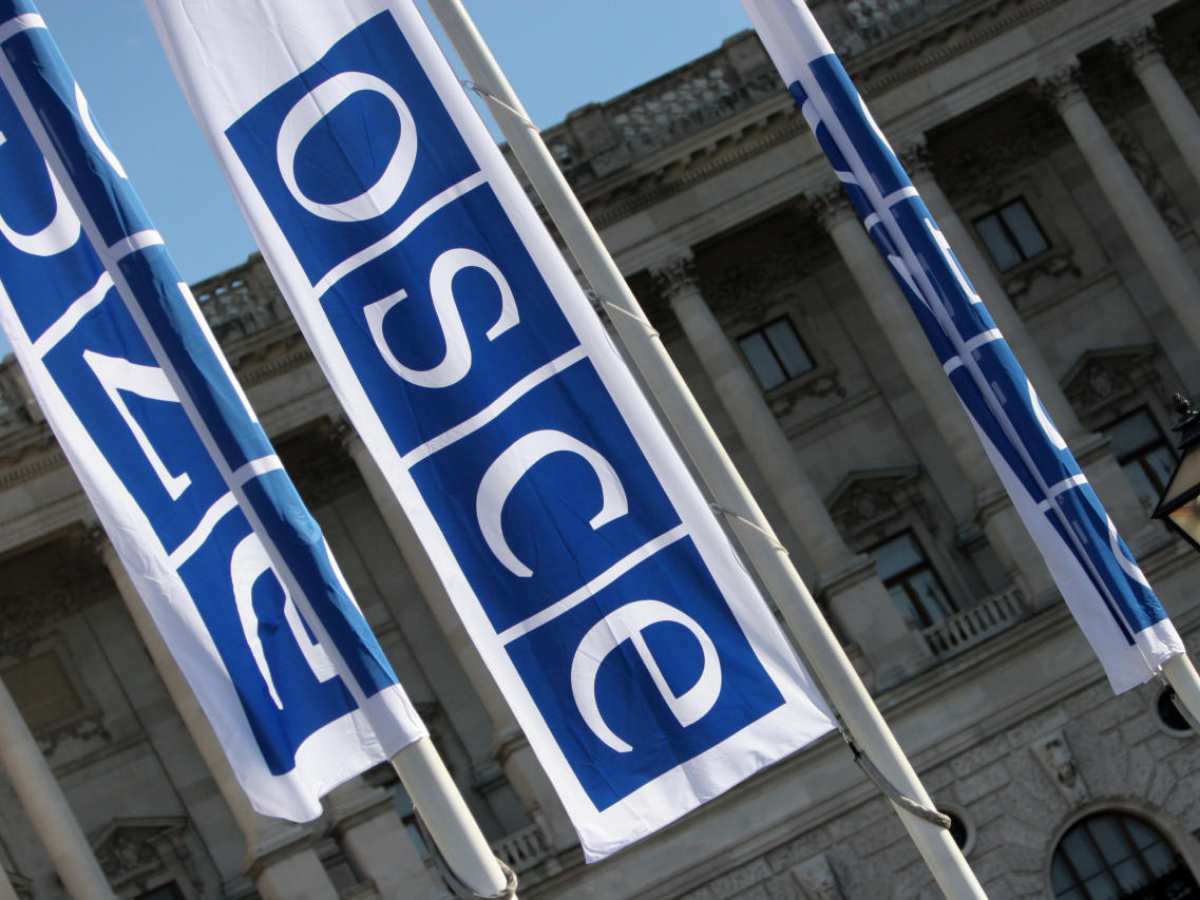
BAKU, Azerbaijan, December 1. Established in 1992, the Minsk Group of the Organization for Security and Co-operation in Europe (OSCE) was intended as an international mediation platform to facilitate the resolution of the Armenia-Azerbaijan conflict. However, over the span of three decades, it failed to halt the escalation of the conflict or produce any tangible outcomes toward resolving the occupation. As a result, the Minsk Group became widely regarded by both the Azerbaijani public and international security analysts as an ineffective, dysfunctional, and largely symbolic entity.
Between 1992 and 2020, the Minsk Group failed to end Armenia's occupation of Azerbaijani territories, to ensure the implementation of United Nations Security Council (UNSC) resolutions, or to apply any meaningful political pressure for the withdrawal of occupying forces. This inaction contributed to the freezing of the conflict. Many analysts contended that the Minsk Group’s role was less about resolving the dispute and more about "managing" and prolonging it for decades.
The political interests of the three co-chairing countries - Russia, the US, and France - played a decisive role in shaping the mediation process. These competing interests undermined the group's ability to act impartially, preventing it from functioning as a truly objective or principled mediator. Decisions required consensus among the co-chairs, a structure that enabled any one of them to block progress through a veto, thereby stalling meaningful decision-making and rendering diplomatic efforts ineffective. As a result, the Minsk Group was unable to operate as a flexible or decisive mechanism.
Over the years, the Minsk Group did not react seriously to Armenia’s ceasefire violations, illegal settlement activities in the occupied territories, or humanitarian and security breaches. This environment of impunity provided Armenia with additional opportunities and prolonged the conflict instead of resolving it. For Azerbaijan, this completely undermined trust in the Minsk Group.
Although the group presented various documents over the years, including the Package Solution, the Step-by-Step Approach, and the Madrid Principles, none offered legally guaranteed mechanisms acceptable to Azerbaijan.
While the formal dissolution of the Minsk Group took place in 2025, the political foundation for this outcome had been shaped for years through the consistent stance of Azerbaijan’s President Ilham Aliyev. The results of the 2020 war, diplomatic efforts, and the President’s principled position in international forums constituted the driving force that delegitimized the Minsk Group and ultimately led to its complete dissolution. These positions shifted the direction of international political discourse, reducing the group’s legitimacy to zero.
For years, Azerbaijan’s President Ilham Aliyev consistently pointed out the failure of the Minsk Group to produce tangible results, its violation of the principle of neutrality, its disregard for Armenia’s occupation policies, and its role in advancing geopolitical interests. He repeatedly conveyed this message at international forums, in interviews, and during meetings with the co-chair countries.
On August 8, 2025, the Washington Declaration, mediated by U.S. President Donald Trump and signed by both President Ilham Aliyev and Armenian Prime Minister Nikol Pashinyan, became the cornerstone for the final phase of the resolution process.
The dissolution of the Minsk Group was not merely an administrative or procedural decision; it marked the culmination of a prolonged diplomatic effort and symbolized the decisive leadership of President Ilham Aliyev.
As of November 30, 2025, at 23:59 (GMT+4), the OSCE officially ended the Minsk Process and dismantled all related structures, marking a definitive conclusion to the group’s involvement in the conflict.
Stay up-to-date with more news on Trend News Agency's WhatsApp channel



