


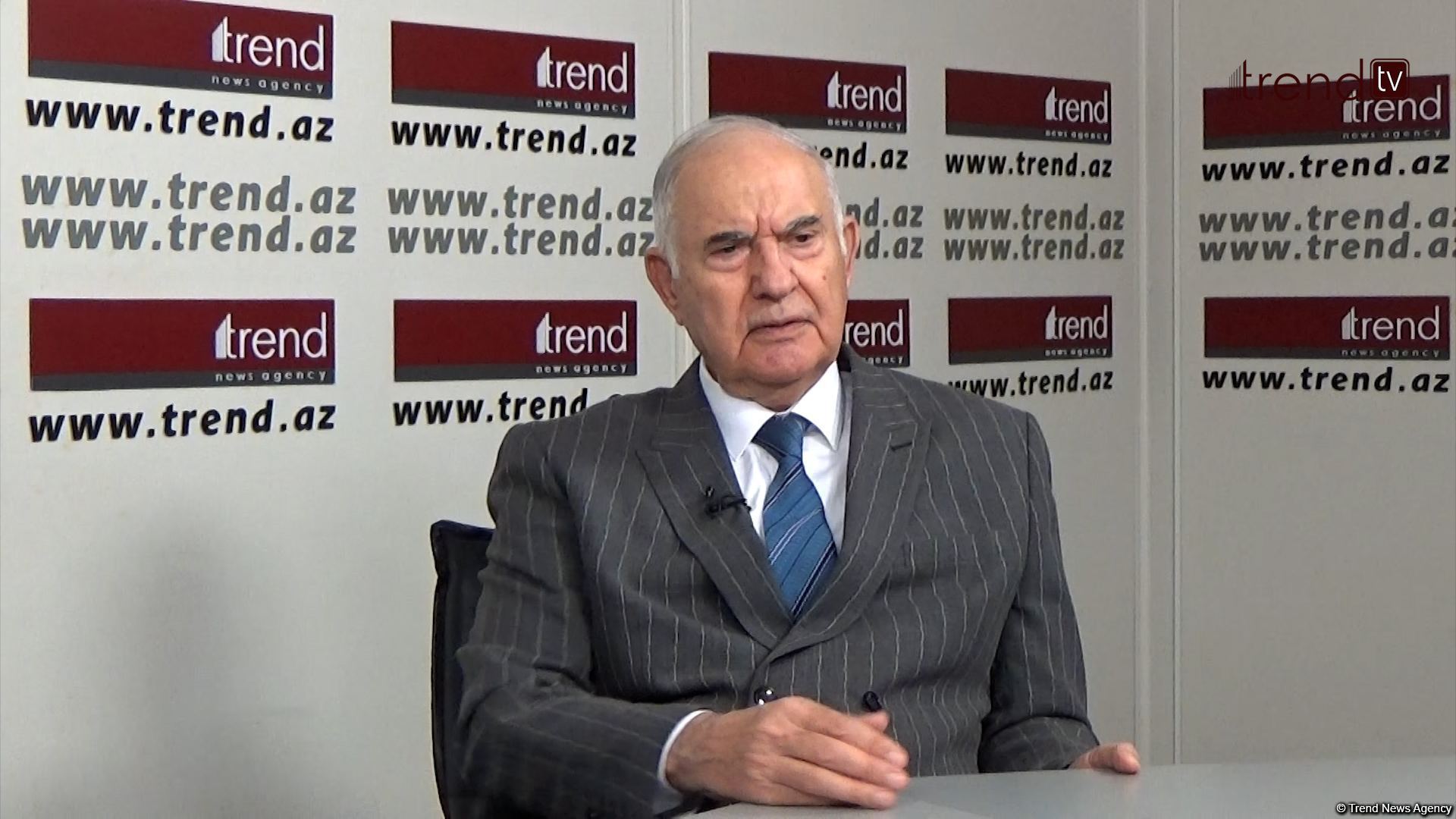

BAKU, Azerbaijan, December 26. Azerbaijan is building peace through real actions, not just words, political analyst Azer Garayev told Trend.
"Long-standing conflict, confrontation, and mistrust in the South Caucasus have significantly limited the region’s development potential. Recent developments, however, indicate that Azerbaijan is taking consistent and pragmatic steps to ensure regional stability and lasting peace. These steps are reflected not only in political statements but also in tangible humanitarian and economic initiatives," he said.
One of the most notable recent developments, according to Garayev, is Azerbaijan facilitating the transit of grain from Russia and Kazakhstan to Armenia through its territory.
“Two grain shipments from Russia and one from Kazakhstan have already reached Armenia via Azerbaijan. This is significant not only economically but also politically and humanitarily. It opens communication lines in the region and ensures mutual benefits. Baku has repeatedly stated that opening transport and trade routes serves the interests of the entire region, not just one country. The unhindered transit of strategic products like grain is a practical confirmation of this position,” he said.
Garayev also highlighted Azerbaijan’s recent start of fuel deliveries to Armenia.
“Energy cooperation is a sensitive and strategic field. By exporting fuel to Armenia, Azerbaijan clearly demonstrates that it prioritizes collaboration over confrontation. Importantly, all these initiatives are undertaken unilaterally, without requiring reciprocal political will or constructive engagement from the other side. Baku’s main priorities are long-term peace, regional stability, and economic integration,” he added.
The analyst emphasized that President Ilham Aliyev has repeatedly noted the emergence of new realities in the South Caucasus, which should be based on cooperation, mutual respect, and international law.
“Post-war, Azerbaijan has prioritized reconstruction and integration. Extensive development is underway in liberated territories, shaping the future economic map of the region. Unfortunately, some political circles in Armenia continue to pursue revanchist rhetoric and live in the past, which harms both Armenian society and regional prospects. These positions isolate Armenia from regional projects and deepen economic isolation,” he explained.
Garayev noted that Azerbaijan’s grain transit and fuel deliveries show that rational cooperation, rather than hostility, is the guiding principle. “These actions have a direct positive impact on the socio-economic conditions of the Armenian population,” he said.
He also criticized certain European actors for attempting to hinder these processes.
“For example, the European Parliament’s recent resolution against Azerbaijan and the EU-Armenia Strategic Agenda demonstrate that Brussels has moved away from a neutral mediator role, taking a one-sided political stance. Terminology, selective facts, and misrepresentations in these documents serve to legitimize Armenia’s political narrative rather than promote peace,” he said.
Garayev further pointed out that claims in these documents about “forcibly displaced” Armenians and “released prisoners” do not align with reality. International organizations, including the International Committee of the Red Cross, confirm that individuals left voluntarily, and post-war detainees are not prisoners of war but individuals held for specific crimes under Azerbaijani law.
He warned that European documents often ignore Azerbaijan’s territorial integrity and post-2020 realities, providing political cover for Armenia’s non-constructive stance. Expanding monitoring missions while overlooking Armenia’s regional obligations undermines the peace process. Against this backdrop, Azerbaijan’s initiatives on grain transit, fuel supply, and opening communication lines clearly demonstrate that real peace is built through concrete, responsible actions, not declarations.
“Every initiative by Azerbaijan highlights its humanitarian responsibility and regional leadership. These measures are significant not only bilaterally but also within a broader geopolitical context. Today, Azerbaijan is a key hub for East-West and North-South transport corridors. This status provides opportunities but also responsibilities, and Azerbaijan proves it is a reliable partner as a transit country. The question remains: who is taking real steps toward peace? Facts show that Azerbaijan advances the peace agenda through practical action. Grain transit, fuel supply, and open communication lines are all part of Baku’s strategic vision. Armenia faces a choice: cling to revanchist illusions or accept the emerging new realities and pursue cooperation. History shows the latter is both more rational and promising,” Garayev said.
He concluded that Azerbaijan’s actions demonstrate that peace is indispensable and materializes through real economic and humanitarian collaboration.
“Baku clearly shows that peace is built through tangible initiatives, not just documents. The future of the region depends on this approach, and Azerbaijan is ready to play a leading role, already demonstrating this with concrete steps,” he added.
Stay up-to-date with more news on Trend News Agency's WhatsApp channel



