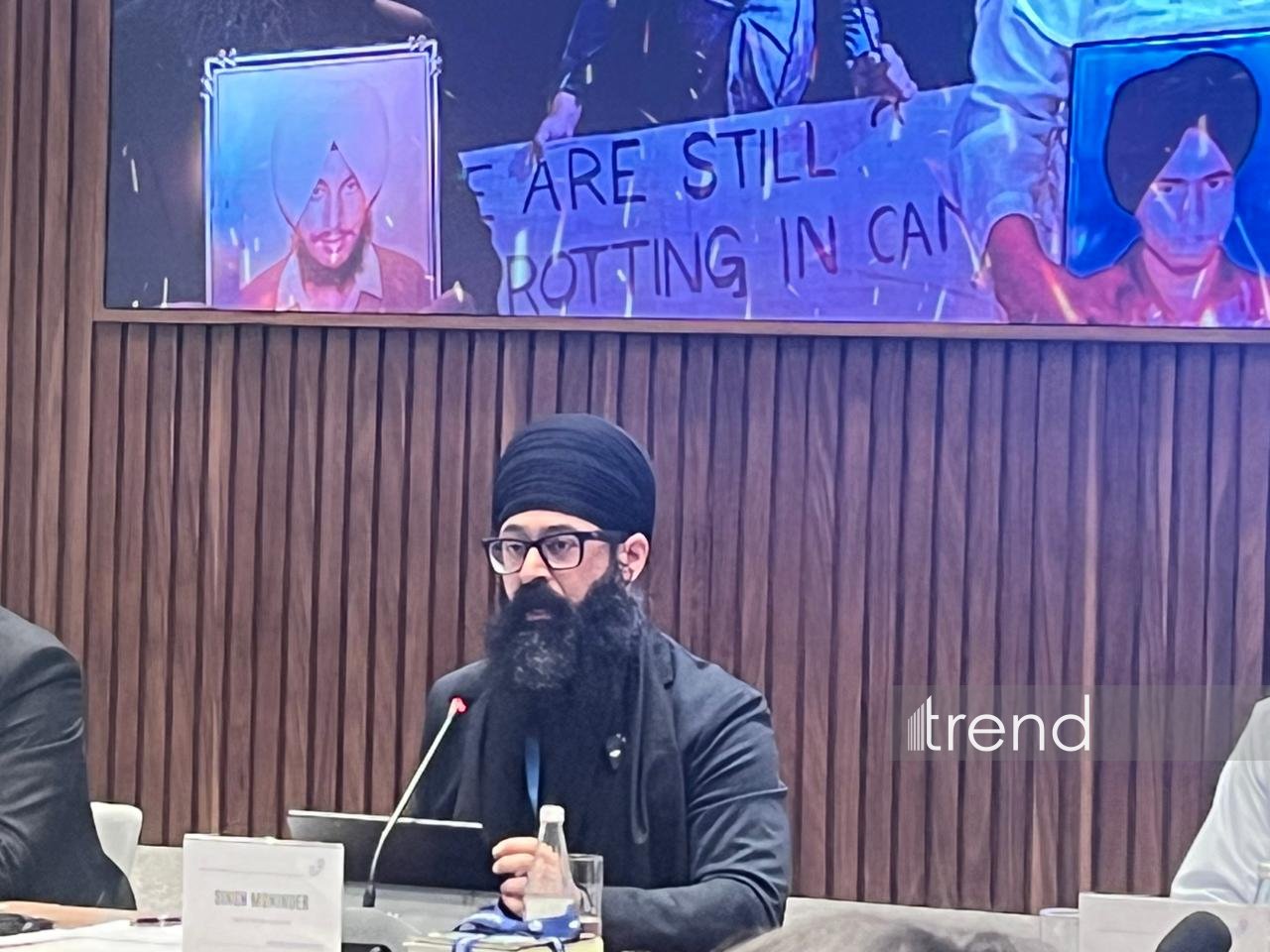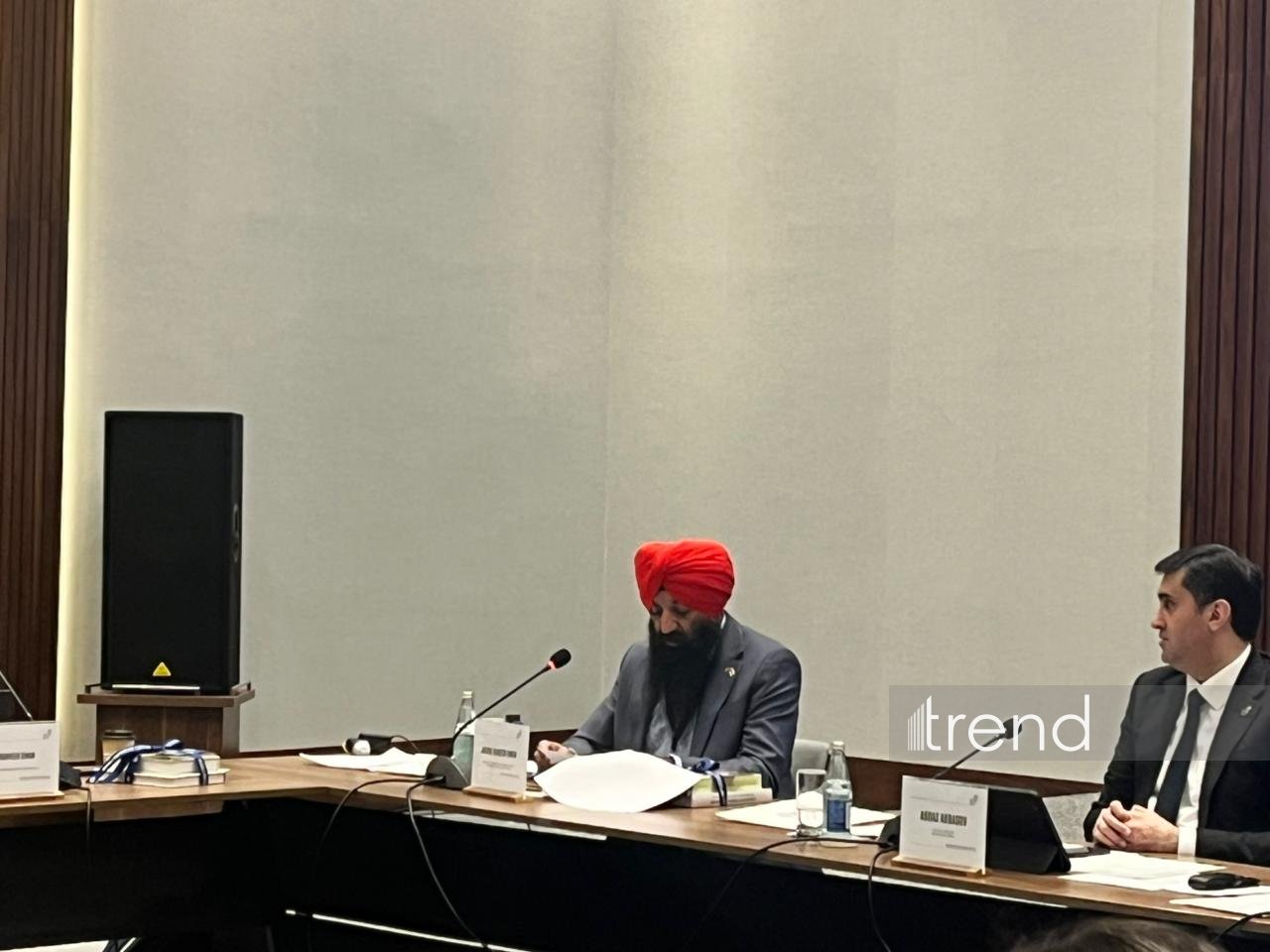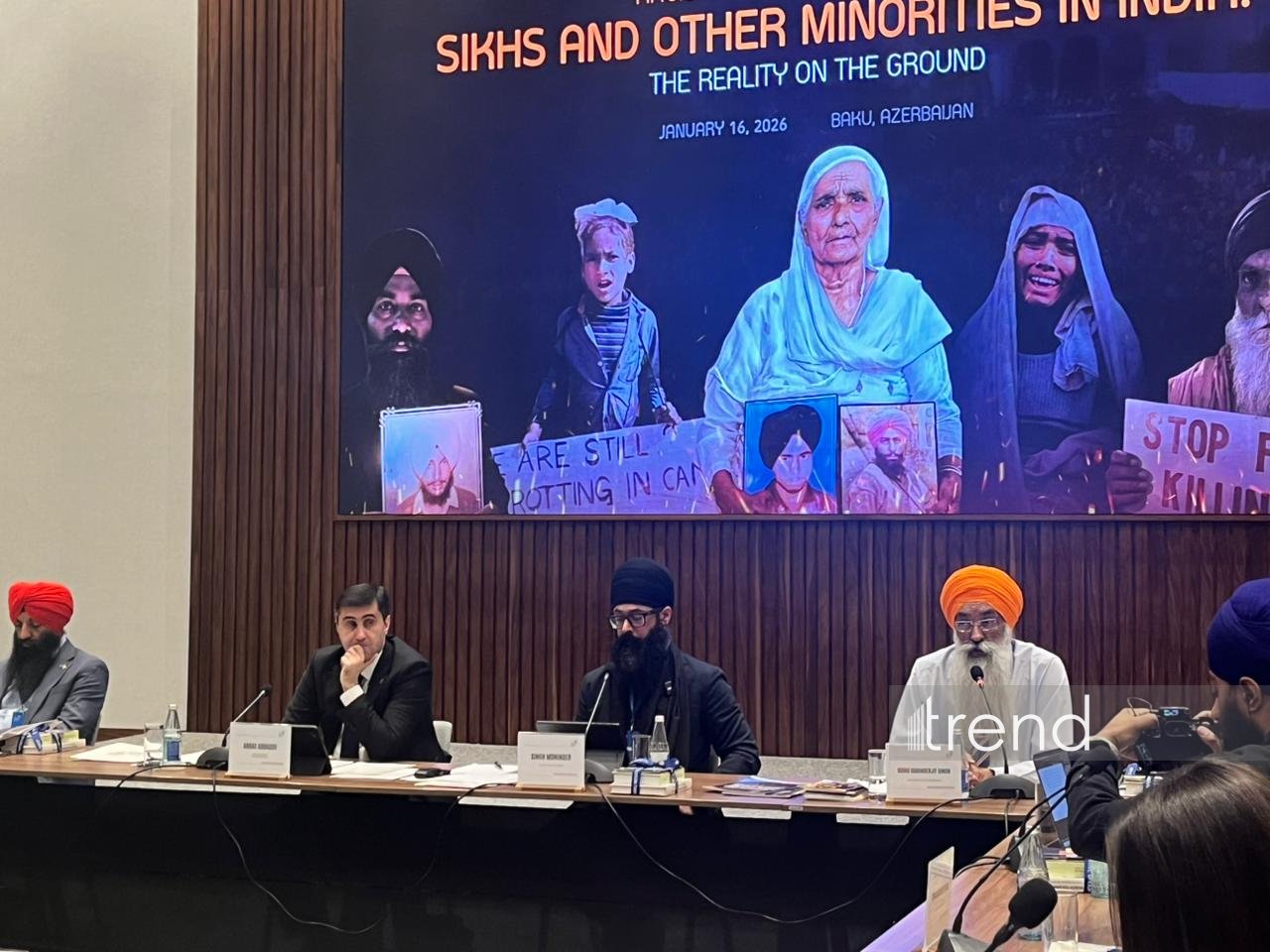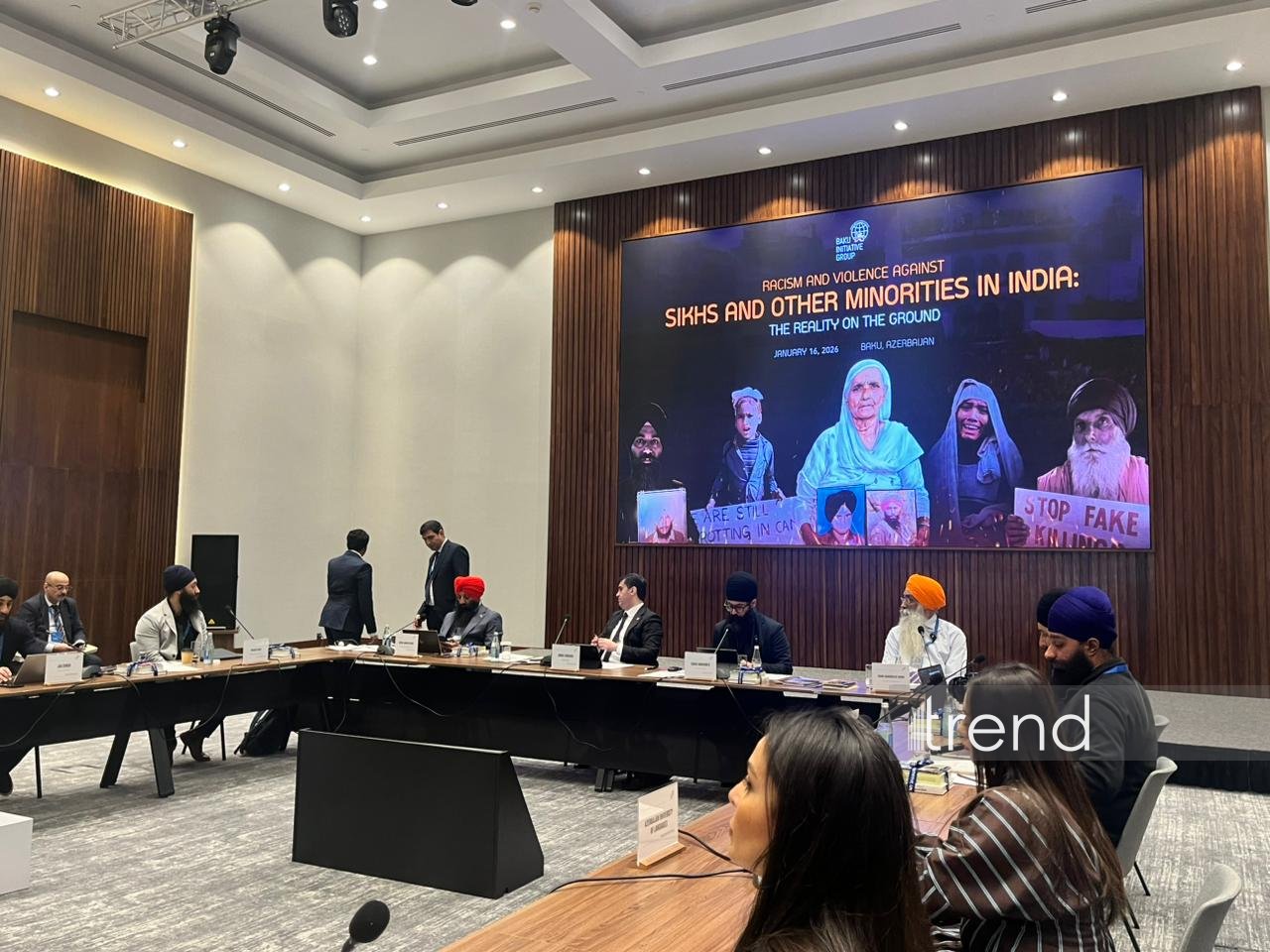

BAKU, Azerbaijan, January 16. An international conference titled “Racism and Violence Against Sikhs and Other Minorities in India: The Reality on the Ground,” organized by the Baku Initiative Group (BIG) and dedicated to the Indian government’s repressive policies against ethnic minorities, was held for the first time in Azerbaijan, Trend reports.
The conference featured Ramesh Singh Arora, Punjab’s Minister of Human Rights and Minorities, along with various other officials, prominent leaders from Sikh communities in Canada, the UK, and the US, directors of renowned think tanks, scholars specializing in human rights and ethnic minority studies from esteemed international academic institutions, and individuals personally impacted by India’s repressive policies. The event provided a platform for examining the ongoing human rights violations in India, particularly those affecting ethnic minorities.
The conference discussed the systematic racial discrimination, violence and repressive policies pursued by the Government of India against Sikhs and other ethnic minorities, as well as gross violations of India's obligations under the International Covenant on Civil and Political Rights, the International Convention on the Elimination of All Forms of Racial Discrimination and the Convention against Torture in the context of attitudes towards ethnic minorities. In addition the conference created basis for discussions on the need to keep the real situation on the agenda of international organizations and make appropriate decisions, in particular on the investigation by the UN Human Rights Committee of the violated rights of ethnic minorities in India, executions carried out without judicial decisions, as well as on documenting violations by UN special rapporteurs and submitting them to international monitoring. A separate topic of discussion was the role of international and local non-governmental organizations and academia in this process, as well as the impact of their reports, legal opinions, and recommendations on international decision-making mechanisms.
Speaking at the event, Abbas Abbasov, executive director of the Baku Initiative Group (BIG), said that historical facts and eyewitness accounts would reveal the true picture of the atrocities faced by Sikhs.
He noted that today's conference is not just an academic discussion or a symbolic event. The conference will conduct an in-depth analysis of the historical roots of discrimination against Sikhs, as well as the ongoing struggle for justice.
“The words I speak cannot fully convey the scale of the mass killings, gross human rights violations, and atrocities faced by Sikhs,” he emphasized.
Abbasov added that the exhibition materials, historical facts, and eyewitness accounts will provide a realistic and objective picture of the problem.
“Over the past two years, the Baku Initiative Group has organized more than 30 international conferences and established cooperation with more than 20 countries,” he emphasized.
Furthermore, the president of the Sikh Federation, Bual Monender Singh, noted that India is demonstrating brutal violence against all those who profess the Sikh faith.
He noted that we should not forget that India was actually created as a British colonial project. At the same time, he said, while expressing solidarity, we must also remember other people of different origins who are subjected to discrimination.
"From Dalits, who have been subjected to caste discrimination for millennia, and Muslims, who have suffered decades of communal violence at the hands of right-wing Hindu groups, to the occupation of Kashmir, one of the most militarized regions in the world, and Christians, who are regularly targeted throughout India because of their religious beliefs. All of this contradicts the Indian Constitution, which declares equal protection. On paper, these guarantees exist, but in practice they are extremely inadequate," he added.
Bual Monender Singh noted that among these communities, it is the Sikhs who bear a particularly heavy burden:
"To understand the tragedy of 1984, one must look to its roots. The basis for violence against Sikhs lies in a combination of political opportunism, state repression, and the denial of Sikh identity and aspirations. One need only look at Article 25B of the Indian Constitution. In this article, Sikhs, Buddhists, and Jains do not have a separate status and are presented as branches of Hinduism. This means a complete erasure of identity in the constitutional and legal field. At the same time, the application of Article 25B over the past decades has been accompanied by extreme violence against the Sikh people."
He emphasized that instead of dialogue and a constructive approach, the Indian state responds with militarization, human rights violations, mass killings, and brutal violence against men, women, and children who profess the Sikh faith:
"During Operation Blue Star in 1984, the army's attack on the Golden Temple, the most sacred shrine of the Sikh people, inflicted deep psychological wounds on the Sikh community and became the starting point for a movement that went beyond the demand for broad autonomy for Punjab and grew into a struggle for the complete independence and sovereignty of Khalistan.
The assassination of Prime Minister Indira Gandhi on October 31, 1984, became the pretext for subsequent events. In the days that followed, Delhi and other cities were engulfed in genocide. Armed groups, having received voter lists from politicians, attacked Sikh homes, burned Sikh men, killed children, and raped women. It was a large-scale attempt to complete the genocide process initiated by the Indian state itself.
Ramesh Singh Arora, Punjab's Minister for Human Rights and Minority Affairs, said that Operation Blue Star marked the beginning of the Khalistan movement.
He noted that the reason for such deep-rooted violence against Sikhs lies in a combination of political opportunism, state repression, and the denial of Sikh identity and national aspirations.
"To see this, one need only look at Article 25(b) of the Indian Constitution. In other words, in the constitutional and legal sphere, the identity of Sikhs is effectively erased," he emphasized.
The minister noted that a clear example of this was Operation Blue Star in 1984, during which the army attacked the most sacred shrine of the Sikhs, the Golden Temple.
"This event inflicted deep wounds on the collective consciousness of the Sikhs and at the same time marked the beginning of the Khalistan movement, i.e., the idea of complete freedom and sovereignty. From that moment on, the struggle ceased to be a demand for greater autonomy for the state of Punjab and turned into a struggle for complete independence. The assassination of Prime Minister Indira Gandhi on October 31, 1984, became the pretext for subsequent events. After that, genocide took place in Delhi and other cities: armed groups, which had received voter lists from politicians, attacked the homes of Sikh families, burned men alive, killed children, and raped women. It was a nationwide attempt to complete the process of genocide begun by the Indian state itself," he concluded.