


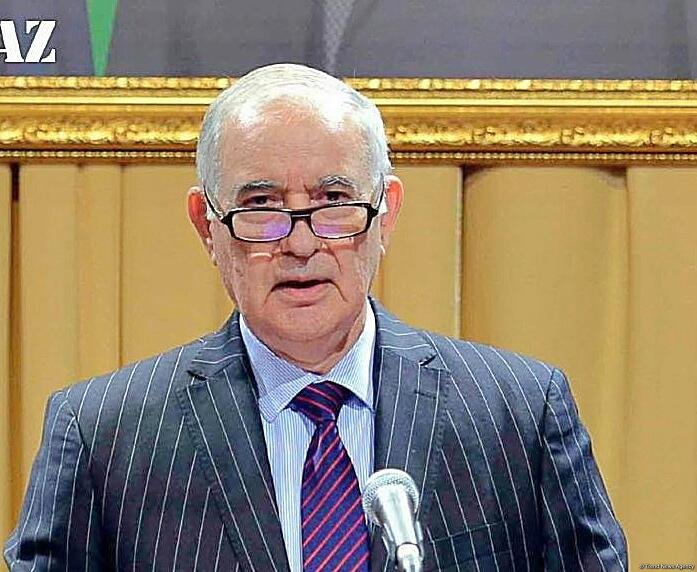

BAKU, Azerbaijan, February 2. Azerbaijan's joining the Board of Peace signals the country's rising global influence, political analyst Azer Garayev told Trend.
"The signing of the Board of Peace Charter in Davos on January 22, 2026, is an important milestone in the new architecture of global politics. The signing of this document by the President of the Republic of Azerbaijan Ilham Aliyev, is another confirmation of the country's growing weight in the system of international relations, its image as a reliable partner, and its role moving from a regional actor to a global player.
The Board of Peace initiative aims to unite states, political leaders, and strategic partners from different regions of the world on one platform, promoting global security, conflict prevention, and political dialogue. In the modern world, against the backdrop of wars, regional crises, tensions around energy and transport routes, the creation of such a platform arises from an objective necessity. Unlike classical international organizations, this organization is built on flexible decision-making, political trust, and mutual obligations. That is, the main issue here is not only formal membership but also a strategic partnership based on mutual trust. It is in this context that Azerbaijan's entry into the Board of Peace is of particular importance," the analyst stated.
According to him, over the past 20 years, Azerbaijan has pursued a balanced and predictable line, which is rarely seen in foreign policy. Baku has also been able to develop cooperation with the European Union, the U.S., Russia, China, the Islamic world, and the Turkic states in parallel. This is a diplomatic skill that very few countries have in an era of intensifying competition between great powers.
"First, commitment to its obligations in the energy sector. Azerbaijan has become a country that plays an important role in Europe's energy security. Huge infrastructure projects such as the Southern Gas Corridor project, TANAP, and TAP have proven that Azerbaijan is a partner that keeps its promises. Second, reliability in the transit and transport sector. The Baku-Tbilisi-Kars railway, the Middle Corridor, the Baku port, and cargo routes passing through the Caspian Sea show that Azerbaijan is an important link in the global logistics chain.
Third, consistency in security and regional stability issues. Azerbaijan has created a new reality in the region after a 44-day war and put the peace agenda at the forefront. Now Baku is becoming a capital that talks not about conflicts, but about opening communications and cooperation. Azerbaijan is now taking an active role not only in classic platforms such as the UN and the Non-Aligned Movement (NAM), but also in newly emerging and future-shaping international initiatives.
During its chairmanship of the NAM, Baku has actually revived this organization, turning it into a real platform for discussing global problems. International summits were held at the initiative of Azerbaijan during the pandemic. The provision of humanitarian aid to countries affected by the conflict and calls for fair global distribution demonstrated Baku's sense of global responsibility. Joining the Board of Peace is a logical continuation of this line. Azerbaijan is already a country that influences the formation of global processes," he noted.
The analyst highlighted that Azerbaijan's entry into the Board of Peace also opens up new opportunities for the region.
"The South Caucasus has been known for many years as a place of conflict and instability. Now, Azerbaijan is presenting this region as a zone of cooperation, transport, energy, and peace. Participation in the Board of Peace allows Baku to more effectively promote its regional initiatives on a global platform. The Zangezur corridor, the Middle Corridor, and the Black Sea-Caspian connections are no longer just regional projects but are part of the international agenda. Besides, this step further strengthens the status of Azerbaijan as a country pursuing an independent policy.
Baku is not an outpost of any bloc but a reliable partner for all major power centers. The most valuable capital in international politics is trust. Azerbaijan has formed this capital over the years. Baku's positions are based on pragmatism rather than harsh rhetoric and calculated decisions rather than emotions. This makes it a predictable partner," he explained.
Garayev emphasized that platforms such as the Board of Peace need precisely such countries—states that stand behind their word, ensure internal stability, and act responsibly in foreign policy.
"Azerbaijan's signing of the Board of Peace Charter is not just a diplomatic event. This is an official confirmation of the trust, authority, and strategic weight that the country has gained in the international system. Azerbaijan is no longer just a regional leader but an actor participating in the formation of the global peace and security architecture. This signature in Davos is a harbinger of Baku's future presence on larger diplomatic, political, and economic platforms. The inclusion of a reliable partner like Azerbaijan in the Board of Peace will be one of the main factors increasing the future effectiveness of this institution itself," the analyst added.
Stay up-to-date with more news on Trend News Agency's WhatsApp channel



