


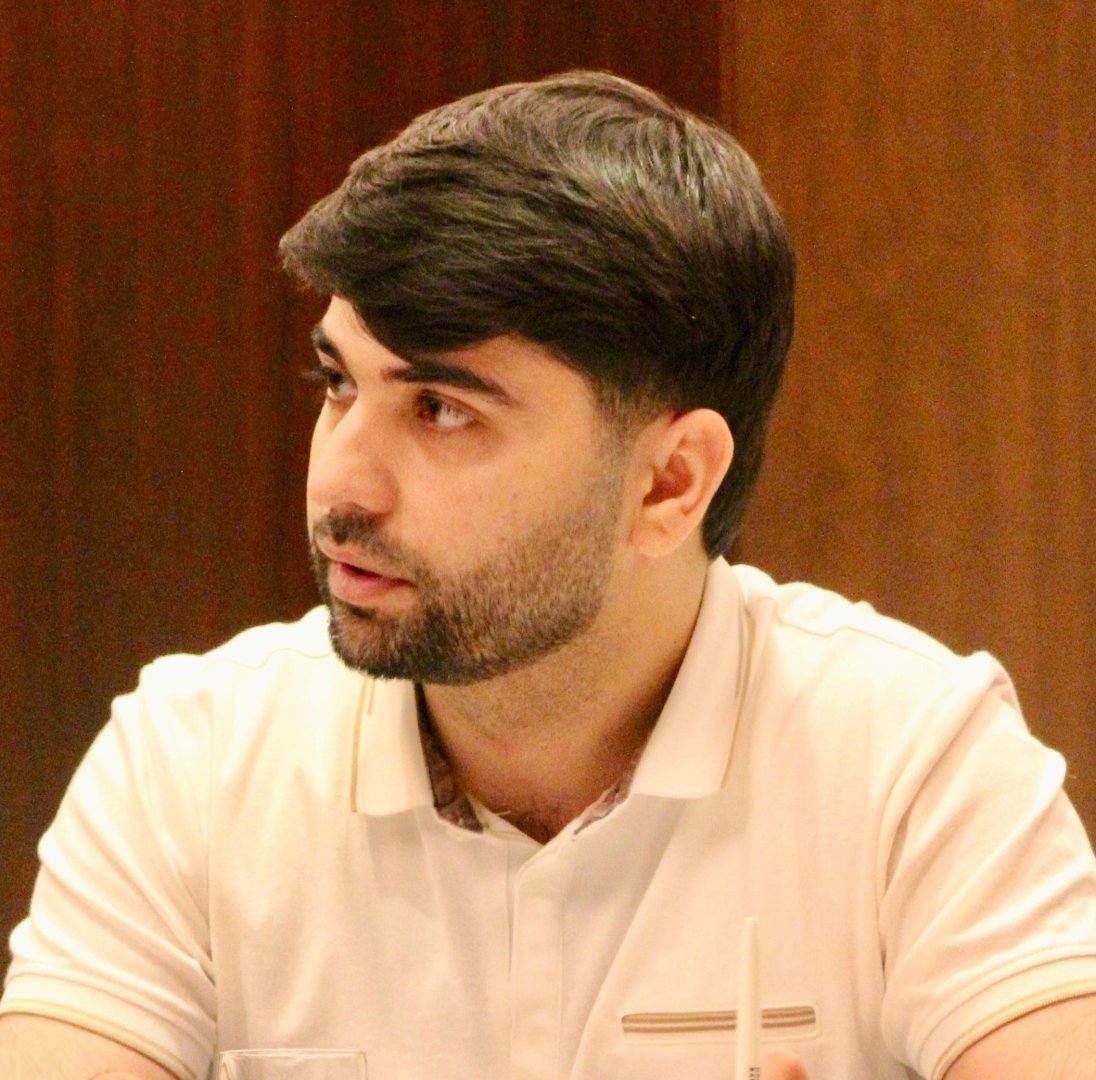
BAKU, Azerbaijan, March 7. The drone attacks on the Nakhchivan Autonomous Republic carried out by Iran on March 5 targeted civilian infrastructure rather than military sites, striking the Nakhchivan International Airport and an area near a school, injuring four civilians, political analyst Azer Garayev told Trend.
The analyst pointed out that the attacks lay bare the real essence of Iran’s regional strategies and showcase the two-faced and antagonistic nature of the Iranian regime.
"On the same day, the Security Council convened under the chairmanship of Ilham Aliyev, President of the Republic of Azerbaijan. The head of state unequivocally classified the incident as a terrorist act. In his address, President Ilham Aliyev stated: 'Today, a terrorist act was committed by Iran against the territory of Azerbaijan and the state of Azerbaijan. The territory of the Nakhchivan Autonomous Republic came under fire from unmanned aerial vehicles launched by the Iranian state. The targets of the attack were civilian facilities, including the Nakhchivan International Airport and its terminal building, a school, and other civilian sites, all treacherously struck by Iran,' These words fully capture the gravity of the incident, as the strikes in Nakhchivan were deliberately aimed at civilian infrastructure, a blatant violation of international law, humanitarian norms, and basic human values," he said.
Garayev highlighted that Iran's decision to target Nakhchivan was not a matter of chance.
"The mullah regime is well aware that land connections between mainland Azerbaijan and the Nakhchivan Autonomous Republic have long been restricted. As a result, the region is primarily connected to the rest of the country by air. By targeting the Nakhchivan airport, Iran has effectively attempted to sever this link. This tactic is not new to the region. In the 1990s, Armenia employed a similar method in an attempt to blockade Nakhchivan. Iran’s repetition of this strategy cannot be ignored and exposes the hypocrisy of its claims regarding regional stability and cooperation," he added.
The analyst also pointed out that right after the drone attack, the spotlight was on the orchestrated maneuvers in the information realm, featuring the dissemination of falsehoods and efforts to twist the truth about the incident.
"Immediately following the incident, a wave of coordinated disinformation began circulating across the information spaces of Iran, Armenia, and, to some extent, Russia. False reports that distorted the nature of the attack and sought to shift responsibility were widely shared on social networks, particularly on Telegram and X channels, as well as on certain media outlets. The primary goal of this campaign was to obscure the facts of the attack and mislead international public opinion. On some platforms, claims falsely attributed the strikes to “unknown forces,” while others outright denied any Iranian involvement. Another stream of disinformation attempted to distort the incident further, promoting baseless assertions that Azerbaijan was allegedly “exaggerating” the situation.
Such information manipulation is far from accidental. In modern conflicts, large-scale information warfare often runs parallel to military operations. The aggressor employs these tactics to influence international perception, evade accountability, and minimize the political repercussions of its actions. The coordinated spread of misleading content after the Nakhchivan attack clearly illustrates this strategy. Many of these campaigns also aimed to create confusion within Azerbaijani society, manipulate public opinion, and cast doubt on the real causes of the incident. However, timely statements from official authorities, factual reporting from the scene, and supporting evidence quickly exposed these manipulations. This episode once again underscores that, in times of regional tension, threats to information security are just as critical as military ones," he said.
Garayev highlighted that Azerbaijan has maintained a steady and responsible stance in the face of ongoing regional tensions. The nation has consistently upheld its commitment to not permit its territory to be utilized against other states, a principle that has been reiterated through various official statements.
"President Ilham Aliyev also emphasized this stance during the Security Council meeting, stating: 'On numerous occasions, particularly following last year’s clashes, we informed the Iranian side that Azerbaijan’s territory would not be used against any neighboring state. We will not allow this, and we have never allowed it. ' This position has remained consistent for many years. Baku has consistently demonstrated that it is a champion of cooperation, not confrontation, in the region. Yet, despite this, the Iranian side has persistently leveled groundless accusations against Azerbaijan and taken provocative actions," the analyst said.
Garayev pointed out that one of the most striking features of the Nakhchivan attack is the backdrop of earlier happenings.
"Very few heads of state in the world have taken an official step regarding the death of Iran's supreme religious leader. President Ilham Aliyev personally went to the Iranian embassy in Azerbaijan to offer condolences. This step represents one of the rare gestures in international diplomacy. The head of state did this not merely as part of diplomatic protocol, but as a sign of respect for neighborly relations. He also stated that Azerbaijan is ready to provide assistance in other matters where Iran may face difficulties. President Ilham Aliyev said in his speech: 'I demonstrated my position by personally visiting their embassy to offer condolences—no other head of state has visited an Iranian embassy elsewhere for this purpose.' This fact once again demonstrates that Azerbaijan pursues a sincere and open policy in its relations. However, Iran's response to this was a drone strike against civilian objects," the political scientist said.
According to him, Azerbaijan did not limit itself to diplomatic gestures alone. As President Ilham Aliyev noted in his speech, Baku also agreed to assist in the evacuation of Iranian diplomatic staff remaining in Lebanon.
"The head of state recalled this episode as follows: 'I must also inform you that this morning, the Deputy Foreign Minister of Iran called Baku, requesting Azerbaijan’s assistance in evacuating Iranian embassy personnel remaining in Lebanon due to a lack of resources. I was briefed and immediately instructed that assistance be provided, with an aircraft dispatched. They even offered to cover the costs, which I declined - if we do not help in times of difficulty, when should we help?' These words clearly demonstrate Azerbaijan's policy, which is based on humanitarian principles and good-neighborly relations. However, at the same time, they also reveal the contradiction between Iran's behavior and this policy," he said.
Garayev noted that Iran's hostile position toward Azerbaijan is not limited to recent events.
"Some time ago, the Azerbaijani embassy in Tehran was also subjected to a terrorist attack. An armed man entered the embassy and opened fire on Azerbaijani citizens. As a result of the incident, one person lost his life, and another was seriously injured. What drew particular attention was that, despite the prolonged nature of the attack, Iranian security forces did not immediately intervene. This fact naturally raised serious questions within Azerbaijani society. President Ilham Aliyev, recalling this incident in his speech, said: 'At that time, we had no doubt that the Iranian state was behind the attack.' This incident caused serious tension in relations between the two countries, and the activities of the Azerbaijani embassy were suspended," he said.
The analyst pointed out that the seeds of Iran's stance on Azerbaijan were sown long before, tracing back to the days of the Karabakh conflict.
"Although Iran officially claimed neutrality during the nearly 30-year occupation of Azerbaijani lands by Armenia, the facts suggested a different reality. There was extensive information about construction materials from destroyed cities and villages in the occupied territories being exported to Iran. The dismantling and sale of stones and other building materials from those areas became widely discussed at the time. In addition, Armenia maintained close economic and logistical relations with Iran. These ties created an imbalance in the region. Iran's behavior during the 44-day Patriotic War in 2020 also caused serious dissatisfaction in Azerbaijan. Reports circulated about fuel and other resources being sent to Armenia during the war. At the same time, Iranian officials made statements about "red lines" and criticized Azerbaijan regarding developments in the region. Such remarks raised serious concerns at a time when Azerbaijan was restoring its territorial integrity," he said.
Garayev pointed out that even with all these changes, Azerbaijan remains steadfast in its role as a champion of stability in the region, while also having all the tools at its disposal to safeguard its security.
"President Ilham Aliyev clearly emphasized this in his speech: 'We will not tolerate this unprovoked act of terror and aggression against Azerbaijan.' This statement reflects Azerbaijan's firm and uncompromising position on national security issues. The Azerbaijani state has repeatedly demonstrated its readiness to take all necessary measures to protect the safety of civilians. The drone attack on Nakhchivan can be seen as a new stage in Iran's policy toward Azerbaijan. This incident once again highlighted the serious contradiction between official Tehran's statements about peace and cooperation in the region and its actual actions.
Azerbaijan, despite all the difficulties, remains committed to international law and the principles of good neighborliness. President Ilham Aliyev's visit to the embassy to express condolences and demonstrate sincerity in diplomatic relations is a clear example of this. However, steps such as attacks on civilian infrastructure undermine trust in the region and seriously damage relations. History shows that Azerbaijan has always been and will continue to be determined to protect its security and sovereignty," the analyst concluded.
Stay up-to-date with more news on Trend News Agency's WhatsApp channel



