


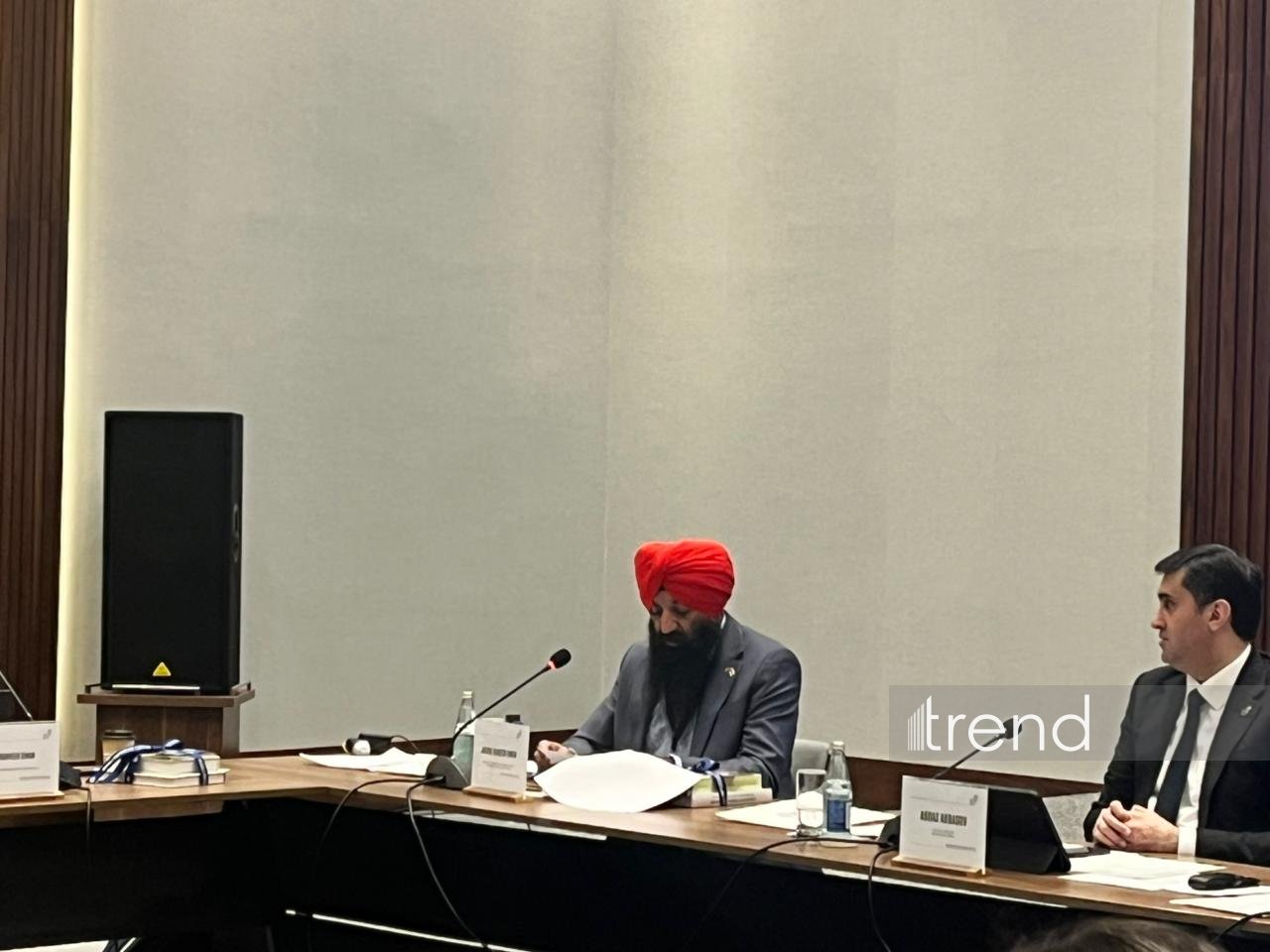

BAKU, Azerbaijan, January 16. Operation Blue Star marked the beginning of the Khalistan movement, Ramesh Singh Arora, Punjab’s Minister of Human Rights and Minorities, said at an international conference titled “Racism and Violence Against Sikhs and Other Minorities in India: The Reality on the Ground,” in Baku today, Trend reports.
According to him, the deep-rooted nature of violence against Sikhs is due to a combination of political opportunism, state repression, and the denial of Sikh identity and national aspirations.
"It is enough to read Article 25(b) of the Indian Constitution for this. That is, under constitutional law, the identity of Sikhs is effectively erased," he emphasized.
The minister noted that the Indian Army’s attack on the Golden Temple, the holiest shrine of Sikhs, during the 1984 Operation Blue Star, is a clear example of this:
"This event caused deep wounds in the collective consciousness of the Sikh community and also marked the beginning of the Khalistan movement, i.e., the idea of full freedom and sovereignty. From that point on, the struggle shifted from a demand for greater autonomy for Punjab to a fight for complete independence. The assassination of Prime Minister Indira Gandhi on October 31, 1984, became an excuse for the events that followed. Genocide took place in Delhi and other cities: armed mobs, provided with selective lists by politicians, attacked Sikh families' homes, burned Sikh men alive, killed children, and raped women. This was a continent-wide attempt by the Indian state to complete the genocide process it had initiated," Arora recalled.
He noted that, even after more than 40 years, those responsible for the violence remain unpunished:
"Real legal justice has not been provided for the victims of the 1984 genocide to this day. In this regard, India’s presentation of this 'truth' to the world is questionable.
India has referred to this historical period as a 'riot'. However, a riot implies a confrontation between two equal sides. In this case, it involves the mobilization of the full machinery of a powerful state: selective lists were given to violent mobs, the police either stood by doing nothing or participated in the violence, and the army and security forces were not deployed to restore peace," the Punjab official added.
Stay up-to-date with more news on Trend News Agency's WhatsApp channel



