


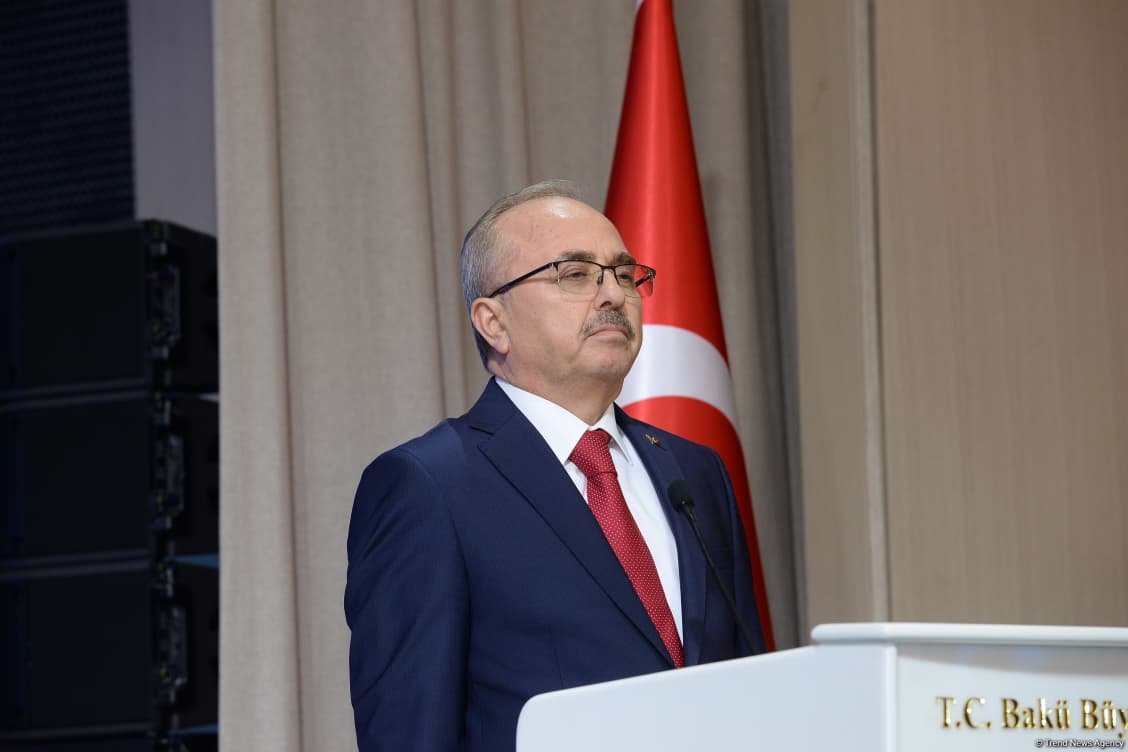

BAKU, Azerbaijan, February 26. The Khojaly massacre has marked a dark stain on the conscience of humanity, taking its place in history as a tragic event, the Embassy of Türkiye once again extends its deepest condolences to Azerbaijani brothers and sisters, said Birol Akgün, Turkish Ambassador to Azerbaijan, Trend reports.
Speaking to journalists during a visit to the "Mother’s Cry" monument in Baku today, on the 34th anniversary of the Khojaly massacre, Akgün stated that on the anniversary of this brutal atrocity, he and the entire embassy staff had come to remember those painful days.
"We pray for mercy for all our martyrs who lost their lives during those tragic days when 613 innocent people were brutally killed. May God never let such painful days happen to our nation or anyone else again. We wish mercy for all our martyrs, patience and resilience for those left behind," he added.
Today marks the 34th anniversary of the Khojaly genocide committed by Armenian armed forces. The Khojaly genocide stands as one of the bloodiest tragedies of Armenia’s occupation and genocide policy against Azerbaijan.
On the night from February 25-26, 1992, Armenian armed forces attacked Khojaly, which had been under blockade since October 1991, with its road and energy connections severed, and carried out mass atrocities against Azerbaijani civilians. The massacre was perpetrated with the assistance of the 366th Motorized Rifle Regiment of the former Soviet Armed Forces.
During the killings, 613 people were brutally murdered, including 63 children, 106 women, and 70 elderly persons. A total of 487 people sustained injuries of varying degrees, 1275 were taken captive and subjected to torture, 8 families were annihilated, 130 children lost one parent, and 25 lost both parents. The fate of many hostages remains unknown.
These atrocities were not merely military operations but part of a policy driven by ethnic hatred and discrimination. Similar targeted massacres against Azerbaijanis in settlements such as Baghanis Ayrim, Jamilli, Karkijahan, Meshali, Malibeyli, Garadaghli, Tugh, and Salakatin further demonstrate the systematic and premeditated nature of the Khojaly genocide.
Stay up-to-date with more news on Trend News Agency's WhatsApp channel



