


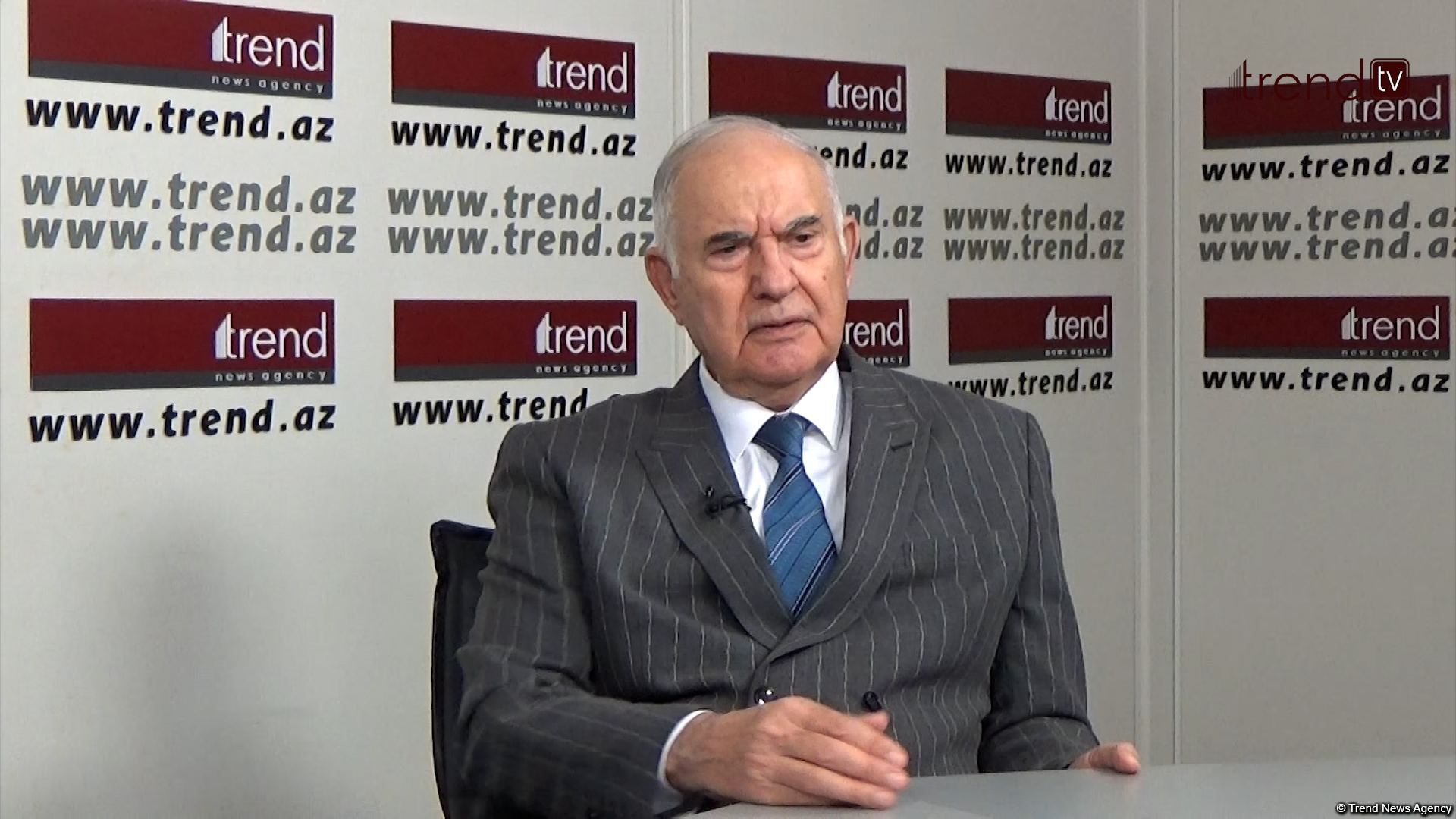

BAKU, Azerbaijan, February 26. The night from February 25-26, 1992, went down in history as one of the bloodiest pages in Azerbaijani history, the political analyst Azer Garayev told Trend.
According to him, this was one of the darkest pages not only in Azerbaijani history, but also in world history.
He stated that Armenian military forces committed operations and crimes against humanity intended to virtually wipe Khojaly off the face of the earth in a matter of hours. As a result, one of the bloodiest genocides in world history - the Khojaly genocide - occurred.
During the killings, 613 people were brutally murdered, including 63 children, 106 women, and 70 elderly persons. A total of 487 people sustained injuries of varying degrees, 1,275 were taken captive and subjected to torture, eight families were annihilated, 130 children lost one parent, and 25 lost both parents. All these figures are separate panels of a horrific genocide. These numbers are not merely statistics — they are evidence of the systematic destruction of a city.
Garayev noted that what happened in Khojaly wasn't an accidental military clash.
As a result of this act, civilians attempting to leave Khojaly came under fire, non-combatants were killed with particular brutality, and violence was committed against the bodies. All of the acts are a gross violation of international humanitarian law. Throughout history, crimes against humanity have taken place on different scales. For example, the Holocaust — the systematic extermination of millions of people — is considered the largest genocide of the 20th century. The Srebrenica genocide is recognized as the gravest mass killing in Europe since World War II.
Although the Khojaly tragedy resulted in fewer victims compared to these events, in terms of its nature and method — as a deliberate and ruthless attack directed against civilians — it falls into the category of a crime against humanity. The main issue here is not only the number of victims, but the essence of the crime: the targeting of unarmed civilians, the killing of people attempting to flee, and the complete annihilation of families.
The analyst pointed out that the liberation of Karabakh and Khojaly from occupation played a major role in helping the Azerbaijani people overcome the trauma of genocide.
"This process should be evaluated not only as a military and political outcome, but also as, in some sense, the healing of a collective trauma that had lasted for many years. Particularly in the context of honoring the memory of those who lost their lives during the Khojaly genocide, the restoration of territorial integrity carries symbolic and moral significance in Azerbaijani society.
The mass killing of civilians during the Khojaly tragedy was not only the fate of a single city, but also left an indelible scar on the nation’s memory. For many years, the lack of control over those territories was perceived as an unresolved issue, including open questions regarding the restoration of justice. Under the leadership of President and Supreme Commander-in-Chief Ilham Aliyev, the liberation of Karabakh changed the defeated spirit of the people and society.
Today, Azerbaijan is a society that can look back at its past and its pain with pride. Without forgetting the tragedies and genocides committed against us, we are now a nation moving forward into the future with great strides," Garayev concluded.



