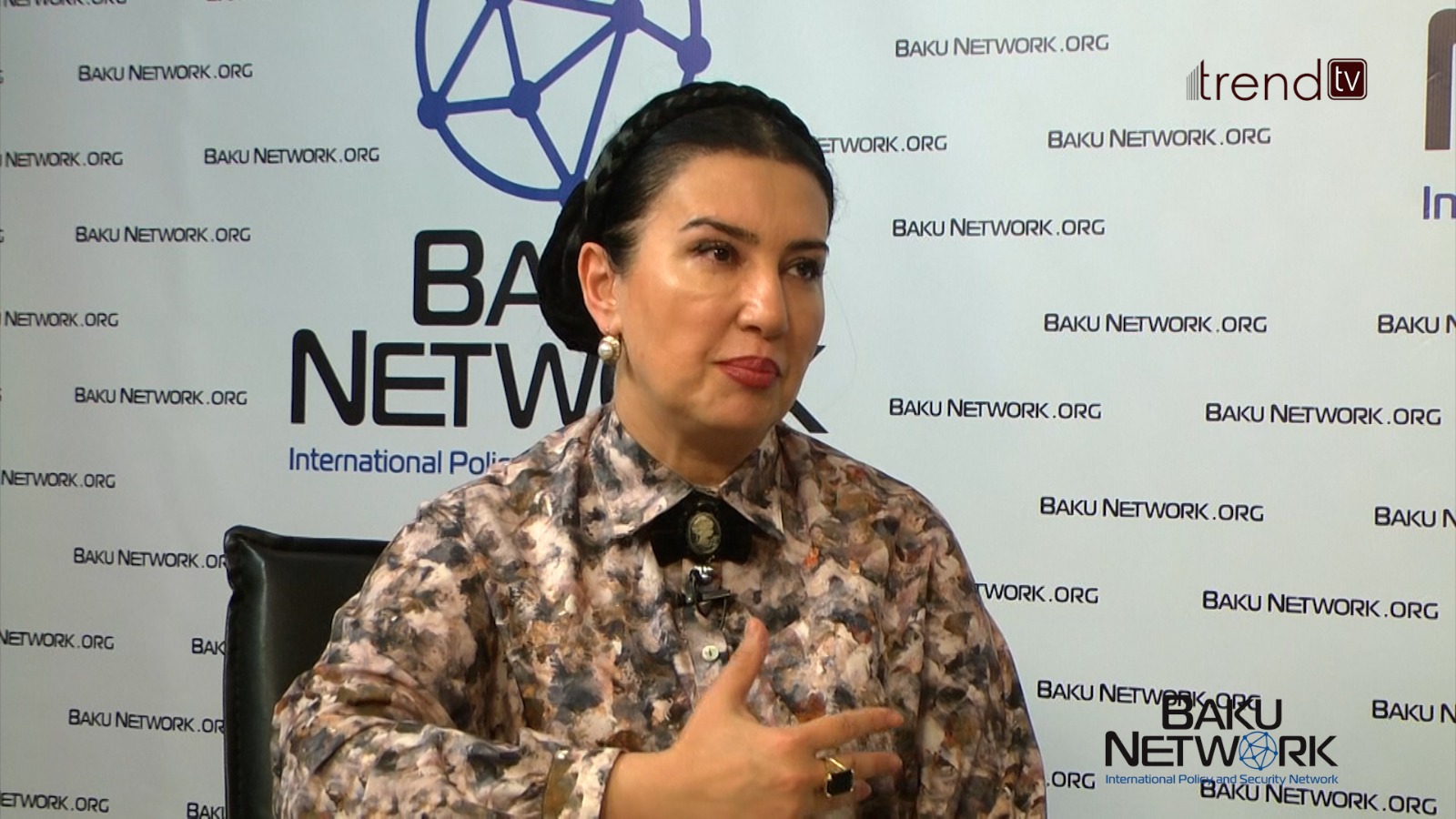

BAKU, Azerbaijan, April 14. The Baku Network platform has released the latest episode of the analytical video project “Dialogue with Tofig Abbasov,” dedicated to issues of culture, history, and statehood, Trend reports.
The guest of the program was Honored Artist of Azerbaijan, composer Govhar Hasanzade.
During the conversation, issues of the national music school, copyright protection, the role of youth in contemporary art, and the activities of the Azerbaijan Composers' Union were discussed.
Hasanzade said she considers her connection to Azerbaijani musical culture a great creative blessing.
"I'm very happy to be an Azerbaijani composer, because being part of Azerbaijani music and culture is a great joy and good fortune," she noted. According to her, Azerbaijani musical culture, rooted in centuries-old traditions, combines rich folklore, mugham, and professional composition, and Azerbaijani music itself has long transcended national borders.
The composer emphasized that Azerbaijani music is distinguished by its depth, antiquity, and distinct originality.
"Azerbaijani music is very deep, very old, very ancient," said Hasanzade. According to her, precisely this strong cultural foundation creates broad creative opportunities and allows Azerbaijani composers to freely work in a wide variety of genres.
The topic of copyright protection was also touched upon during the conversation. Hasanzade noted that significant work has been done in this area in Azerbaijan in recent years.
"In the last four years, this has been a tremendous achievement, with great successes and great opportunities," she said, stressing that Azerbaijani musical works were often used abroad without attribution. According to her, every song should be registered and have its own certificate – 'like a passport'.
Hasanzade also highlighted the new stage of the country's cultural development in the post-war period. According to her, Azerbaijan is currently experiencing a noticeable upsurge in music, with young creatives demonstrating a high level of preparation and modern thinking.
"I spend more time working with them. They are all so different. You hear the Azerbaijani style, and the form suddenly becomes so modern," she said, speaking of young composers and performers.
The composer paid special attention to the activities of the Union of Composers of Azerbaijan and its chairman, Firangiz Alizade.
"I would like to pay special attention to the Azerbaijan Composers' Union, headed by our wonderful Firangiz Alizade," Hasanzade said. According to her, the Union is carrying out extensive work, and its venue has become an important center of the country's musical life.
Hasanzade also emphasized the international recognition of Alizade's work.
"Her piece was nominated for a Grammy," she recalled, calling this a significant achievement for the entire Azerbaijani school of composition.
Furthermore, the composer noted Alizade's active role in the country's musical life and her constant support of composers.
"Firangiz khanum is so active that she constantly sobers me up: where are you, where is your new work, where is your classical work? Everyone, come and participate," Hasanzade said.
Speaking of major cultural initiatives, she singled out the Silk Road International Music Festival, which, she said, is also associated with the name of Alizade.
"I would also like to note the enormous role of large-scale music forums in the country. One such venue is the Silk Road International Festival, headed by Firangiz Khanum since 2010," Hasanzade emphasized.
According to her, interest in Azerbaijani music abroad continues to grow, and works by Azerbaijani composers are increasingly being included in international concert programs.
"I'm very pleased that people abroad often request sheet music and include works by Azerbaijani composers in their programs. There is a great demand for Azerbaijani song culture," Hasanzade added.
The full video recording of the program is presented to readers: