


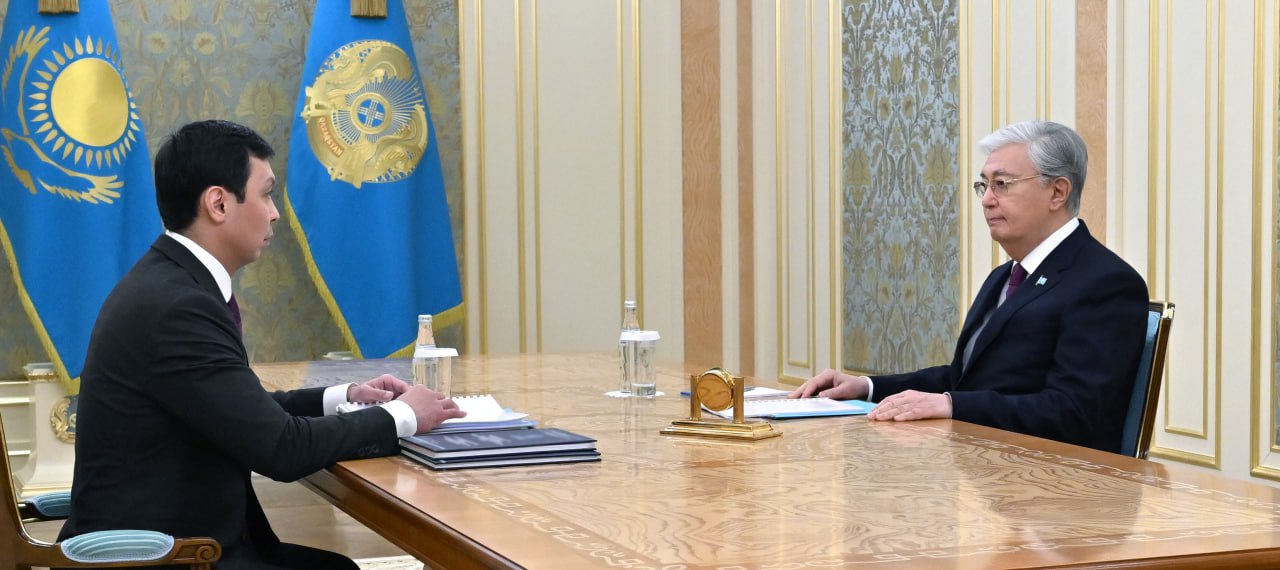

ASTANA, Kazakhstan, January 17. Kazakhstan is implementing a pilot project for the "coloring of money" on the "Digital Tenge" platform, and this tool is being applied to certain areas of agriculture and road infrastructure, with plans to scale it to digitally cover all stages of budget fund movement, said Askhat Zhumagali, Chairman of the Anti-Corruption Agency of Kazakhstan, during a meeting with President Kassym-Jomart Tokayev, Trend reports.
The President received a report on the measures being taken by the agency to combat corruption in the country. Kassym-Jomart Tokayev was informed about the plans and key objectives of the Anti-Corruption Service for the current year, including the implementation of the principle of "Law and Order."
As Askhat Zhumagali reported, 1,641 corruption crimes were registered last year, 68 cases of systemic corruption were identified, and criminal activity by 2 organized criminal groups was uncovered, with convictions issued for both groups. A total of 1,493 individuals were implicated in corruption, including 229 leaders of various levels. Some 914 individuals were sentenced.
Since 2022, the Agency has facilitated the return of property
assets and funds to the state amounting to 1.12 trillion tenge
($2.128 million), which includes 486.5 billion tenge ($923,350)
from the previous year. The President received information that,
while overseeing government procurement and the allocation of
targeted funds, the Agency successfully averted the imprudent
expenditure of 87.7 billion tenge ($166,630). The agency has
persisted in its efforts to support the development of significant
infrastructure and social initiatives. A total of 182 objects are
under monitoring, with 81 of them having been completed.
The head of the Anti-Corruption Service also informed the President
about the fulfillment of specific tasks. As part of the work to
eradicate corruption in the road sector, an analysis was conducted,
and a series of recommendations were submitted to the authorized
bodies. At the same time, specially created working groups continue
to monitor the construction and repair of roads in the regions. Of
the 258 monitored projects, 119 sections, totaling 1.800 km, have
been put into operation, and 95 percent of identified defects have
been eliminated.
The President was also informed about the nationwide launch of a project to issue free medicines to patients via QR codes, which reduces the risks of issuing fake prescriptions and theft of medicines, as well as saves budget funds.
Tokayev was briefed on the results of international cooperation, including the signing of memoranda with anticorruption agencies in Azerbaijan, Russia, Hong Kong, Jordan, and Qatar. Work continues on implementing the recommendations of the OECD and GRECO, within which two bills were submitted to the Majilis for the implementation of best international practices.
After the meeting, the President issued several directives aimed at intensifying the fight against corruption in the country.
The Organisation for Economic Co-operation and Development (OECD) is an international economic organization of developed countries that recognizes the principles of representative democracy and free market economy.
The Group of States Against Corruption (GRECO) is an international organization established by the Council of Europe in 1999. The main objective of the organization is to support member countries in their efforts to fight corruption. GRECO sets forth anti-corruption standards for state activities and oversees adherence to these standards. GRECO collaborates with the UN, the OECD, and various international and non-governmental organizations. The group is made up of 49 countries.



