


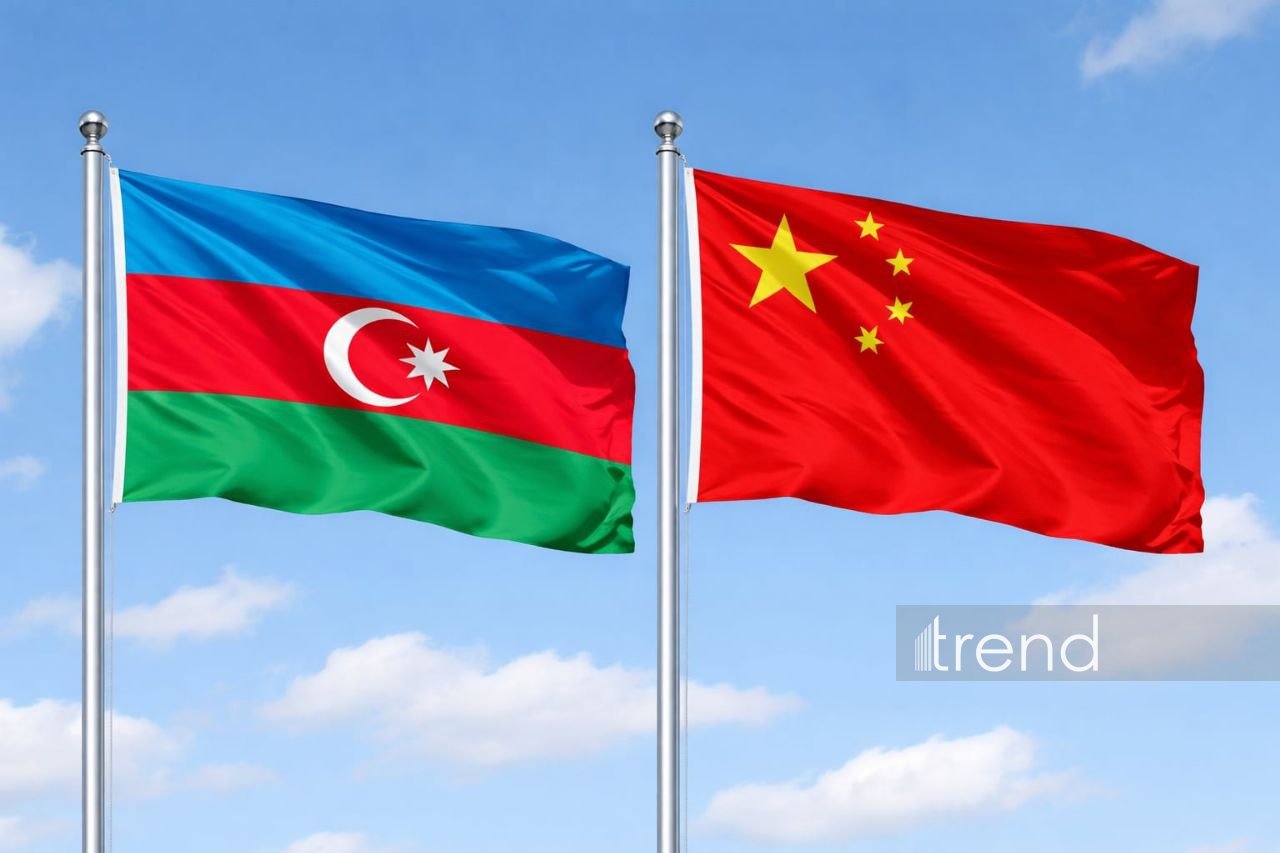

BAKU, Azerbaijan, January 15. As the global economy becomes increasingly fragmented, supply chains undergo significant restructuring, and the energy transition accelerates, the relationship between Azerbaijan and China is evolving beyond traditional bilateral cooperation, assuming a broader geoeconomic importance. Azerbaijan is emerging as a central pillar for China’s Belt and Road Initiative (BRI) in the South Caucasus, positioning itself as a strategic hub connecting Asia and Europe through the Middle Corridor. This transformation is occurring alongside deepening collaboration in trade, logistics, and renewable energy, prompting important questions regarding the future architecture of Eurasian connectivity.
Political and strategic foundation: institutionalization and trust
The institutional foundations of Azerbaijan–China relations have been built gradually through consistent high-level engagement. Official visits by President Ilham Aliyev to China since 2003 have contributed to the intensification of bilateral dialogue, while the 2015 Memorandum of Understanding on the Silk Road Economic Belt established the core economic philosophy of this partnership. More recently, the momentum has accelerated; a 2022 meeting between President Aliyev and President Xi Jinping in Samarkand set a formal roadmap, leading to the 2024 Strategic Partnership and the landmark Comprehensive Strategic Partnership signed in Beijing in April 2025. These documents are more than mere political declarations; they have created concrete coordination mechanisms in trade, investment, and technology that provide a predictable environment for long-term state and private cooperation.
Trade and investment: momentum confirmed by figures
Economic cooperation continues to expand at a record pace, as evidenced by data from the State Customs Committee. Trade turnover reached $4.21 billion in the first eleven months of 2025, representing a 24% increase and positioning China as Azerbaijan’s fourth-largest trading partner. This growth is driven by expanded transit capabilities and a surge in the integration of Chinese technologies into the Azerbaijani market. This momentum is equally visible in foreign direct investment; according to the Central Bank of Azerbaijan, Chinese FDI grew by nearly 68% in 2025. Conversely, Azerbaijani investment into China nearly quadrupled during the same period, suggesting that the relationship has matured into a two-way street based on mutual economic interests and a shared vision of Azerbaijan as a manufacturing and energy platform.
The Middle Corridor and logistics: strategic transit opportunities
While China remains focused on raw materials in Central Asia and manufacturing in Eastern Europe, Azerbaijan offers a unique "logistics–energy–trade triangle" that distinguishes it as a regional leader. Amid the relative weakening of traditional northern transit roles and a global effort to diversify supply chains, the Middle Corridor (TITR) has emerged as a vital and secure alternative for China–Europe cargo. Azerbaijan’s role as a multimodal hub was further strengthened in late 2025 through a memorandum with China’s Xi’an Port, aimed at optimizing container trains and real-time digital monitoring. These efforts have yielded tangible results, with Azerbaijan Railways reporting a 39% increase in block trains and a 20% rise in container volumes in 2025, highlighting the corridor's growing role in global logistics.
Energy and green transition: the sector of the future
Energy cooperation between Azerbaijan and China has evolved beyond traditional hydrocarbons, becoming a cornerstone of Azerbaijan’s sustainable development and a key component of China’s global green technology strategy. Projects such as the Khizi–Absheron Wind Power Plant and the Gobustan Solar Power Plant highlight the growing role of Chinese companies as crucial technology and financial partners. A significant milestone was reached in late 2025 with the installation of the first panel at the 100-megawatt Gobustan facility, which is anticipated to reduce carbon emissions by 124,000 tons annually upon completion. Additionally, the agreement with China Datang Corporation for large-scale offshore wind and solar projects reinforces a mutual commitment to establishing a "Green Energy Corridor."
The rapid increase in trade turnover, the strengthening of logistics integration along the Middle Corridor, and the expanding scale of renewable energy projects offer a clear indication of the current trajectory of this partnership. As Azerbaijan transitions from a transit nation to an active geoeconomic player, the long-term implications of the Baku-Beijing axis on the broader Eurasian economic landscape remain a critical subject for analysis. The data and strategic developments observed in 2025 point to a fundamental realignment, the full consequences of which will unfold through the ongoing execution of these large-scale initiatives in the years ahead.



