



BAKU, Azerbaijan, January 16. The global transport agenda is increasingly shaped by geopolitical realignments, expanding regional trade, and efforts to diversify and secure logistics routes. Within this evolving landscape, the Trans-Caspian International Transport Route (the Middle Corridor) has emerged as one of the fastest-growing Eurasian corridors. In 2024, cargo volumes along the route increased by approximately 68%, with projections indicating growth to around 11 million tons by 2030, while total freight flows across Central Asia are expected to rise by 1.5 times to 90-95 million tons by the end of the decade.
Within this context, Turkmenistan is at a transitional stage in the development of its transport sector, seeking to leverage its geographic position between the Caspian region, Iran, Afghanistan, and Central Asia to strengthen its transit role. Since 2019, investments in transport infrastructure have exceeded $4.6 billion, with road and railway projects, as well as maritime logistics, remaining key priorities. At the same time, structural constraints persist, including limited access to foreign capital and the need for deeper integration into regional supply chains.
A key multilateral mechanism with the potential to facilitate progress in these areas is the Ashgabat Agreement, which establishes a multimodal corridor linking Central Asia with the Persian Gulf. In parallel, Turkmenistan has concluded bilateral agreements with Uzbekistan and Iran aimed at reducing transit costs and simplifying procedures, while the Customs Code updated in 2023 prioritizes digitalization and the implementation of a “single window” system.
According to the Eurasian Development Bank (EDB), container traffic in Central Asia is expected to increase by approximately 66% by 2030. The Middle Corridor is increasingly viewed as a key alternative to traditional East-West routes. To meet projected demand, the region will require around 18.5 billion euros, or approximately $21.5 billion, in transport infrastructure investments.
Turkmenistan’s regional neighbors are also in the thick of these processes. Kazakhstan and Uzbekistan are modernizing railway and port capacities, while Kyrgyzstan and Tajikistan are focusing on integration into regional and South Asian transport routes. In light of this situation, Turkmenistan is frequently seen as a diamond in the rough, a transit link that could bridge the Caspian region with Iran and Afghanistan.
At the national level, major projects connecting Turkmenistan’s borders across its territory include the M37 highway running from the Caspian coast to the eastern regions, the 600-kilometer Ashgabat-Turkmenabat highway, and the ongoing development of the Turkmenbashi International Seaport.
Turkmenistan’s road network extends approximately 58,600 kilometers, more than 80% of which is paved. In recent years, large-scale highway and bridge construction projects have been implemented, alongside updates to the regulatory framework governing road construction and traffic safety.
All things considered, the country still has its work cut out for it when it comes to modernizing rural roads, rolling out digital transport solutions, and boosting infrastructure maintenance efficiency—elements that have a direct impact on its overall transit potential.
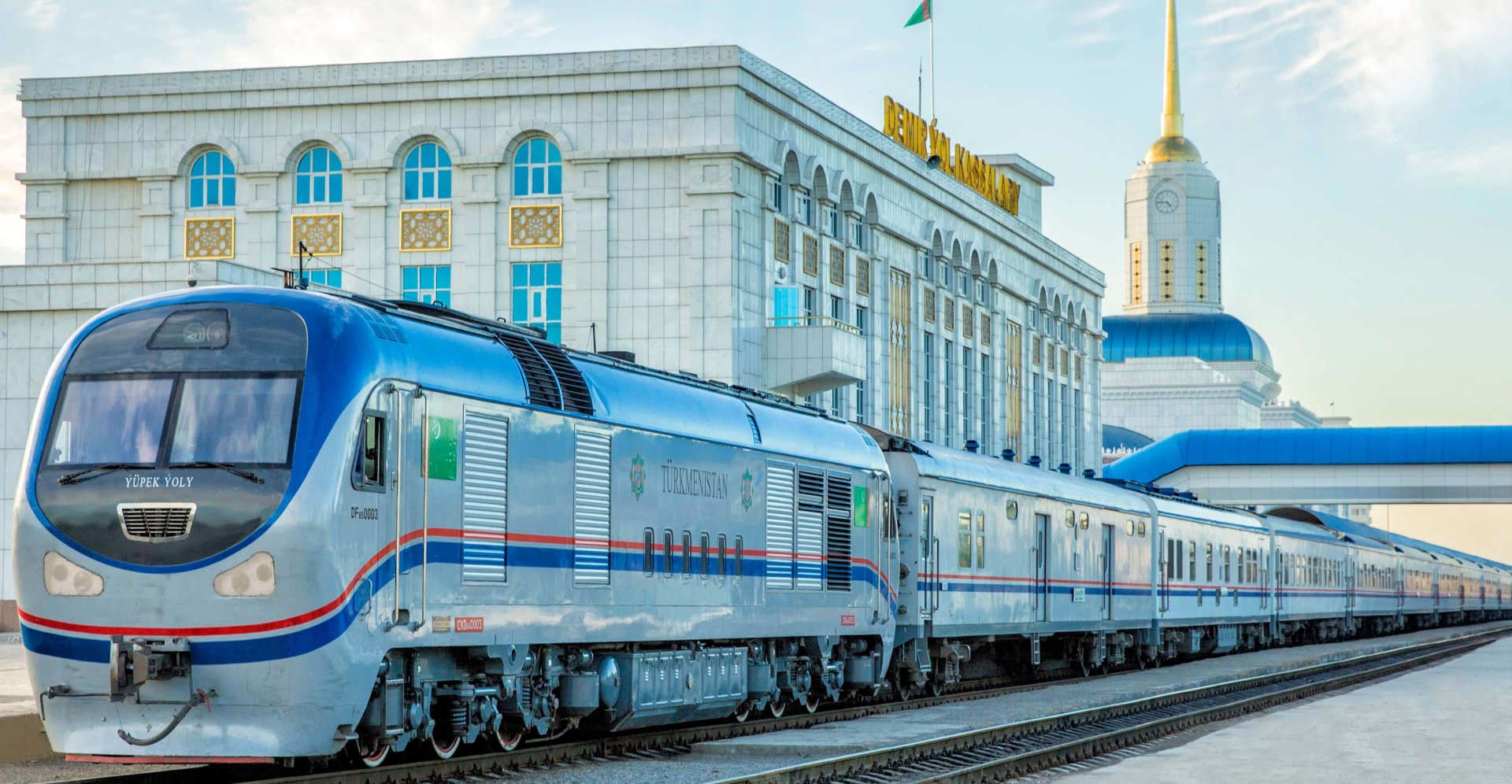
Railway infrastructure has also been upgraded in recent years, with key lines such as Tejen-Serakhs, Turkmenabat-Kerki, and Ashgabat-Dashoguz adding more than 1,600 kilometers of modernized and newly developed routes.
Turkmenistan has established a foundational infrastructure and regulatory framework for participation in regional transport processes. Amid accelerating transit growth across Central Asia, Ashgabat is demonstrating a willingness to adapt its transport policies and infrastructure priorities, positioning the country as a potentially more flexible element within the emerging Eurasian logistics architecture.
Stay up-to-date with more news on Trend News Agency's WhatsApp channel



