


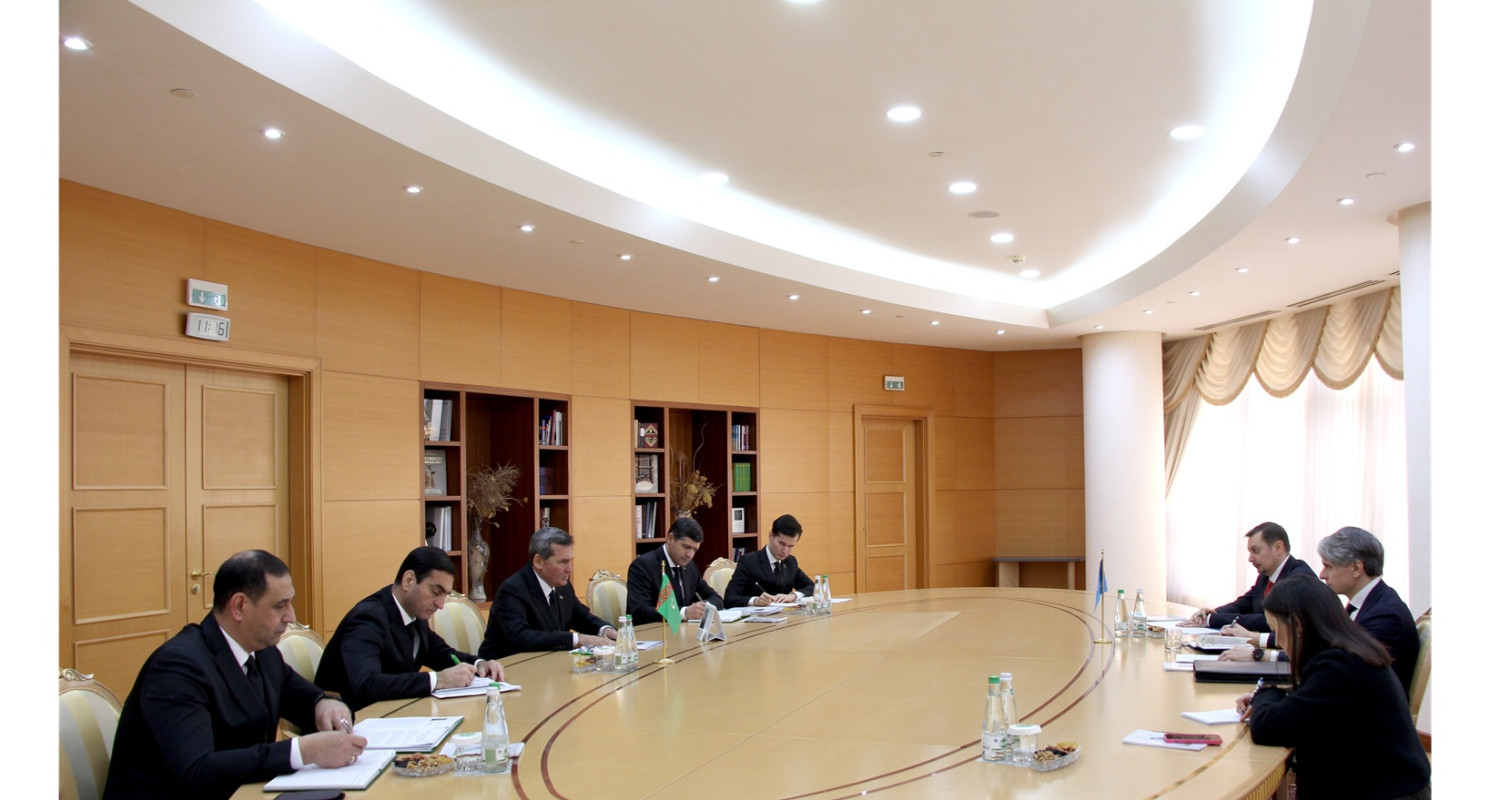

ASHGABAT, Turkmenistan, January 23. Turkmenistan and the UN Economic Commission for Europe (UNECE) discussed prospects for strengthening cooperation in sustainable development, energy, transport connectivity, and regional integration, Trend reports via the Turkmen MFA.
The talks took place during a meeting between Turkmen Foreign Minister Rashid Meredov and UNECE Deputy Executive Secretary Dmitry Maryasin, who arrived in Ashgabat to participate in the High-Level Week of the Special Programme for the Economies of Central Asia (SPECA) held from January 20 through 23.
The sides focused on sustainable energy, methane emissions reduction, and the development of safe and resilient transport corridors. The practical implementation of outcomes from the Third UN Conference on Landlocked Developing Countries (LLDC3) and the Avaza Programme of Action for 2024-2034 was also emphasized, with UNECE recognized as a key regional partner.
During the meeting, the Turkmen side reaffirmed its commitment to the UNECE mandate and highlighted the Commission’s role as an effective platform for implementing UN global decisions at the regional level. Participation in the 71st UNECE session in April 2025 at the high level was also noted as significant.
Turkmenistan, holding the world's 4th largest natural gas reserves, relies heavily on fossil fuels for over 88% of its economy. While facing sustainability challenges as the region's most carbon-intensive economy with significant methane emissions, Turkmenistan is beginning to pivot towards sustainable development. This includes commitments to reduce methane emissions by 30% by 2030 and the introduction of renewable energy pilot projects. The energy sector, primarily state-run, mainly exports natural gas to China.
Additionally, Turkmenistan is developing transport infrastructures, such as the CASCA+ and North-South corridors, to enhance connectivity with regional markets. The National Program of Socio-Economic Development (2022-2052) aims for a green economy, focusing on digital technologies and eco-friendly practices, supported by initiatives with the EU to decarbonize and upgrade energy efficiency.
Stay up-to-date with more news on Trend News Agency's WhatsApp channel



