



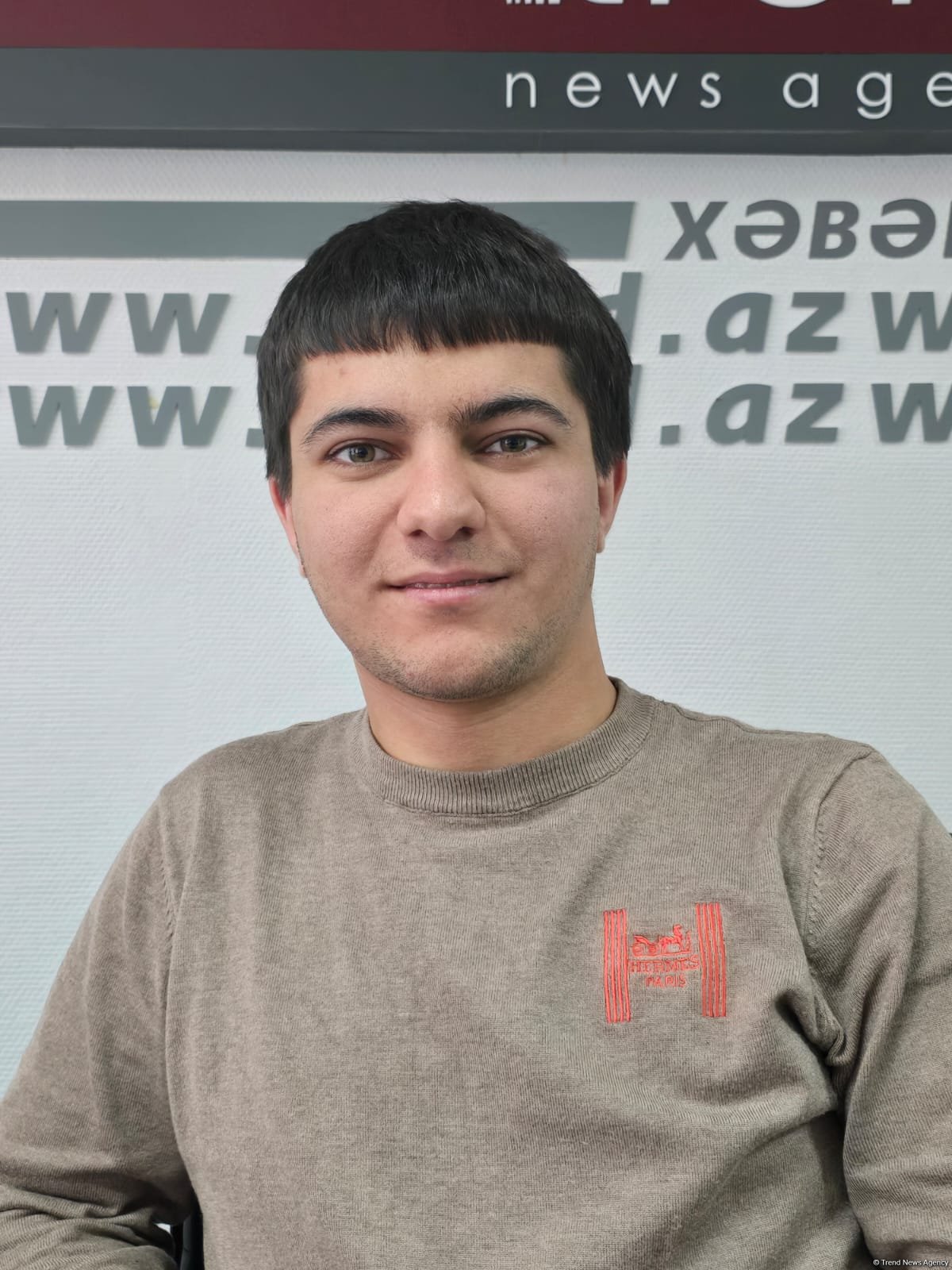
BAKU, Azerbaijan, January 27. International development banks are showing growing interest in issuing securities in the local currency (manat) on the Baku Stock Exchange (BSE), Ruslan Khalilov, Chairperson of the Management Board of the Baku Stock Exchange, said in an interview with Trend.
At the beginning of the interview, Khalilov spoke about the BSE’s achievements in 2025.
“Last year, as the Baku Stock Exchange, we conducted a full and in-depth diagnostics of our technological infrastructure. Our trading systems are built on a unified platform, and extensive testing was carried out on this platform. Based on the results of the diagnostics, internal stabilization work was implemented to enhance system harmonization and stability. In parallel, several stress tests were conducted to ensure that the platform is fully prepared for large-scale operations.
These inspections are conducted every year, but last year they were carried out in a broader and more detailed manner. This is because the market may see the entry of numerous initial public offerings (IPOs) and bond issuances. The goal is to ensure that the technological platform can process hundreds of thousands of orders without any issues. I can confidently say that the Baku Stock Exchange is fully ready to handle multiple issuances,” he said.
Khalilov pointed out that the exchange is now stepping into the next strategic chapter of its internal transformation journey, putting a significant emphasis on technological readiness and integration.
“At this stage, our main focus is on strengthening technological preparedness and technological integration. The objective is not only integration within the BSE itself, but also increasing integration across the entire capital market,” he said.
Khalilov added that the BSE’s trading platform is currently integrated with two banks through the applications of two investment companies, with the ultimate goal of connecting all investment companies operating in the market through their own applications. Banks holding investment licenses are also expected to integrate their systems.
“This creates maximum convenience for the retail investor. In other words, an investor can trade on the exchange with a single click through their broker’s application. This model is already actively operating for shares of the International Bank of Azerbaijan (IBA),” the chairperson noted.
Speaking about last year’s achievements, Khalilov highlighted the signing of a collective exchange agreement within the Tabadul project between the Abu Dhabi Securities Exchange (ADX), the National Depository Center (NDC), and Azer-Turk Bank.
“This document enabled the launch of technological connections and the testing phase. Currently, the Baku Stock Exchange continues testing technological integration with the Tabadul Trading Hub. The main objective of this work is to strengthen integration within the local market and to ensure seamless cross-border integration.
The Tabadul Hub operates as an exchange-hub model, bringing together exchanges from different countries into a single space. Through this mechanism, for example, a broker operating in Abu Dhabi could directly trade on the Baku Stock Exchange. For this, the broker must be a member of the Baku Stock Exchange.
Current legislation does not prohibit foreign brokers from becoming members of the BSE. However, there are several requirements. For instance, a foreign broker must establish an office locally or have a local representative. To simplify these requirements, we have shared our views with the Central Bank of Azerbaijan (CBA) within the framework of the review and proposed amendments to securities market legislation,” he stressed.
Khalilov emphasized that integration processes are currently being carried out mainly through the Tabadul platform, while active discussions are also underway with regional and global brokers.
“In meetings that I personally attend, we discuss what conditions are required for global brokers to connect the Baku Stock Exchange platform to their systems, what criteria are considered, and expectations regarding market turnover.
The main goal here is to determine in advance what technical, institutional, and market conditions must be met if such integration becomes possible in the future. At the same time, we analyze what advantages this model could bring to the local market and what potential shortcomings may exist,” the official said.
He explained that most global brokers operate under a multinational trading facility model and typically use smart order routing (SOR) systems.
“Through this system, if a security is listed on several exchanges, the order is automatically routed to the market offering the lowest price and minimal commission. In this context, even displaying securities traded and quoted on the Baku Stock Exchange on such platforms could be an important integration step for our market.”
Khalilov also highlighted the launch of trading in manat-denominated floating-rate bonds issued by the European Bank for Reconstruction and Development (EBRD) on the BSE, calling it a highly significant development.
“This is the first issuance by an international financial institution in both local currency and floating-rate note format. There has even been a transaction on the secondary market, with an operation amounting to around 3 million manat ($1.76 million).
Another benefit of trading EBRD’s floating-rate manat bonds is that, although it may be early, this could eventually lead to interest rate swap transactions. At the very least, the market now has a floating-rate bond as a first step, which did not exist before. This was a very important step,” he explained.
According to Khalilov, negotiations are currently underway with several other international financial institutions regarding bond issuances.
“International development banks are interested in issuing in local currency, as this allows for more effective management of 'currency risk.' Many international financial organizations with which we are in contact are interested in issuing bonds on the Baku Stock Exchange.
We see such practices in neighboring countries. However, it would not be correct to say which institution will issue and when. I would say that almost all international development banks operating in Azerbaijan are interested in issuance. At the very least, because as development banks, the most suitable solution for them is to issue bonds in local currency at their own risk levels and then channel the proceeds into local strategic projects, also in local currency,” Khalilov said.
He noted that the exchange actively engages with these institutions, invites them to meetings, and provides information about the domestic market.
Khalilov also stressed that the time has come for state-owned enterprises to enter the market through bond issuance:
“One of the key strategic initiatives approved by the Supervisory Board of the Baku Stock Exchange in the Strategic Development Plan for 2024-2026 is encouraging and attracting state-owned enterprises to issue bonds.
We are actively holding discussions with state-owned enterprises. We have met several times with Azerbaijan Railways CJSC and even prepared a brief presentation on local capital market opportunities for them. I am very pleased that the company has started issuing bonds.”
He added that one or two more companies from the transport and logistics sector are also planning bond issuance, and that the exchange is in active discussions with all of them.
“We even prepare and send additional information to some companies to support their decision-making. Several both state and non-state companies are showing significant interest in bond issuance," Khalilov noted.
In addition, Khalilov recalled that trading in green bonds issued by the State Oil Company of the Azerbaijan Republic (SOCAR) began on the BSE in March last year.
“The green bonds are issued for a five-year maturity, with a total issuance volume of $200 million. To support green bonds, we created a dedicated Green Bond Segment and set all listing fees for this segment to zero.
If a company meets the relevant criteria and wants to be listed as a green bond or green instrument, we exempt it from listing fees. There is interest from companies in certain sectors, particularly in the energy sector, and we also see interest from companies in the logistics sector. Much depends on the investment banks involved, and over time, we are likely to see additional green bond issuances,” he said.
Touching upon the development of the manat yield curve, Khalilov said it has fundamental importance for the market.
“The 'yield curve' serves as a base interest rate for issuers. While liquidity in Azerbaijan is currently concentrated in instruments with maturities of up to three years, we expect liquidity to gradually increase in the 5-7 year segments as well.
The CBA already publishes the yield curve, and it is gradually becoming more market-based,” the official said.
Khalilov also spoke about the BSE’s recent membership in the United States-Azerbaijan Chamber of Commerce (USACC) and the potential benefits of this step.
“This membership is important for learning best practices from the U.S. market, exploring technological solutions, and establishing contacts with potential investors. We have very good cooperation with the chamber and maintain active communication.
The U.S. is a mature market with much to learn from. At the initial stage, our cooperation focuses on understanding how exchange and trading platform companies structure their operations, as well as exchanging views on technical matters and overall market development. Commercial cooperation may also become possible in the future. At present, there is no direct linkage comparable to Tabadul, but extensive efforts are underway to establish foundational contacts and advance preliminary discussions," he pointed out.
Finally, Khalilov addressed regional cooperation opportunities, particularly with Central Asian countries.
“We have exchanged views with the Kazakhstan Stock Exchange (KASE) on sharing technical expertise and creating a regional data hub. The goal is to process capital market data from Central Asia and the Middle East on a single platform and present it to regional and international investors.
This project is still at the idea stage, but cooperation is not ruled out. At the same time, we are exchanging experiences with Uzbekistan and other Central Asian countries. These markets are at similar stages of development and are comparable in terms of technological progress.
Overall, our goal is to transform the Baku Stock Exchange into a market with high regional and global visibility. This can be achieved through the integration of BSE-listed instruments into global brokers’ platforms and through advanced technological solutions,” Khalilov concluded.
Stay up-to-date with more news on Trend News Agency's WhatsApp channel



